
Care & longevity
Cupped Deck Boards: Causes, Checks and Repairs
Last updated
The short answer
Deck boards cup when moisture and movement affect the timber unevenly, often with drainage, ventilation or fixing problems underneath. A mildly distorted sound board may be refixed after those conditions are corrected. Severely twisted, cracked or soft boards should be replaced rather than forced flat with extra screws.
At a glance
- Visible sign
- Raised edges or a curved board face
- Common conditions
- Uneven drying, poor airflow and trapped water
- Check below
- Joists, fixings and drainage
- Repair limit
- Badly distorted boards need replacement
Cupping is a change in board shape linked to uneven moisture and movement. Refixing may help a sound board, but forcing a badly distorted one flat rarely lasts.
A cupped board has lifted or curled across its width, often leaving raised edges that catch feet and hold water. It may appear in one isolated board or across a whole section of decking.
The visible shape is only the final symptom. Moisture on opposite faces, drainage, board orientation, fixing pattern and the condition of the joists can all contribute. This guide explains what to check before reaching for more screws.
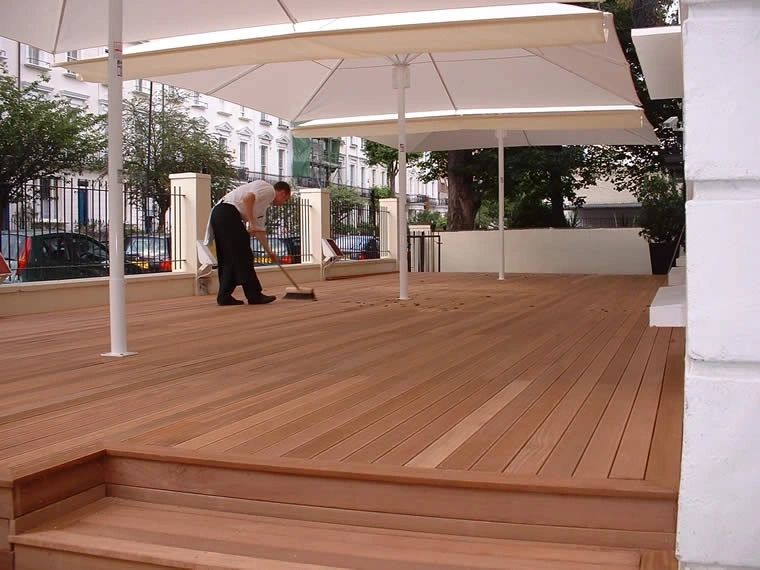
What cupping looks like
The centre and edges of the board no longer sit on the same plane. Depending on the direction of the distortion, the middle may hold rainwater or the edges may lift away from the joists. Nearby boards can make the ridge feel more pronounced underfoot.
Cupping is different from a loose board that rocks at one end and from a frame that bounces. Identifying which movement you have prevents the wrong repair.
Uneven moisture above and below
Timber changes shape as its moisture content changes. When the upper face dries in sun while the underside stays damp, or one side receives persistent splashback, the two faces can behave differently. The result is a curved board rather than a flat one.
A deck with poor ventilation is more vulnerable because the underside has less opportunity to dry. Leaves packed into gaps and solid objects covering the surface can create local variations too.
Drainage and water sitting on the deck
Blocked gaps and inadequate falls let water remain against the timber for longer. A cupped board can then worsen its own situation by forming a shallow channel or holding a puddle along the edge.
Check whether water drains away after rain and whether the ground or frame below stays wet. Refixing the visible board without addressing those conditions leaves the same forces in place.
Fixings and joist support
Boards need suitable support and fixing at the intended joist positions. Missing screws, corroded fixings and wide spans can allow distortion to become more pronounced. A joist that has moved or softened may no longer provide a flat bearing surface.
Adding screws into the same weak area rarely solves it. The support below must be firm, and the fixing pattern should suit the board rather than pinning down one corner at a time.
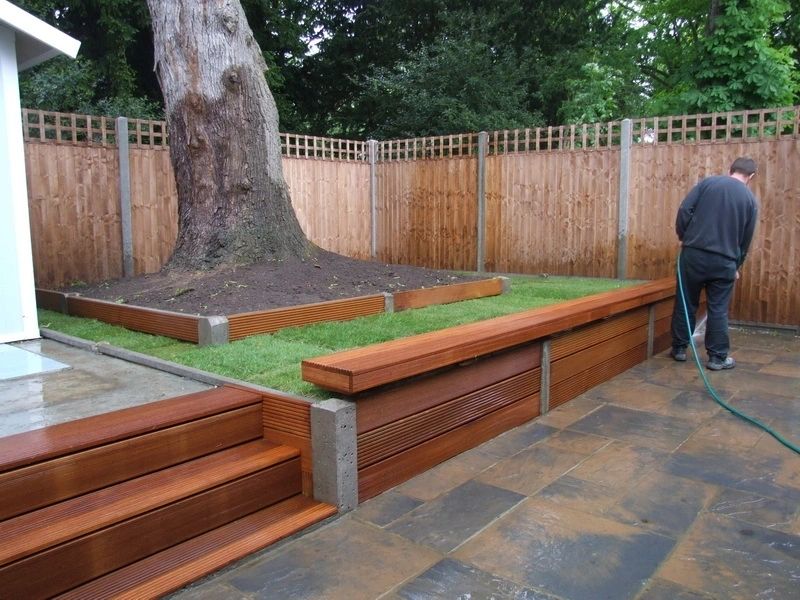
Can a cupped board be flattened?
A mildly distorted, otherwise sound board may improve if moisture conditions are corrected and it is properly refixed. The process should not rely on excessive force or crushing the fibres around the screw heads.
A severely twisted, cracked or softened board is unlikely to become a durable flat surface again. Replacing it avoids creating a collection of oversized holes and fresh splits while the original shape keeps trying to return.
Checking neighbouring boards and the frame
One isolated board may have its own defect or fixing problem. A repeating pattern across many boards points more strongly towards ventilation, drainage or frame conditions. Look underneath where safe access exists before deciding how many to replace.
New boards fitted to damp or uneven joists can cup in turn. Any frame repairs, clearing and drainage improvements therefore belong in the same plan as the surface work.
Safety while the boards are distorted
Raised edges can catch bare feet, shoes and furniture legs. Screws may also stand proud as the timber moves. Keep the area clear if a board is badly lifted or cracked, and avoid planing a ridge without checking how much sound timber remains.
- Watch for raised screw heads
- Check steps and door thresholds first
- Do not ignore softness around the cupped area
- Keep furniture from rocking on uneven boards
- Photograph the deck after rain to show where water sits
Repair or replace the affected section
The sensible scope might be one new board, refastening a small area or rebuilding a section of frame. It depends on whether the timber and supports remain sound and how widespread the distortion is.
Send close photographs across the board width and along the deck, together with any view of the joists below. We can then assess whether the visible cupping appears local or part of a broader moisture and support problem.
Board edges lifting or holding rain?
Send views across and along the affected boards after dry weather and after rain if possible. We will look for the moisture or support cause.
Frequently asked
Can cupped decking be screwed back down?
Sometimes a mildly distorted sound board can be refixed after the cause is addressed. Severely warped or cracked boards are usually better replaced.
Does cupping mean the deck is rotten?
Not necessarily. Moisture imbalance and movement can cup firm timber, but softness, crumbling and decay around fixings must be checked separately.
Will oiling flatten a cupped board?
No. A suitable finish may help manage future surface weathering on sound timber, but it does not mechanically restore the board's original shape.
Why are several boards cupping in the same area?
That pattern often suggests shared conditions such as poor ventilation, blocked drainage or frame support rather than unrelated faults in every board.