
How it's done
Decking Board Spacing: Gaps Between Boards
Last updated
The short answer
Deck boards need a gap between them so rain drains through, air reaches the frame and the boards can swell and shrink without pushing against each other. The right gap depends on the board: timber moves with moisture, and composite needs the side and end gaps its manufacturer specifies. We set gaps to the board maker's guidance, using spacers or the system's own clips.
At a glance
- Why gaps matter
- Drainage, airflow and room for movement
- Timber
- Allow for swelling and shrinking with moisture
- Composite
- Follow the maker's side and end gaps, often set by clips
- Joists
- Composite commonly 300mm centres, timber 400mm or more
The gap between deck boards is small, but it decides whether water drains, whether the frame stays dry and whether the boards stay flat.
Most people notice deck board spacing only when it goes wrong: boards pushed tight together that cup and bow after a wet spell, or gaps that have opened so wide a heel catches in them. Both come from the same mistake, setting the gap without thinking about how the board will move.
This guide explains how we approach board gaps on the timber and composite decks we build across London and Hertfordshire. We deliberately do not give one figure for every deck, because the right gap is set by the board you choose and its maker's guidance.
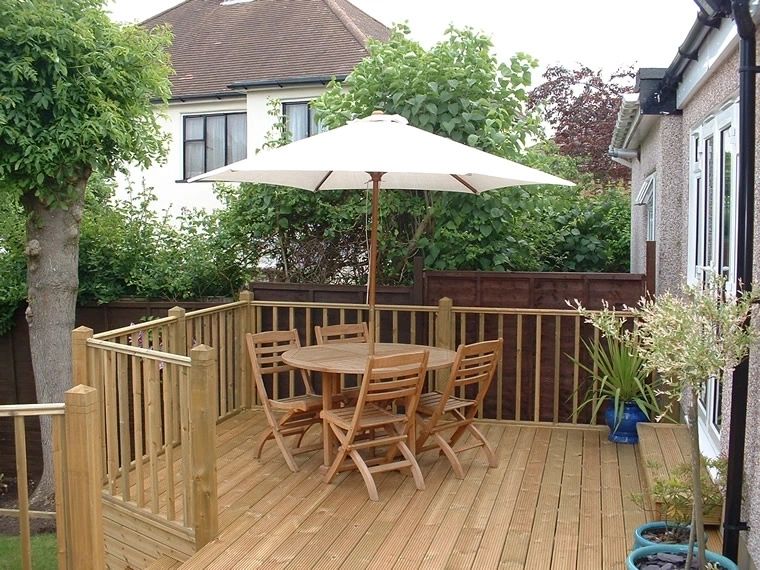
Why deck boards need gaps
A deck laid with no gaps behaves like a sealed floor outdoors. Water sits on it, the frame underneath stays damp, and the boards have nowhere to go when they swell.
- Rainwater drains between the boards instead of sitting on the surface
- Air moves around the boards and down to the frame, so the timber dries out
- Boards can expand and contract without forcing each other up
- Leaves and grit can be brushed through rather than packing into the joints
Timber boards: allow for moisture
Softwood and hardwood boards change size as they take up and lose moisture. Pressure-treated softwood is often still wet from treatment when it is fitted, so it will usually shrink as it dries, and a gap that looked right on the day can end up wider than intended. Boards that arrive dry will swell in a wet winter, so a gap set too tight can close up completely. The aim is a gap that stays open and even through the seasons.
Composite boards: follow the system
Composite boards move mainly along their length with temperature rather than with moisture. Each manufacturer publishes the side gaps, end gaps and gaps at walls for its boards, and many systems use hidden clips that set the side gap for you. Following that guidance matters: it is what the board was designed around, and ignoring it is a common reason DIY composite decks buckle.
End gaps and gaps at walls and posts
Where two boards meet end to end, and where boards stop against the house, a wall, a post or a step, they need room to move too. A board butted hard against brickwork has nowhere to expand. Along the house, the gap also keeps the deck clear of the wall so water can drain away rather than being held against the brickwork.
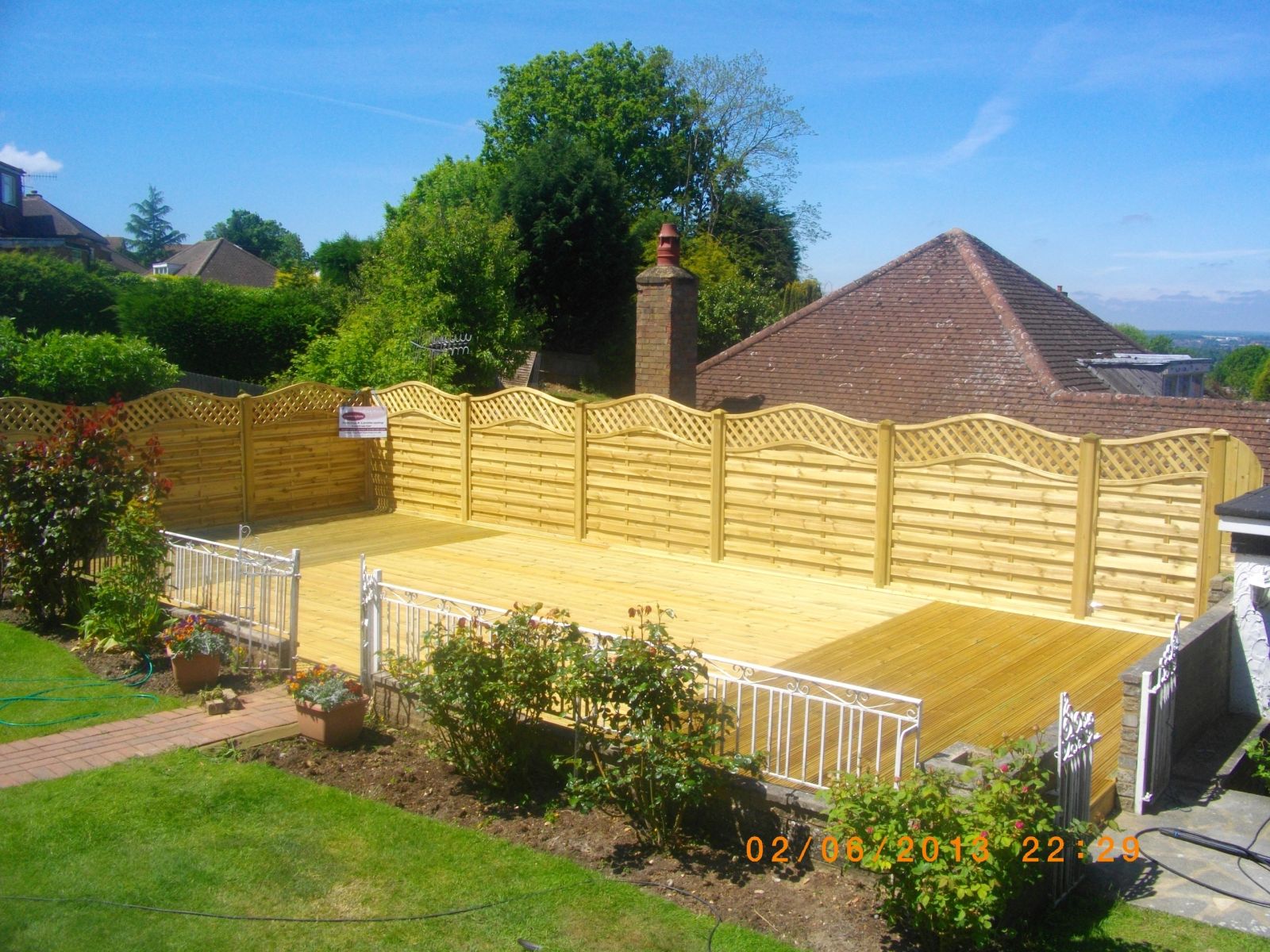
Joist spacing: the gap you do not see
Board gaps and joist spacing are worked out together. Composite boards typically need closer joists than timber, commonly 300mm centres compared with 400mm or more for timber, and diagonal laying tightens the spacing further. A board laid over joists that are too far apart will bounce and can open its gaps as it flexes. Our decking substructure guide covers the frame in more detail.
Keeping the gaps clear
Gaps only work while they stay open. Brush leaves and debris out of the joints, especially in autumn, and keep the space under the deck free of anything that stops air moving. A deck that stays wet in shade is more likely to grow algae and turn slippery.
Getting a deck built
Send photos and rough measurements of the area, the board you are considering and whether the deck is at ground level or raised. We send a written estimate, then visit to confirm the levels and the frame before the final written quote.
Want this priced properly for your garden?
Photos first, then a written estimate across London and Hertfordshire, a written specification, and a fixed price. No obligation.
Frequently asked
How big should the gap be between deck boards?
It depends on the board. For composite, use the side gap the manufacturer specifies, often set by its clips. For timber, the gap has to allow for the board shrinking or swelling with moisture, so how wet the boards are when fitted matters.
Why have my deck boards gone tight together?
Usually because timber boards have swollen after wet weather, or because they were fitted with too small a gap. Composite boards pressed tight together normally point to missing side or end gaps.
Why are the gaps in my decking getting wider?
Timber boards fitted wet shrink as they dry, which opens the gaps. Gaps that widen unevenly can also mean loose fixings or a frame that has moved.
Do hidden fixings set the board gap?
Many composite systems use clips that set the side gap automatically. With timber boards and face fixings, the gap is set by hand with spacers.
Do composite and timber deck boards need the same gap?
No. Timber gaps allow for moisture movement, while composite gaps follow the maker's figures for side and end expansion, so a gap that suits one board can be wrong for the other.
Should decking touch the house wall?
No. Leave a gap so the boards can move and water can drain away from the wall, following the board maker's guidance.