
Rules & permissions
Can You Put a Fence on Top of a Wall?
Last updated
The short answer
You can often put a fence on top of a wall, as long as the wall is sound, you own it or have the owner's agreement, and the combined height stays within the general limits measured from ground level. For tall or solid fencing, posts set behind the wall are usually safer than fixing to the wall itself.
Official guidance: Planning Portal: fences, gates and garden walls
At a glance
- Height
- Wall and fence measured together from the ground
- Check first
- The wall is upright, sound and yours
- Safer for tall fences
- Posts set in the ground behind the wall
- Lighter options
- Trellis, slatted screens or railings
Often you can, but the wall has to be strong enough, it has to be yours to build on, and the height limit applies to the whole thing.
A low brick wall with a fence above it is a common way to get more privacy without losing an old boundary wall. It works well when it is planned properly. When it is not, the fence turns the wall into a lever every time the wind blows.
This guide covers the four questions to answer before adding a fence to a wall, and the options we look at when the wall is not up to it.
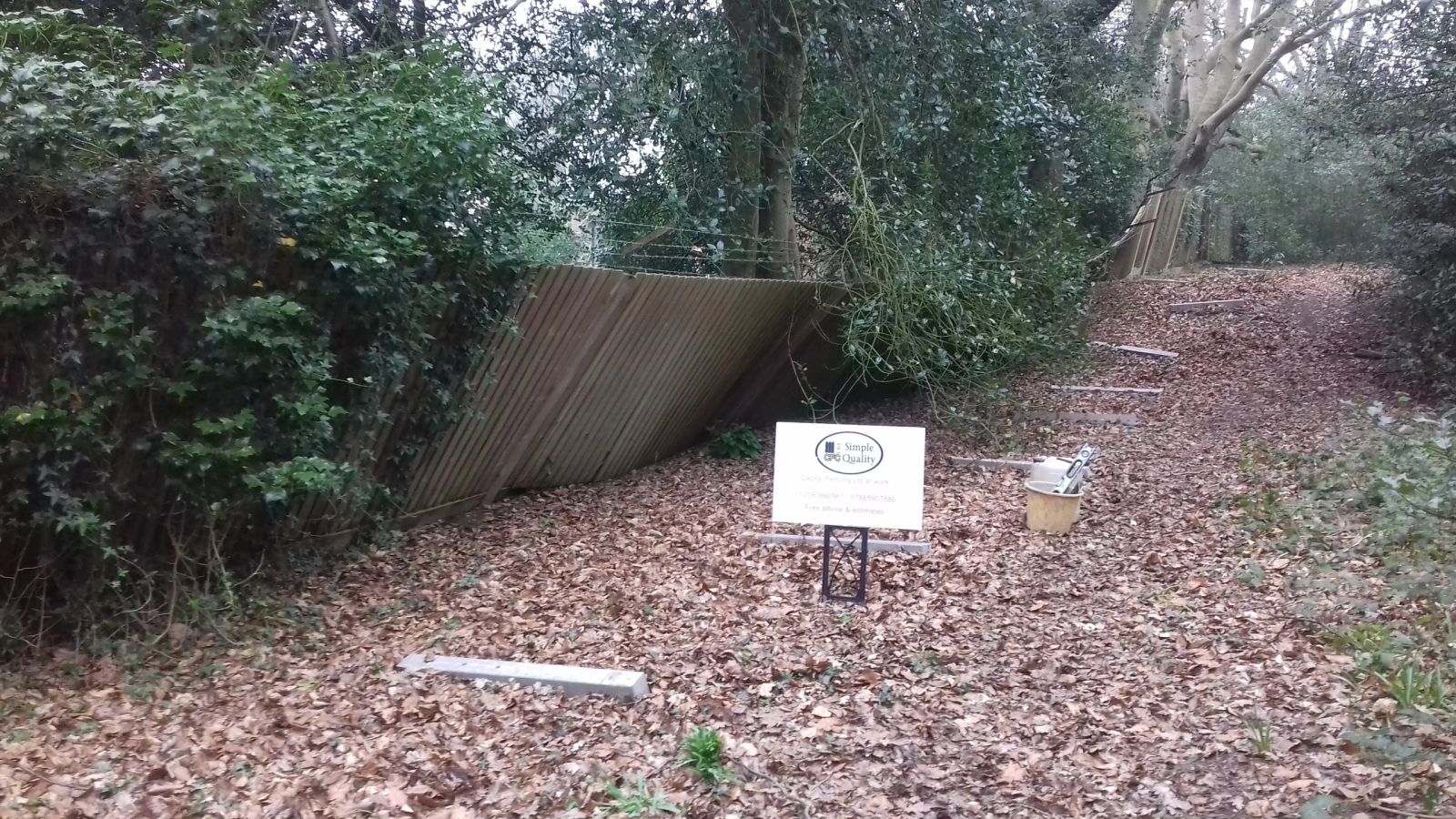
Height is measured from the ground, not the wall
The Planning Portal's guidance on fences, gates and garden walls measures the height limit from ground level. In general you can build up to two metres without planning permission, or one metre next to a road used by vehicles or its footpath, subject to the usual exceptions such as listed buildings and article 4 directions. A fence on a wall is judged on the combined height, so a tall wall leaves little room for fencing above it.
Is the wall strong enough?
Many garden walls were built to stand up on their own and nothing more. A single skin of brick, a wall without piers, or one with cracked mortar and a lean will not cope with the extra wind load from solid fencing on top.
- Look for leaning, bulging or cracks running through bricks
- Check whether there are piers at intervals along the wall
- Tap the coping and top course for loose bricks
- Note any tree roots or damp at the base
Whose wall is it?
A wall on the boundary may belong to you, your neighbour or both of you. Fixing a fence to a wall you do not own needs the owner's agreement. The Planning Portal also notes that a wall which counts as a party fence wall can mean notifying the adjoining owner. Our guide on who owns the fence explains how to check the title plan.
How a fence can be fixed to a wall
There are two broad approaches. Light screens can be fixed to the wall with brackets bolted into sound masonry. For anything taller or more solid, it is usually better to set posts in the ground just behind the wall, so the posts carry the fence and the wall only has to look after itself.
Bolting straight into the top of a wall or its coping is the weakest option, because the fixings sit in the least supported part of the structure.
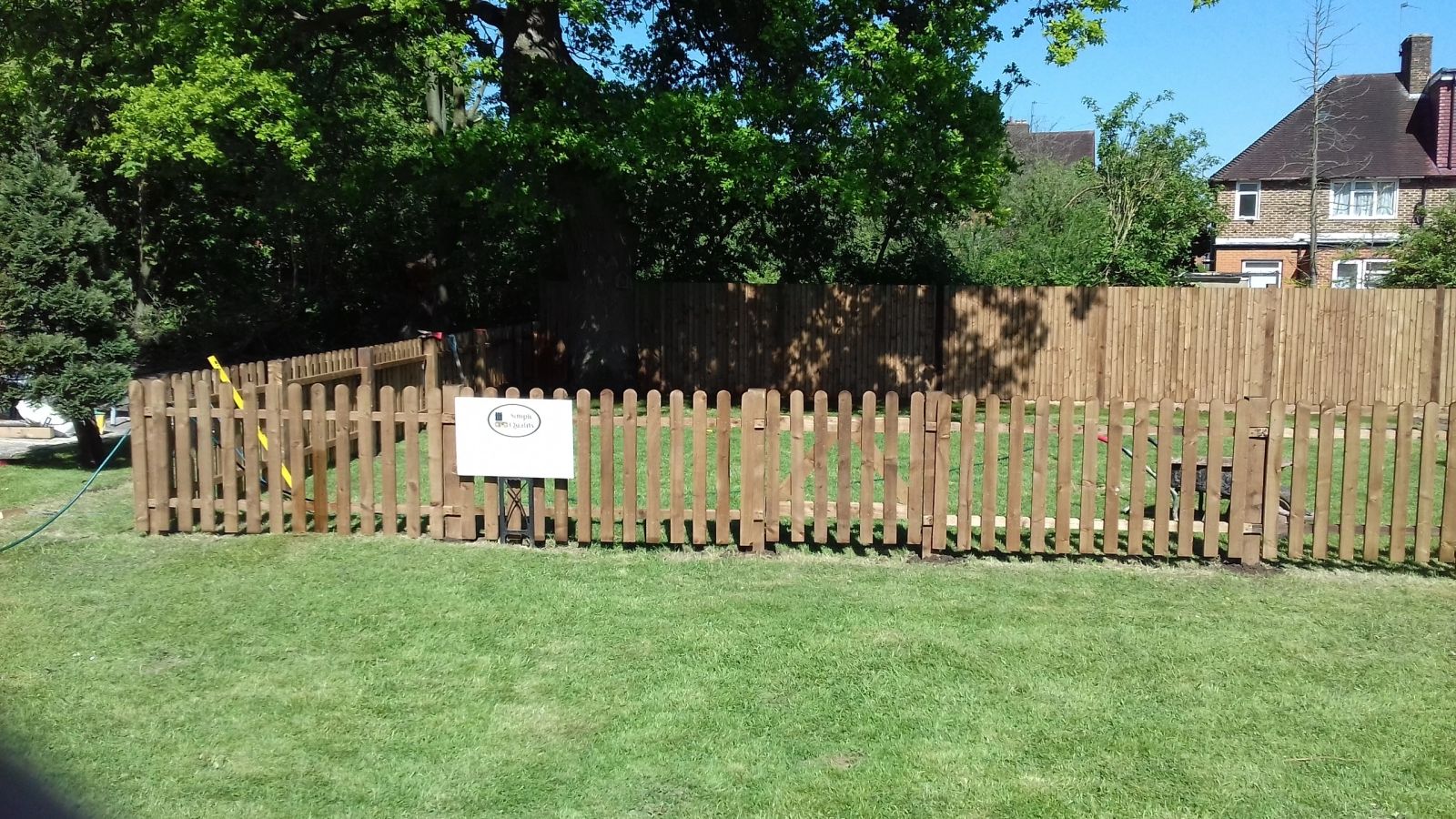
Lighter options for a wall top
If the wall is sound but not robust, something that lets wind through is kinder to it. Slatted screens with gaps, trellis and metal railings all add height and a sense of enclosure with far less load. Railings in particular suit older front walls in period streets, where they often replace ones removed long ago.
Repairing the wall first
If the wall has loose bricks, failed mortar or a damaged coping, it is far better to have it repaired before any fence goes on or behind it. A fence will not hold a weak wall together, and fixing into crumbling joints gives anchors nothing to grip. Repointing and resetting the top course is masonry work rather than fencing, so we will say if the wall needs that done first and plan the fence around it once it is sound.
Front walls and the road
Front garden walls are often the ones people want to raise, for privacy from the street. They are also the ones most likely to sit next to a footpath or a road used by vehicles, where the general limit is much lower. In many cases a low wall already uses most of the allowance, so railings or planting behind the wall may be the realistic option. If in doubt, ask your council before ordering anything.
What we look at on a visit
From photos we can usually tell whether a wall is likely to take a fence or whether posts behind it are the safer answer. We will also note the total height against the general limits and any signs the wall needs repair first. Send photos of both faces of the wall, the top and a rough length, and we will give a written estimate and confirm on site.
Not sure your wall can take a fence?
Photos of both faces and the top of the wall are usually enough for us to say whether to fix to it or set posts behind it.
Frequently asked
Do I need planning permission for a fence on top of a wall?
Not usually, if the combined height stays within the general limits and no exception applies. Check the Planning Portal guidance and ask your council if your property is listed or in an area with special controls.
Can trellis go on top of a garden wall?
Yes, light trellis fixed with brackets is one of the gentler ways to add height, as long as the wall is sound and the total height is within the limits.
Can I fix a fence to my neighbour's wall?
Only with their agreement. If the wall is shared, it is sensible to agree the plan in writing first.
What if the wall is leaning?
Do not add load to it. A leaning wall needs looking at first, and posts set behind it may be the better way to get privacy.