
A front garden fence has a different job to a back garden fence. It is not there for privacy. It marks the boundary, stops a child or a dog wandering onto the pavement, and sets the look of the house from the street. It also usually has to stay low.
This page helps you choose between the main front boundary styles and explains the height rule that applies to most front gardens.
The height rule
Under permitted development, a fence, wall or gate next to a road used by vehicles, or the footpath beside it, is generally limited to one metre high without planning permission. Most front gardens fall under this, so front boundaries are usually kept at or below a metre. Our guide to fence height rules explains the detail and the exceptions.
Picket fencing
Picket suits cottages, semis and houses with a lawn to the front. Pointed or rounded pickets are fixed to rails between posts, and can be painted or stained. Gaps between pickets keep the front open while still stopping a dog. A matching picket gate completes the run.
Metal railings
Railings suit period frontages and anywhere the original ironwork has been lost. They can sit on a sound dwarf wall, with uprights resin fixed, or go into the ground in concrete. Ball top, spear top and flat top heads are all available, galvanised and powder coated.
Low closeboard and panel
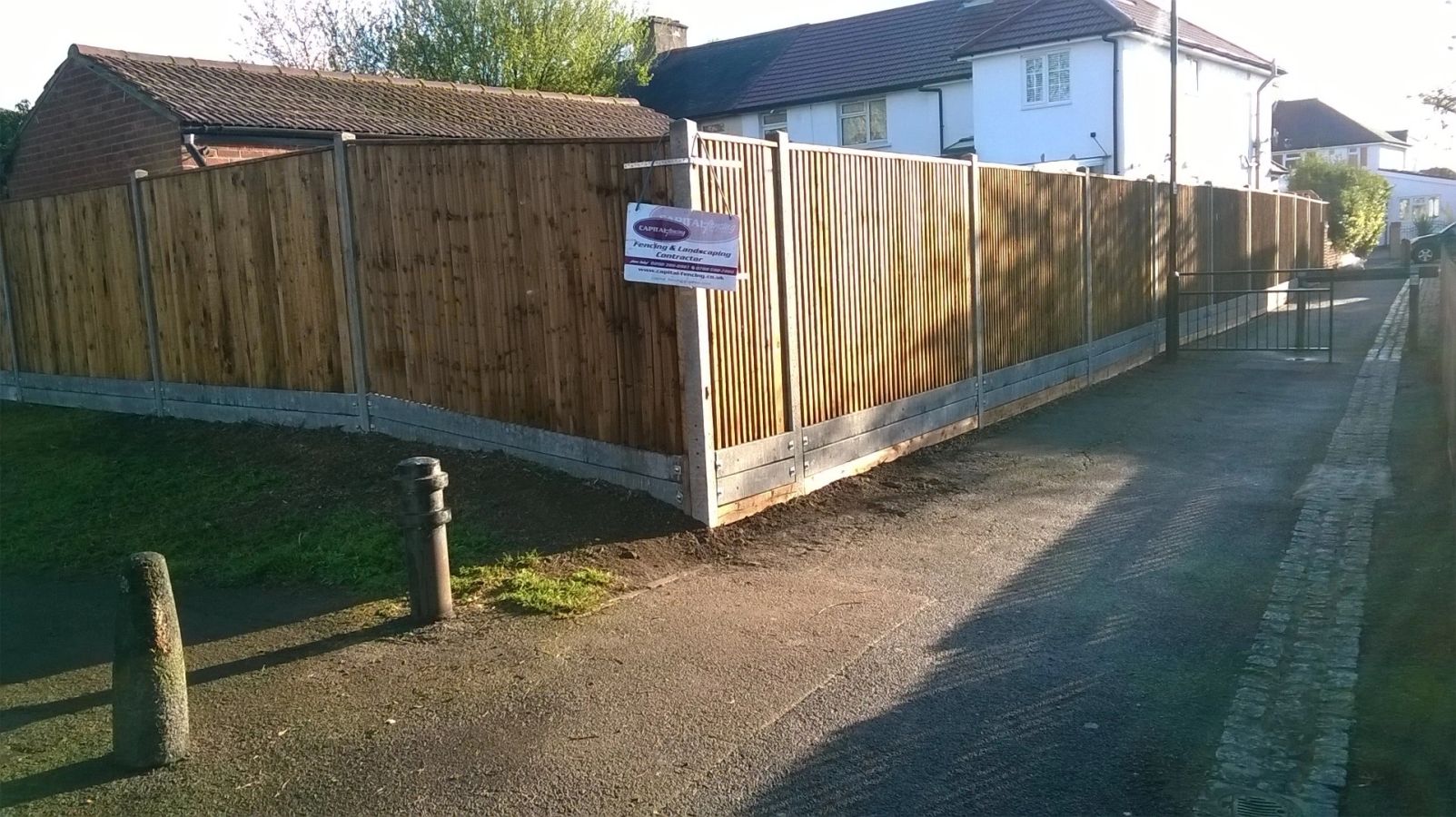
Where you want more screening at ground level, a low closeboard or panel fence on concrete posts gives a solid line. It works well where a front garden has bins or a car to hide, though it can feel closed in on a small frontage.
Choosing between them
We look at the house, the street and the neighbours on the free site visit and give you a written quote for the option that suits. The old fence is taken away.
- Want the house seen and a period look: railings
- Want a softer, cottage feel: picket
- Want to hide bins or a parking space: low closeboard or panel
- Have a dog or small child: close-spaced picket or railings with tight bar centres