
How it's done
Choosing Fencing for an Exposed or Windy Site
An exposed site needs a different set of decisions from a sheltered garden, starting with how much wind the fence is designed to let through rather than block.
A fence on an open hillside, a coastal plot or a garden that funnels wind down a side return fails for different reasons than one in a sheltered courtyard, and it's usually the design choices made before installation that decide which category yours falls into. This guide runs through the practical decisions worth making at the design stage for a genuinely exposed site.
Figures below are indicative guide ranges based on the kind of work we quote across London and Hertfordshire — they are not a quotation. Every job is priced after a free site visit, and the written price we give is the price you pay.
Let some wind through: hit and miss and slatted styles
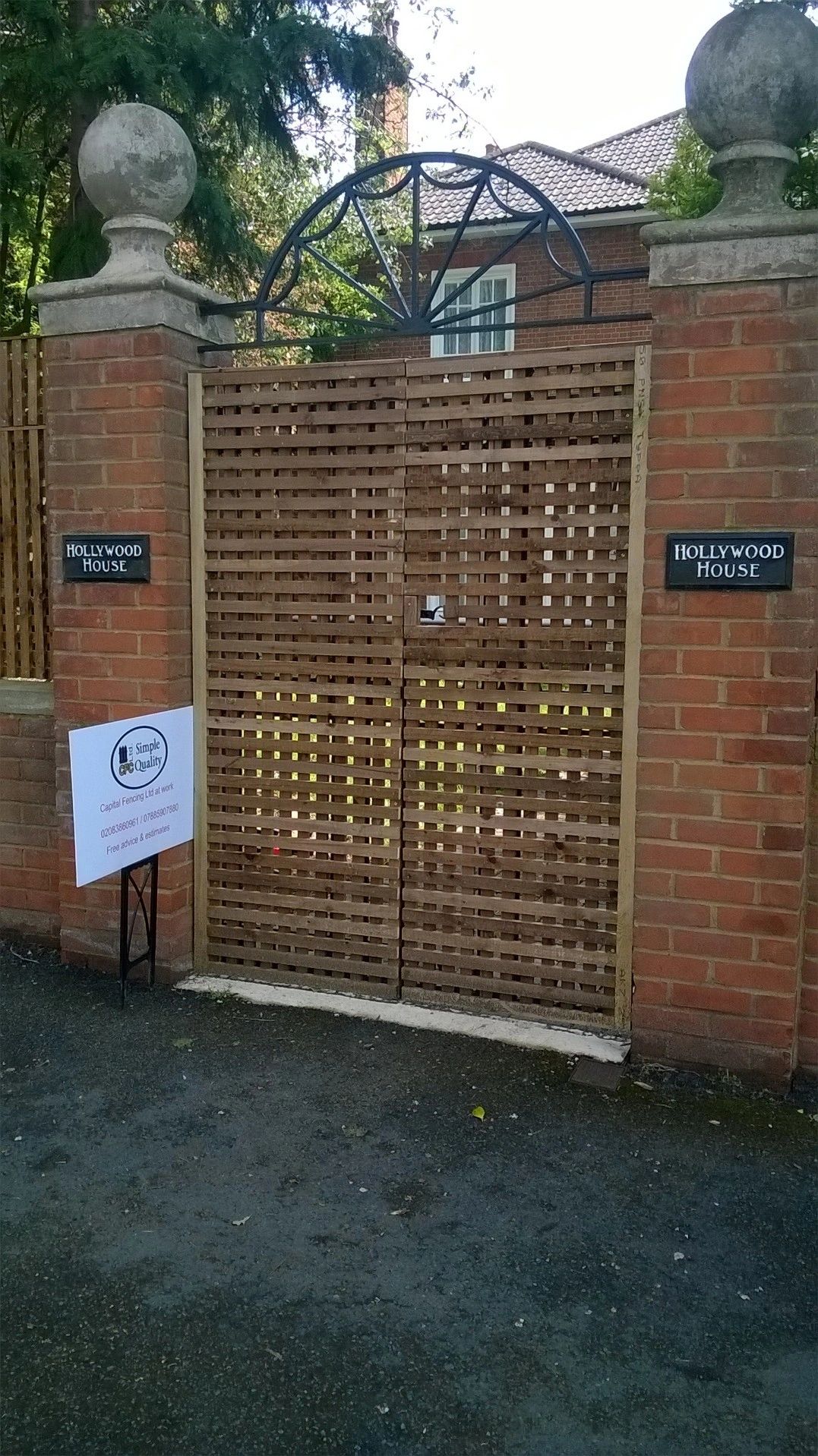
A solid flat panel acts like a sail in strong wind, taking the full load across its face, whereas a hit and miss or slatted design deliberately leaves gaps between boards so wind passes through rather than pushing against a solid surface. On genuinely exposed sites this single design choice does more for longevity than almost any other decision, and it's worth accepting a small loss of total privacy in exchange for a fence that's still standing after the next named storm.
- Hit and miss: boards alternate front and back of the rail, giving privacy from most angles with real airflow through the gaps
- Slatted: evenly spaced vertical boards with a consistent gap, a more contemporary look with the same wind benefit
- Solid panels: fine on sheltered plots, the first thing to fail on an open or coastal site
Understanding wind load in plain terms
Wind load is simply the force the wind exerts on the face of the fence, and it rises sharply with both height and how solid the surface is. A 1.8m solid panel on an exposed hilltop can be under several times the load of the same panel in a sheltered courtyard, which is why height, solidity and post strength all have to be considered together rather than picked independently.
Post spacing and post type
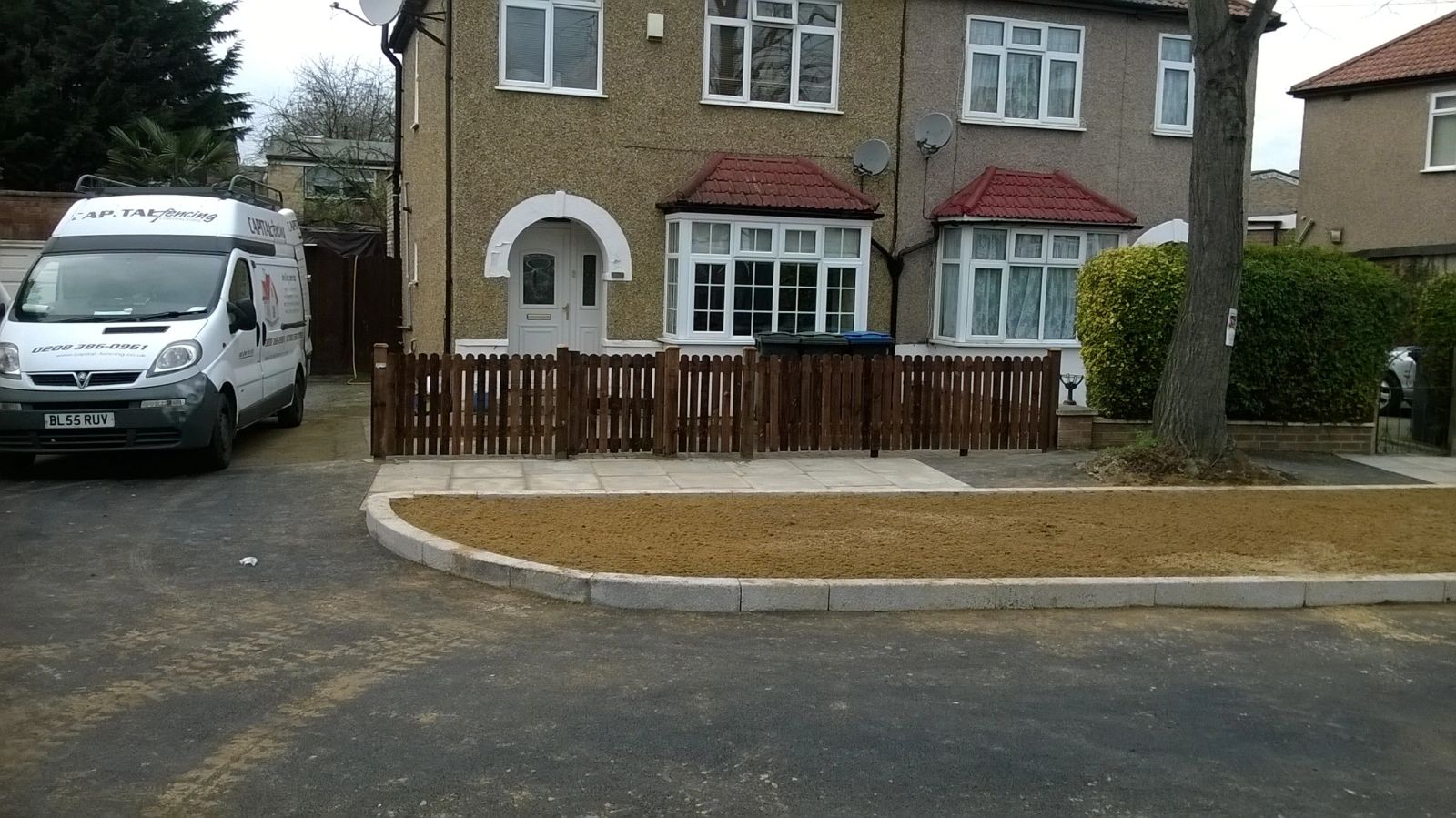
Closer post spacing spreads wind load across more fixing points, so an exposed run is often built with tighter centres than the standard spacing used on a sheltered boundary, alongside concrete posts set to a greater depth than usual. Timber posts can still be used on an exposed site, but they're the first thing to work loose under repeated gusting, which is exactly why concrete is the stronger recommendation here rather than simply the premium upsell it can look like elsewhere.
Gravel boards and the base of the fence
A gravel board along the base of an exposed run does more than keep boarding off wet soil, it stiffens the bottom of the panel and reduces the flex that gradually works fixings loose in sustained wind. On an exposed site we'd treat a gravel board as a standard inclusion rather than an optional extra, and specify it slightly heavier than we would on a sheltered garden.
Choosing a sensible height for the site
Taller isn't always better on an exposed plot; a full 1.8m solid boundary in the wrong material can genuinely be a worse choice than a slightly lower, part-slatted fence that survives the winter. Where privacy matters more than the last few inches of height, a slatted or hit and miss design at a slightly reduced height, or a fence stepped down in height toward the most exposed corner, is often the more durable specification.
Bringing the specification together
On a genuinely exposed site we'll usually recommend a hit and miss or slatted style, concrete posts at tighter centres, a proper gravel board, and a height that's been chosen with the wind in mind rather than assumed at a standard 1.8m. It's a slightly different conversation from a sheltered garden, and it's exactly the kind of judgement call a free site visit is for, since wind exposure varies enormously between two gardens on the same street.
Frequently asked
Is slatted fencing better than solid panels on a windy site?
Generally yes, since it lets wind pass through rather than loading the full face of the panel, which significantly improves durability on exposed plots.
Do I need concrete posts on an exposed site?
Strongly recommended. Concrete posts hold up far better than timber under repeated gusting and reduce the loosening that eventually fails a fence in wind.
Should post spacing be different on a windy plot?
Yes, tighter centres than a standard sheltered install are common on exposed sites, spreading wind load across more fixing points.
Does a gravel board really help with wind resistance?
It contributes by stiffening the base of the panel and reducing flex, alongside its main job of keeping timber off wet ground.
Is a lower fence sometimes the better choice on an exposed site?
Often, yes. A slightly reduced height in a wind-permeable style can outlast a taller solid fence in the same location.
Can hit and miss fencing still offer privacy?
Reasonable privacy from most viewing angles, though not total, since the design relies on offset gaps that also let wind through.
How do I know if my garden counts as an exposed site?
Hilltop, coastal, open-field-facing and funnel-effect side returns between buildings all count; a free site visit is the most reliable way to assess it properly.
Want this priced properly for your garden?
Free site visit across London and Hertfordshire, a written specification, and a fixed price. No obligation.