
Rules & permissions
Fencing Next to a Footpath or Rear Alley: What to Consider
Last updated
The short answer
A fence beside a footpath or alleyway is treated like any other boundary fence, but height limits can be lower where it sits next to a highway used by vehicles, and you should check the Planning Portal guidance for your case. Choose a style that is hard to climb and solid at the base, and keep the fence inside your boundary so it does not narrow the path.
Official guidance: Planning Portal: fences, gates and garden walls; GOV.UK: get information about property and land
At a glance
- Planning
- Lower limits can apply next to a highway
- Position
- On your land, never on the path
- Security
- Solid base, smooth face, no easy footholds
- Gates
- Strong locks and hinges that cannot be lifted
A fence that backs onto a path or alley does two jobs: it marks the boundary and it faces the public. That changes the choices on height, style and security.
Terraced and semi detached houses across North London often back onto a shared alley or have a public path down one side. That boundary gets more attention than a fence between two gardens, from passers by, bins, bikes and sometimes people looking for a way in.
This guide explains the points that are particular to a fence facing a public route, from height rules to which side the posts go on.
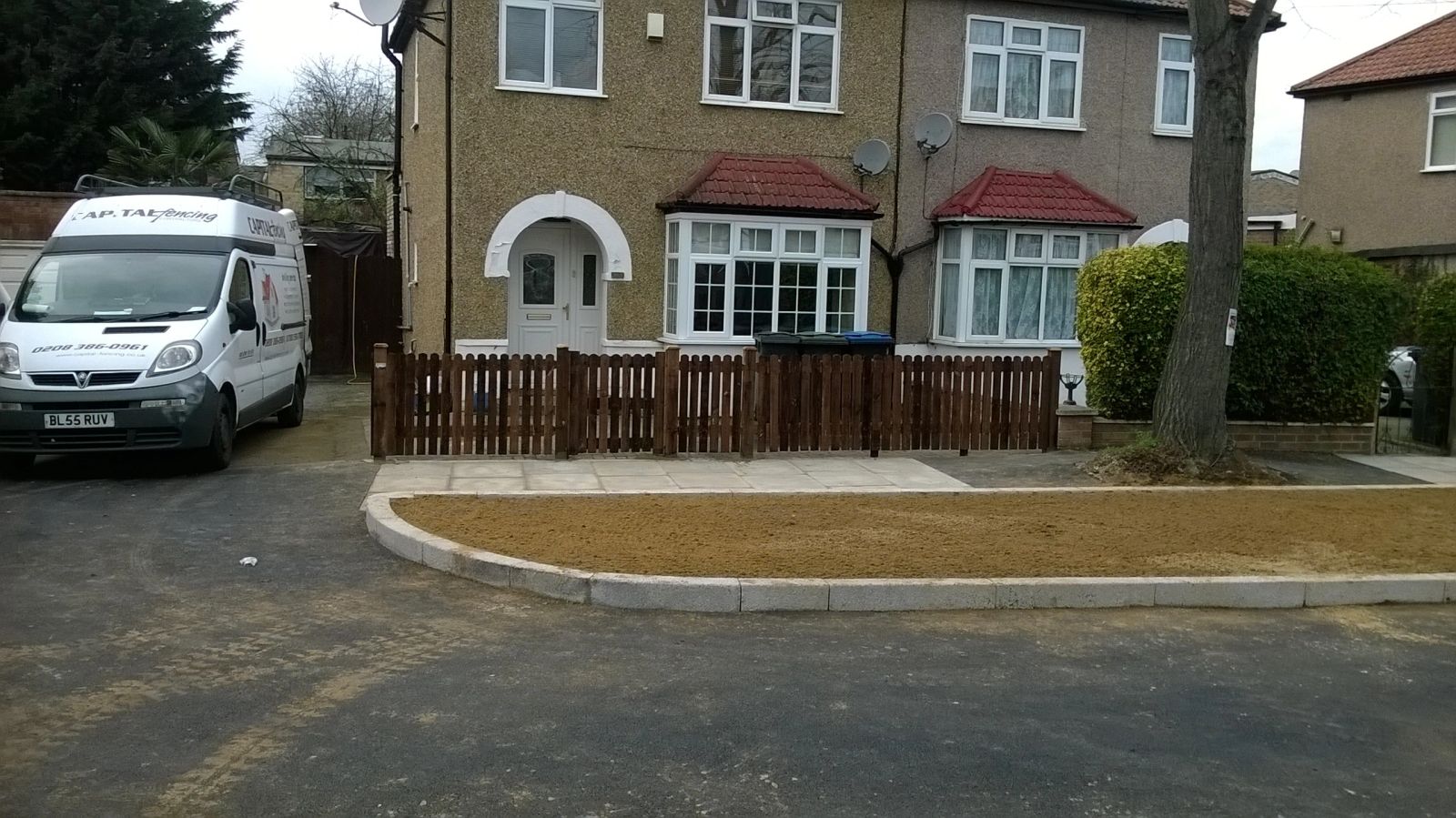
Height and planning in general
Planning rules in England generally allow a fence up to a certain height without an application, with a lower limit where the fence is next to a highway used by vehicles. Whether a footpath or alley counts depends on its status, so the safest course is to read the Planning Portal guidance on fences, gates and garden walls and ask the council if you are unsure. Our guide to fence height rules explains the general limits.
Keeping the fence on your side
The posts and boards should sit within your boundary so the path stays its full width. Moving the line even slightly outwards can cause problems with the council or whoever is responsible for the alley. If the old fence has drifted, the new one is a chance to put it back where it belongs. Our guide on which side of the fence is yours helps with working out the line.
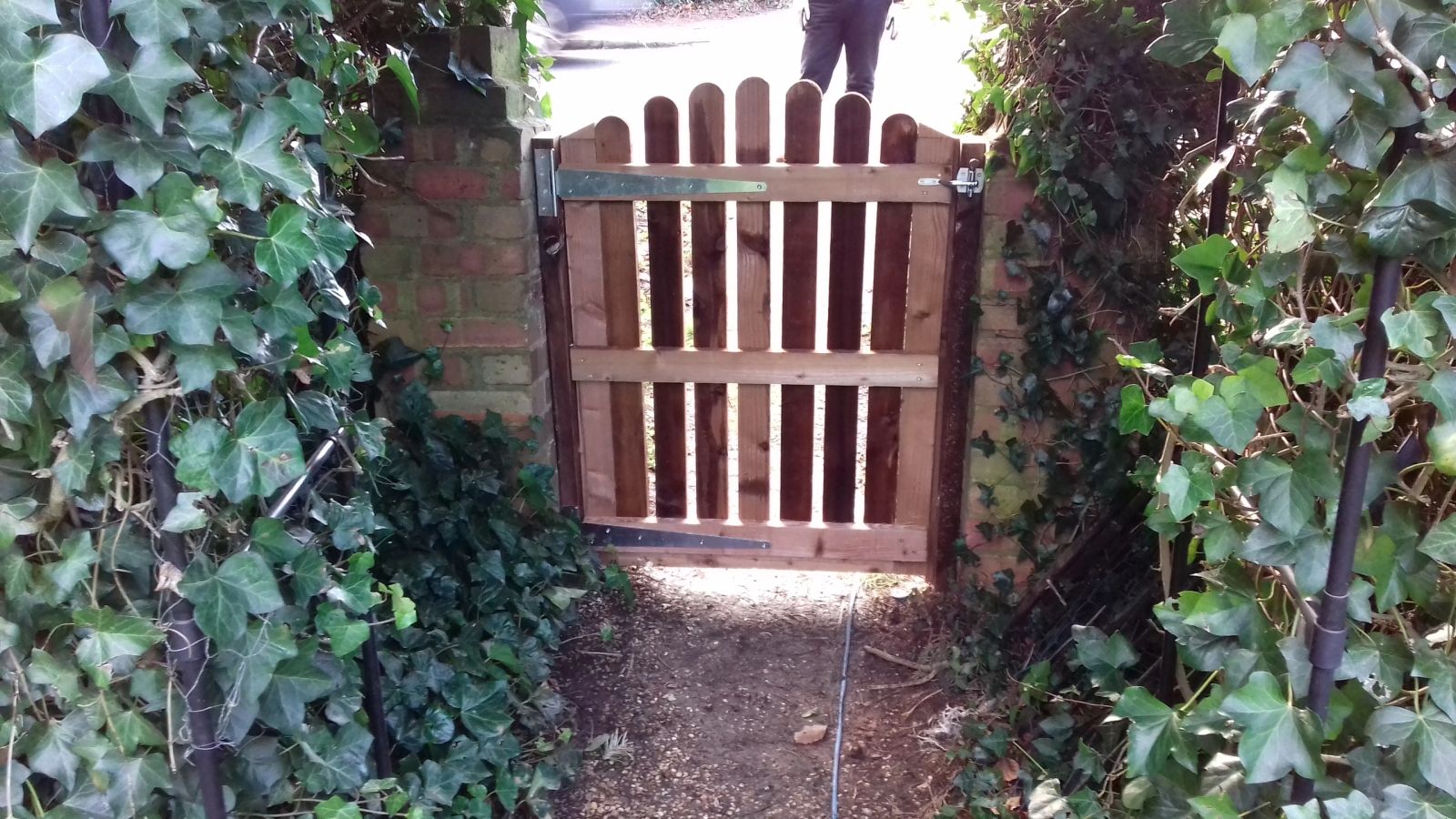
Making the fence harder to climb
A smooth outer face with the rails on the garden side gives fewer footholds from the path. Closeboard fencing built that way is a common choice. Trellis on top adds height and is awkward to climb because it is not strong enough to take weight.
- Rails and posts facing into the garden
- Solid boards right down to a gravel board
- Trellis toppers that do not take a foothold
- No bins or walls stacked against the outside
Gates onto an alley
A rear gate onto an alley needs a lock that cannot be reached over the top, hinges fixed so they cannot be unscrewed or lifted from outside, and posts set firmly. Our side gate page covers the options we fit for passage gates.
Doing the work from one side
Fencing beside a public path is usually built from the garden side, with the path kept clear while we work. Old fencing comes out in sections. If parts of the job need the alley, such as reaching the back of a post, we keep the route passable and tidy as we go.
Shared alleys and who maintains them
Some rear alleys are owned jointly by the houses along them, some by the council and some by a private owner. That affects who looks after the surface, not who owns your fence, but it is worth knowing before any work that might touch the alley. Your title deeds or the Land Registry may help.
Bins, bikes and passing traffic
A fence along an alley often takes knocks from wheelie bins, bikes and the odd van reversing. Concrete posts and gravel boards cope with that better than timber at ground level. If bins are stored against the outer face, a short section of stronger boarding there can save repeated repairs.
Lighting and visibility
Some people want a very tall solid fence on an alley, while others prefer to keep some sight of the path. A slatted or trellis top gives height without a blank wall, and lets a little light through to the passage. Think about what suits the way the alley is used before settling on a style.
What to send us
Photos from inside the garden and from the path or alley, with a rough length, are enough to start. Tell us if security or privacy is the main worry. We give written quotes and can talk through styles at a visit once you are ready.
Frequently asked
How high can my fence be next to a footpath?
It depends on whether the path counts as a highway used by vehicles. Check the Planning Portal guidance and your council if you are not sure which limit applies.
Which way should a fence face onto an alley?
Usually with the smooth side outward and the rails and posts inside the garden, so there are fewer footholds from the alley.
Can my fence be built on the edge of the path?
It should stay within your own boundary. Building onto the path can narrow a public route and lead to it having to be moved.
Can you work from the alley side?
Mostly we work from the garden. If we need the alley briefly, we keep it passable and clear up as we go.
Fence facing a path or alley?
Send photos from both sides and we will suggest a style and height to look into.