
Care & longevity
Protecting Your Fence During Building Work
Last updated
The short answer
Protect a fence during building work by agreeing access routes with your builder, boarding over the fence face, keeping a clear strip along the boundary and holding gates securely open. If the fence is already old, it often makes sense to replace it after the work, when it will not be knocked and can suit the finished levels.
At a glance
- Before work
- Agree access and photograph the fence
- Protection
- Boards over the face, clear strip
- Gates
- Hold open securely or remove
- Old fence?
- Replace once the builders leave
Extensions, loft conversions and landscaping all bring skips, scaffolding and barrows past your fence. A little planning saves it from damage.
Building work and fences do not mix well. Scaffold poles lean on panels, mixers splash cement on boards and barrows knock gate posts. Sometimes the fence has to come down temporarily to let materials through.
This guide explains how to protect an existing fence during building work and how to decide whether to replace it once the builders have finished.
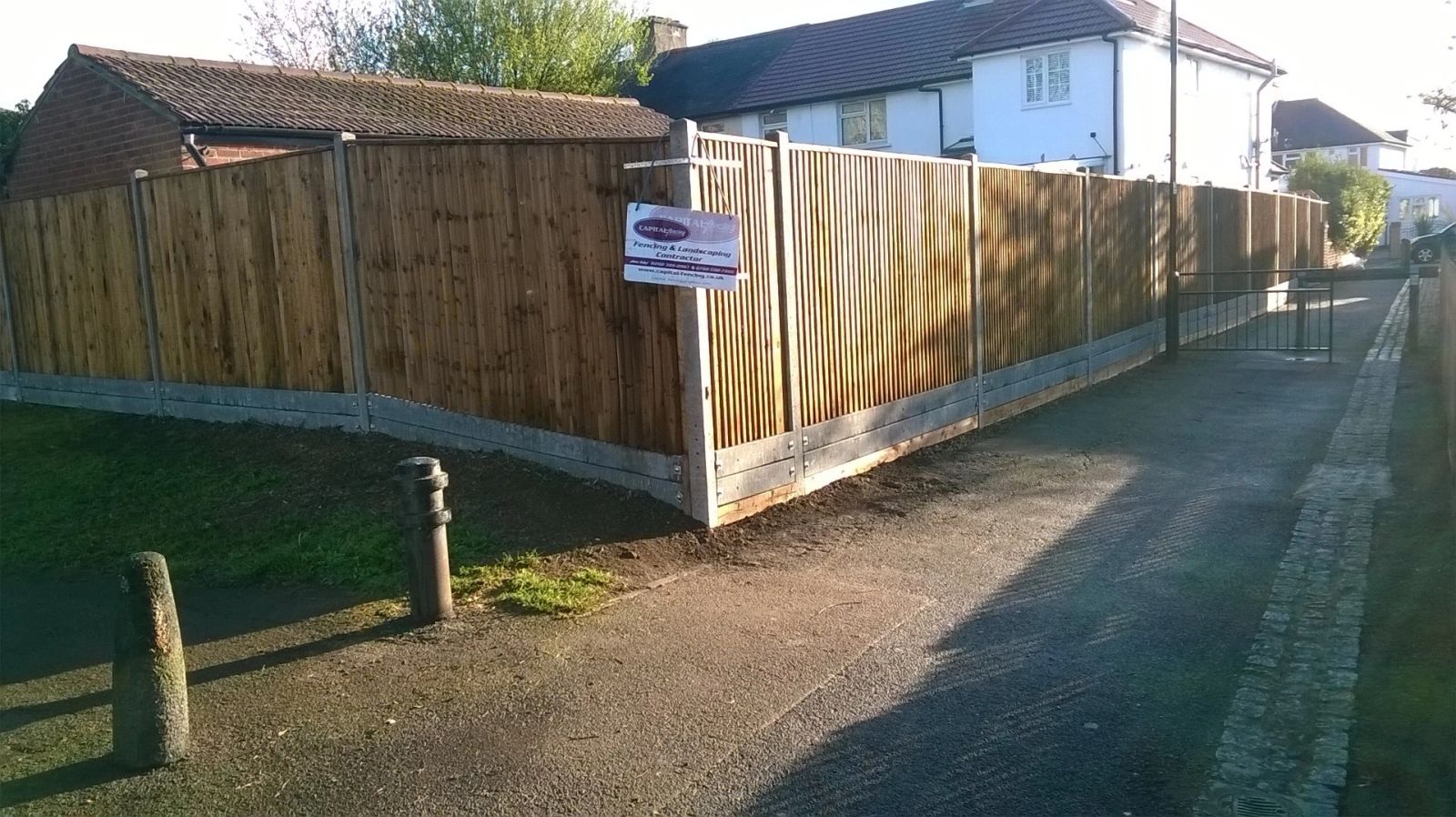
Talk about the fence before work starts
Ask your builder how materials will come in, where the skip will go and whether scaffolding will touch the boundary. If a neighbour's fence is affected, they will want to know too. Agreeing this early avoids arguments later.
Simple protection that works
Sheets of board or heavy protection fixed in front of the fence take knocks and splashes. Keeping a clear strip along the fence stops materials being stacked against it. Gate posts by an access route can be wrapped.
- Board over the fence face
- A clear strip along the boundary
- Wrapped gate posts on the access route
- Covers over plants at the base
Taking a section down temporarily
On some sites it is easier to remove a few panels to get machinery or materials in, then reinstate them. Panels in concrete posts can usually be lifted out and refitted. Site built fences are harder to take down without damage. Some temporary barrier is needed while it is out, especially where pets or children are involved.
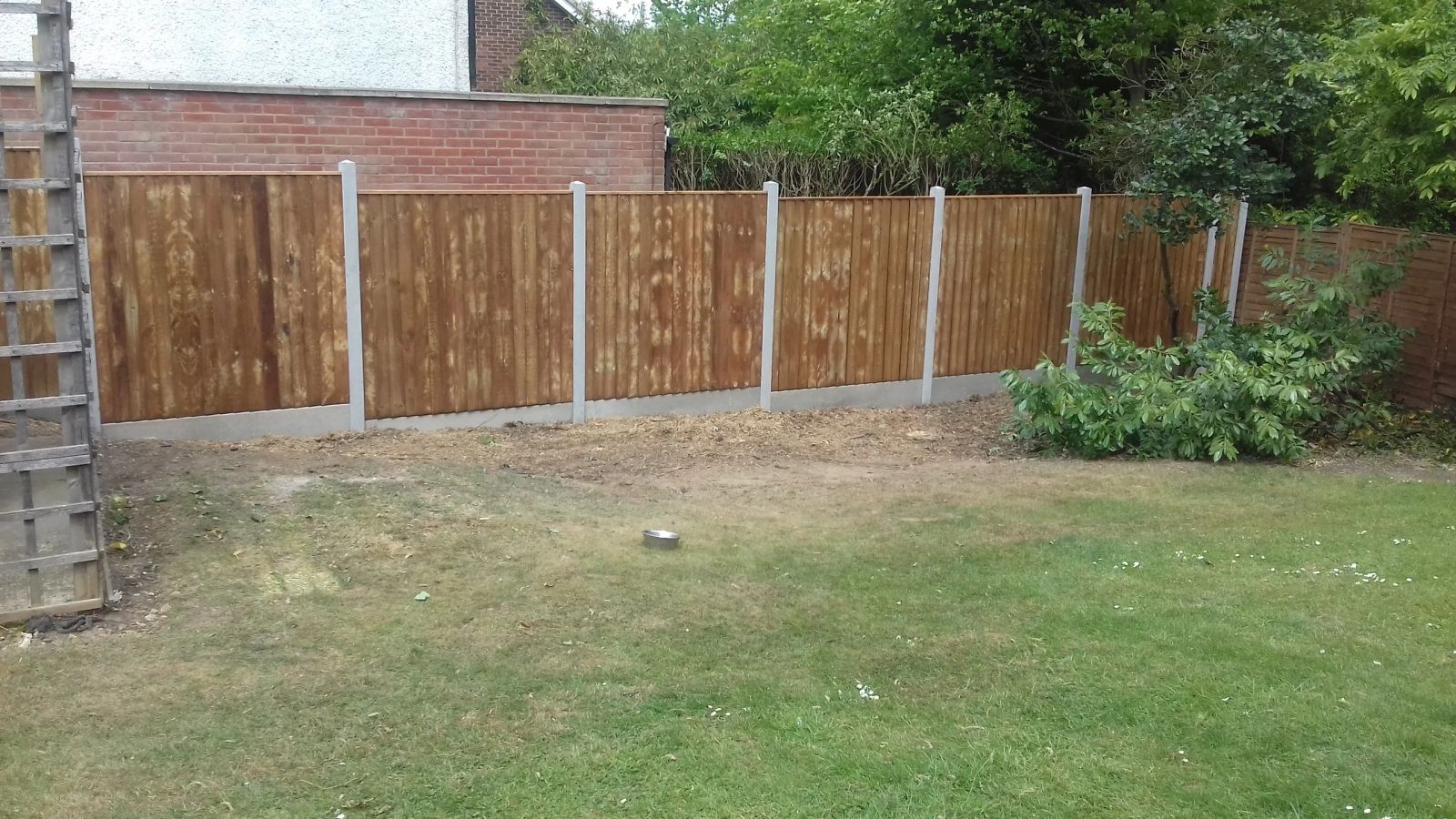
Foundations near the boundary
Extension footings dug close to a fence can undermine its posts. If footings run near the line, the posts may need temporary support or removal. Party wall rules may also apply to work near a boundary, and your builder or surveyor will advise on those.
Replace now, or after?
If the fence is already old, it can make sense to wait until the building work is finished and then replace it. A new fence put up before heavy work is at risk of damage. Waiting also lets you match the new fence to the finished levels and patio.
Checking for damage afterwards
Once the builders leave, check each post for movement, look for cement on the boards and check that gates still close. Small damage can often be repaired. A run that has been pushed out of line may need resetting.
How we can help
We can replace fences and gates once the building work is done, or repair damage. Send photos of the fence after the work, and tell us about the new levels or patio so we can plan around them.
Gates on the access route
Side gates and driveway gates take the brunt of building work because everything passes through them. Hinges are strained when gates are propped wide for days, and barrows clip posts. Holding the gate fully open with a secure catch, or taking it off its hinges and storing it safely while the work goes on, protects it. Refitting afterwards is usually quick if the hinges and posts were not damaged.
If a gate is already sagging, the end of a building project can be a good time to replace it, because the access route will be clear and the new gate will not be knocked straight away.
Recording the condition first
Take photos of the fence and gates from both sides before building work starts, with the date. If damage occurs, you have a clear record of what was there. Share those photos with your builder so everyone agrees on the starting point.
Cement, mortar and paint splashes
Fresh cement and mortar splashes stain timber and can be hard to remove once dry. Protecting the fence face with sheeting where mixing happens prevents most of the mess. Wiping splashes off while wet works far better than trying to scrub them off later. Paint and render overspray can be avoided by covering the fence when walls are being finished.
Temporary fencing for safety
Where a section of fence is removed, the opening still needs closing, especially if children or pets use the garden, or if the site backs onto a public path. Builders often bring temporary barriers for this. Agree who provides them and when the permanent fence goes back.
Frequently asked
Who pays if builders damage my fence?
That is between you and your builder. Agree in advance how the fence will be protected and record its condition before work starts.
Can scaffolding lean on a fence?
It should not. A fence is not designed to take that load. Ask for the scaffold to stand clear.
Should I replace my fence before or after an extension?
Usually after, so the new fence is not damaged and can suit the finished levels.
Do you repair fences after building work?
Yes. Send photos and we will say whether a repair or a replacement makes more sense.
Builders just finished?
Send photos of the fence and the new levels and we will say whether to repair or replace.