
How it's done
What Happens to Your Old Fence When It Is Replaced?
Last updated
The short answer
When a fence is replaced, the old panels or boards come down, the posts and their concrete bases are dug out, the line is cleared of roots and rubble, and the waste is taken away. When we replace a fence, removing the old fence, posts and concrete is part of the job unless you ask us to leave materials.
At a glance
- Comes out
- Panels, boards, posts, concrete, gravel boards
- Hardest part
- Old concrete post bases
- Disposal
- Treated timber is not garden waste
- Agree first
- Ownership, neighbours, what you want kept
Taking an old fence out is often the slowest part of replacing it. Knowing what is involved helps you read a quote and plan the day.
Most new fences replace an old one, and the old fence does not simply vanish. Panels and boards come down, posts come out, old concrete is broken up and everything has to go somewhere. How much of that is in the price is one of the main reasons fencing quotes differ.
When we replace a fence across London and Hertfordshire, we take down the old fence, posts and concrete and remove them as part of the job unless agreed otherwise. This guide explains what that involves.
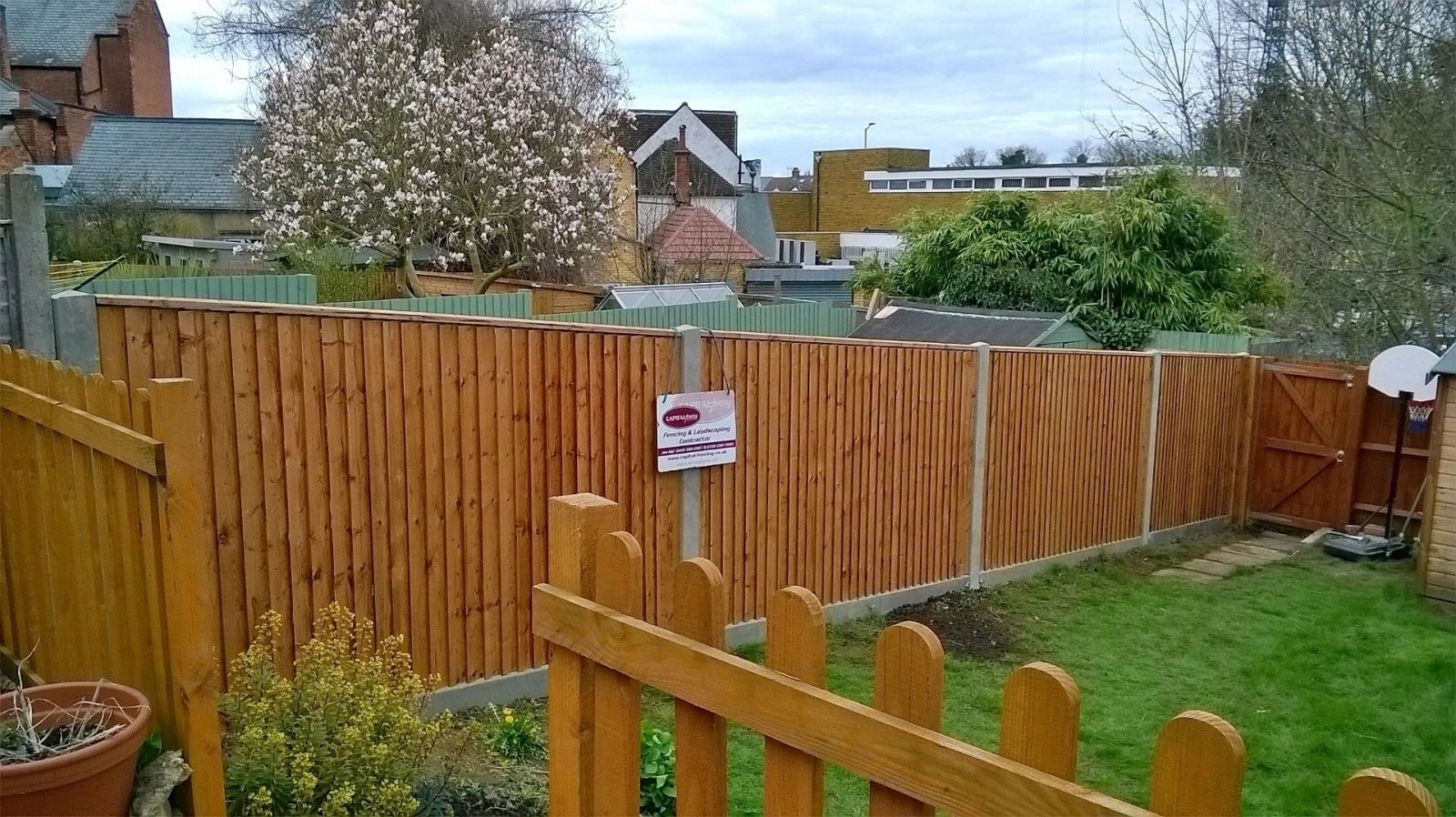
Taking down panels and boards
Panels are unscrewed or cut free from the posts and stacked, and boards on a closeboard fence are stripped from the rails. Old timber is often brittle and full of nails, so this is done carefully, particularly next to a neighbour's planting, sheds and greenhouses.
If a neighbour has climbers growing through the fence, it helps to warn them in advance. Some growth will need cutting back to free the old panels.
Getting the old posts out
Rotten timber posts sometimes snap off at ground level, leaving the stump in its concrete. Concrete posts are heavy and are usually rocked out with their bases. Either way, the old concrete lumps are often the hardest part of the job.
Where the old bases sit exactly where new posts need to go, they must come out. Where they are in the way only slightly, the new post line or spacing can sometimes be adjusted, which saves digging.
Clearing the line
Before the new fence goes up, the line is cleared of roots, rubble and old gravel boards, and the ground is levelled enough for the new boards to sit properly. Hidden services are a risk on any dig, so we ask about cables and pipes near the boundary before starting.
- Old panels, boards and rails
- Posts, stumps and concrete bases
- Old gravel boards and fixings
- Roots and rubble along the line
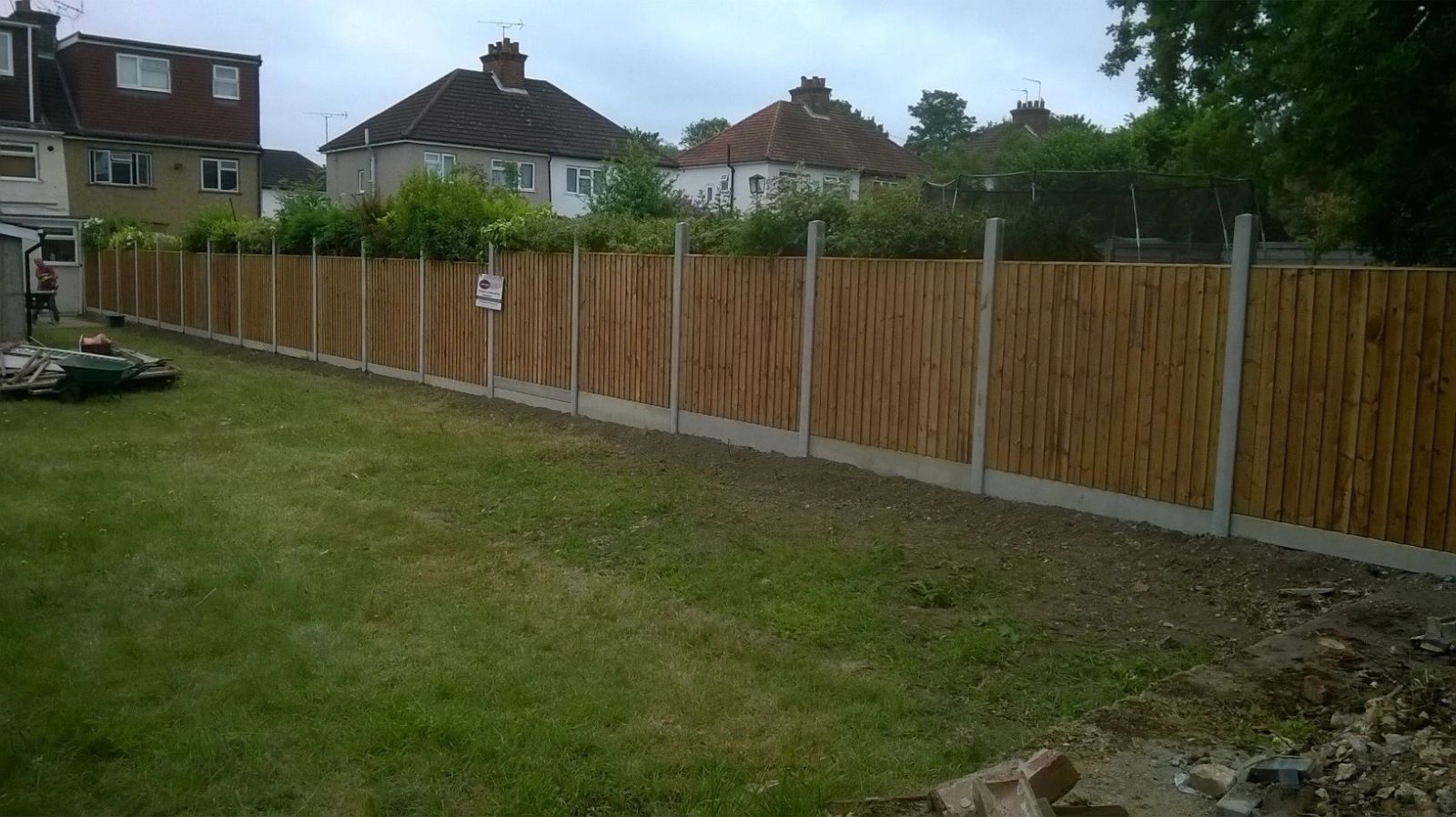
Disposal and where it goes
Old fencing is bulky and a lot of the timber is treated, so it is not garden waste. Anyone taking waste away from your property as a business should be a registered waste carrier, and you can check the public register on GOV.UK. Ask any contractor how the old fence will be disposed of and whether it is included in their price.
Some owners prefer to keep sound posts or panels, or to take materials to the tip themselves. That is fine to agree before work starts, so the quote reflects it.
Shared fences and neighbours
If the fence is shared or belongs to a neighbour, agree in writing before anything is removed. Our guides on who owns a fence and on sharing the cost cover this. A short conversation before the day also avoids surprises when the old fence comes down and both gardens are open for a while.
Protecting the gardens on both sides
Taking down an old fence opens both gardens for a while, which matters if either side has a dog, young children or a pond. We plan the order of work so the gap is open for as short a time as possible and can put up temporary screening where needed. Plants and lawns along the line are protected as far as the work allows.
When an old fence can be partly kept
Not every replacement is total. Sound concrete posts can sometimes stay and take new panels, and good gravel boards may be reused. We will point out anything worth keeping when we look at the fence, and the quote will reflect it.
What to ask for in your quote
Make sure the quote says whether removal of the old fence, posts and concrete and disposal of the waste are included. Send photos of the existing fence, its length and your postcode, and we send a written estimate and visit to confirm before the work is agreed.
Frequently asked
Do you take away the old fence?
When we replace a fence, taking down the old fence, posts and concrete and removing them is part of the job unless you ask us to leave materials.
Can new posts go in the old post holes?
Sometimes, once the old concrete is removed. Often the new posts are set slightly to one side to reach solid ground.
How long does removing an old fence take?
It depends on the length, the posts and how much old concrete there is. We include it in the time we give for the whole job.
Can I keep any of my old fence?
Yes. Tell us before work starts which parts you want to keep and we will set them aside.
Do I need to be at home while the old fence is removed?
Not always, but access to the garden is needed and it helps to be around at the start to agree the line, anything to keep and any plants that need care. We arrange this when booking.
Want this priced properly for your garden?
Photos first, then a written estimate across London and Hertfordshire, a written specification, and a fixed price. No obligation.