
Rules & permissions
Replacing a Garden Wall With a Fence: What Is Involved
Last updated
The short answer
A garden wall can usually be replaced with a fence, but first find out whether the wall is yours alone or shared. A wall standing across the boundary line may be a party fence wall covered by the Party Wall Act, which means giving notice to your neighbour. The wall has to be taken down safely and the old footings dealt with before fence posts go in.
Official guidance: GOV.UK: party walls and building work; GOV.UK: your property boundaries; Planning Portal: fences, gates and garden walls
At a glance
- First question
- Is the wall yours or shared?
- Shared walls
- May need notice under the Party Wall Act
- Hidden work
- Old footings under the post line
- Often chosen
- Closeboard or panel fencing on concrete posts
An old garden wall that leans or crumbles can be replaced with a fence, but who owns the wall and what sits under it both need sorting out first.
Low brick walls between gardens are common in older streets, and many are now cracked, leaning or pushed over by tree roots. A fence is often cheaper to put up than rebuilding the wall and gives more height for privacy.
Taking a wall away is not quite the same as swapping one fence for another. This guide sets out the questions to answer before work starts and how the fence is put in afterwards.
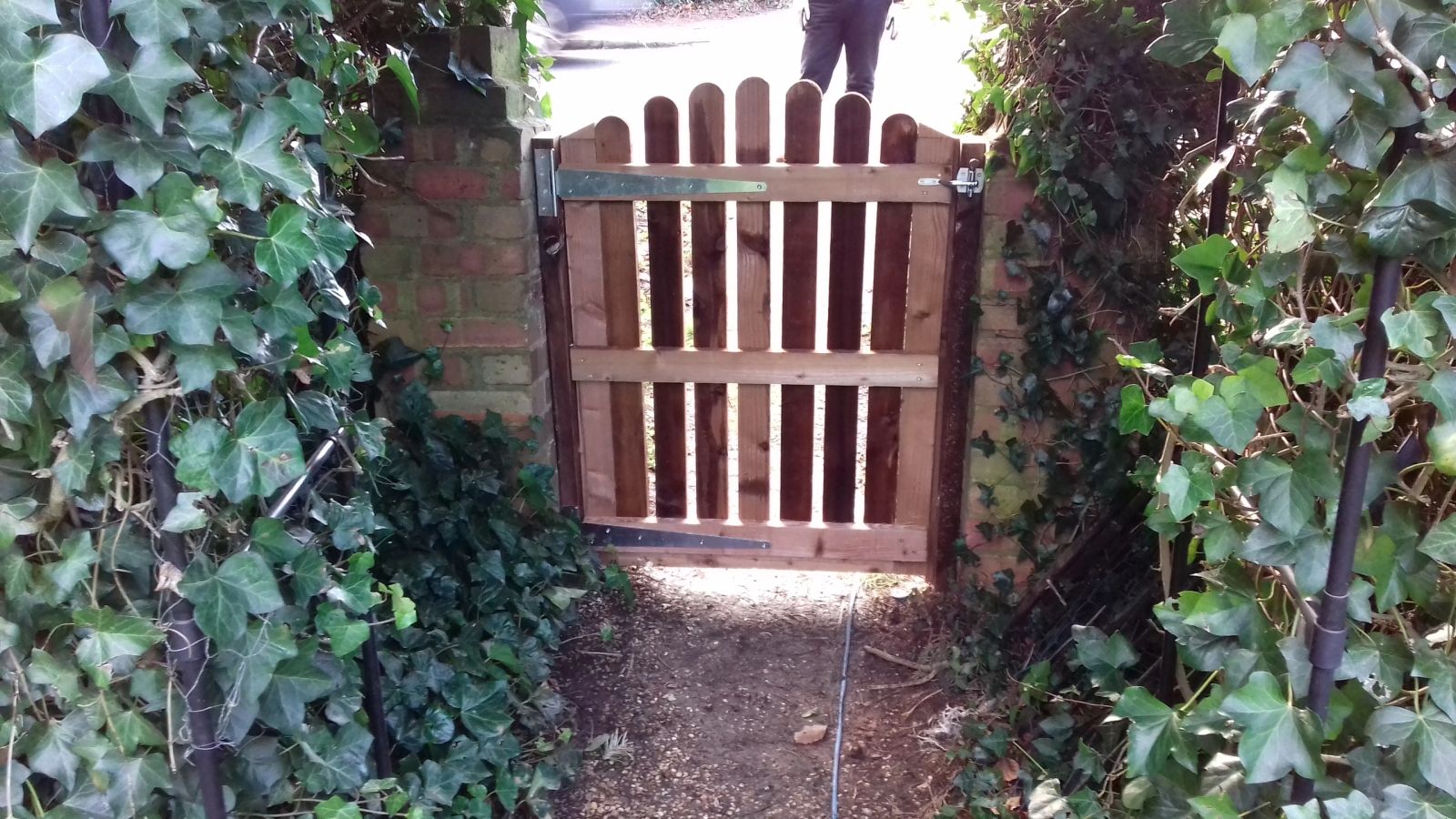
Who owns the wall
If the wall stands wholly on your land, it is yours to change, though telling your neighbour is still sensible. If it straddles the boundary, it is likely shared. Title plans rarely show this precisely, so look at the deeds and talk to the neighbour. GOV.UK has guidance on property boundaries that explains where to find information.
When the Party Wall Act may apply
The Party Wall etc. Act 1996 covers some walls that stand astride a boundary and do not form part of a building, often called party fence walls. Work on one can mean serving notice on the adjoining owner before starting. GOV.UK explains party walls and building work in general terms. If you think it applies, take advice before booking anything.
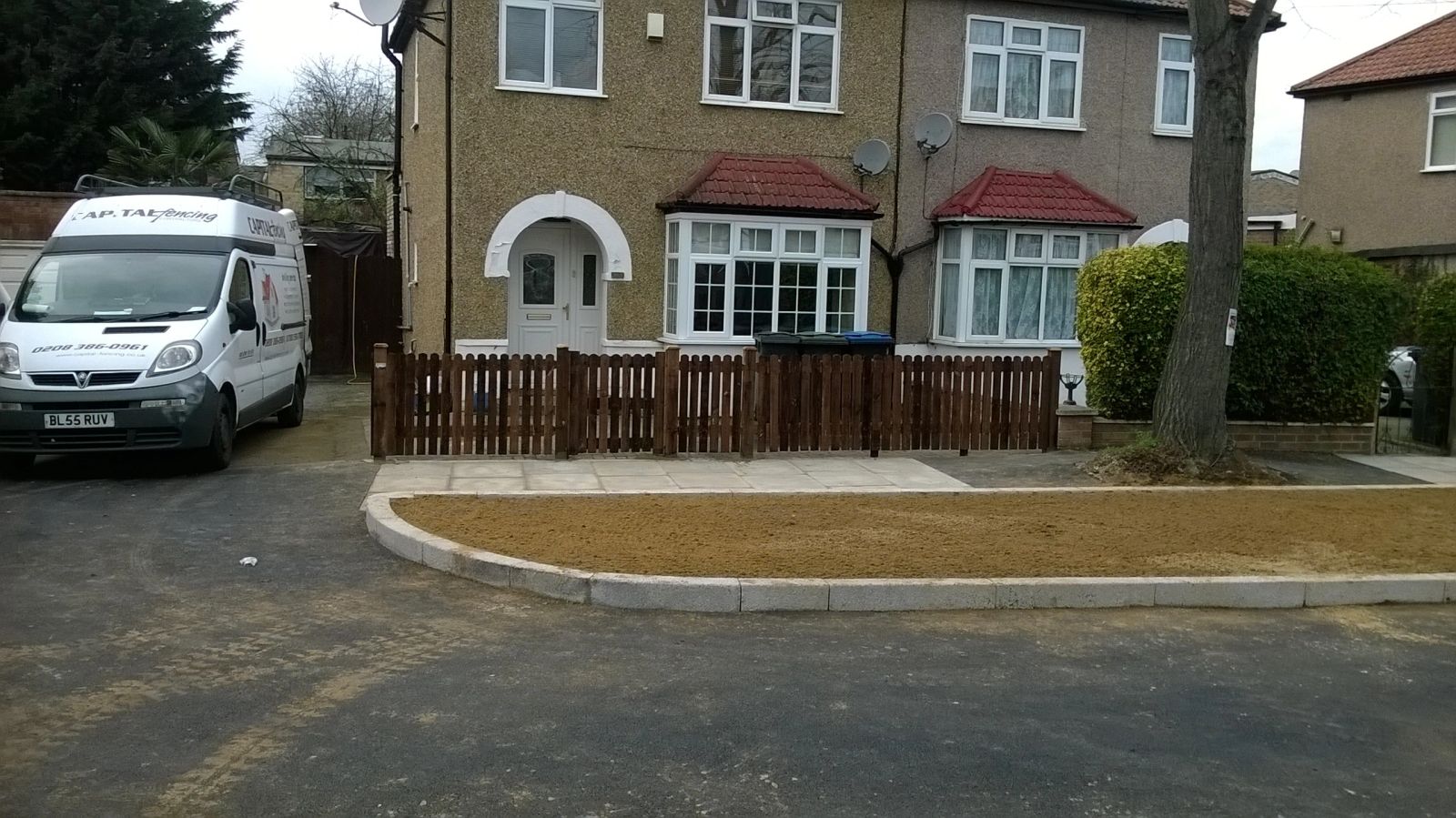
Planning and conservation areas
Taking down a garden wall is normally straightforward, but in a conservation area demolishing a wall above a certain height may need consent, and a new fence must still fit the general height limits. Our guide to conservation area boundaries covers that in more detail, and the Planning Portal has general guidance on fences and walls.
Taking the wall down safely
An unstable wall can fall unexpectedly once work starts, so it is taken down from the top in courses rather than pushed over. Bricks and rubble have to be removed or reused. Tell us in advance if you want the bricks kept, for example for edging or a path.
- Wall dismantled from the top down
- Rubble cleared or bricks set aside
- Neighbour's side protected from falling material
- Footings checked once the wall is down
Dealing with old footings
Most garden walls sit on a concrete or brick footing below ground. Fence posts cannot go straight down where that footing is, so either parts of it are broken out where each post will go, or the posts are positioned along the line to miss the solid sections. The approach depends on what is found once the wall is gone.
Choosing the new fence
Any of the fences we build can replace a wall, from closeboard and panels to slatted designs. A gravel board along the bottom stops soil from the old wall line touching the timber. If you liked the solid look of the wall, a closeboard fence on concrete posts is often the closest feel.
Keeping part of the wall
Sometimes only the upper courses are loose, and a sound lower section can stay as a dwarf wall with a fence above it. That keeps the solid look at the base and avoids digging out the footing along the whole run. Our guide on a fence on top of a wall explains when that approach works and how the posts are fixed.
Timing the work
Taking down a wall creates more waste and noise than replacing a fence, so warn neighbours of the dates. Allow for the run to be open for a short time between the wall coming down and the new fence going up, and plan for pets or children while it is open.
Getting a quote
Send photos of both faces of the wall, its length and height, and any cracks or lean. Mention whether you have spoken to the neighbour. We give a written quote that says what happens to the wall, the footings and the waste, so nothing is left as a surprise.
Frequently asked
Do I need my neighbour's permission to knock down a garden wall?
If the wall is yours alone, you may not, but telling them is wise. If it is shared, you will need to agree, and the Party Wall Act may require formal notice.
Is a fence cheaper than rebuilding a wall?
Often, especially for a long or tall boundary. We price the fence and the wall removal in the written quote so you can compare.
What happens to the bricks?
They are taken away with the other waste unless you ask us to set them aside for reuse in the garden.
Can a fence go on top of the old wall footing?
Posts need firm ground. Parts of the footing are broken out or the posts are spaced to miss it, depending on what we find.
Old wall needs to go?
Send photos of both sides and its length and we will price taking it down and fencing the line.