
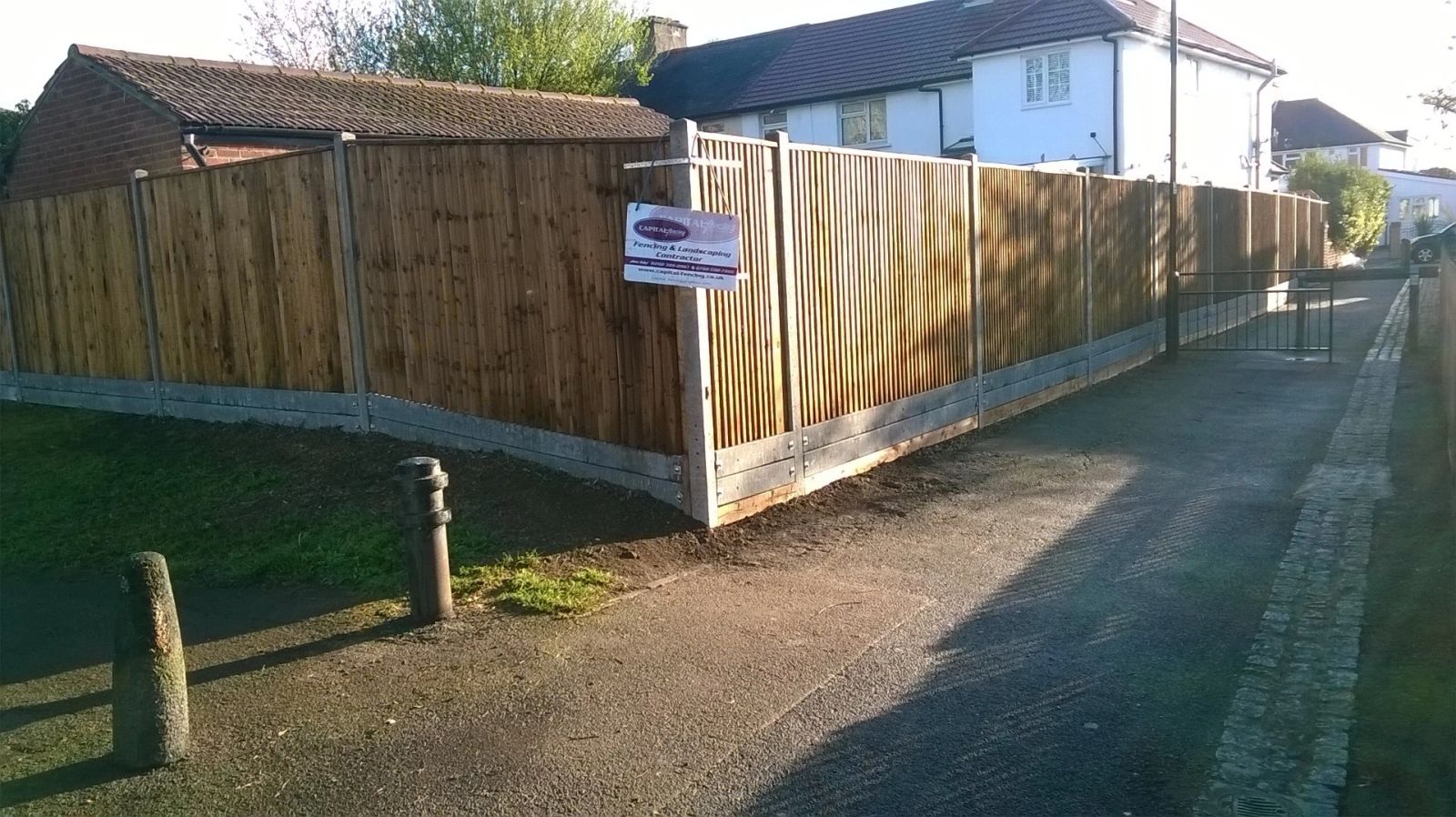
A gravel board is a strip of concrete or timber fitted along the base of a fence, between the posts, so the panels or boards sit above the ground instead of touching it. It is a small part of the fence that makes a big difference: the bottom of a panel that sits in damp soil rots first, and a gravel board takes that wear instead.
We fit gravel boards as part of new fences and add them under existing fences where the bottom of the panels is starting to suffer.
Why gravel boards stop rot
Soil holds water, and timber that stays wet rots. Keeping the panels a few inches off the ground lets them dry out after rain. When the gravel board itself wears, it can be replaced on its own, which is much easier than replacing a panel.
Concrete or timber gravel boards
Concrete gravel boards do not rot and drop straight into slotted concrete posts, so they suit panel fences on concrete posts. They are heavy and look utilitarian, though they are mostly hidden by planting.
Timber gravel boards are treated for ground contact and suit closeboard fences and timber posts, where they are fixed to the posts or to cleats. They look more natural but will eventually need replacing.
- Concrete: rot-proof, for slotted concrete posts
- Timber: natural look, for timber posts and closeboard
- Either can be fitted under a new or existing fence
Adding gravel boards to an existing fence
Gravel boards can often be added under a fence that does not have them. On concrete posts, the panels are lifted, the boards dropped into the slots and the panels put back on top. On timber posts, timber boards are fixed between the posts. If the panels already sit on the ground and have rotted at the bottom, it may be worth replacing them at the same time.
Level changes and holding back soil
Where the ground steps up along a fence line or one garden sits a little higher than the next, gravel boards can hold back a small amount of soil and tidy the step. They are not a retaining wall: if a lot of soil is pushing against the fence, it needs a proper retaining solution rather than a board that will be pushed out over time.
Replacing worn gravel boards
Gravel boards take the knocks a fence gets at ground level: wet soil, strimmers, bins and footballs. A rotten or cracked board can be replaced on its own, usually without disturbing the panel above for long, which keeps the fence protected.
How a gravel board job runs
Send us photos and rough measurements, we send a written estimate, then we visit to confirm before work starts. We cover London and Hertfordshire. Photos of the base of the fence and the posts help us see what type of board will fit.