
Hit and miss fencing fixes boards alternately to the front and back of the rails, rather than all to one face. The result is a fence that looks the same from both sides — useful on a shared boundary where neither neighbour wants to look at rails and fixings — and one that sheds wind load through the small gaps rather than taking the full force on a solid face.
It's a strong middle ground between full privacy and a screen that won't rack in exposed, windy gardens.
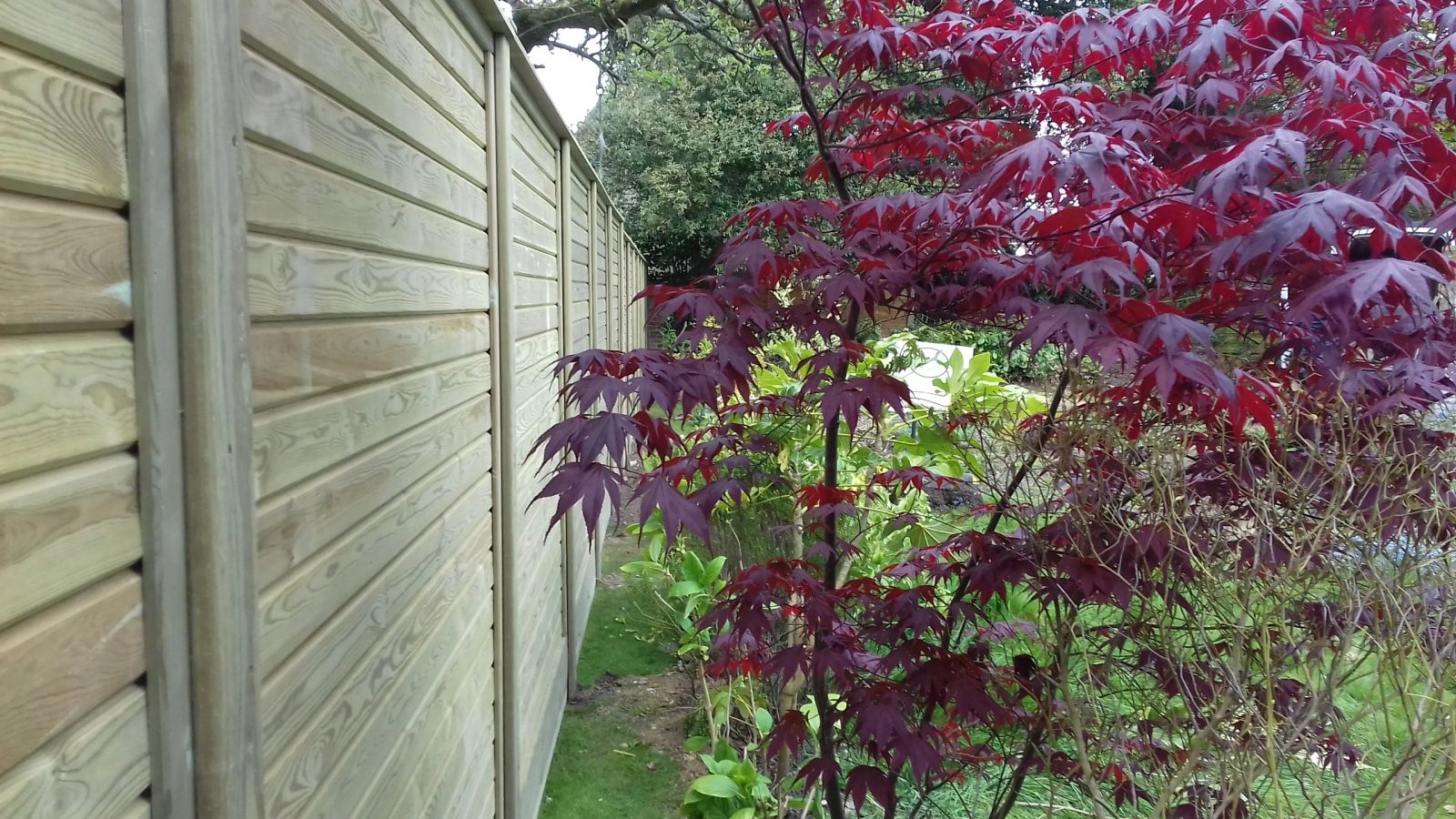
Board layout and privacy trade-off
Boards are spaced with a deliberate gap so the alternating front/back boards overlap the gap on the opposite face — from a few metres away it reads as solid, but close up or at an angle there's a narrow sightline through.
This isn't the fence to specify where total privacy from a close range is the brief; it's the fence to specify where a good-looking, wind-tolerant, dual-aspect boundary matters more.
Airflow, noise and shared boundaries
Because roughly a third of the face area is open, hit and miss sheds far more wind load than a solid fence, which is the main reason we recommend it on exposed rear gardens and elevated plots. The gaps also let sound pass rather than reflect, so it isn't the fence to specify where noise screening from a road or neighbour is the actual brief — a solid or acoustic-rated boundary does that job instead.
On a genuinely shared boundary it also settles a common dispute before it starts: because both faces look identical, there's no 'good side' that one household gets and the other doesn't, which matters more than people expect once a fence is up for twenty years.
- Identical finish on both faces — no 'good side' dispute on shared boundaries
- Sound passes through the gaps rather than being blocked
- Reduced wind loading versus a solid board fence
- Partial sightline at close range and steep angles
When to choose it, and when not to
Choose hit and miss where the boundary is shared and visible from both gardens, where the site is exposed to wind, or where you want airflow around planting without a fully solid screen. Avoid it where a footpath or alley runs directly behind the fence and full privacy from close range is the priority — closeboard or T&G suit that brief better.
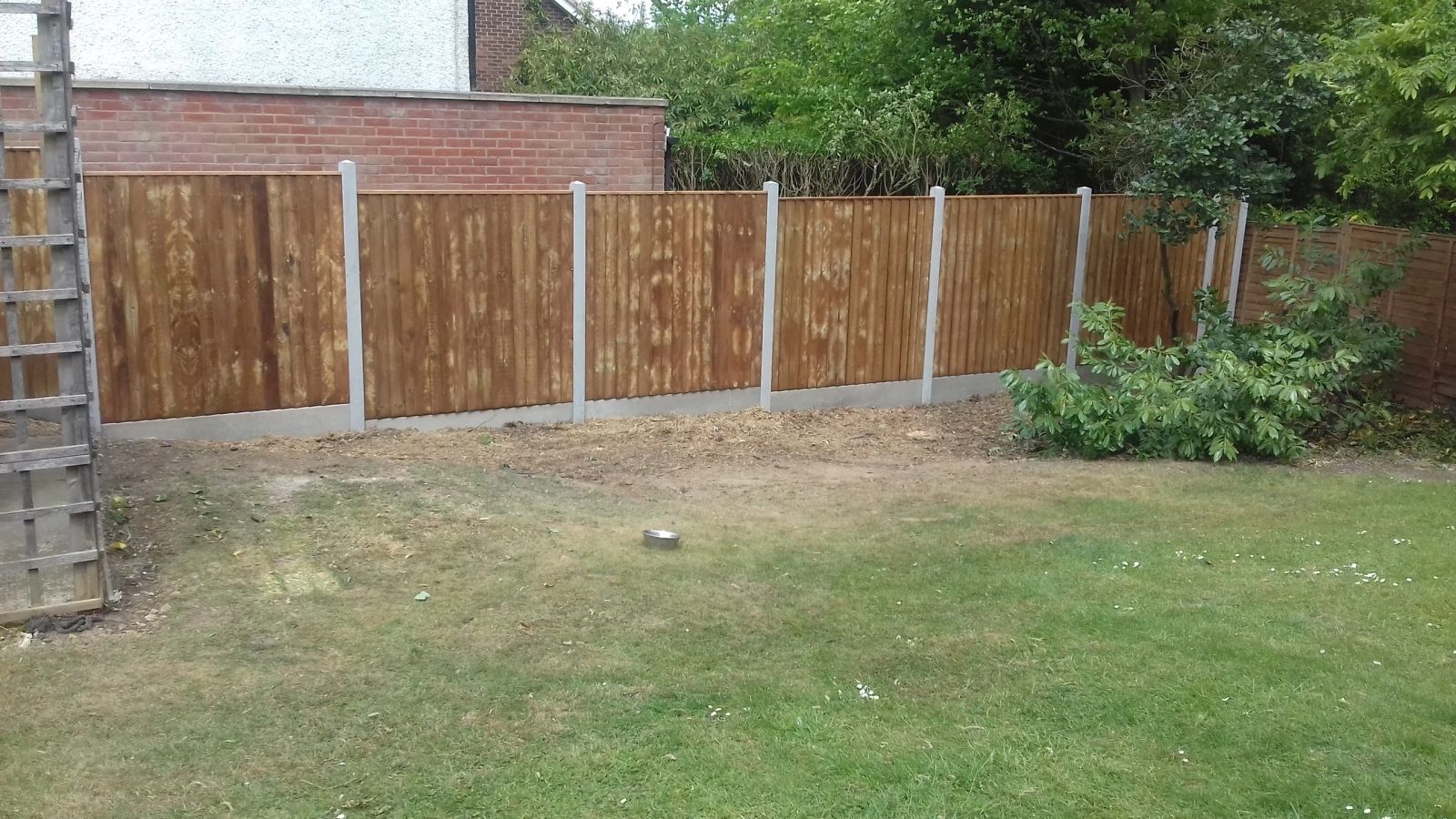
Before you sign off a quote
- Confirm board gap width — wider gaps trade privacy for more airflow
- Check both faces are genuinely intended to look identical in the quote
- Ask whether posts are timber or concrete for your exposure level
- Confirm treatment/finish matches your other boundary fencing if adjoining
- Discuss sightline concerns before install, not after
Got an exposed boundary that keeps failing in wind?
Hit and miss might solve it without losing the privacy you need. We'll assess the exposure and quote a spec that actually copes with your site.
Frequently asked
Does hit and miss fencing block road or garden noise?
Not well — sound passes through the gaps between boards. Where noise screening is the main goal, a solid or acoustic-rated fence is the right spec instead.
Does hit and miss fencing really look the same on both sides?
Yes, that's the defining feature — boards alternate front and back of the rail so neither neighbour gets the 'rail and post' side, which avoids a common dispute on shared boundaries.
Is hit and miss fencing private enough for a rear garden?
It gives good general privacy from a normal viewing distance, but there is a partial sightline close up and at an angle — closeboard or T&G suit briefs where total privacy is non-negotiable.
Can hit and miss be built to match an existing closeboard fence height?
Yes, board and rail heights are set the same as closeboard, so it can run alongside an existing boundary at a consistent height.
Does hit and miss cost more than closeboard?
It's broadly similar or slightly more, since the alternating fixing takes marginally longer, but material use is comparable.