
Quick checklist
- Decide topper height (300mm/450mm) before pricing the whole run
- Choose square trellis if you plan to grow anything vigorous up it
- Confirm post spec is upgraded to handle mature planting load
- Check your total height against local planning guidance if near a boundary limit
- Ask about removable panels if you want to review height later
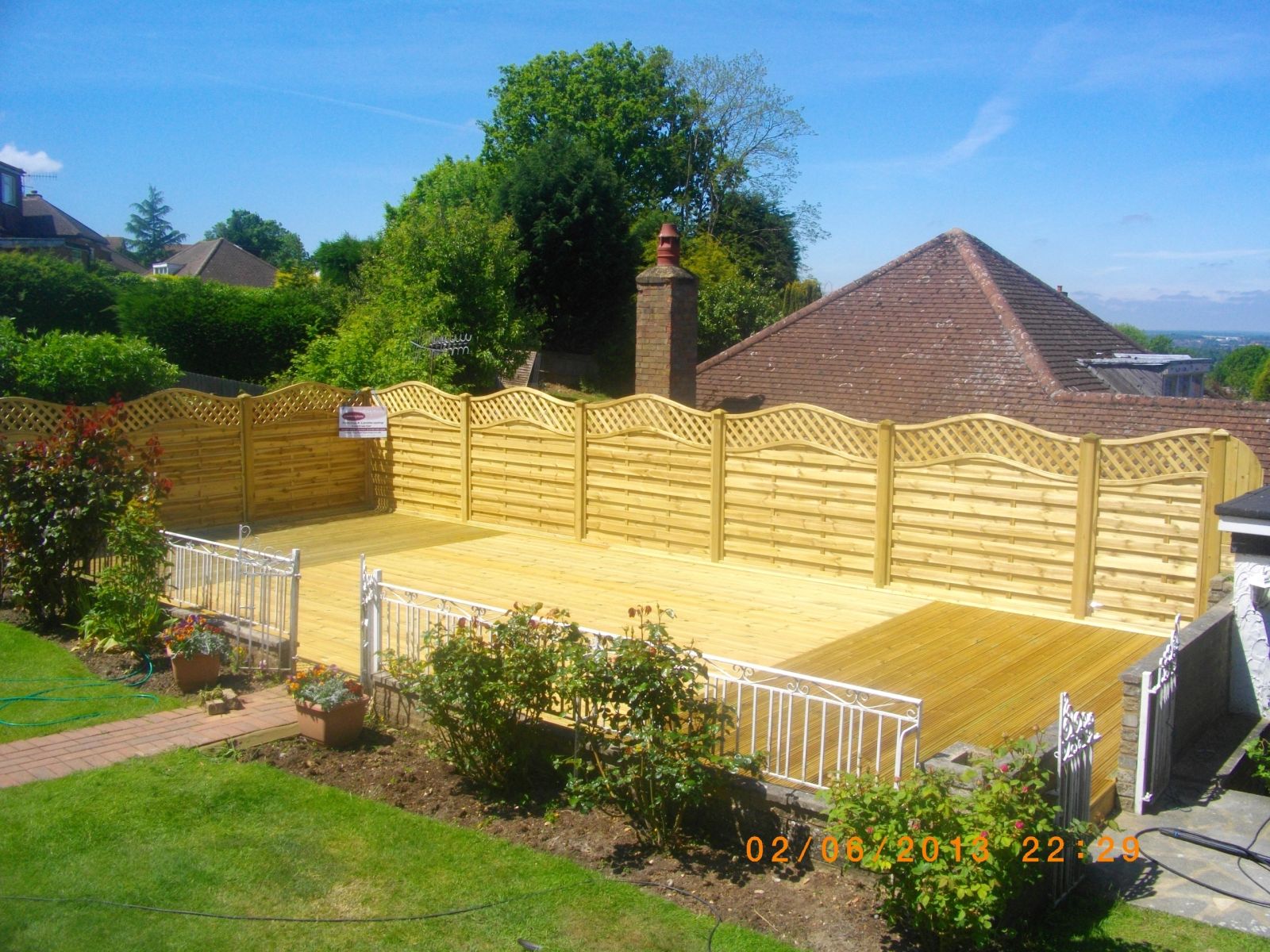
Trellis-topped fencing is a solid boarded fence (closeboard, panel or T&G) with an open trellis panel fixed above it, usually adding 300–450mm of height for planting screening, extra privacy from upstairs windows, or simply a softer top line than a flat board fence.
It's frequently used to get extra height above the 1.8m/2m thresholds that trigger planning consideration for solid boundaries, since open trellis is treated differently to solid boarding — but the detail matters, and we'll cover that honestly below.
Fixing methods and height added
Trellis panels typically fix to extended posts or brackets above the main fence's top rail, in either a square or diamond lattice pattern. Diamond trellis is more decorative and slightly weaker under load; square trellis is stronger and better suited to heavier climbers.
Standard toppers add 300mm or 450mm; taller custom toppers are possible but increase wind loading on the posts below, which needs checking against post spec, not just bolted on regardless.
Wind load and planting weight
An open trellis sheds far more wind than solid boarding, which is good for the posts, but once a mature climber fills the lattice it behaves almost like a solid panel again — we regularly find trellis-topped fences that have gone over purely because ivy or a mature clematis turned an open structure into a wind sail.
If you plan to grow anything vigorous up the trellis, we'll spec heavier posts and closer spacing up front rather than waiting for a failure.
- Square lattice trellis for heavier climbers, diamond for lighter/ornamental growth
- Extended posts or bolt-on brackets, sized to the total fence-plus-trellis height
- Post spec upgraded where mature planting is planned
- Removable panels available where you want seasonal flexibility
Planning and boundary height context
Height rules for boundaries generally look at the total structure, and while open trellis is sometimes treated more leniently than solid fencing, this varies and isn't a blanket exemption — see our planning rules guide for the detail, and we'll flag it on site if your combination looks borderline.
Want extra height and screening without over-building the fence?
We'll spec the topper height, lattice type and post upgrade to suit whatever you're planning to grow, and flag anything that needs a planning check.
Frequently asked
Does trellis-topped fencing need planning permission?
Often not, but it depends on total height and location — see our fence height planning rules guide, and we'll flag anything borderline on site before we quote.
How much extra height does a trellis topper add?
Standard toppers are 300mm or 450mm; taller custom options exist but increase wind loading on the posts, which we'll factor into the spec.
Will a trellis topper collapse under a climbing plant?
Not if specified for it — square lattice on upgraded posts handles a mature climber; standard lightweight diamond trellis can fail under heavy, established growth.
Can trellis be added to an existing fence?
Sometimes, if the existing posts and top rail can take the extra height and load; we'll check on site rather than assume every fence can carry it.
Is trellis-topped fencing more private than a plain fence?
Once planted up, yes — it adds height and a softening screen effect that a flat board top doesn't give.