
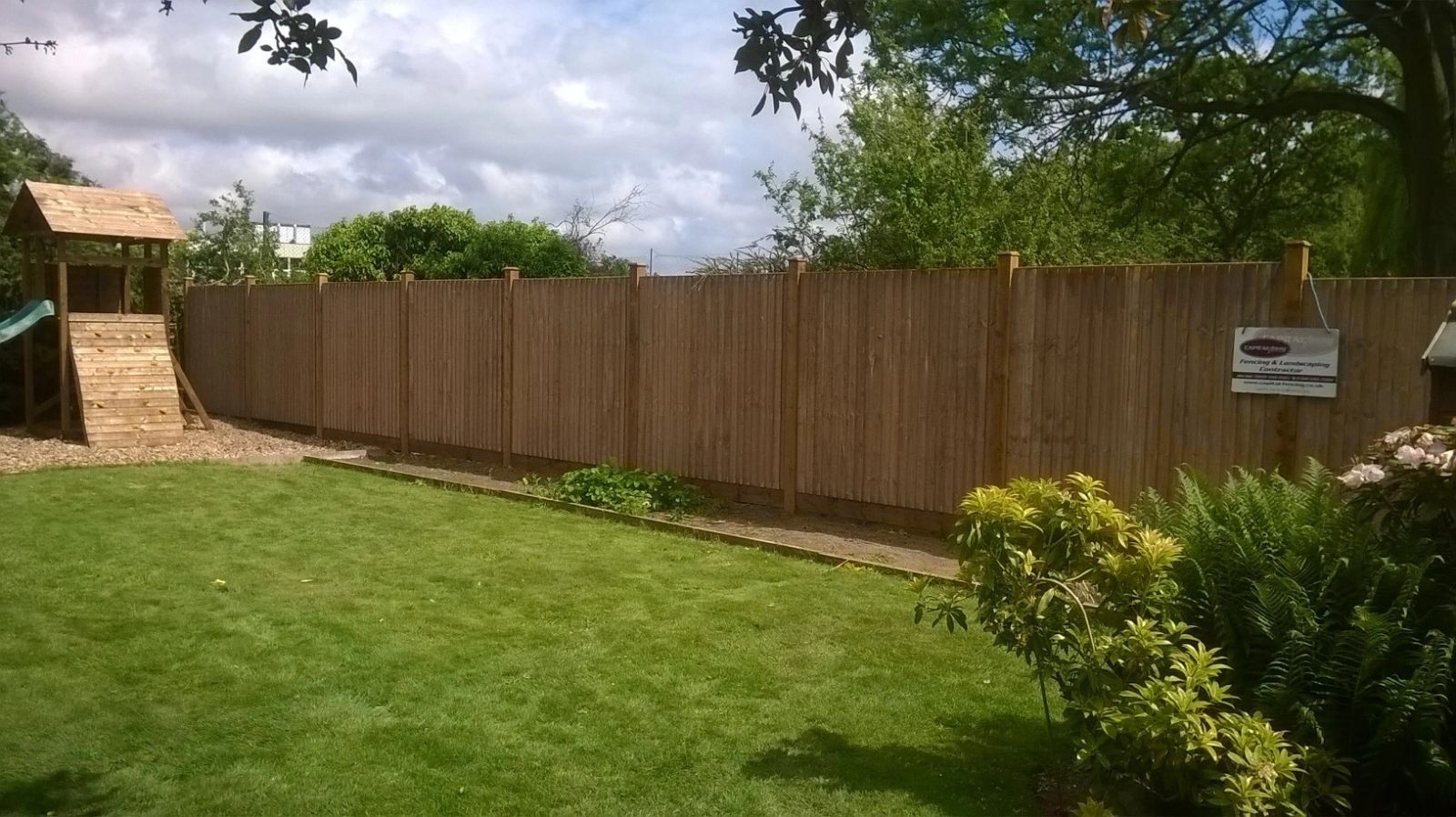
Post and rail fencing is the open, rural-looking fence of timber posts with two or three horizontal rails between them. It marks a boundary, keeps people and animals to the right side of it and leaves the view open. It suits larger gardens, paddock edges, driveways and the edge of the green belt around Hertfordshire, where a solid fence would look out of place.
We fit post and rail in cleft and sawn timber, with or without wire netting, as part of our timber fencing work.
Two rail or three rail
Two rail fencing is the lighter option, mainly for marking a boundary or edging a drive. Three rail is taller and stronger, and gives more to fix netting to, so it is the usual choice for paddocks and around animals.
Cleft or sawn timber
Cleft rails are split along the grain, giving a rustic, irregular look that suits countryside settings. Sawn rails are cut square and look neater, suiting a garden or a more formal driveway. Posts are pressure treated for ground contact and set firmly, as the rails rely entirely on them.
- Cleft: rustic, split along the grain
- Sawn: square and tidy
- Rails morticed into posts or nailed to the face
- Pressure-treated posts set for ground contact
Post spacing
Posts are spaced to suit the rail length, so the rails meet or join on a post. Morticed fences have the rails slotted through holes in the posts; face-fixed fences have them nailed or screwed to the front. Morticed fences are neat and strong; face-fixed is quicker and easy to repair. On longer runs, intermediate posts keep the rails from sagging.
Adding stock or rabbit netting
On its own, post and rail is not stock-proof: small animals and dogs walk straight through. Adding wire netting to the rails closes the gaps. Stock netting keeps larger animals in; rabbit netting has a finer mesh and is often buried at the bottom so rabbits cannot dig under. Netting is stapled to the rails and posts and pulled tight so it does not sag.
Post and rail vs picket or closeboard
Picket fencing is lower and more decorative, suiting front gardens and cottages. Closeboard is solid and private, for back gardens. Post and rail sits between them as an open boundary for larger spaces, and it uses far less timber per metre, which helps on long runs. It also lets wind straight through, so it suits exposed sites where a solid fence would be pushed about. Our picket fencing and wooden fencing pages cover those styles.
Slopes and how a job runs
Post and rail follows the ground well. On a slope, the rails can run parallel to the ground or be stepped; our fencing on a slope guide explains the difference.
Send us photos and rough measurements, we send a written estimate, then we visit to confirm before work starts. We cover London and Hertfordshire.