
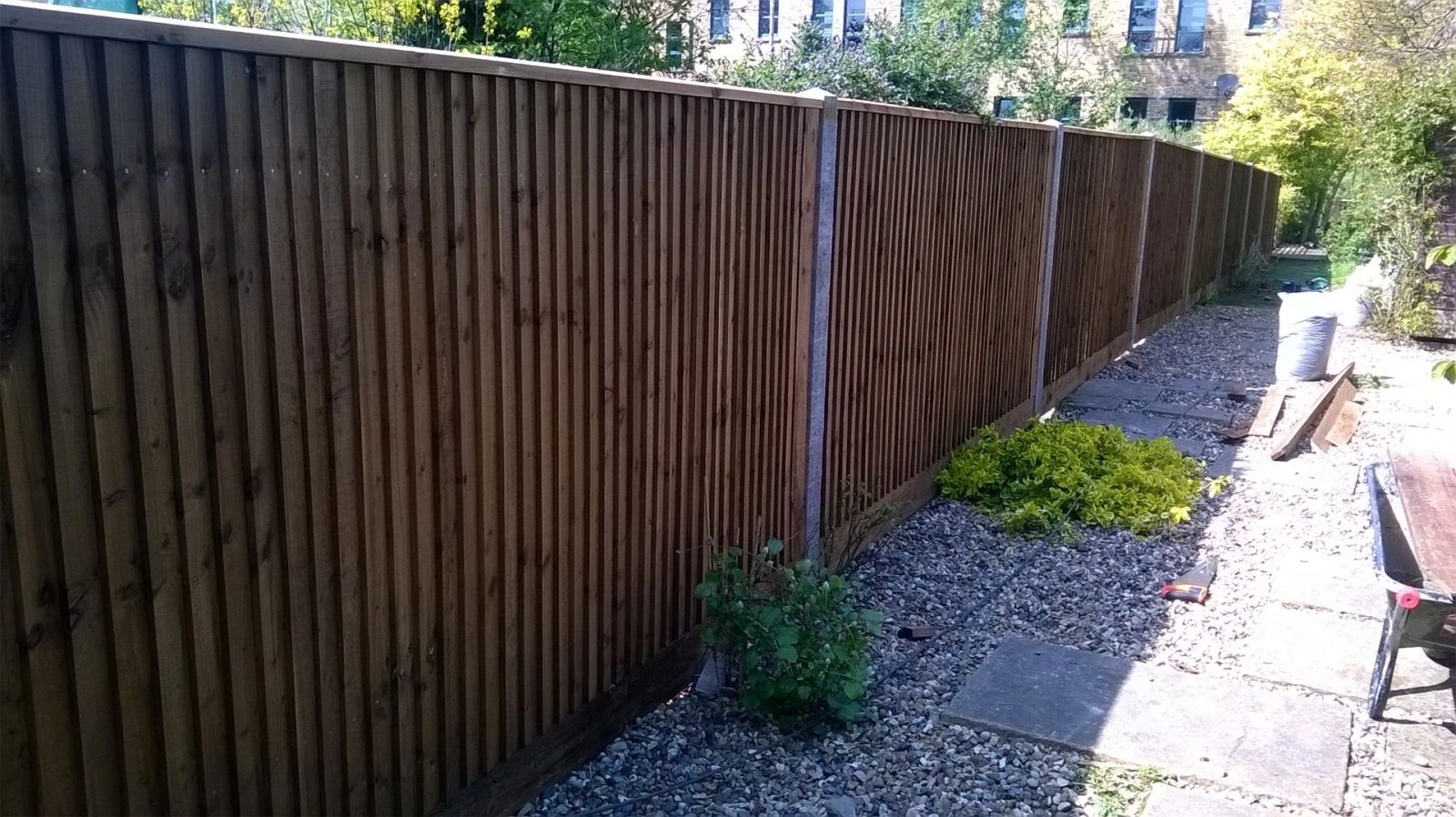
Converted period houses and purpose-built blocks both throw up the same recurring issue: the person paying for fencing is rarely the sole legal owner of the boundary, so authorisation has to be sorted before anything is measured, not after.
Access and authorisation
Freeholders or management companies typically need to approve external alterations including fencing, even for demarcating a ground-floor flat's private amenity space from a shared garden.
- Confirm freeholder/managing agent consent before booking work
- Ground-floor flats often have a smaller demarcated area rather than full garden rights
- Shared access paths mean careful protection during material delivery
Typical specs
Lower-height picket or panel fencing to demarcate private space within a shared garden, or a low-maintenance composite screen where several flats' outlooks are affected and long-term upkeep needs to be simple for a managing agent to sign off on.
What changes the price
Shared access, restricted working hours in occupied blocks, and the need for written management company approval all add time before work even starts — factor this into your timeline, not just the fencing cost.
Common questions
Do I need permission to fence my section of a shared garden?
In almost every leasehold or shared-freehold arrangement, yes — check your lease and get written approval before work is booked.
Can I fence off a private patio at a ground-floor flat?
Often yes if your lease grants exclusive use of that area, but the fence design usually still needs freeholder sign-off.
Is composite fencing a good choice for shared gardens?
Often yes — its low maintenance suits a managing agent's preference for minimal future upkeep obligations.
How do you handle access for material delivery in a block of flats?
We plan delivery and protection of shared hallways/stairwells in advance and can work around building access hours.