
Quick checklist
- Confirm the board is capped, not just surface-coated
- Check post material — aluminium/steel, not composite-clad timber
- Ask for the concrete base depth in writing, not just 'concreted in'
- Get the manufacturer's warranty document, not a verbal assurance
- Confirm whether replacement boards in your exact colour will still be available in 10 years
"Composite fencing" covers a wide range of actual products, and the spec differences between them explain most of the failures we get called to inspect. A capped, co-extruded board on a proper aluminium post system behaves nothing like an uncapped budget board dropped into timber posts, even though both are sold under the same name.
This page sets out the specification detail — board construction, post systems, span and fixing tolerances — so you can read a quote and know what you're actually being sold, not just what it's called.
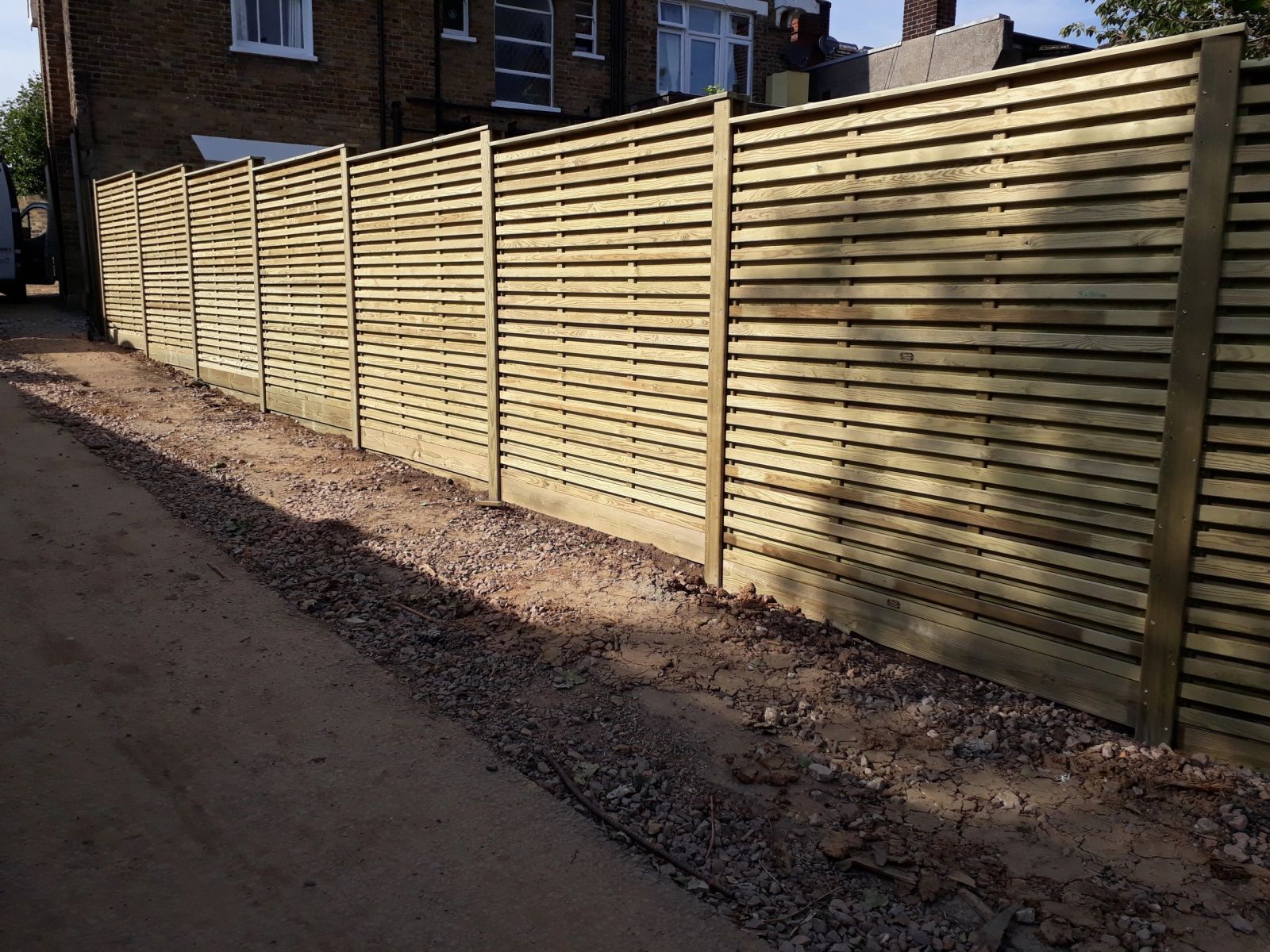
Board construction and what actually varies
Composite boards are an extruded core of recycled wood fibre and polymer, either left as a solid profile or capped with a polymer shell on the visible faces. Capped boards resist staining and UV fade far better than uncapped boards, which is the single biggest quality signal in the category.
Colour-through boards keep their tone as they weather; boards that are only surface-coloured show wear lines at cut ends and fixing points within a couple of seasons. We specify capped, colour-through boards as standard and will say so on the quote.
- Solid-core boards are heavier and more impact-resistant but cost more per metre
- Hollow-core boards are lighter and cheaper but dent under sustained point load, e.g. a leant ladder
- Grooved or embossed faces disguise scuffing better than smooth faces on a boundary fence
Post systems and fixings
Composite is almost always hung on aluminium or galvanised steel posts rather than timber, because the post is the part that fails first in a conventional fence — rot starts at ground level, and a metal post system removes that failure mode entirely.
Posts are set in concrete to a minimum 600–700mm depth for a standard 1.8m fence, deeper on exposed or gate-bearing runs. Boards slot into a channel on the post face and are held with concealed fixings; there should be no visible screw heads on the finished face.
| Element | Typical spec | Notes |
|---|---|---|
| Post | 60–80mm aluminium or steel box section | Powder-coated to match board colour |
| Post spacing | 1.8–2.0m centres | Reduce to 1.5m on exposed boundaries |
| Base | 600–700mm concrete | Deeper for gate posts or corner posts |
| Board fixing | Concealed clip or channel | No face-fixed screws on a quality system |
Lifespan, maintenance and honest limitations
Manufacturers typically warrant capped composite boards for 15–25 years against rot and insect damage; in practice the post system usually outlasts the boards' cosmetic life. Maintenance is a wash-down, not annual treatment — that's the entire selling point.
Composite is the wrong choice where a single damaged panel needs to be swapped cheaply: a dented board usually means replacing the full board, and matching an older colour run years later isn't guaranteed. It's also a poor fit for very tight budgets, since it typically costs 60–100% more per metre than a treated timber panel fence.
Want composite fencing specified properly for your boundary?
We'll survey the run, confirm post depths for your ground conditions, and give you a written spec — board type, post system and warranty — before you commit to a price.
Frequently asked
Does composite fencing fade in direct sun?
Capped, colour-through boards resist fading far better than uncapped or surface-coated boards, but every material weathers slightly over 10+ years in full south-facing sun. We spec capped boards specifically to minimise this.
Can composite fencing be repaired if a board is damaged?
Yes — individual boards slot out of the post channel and can be replaced without disturbing the rest of the run, provided you can still source the matching profile and colour.
Is composite fencing noisier in wind than timber?
Hollow-core boards can produce a slight resonance in strong wind that solid boards don't; we'll tell you which type is quoted so there are no surprises.
Can composite boards go into existing concrete posts?
Only if the post has the correct channel profile for that board system — timber-effect composite boards designed for their own aluminium post rarely fit generic concrete post slots.
Is composite fencing worth it for a rental property?
Often yes — the maintenance-free running cost over a tenancy cycle can offset the higher install price, particularly on long boundary runs a landlord doesn't want to revisit annually.