London & Hertfordshire Free Site Visit
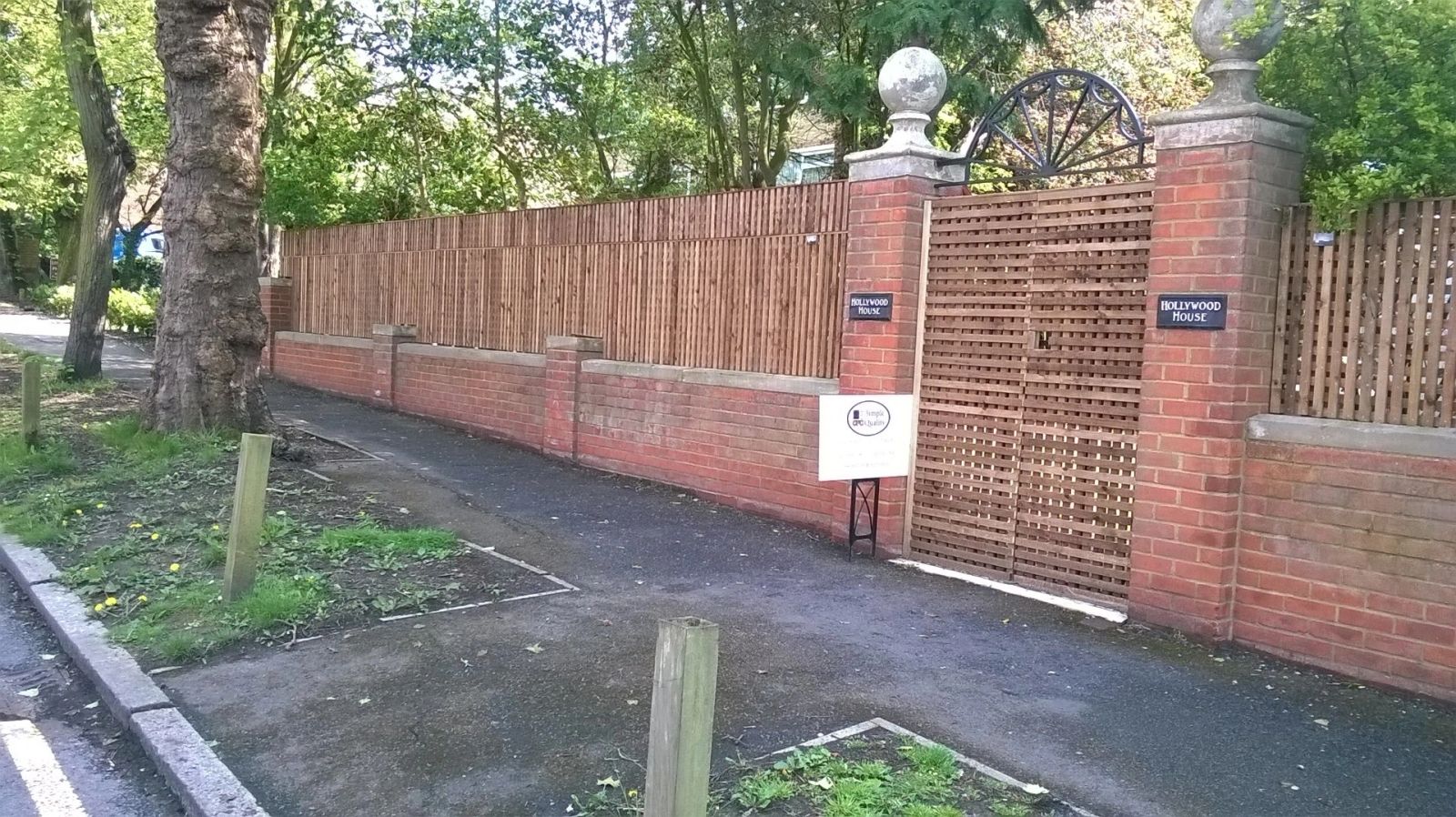
closeboard fence run installed by Capital Fencing in Borehamwood (WD6)
Borehamwood · WD6

Panel Fencing in Borehamwood: What Works on small to mid-size rear plots

Panel fencing is the cost-controlled option: factory-made lap or overlap bays dropped between concrete posts. For a lot of Borehamwood rear gardens it is the sensible answer — quick, tidy, and a whole boundary usually done inside a day. Capital Fencing installs panel fencing across Borehamwood and out to bushey and barnet. Hertsmere Borough coverage plus proximity to M1 J4 / M25 J23 means most quotes are on your inbox within 48 hours of a site visit. Recent work on Cardinal Avenue and Brook Road. We orient jobs off Sky Studios entrance.

Panel fencing is the cost-controlled option: factory-made lap or overlap bays dropped between concrete posts. For a lot of Borehamwood rear gardens it is the sensible answer — quick, tidy, and a whole boundary usually done inside a day. Capital Fencing installs panel fencing across Borehamwood and out to bushey and barnet. Hertsmere Borough coverage plus proximity to M1 J4 / M25 J23 means most quotes are on your inbox within 48 hours of a site visit. Recent work on Cardinal Avenue and Brook Road. We orient jobs off Sky Studios entrance.

Typical spec

How we build panel fencing in Borehamwood

6ft lap or overlap panels between pressure-treated or concrete posts. Standard build: 6ft × 6ft overlap or waney-edge panels, concrete posts and 150mm gravel boards. On Borehamwood jobs we adjust for limited rear access on the older estates means materials usually have to come through the house.

Property mix locally: mix of post-war terraces, 1960s low-rise estates and new-build apartments near the studios. Typical gardens: small to mid-size rear plots, often south-facing on the Elstree side. Postcodes we regularly service: WD6.

Common Borehamwood briefs

  • residential rear boundaries where fastest install and lowest cost matter most
  • landlord turnarounds needing a fresh boundary in a single day
Honest trade-offs

Where panel fencing isn't the right answer

  • shorter service life than closeboard — expect 10–12 years on well-drained ground
  • cheap overlap panels can rack in high wind if posts aren't properly set

We'll say so on the site visit — a wasted quote helps nobody.

Why panel fencing works here

  • quickest fence type to install — typical rear garden in a day
  • cheapest way to secure a boundary in pressure-treated softwood
  • easy to combine with concrete posts and gravel boards for a longer service life

Panel Fencing FAQs — Borehamwood

Can panel fencing be built on a slope?

Concrete posts are the reason a Borehamwood panel fence survives a wet winter — timber posts fail at the ground line first. Survey slots across WD6 are usually inside a week. In short: quickest fence type to install — typical rear garden in a day, though one damaged panel means replacing the whole panel, not a single board.

Can panels be re-stained a different colour?

Concrete posts are the reason a Borehamwood panel fence survives a wet winter — timber posts fail at the ground line first. We work this patch weekly, from Elstree Way out toward bushey. Practically, that means cheapest way to secure a boundary in pressure-treated softwood — and we're upfront that cheap overlap panels can rack in high wind if posts aren't properly set.

Do I need planning permission for a 6ft panel fence?

A single damaged bay is a same-visit swap, which keeps maintenance on a Borehamwood rental property simple and cheap. For mix of post-war terraces in WD6, that is where the cost sits. Worth weighing quickest fence type to install — typical rear garden in a day against one damaged panel means replacing the whole panel, not a single board before you commit.

What's the difference between overlap and lap panels?

Concrete posts are the reason a Borehamwood panel fence survives a wet winter — timber posts fail at the ground line first. We allow for small to mid-size rear plots when setting out in Borehamwood. In short: quickest fence type to install — typical rear garden in a day, though one damaged panel means replacing the whole panel, not a single board.

Are gravel boards worth adding?

A single damaged bay is a same-visit swap, which keeps maintenance on a Borehamwood rental property simple and cheap. Survey slots across WD6 are usually inside a week. In short: quickest fence type to install — typical rear garden in a day, though one damaged panel means replacing the whole panel, not a single board.

Recent panel fencing work
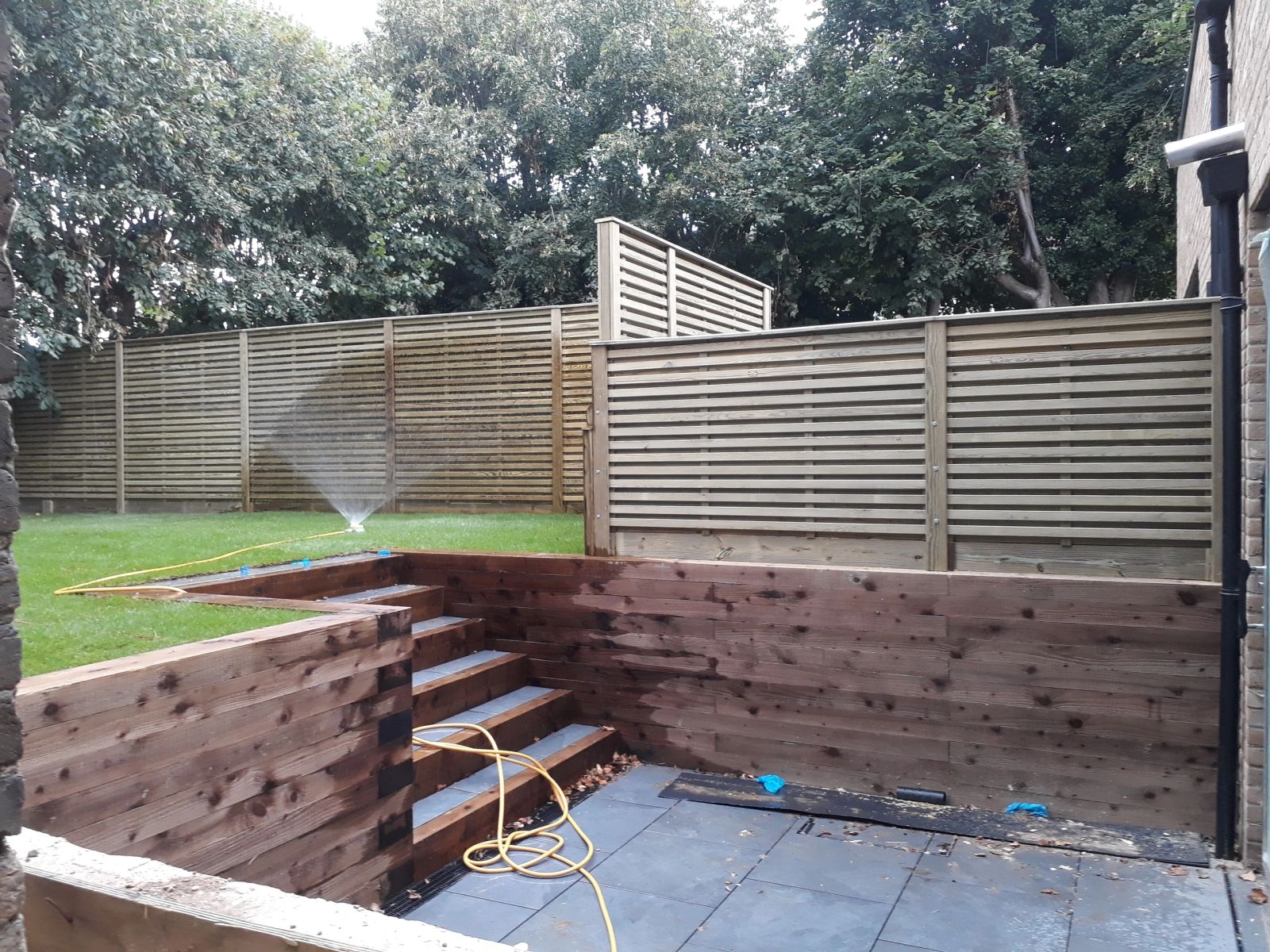
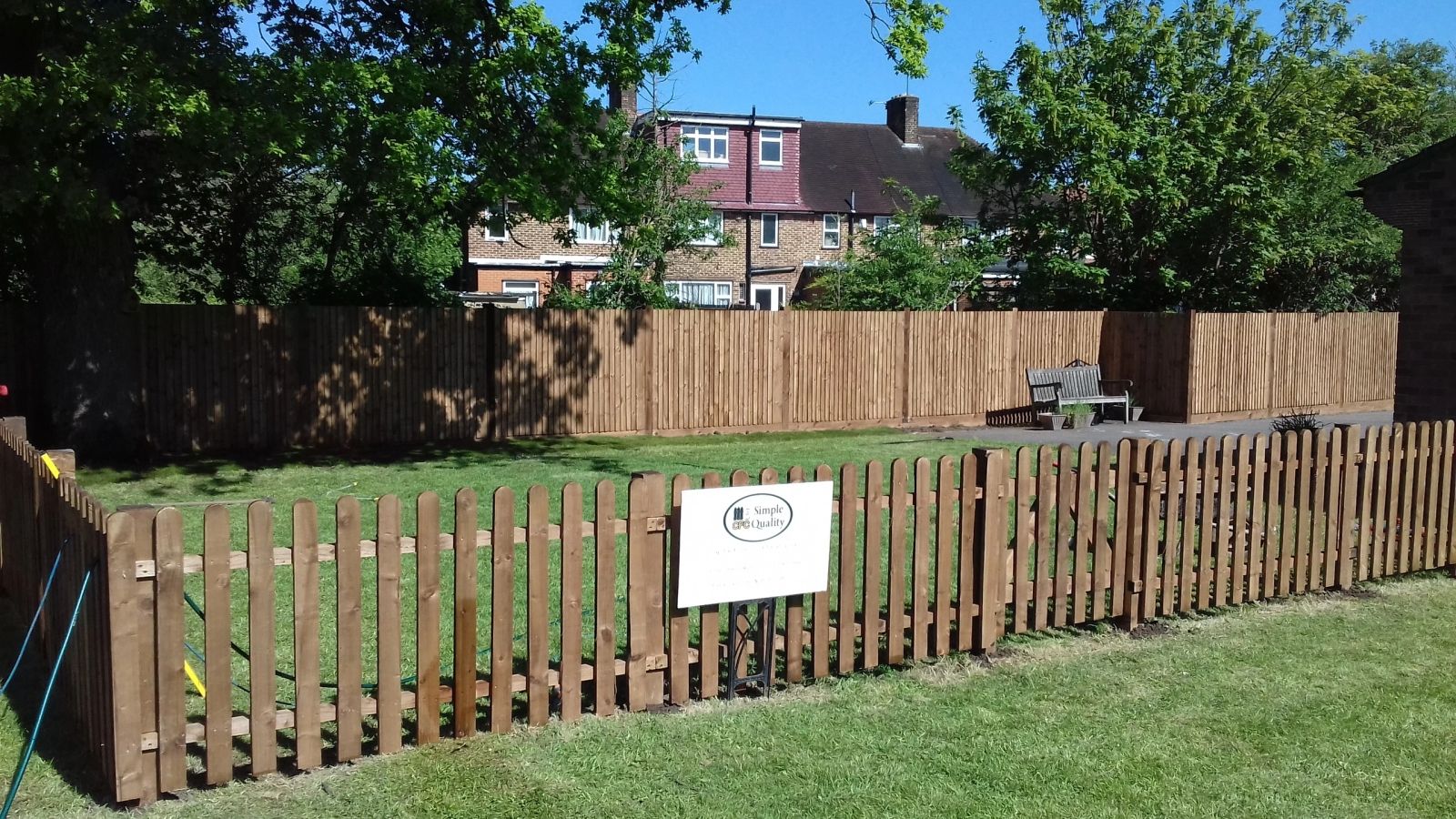
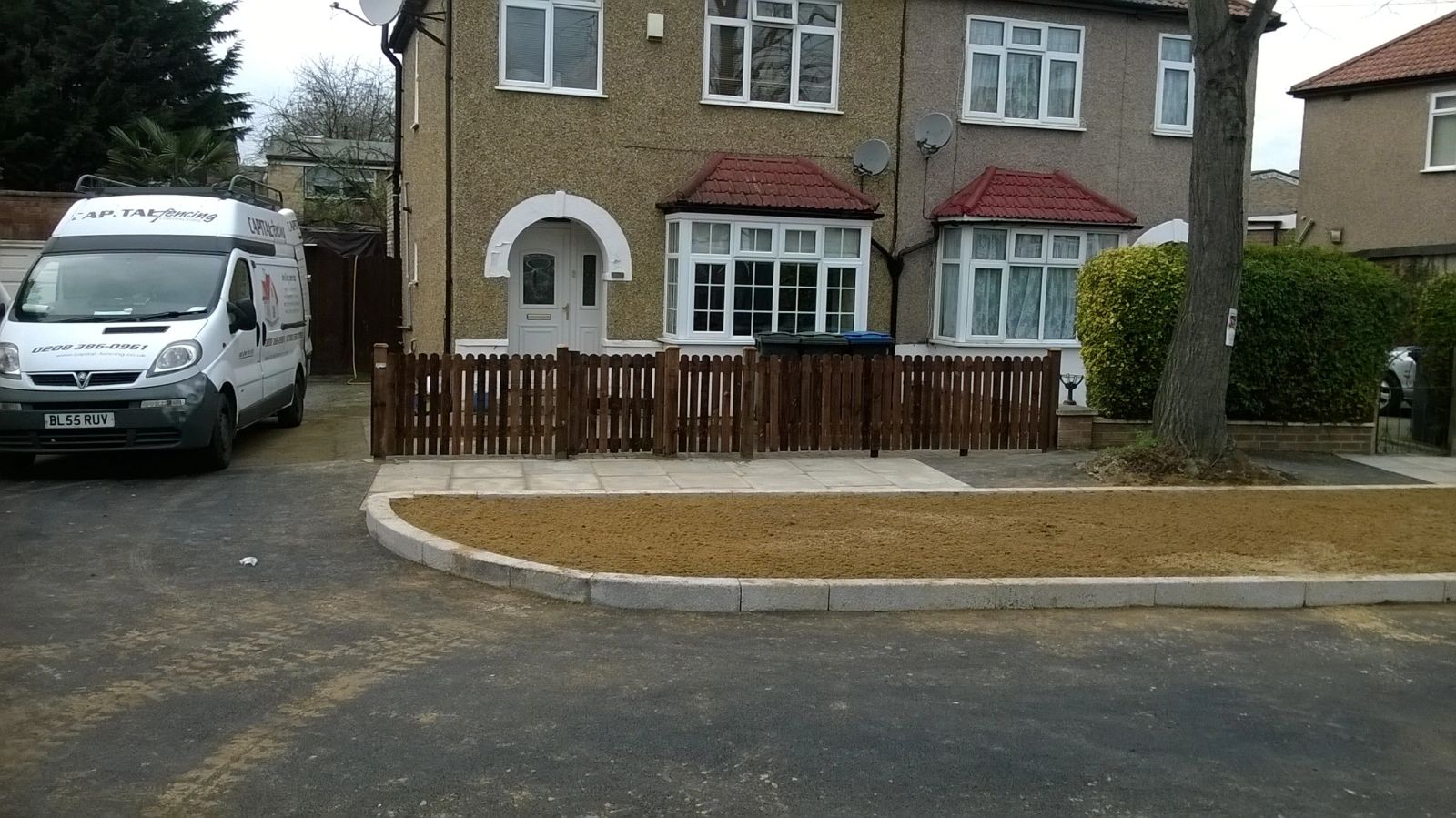
closeboard fence run installed by Capital Fencing in Borehamwood (WD6)panel fence install installed by Capital Fencing in Borehamwood (WD6)trellis-topped fence installed by Capital Fencing in Borehamwood (WD6)bespoke decorative fence installed by Capital Fencing in Borehamwood (WD6)

Local considerations across Borehamwood and bushey

Resolving height and style disputes with a neighbour

Disagreements over a shared fence usually come down to height, style or who's responsible for a section, and most are resolved fastest with a plain conversation and a written note of what's agreed before work starts.

Where a genuine dispute over the boundary line itself exists, the Land Registry title plan (not the fence's current position) is the reference point, and a RICS-qualified boundary surveyor can produce a determined line if the deeds are ambiguous.

We'd always rather delay a start date by a week to get sign-off from both sides than build a fence that has to be moved once a dispute surfaces.

Ring-shank versus smooth nails

Ring-shank nails have a series of raised rings machined into the shank, which bite into surrounding timber fibres as they're driven and resist being pulled back out far more effectively than a plain smooth shank.

That extra grip matters on fencing components subject to repeated movement from wind load, such as feather-edge boards on rails, where smooth nails can gradually work loose over several seasons of flexing.

The trade-off is that ring-shank nails are harder to remove cleanly for repairs, often splitting the timber around them rather than sliding out, whereas smooth nails can usually be levered free without damaging the board.

Anti-twist shoulder details on post fixings

Some post shoe and anchor systems include a shaped shoulder or collar that grips the post's cross-section rather than relying purely on friction from clamping bolts, resisting the post twisting in the fitting under sustained wind load.

Without that shoulder detail, a smooth-sided post held only by bolted clamp plates can gradually rotate within the fitting as repeated gusts work it slightly each time, loosening the bolts further with each cycle.

This detail matters more on taller, more exposed posts carrying larger panel or gate areas, where the leverage from wind load is greatest, than on short, low-level fencing where twisting force is comparatively small.

Drop bolt materials and corrosion resistance

A drop bolt is typically dropped into a socket set in the ground or a hard surface to secure the closed leaf of a double gate, and that socket is one of the most exposed fittings on a gate to standing water and debris.

Galvanised or stainless drop bolts resist the corrosion that a plain steel bolt develops from sitting in a damp, dirt-filled socket, which can otherwise seize the bolt in place within a season or two.

Regularly clearing debris from the ground socket does more for a drop bolt's long-term function than the bolt's material alone, since even a corrosion-resistant bolt can jam against compacted grit and soil.

A fence's role alongside a formal noise complaint

Where noise from a specific source has escalated to a formal complaint to a local authority's environmental health team, a garden barrier can reduce day-to-day disturbance but doesn't replace or resolve that separate regulatory process.

Installing a barrier while a complaint is ongoing is a reasonable practical step, but it's not evidence that the underlying noise source itself has been addressed, and the two should be treated as separate tracks.

Staining and finishing heavy timber

A dense acoustic timber skin takes stain or preservative in the same way as any timber fence, but the thicker section and the sealed cavity behind it mean both faces need proper coverage since the inner face is harder to reach for future maintenance.

Finishing before final assembly, where the design allows, ensures the inner skin gets a proper coat rather than being left untreated once the infill and outer skin are in place.

Cat-proofing with angled overhangs

Cats are agile climbers rather than diggers, so containment relies on preventing a solid grip at the top of the fence rather than closing ground-level gaps, typically with an angled overhang or rotating roller bar fitted along the top.

These systems work by tipping the cat back into the garden as it reaches the top rather than physically blocking the climb, and need a consistent, unbroken run along the full boundary to be effective, since a single untreated gate or low section undoes the rest.

Overhang brackets add a small amount of extra load and a slight increase in overall height, both of which are worth checking against permitted development limits before fitting.

Hardwood versus composite decking movement

Hardwood decking boards, like any solid timber, shrink and swell across their width with moisture changes, which is why they're laid with a consistent gap between boards rather than tight-butted, and why that gap can look different in a dry summer compared with a wet winter.

Composite boards move less with moisture but expand and contract more with temperature than timber, so the gapping and fixing method used has to account for a different kind of movement rather than assuming timber spacing rules apply directly.

Both need their end cuts sealed or capped where boards are cut to length on site, since a cut end is the point most likely to take on water and start to degrade first.

Planed versus sawn timber faces

Sawn timber retains the rough, slightly fibrous surface left by the mill saw, which holds paint and stain better initially but can also hold moisture and dirt in the surface fibres for longer after rain.

Planed, or PAR (planed all round), timber has a smooth, machined finish that looks tidier and is more pleasant to handle, but its closed surface can mean stain sits on top rather than soaking in, needing more frequent reapplication.

Fencing components are commonly specified as sawn for structural parts like posts and rails and planed for visible features like capping, reflecting the balance between weathering performance and finished appearance.

Who maintains a grass verge next to a boundary

A grass verge between a garden boundary and the road is often owned and maintained by the local council as part of the adopted highway, rather than by the adjoining property owner.

This affects where a fence can legally be positioned, since building onto highway land, even a seemingly unused verge, generally needs authorisation.

Where the extent of a verge and its ownership isn't obvious, the local highway authority can usually confirm it against their adopted highway records.

Post top crown-cutting for water shedding

A crown cut, a shallow diagonal saw cut across the top of a fence post, sheds rainwater to one side rather than letting it pool flat on the post's exposed end grain.

It's a lower-cost alternative to fitting a separate post cap and can be combined with an end-grain preservative treatment applied to the freshly cut surface for extra protection.

A flat-topped post left uncapped and uncut is the most exposed detail on an otherwise well-treated post, since the end grain there absorbs water directly with nothing to divert it.

UV stabilisers in composite and PVC fencing

UV stabiliser additives are blended into composite and PVC fencing products during manufacture to slow the surface degradation and colour fade that ultraviolet exposure otherwise causes in polymer materials over time.

Products with a lower proportion of UV stabiliser, often reflected in a lower price point, tend to show chalking, a dusty faded surface, and colour loss earlier than better-stabilised equivalents exposed to the same sunlight.

South and west-facing runs receive substantially more cumulative UV exposure than shaded or north-facing runs, so the same product can visibly fade at different rates depending purely on orientation and surrounding shade.

Concrete, timber and steel posts compared

Concrete posts don't rot, warp or need re-treating, which makes them the default for a long-life boundary, but they're heavier to handle, harder to cut on site, and can crack if struck hard rather than bending.

Timber posts are lighter, easier to notch and fix ironmongery to, and match a fully timber run visually, but they're the first component to fail through rot even when the boards above them are sound.

Steel posts (box section or RSJ) suit gates, very exposed runs or where a slim sightline matters, and they're galvanised or powder-coated rather than treated, but they need a compatible fixing method for timber infill panels rather than simple nailing.

Wind loading on exposed runs

A fence on an open, elevated or unsheltered boundary — a plateau, a field edge, or a long unbroken run with no buildings breaking the wind — takes a real structural load that a sheltered suburban garden never sees.

Standard 75x75mm posts and full-height solid panels are the combination most likely to fail here; heavier posts, shorter bays between them, and a slatted or louvred profile that lets some wind through all reduce the load rather than fighting it head-on.

It's a specification decision made at quote stage, not something to retrofit after the first panel goes over in a storm.

Concrete posts and gravel boards are what make a panel fence last in Borehamwood; the panel itself is the part you can swap out later. Borehamwood clients get the same crew from first visit to hand-over. That's the whole model — one small team, panel fencing done properly, work agreed in writing before it starts. Recent work on Cardinal Avenue and Whitehouse Avenue. We orient jobs off Meadow Park (Boreham Wood FC).

Get In Touch

Get My Free Quote — 24h Response

No callout fee · Free site visit · Friendly local team covering London & Hertfordshire.

Call us
07885907880
or 02036484746
Email
capital_fencing@yahoo.com
WhatsApp
Message us anytime
Area
London & Hertfordshire
Payment
Card payments accepted

Pay by debit or credit card, bank transfer or cash once the work and price are agreed. No deposit taken online.

Request a Free Quote

We'll get back to you within 24 hours.

Free Site Visit No Callout Fee
Call WhatsAppQuote