London & Hertfordshire Free Site Visit
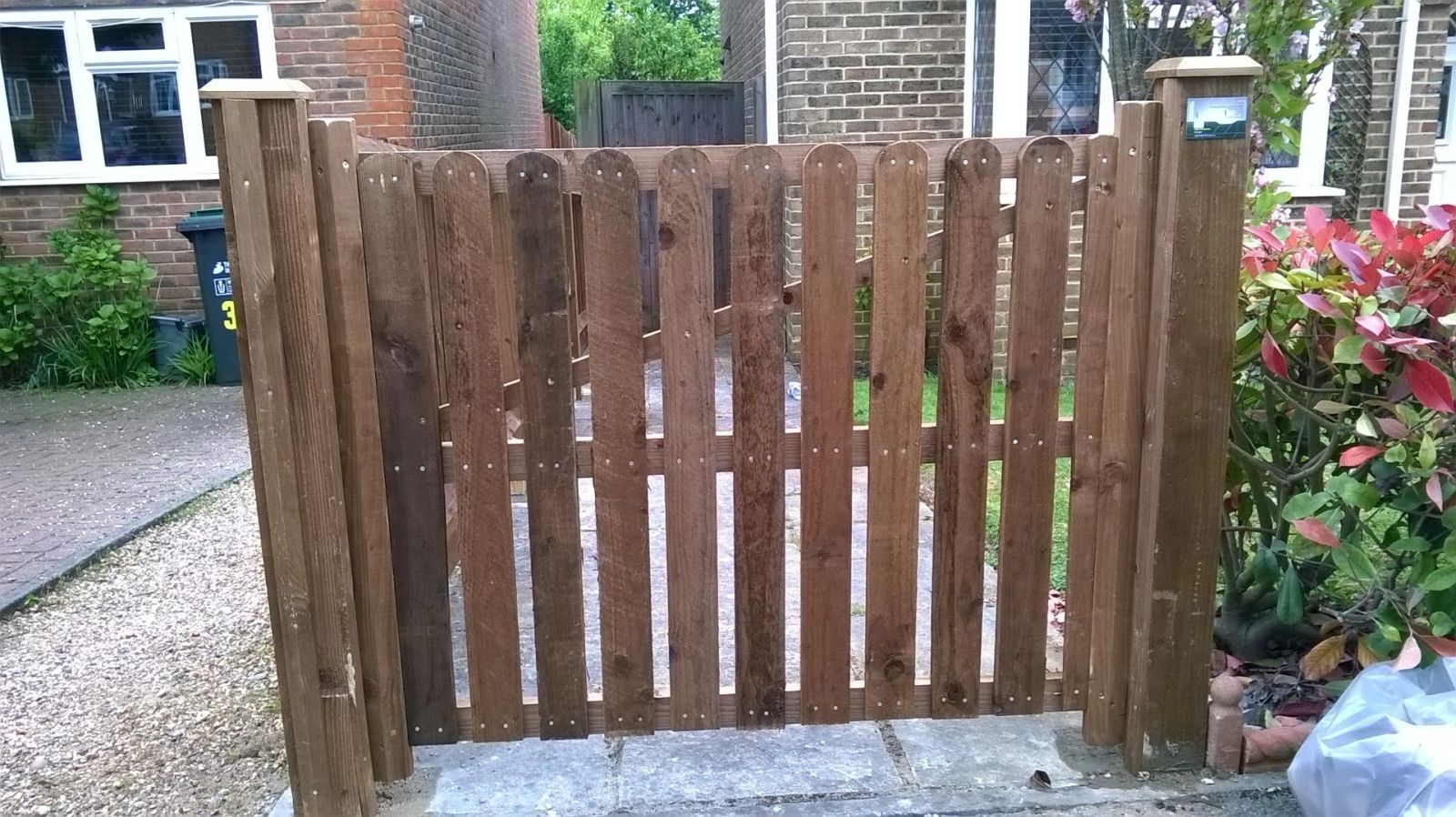
bespoke wooden gate installed by Capital Fencing in Borehamwood (WD6)
Borehamwood · WD6

Metal Gates for mix of post-war terraces in Borehamwood

Metal gates are a fabrication job with an access question attached. Frame section, infill, hinge type and whether it will ever be automated all get settled before we cut steel for a Borehamwood driveway. We're a small, time-served metal gates crew working out of London and Herts, and Borehamwood is a regular week for us. Most briefs here come down to driveway gates where security and impact resistance are the brief — and honestly, whether metal gates is the right answer at all before we quote. Recent work on Manor Way and Furzehill Road. We orient jobs off Elstree & Borehamwood station.

Metal gates are a fabrication job with an access question attached. Frame section, infill, hinge type and whether it will ever be automated all get settled before we cut steel for a Borehamwood driveway. We're a small, time-served metal gates crew working out of London and Herts, and Borehamwood is a regular week for us. Most briefs here come down to driveway gates where security and impact resistance are the brief — and honestly, whether metal gates is the right answer at all before we quote. Recent work on Manor Way and Furzehill Road. We orient jobs off Elstree & Borehamwood station.

Why metal gates works here

  • won't warp, drop or shrink the way timber does
  • handles automation loads without the reinforcement carpentry timber gates need
  • hot-dip galvanised then powder-coated finishes give 25-year service life
Honest trade-offs

Where metal gates isn't the right answer

  • impact damage usually means welding and re-coating on site
  • higher lead time — most metal gates are made to measure

We'll say so on the site visit — a wasted quote helps nobody.

Typical spec

How we build metal gates in Borehamwood

Galvanised steel or wrought-iron-style frames with hardwood or composite infill. Standard build: 50×50mm SHS frame, 40×40mm infill or hardwood slats, hot-dip galv + RAL powder-coat. On Borehamwood jobs we adjust for limited rear access on the older estates means materials usually have to come through the house.

Property mix locally: mix of post-war terraces, 1960s low-rise estates and new-build apartments near the studios. Typical gardens: small to mid-size rear plots, often south-facing on the Elstree side. Postcodes we regularly service: WD6.

Common Borehamwood briefs

  • estate-style pedestrian gates matching bow-top railings
  • driveway gates where security and impact resistance are the brief

Metal Gates FAQs — Borehamwood

How do you finish metal gates to stop rust?

Hinge posts are set deeper and concreted wider than fence posts because a steel leaf loads them every single day. We allow for small to mid-size rear plots when setting out in Borehamwood. In short: won't warp, drop or shrink the way timber does, though impact damage usually means welding and re-coating on site.

Do you install pedestrian and driveway gates as a matching pair?

Hinge posts are set deeper and concreted wider than fence posts because a steel leaf loads them every single day. Survey slots across WD6 are usually inside a week. Worth weighing won't warp, drop or shrink the way timber does against impact damage usually means welding and re-coating on site before you commit.

How long do galvanised gates last before recoating?

Galvanise then powder-coat: the coat is cosmetic, the galvanising is what keeps a Borehamwood gate off the rust list. We work this patch weekly, from Elstree Way out toward bushey. Worth weighing won't warp, drop or shrink the way timber does against impact damage usually means welding and re-coating on site before you commit.

What's the maximum span before a metal driveway gate needs a wheel or cantilever?

Galvanise then powder-coat: the coat is cosmetic, the galvanising is what keeps a Borehamwood gate off the rust list. For mix of post-war terraces in WD6, that is where the cost sits. Worth weighing won't warp, drop or shrink the way timber does against impact damage usually means welding and re-coating on site before you commit.

Are metal gates easier to automate than timber?

Swing direction and drive fall decide whether a Borehamwood pair swings in, out or slides — surveyed first, not assumed. We allow for small to mid-size rear plots when setting out in Borehamwood. Practically, that means handles automation loads without the reinforcement carpentry timber gates need — and we're upfront that no natural warmth — often paired with timber slats or composite infill.

Recent metal gates work
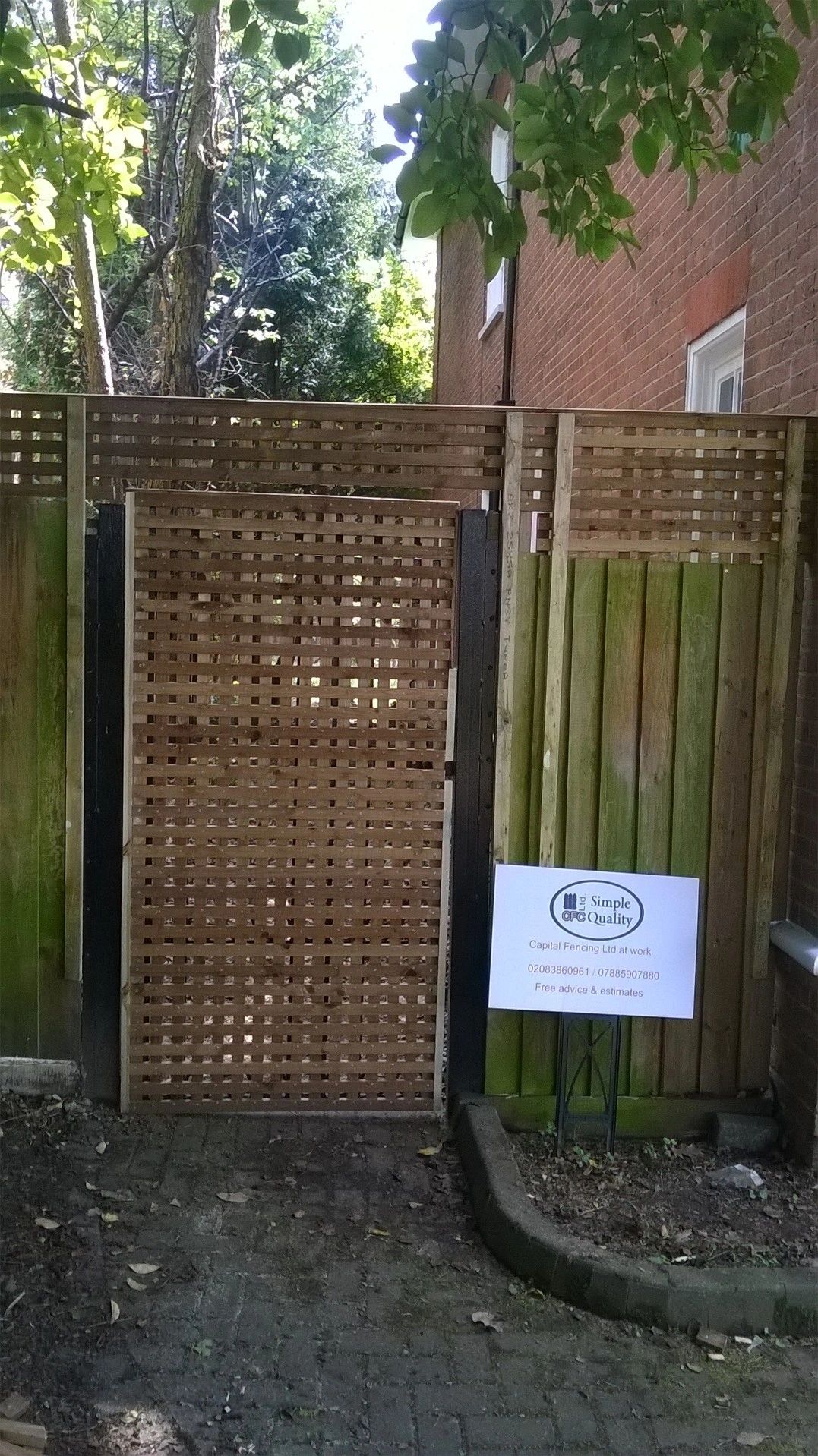
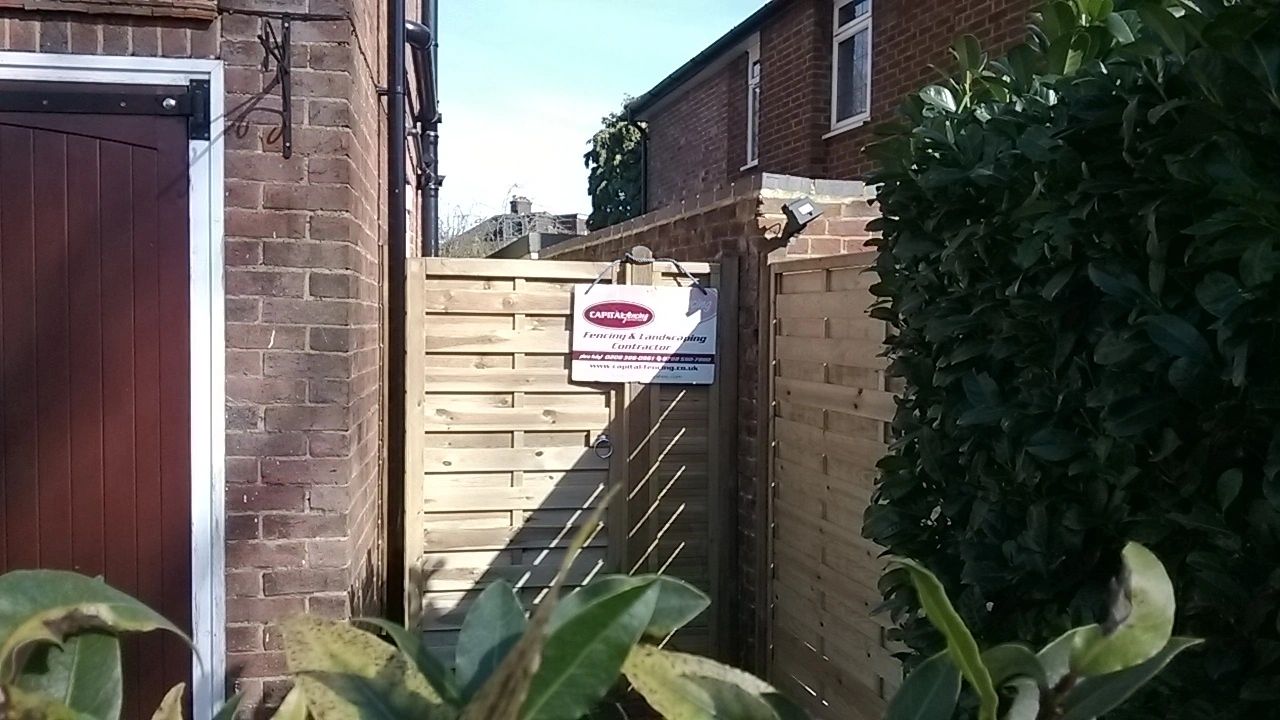
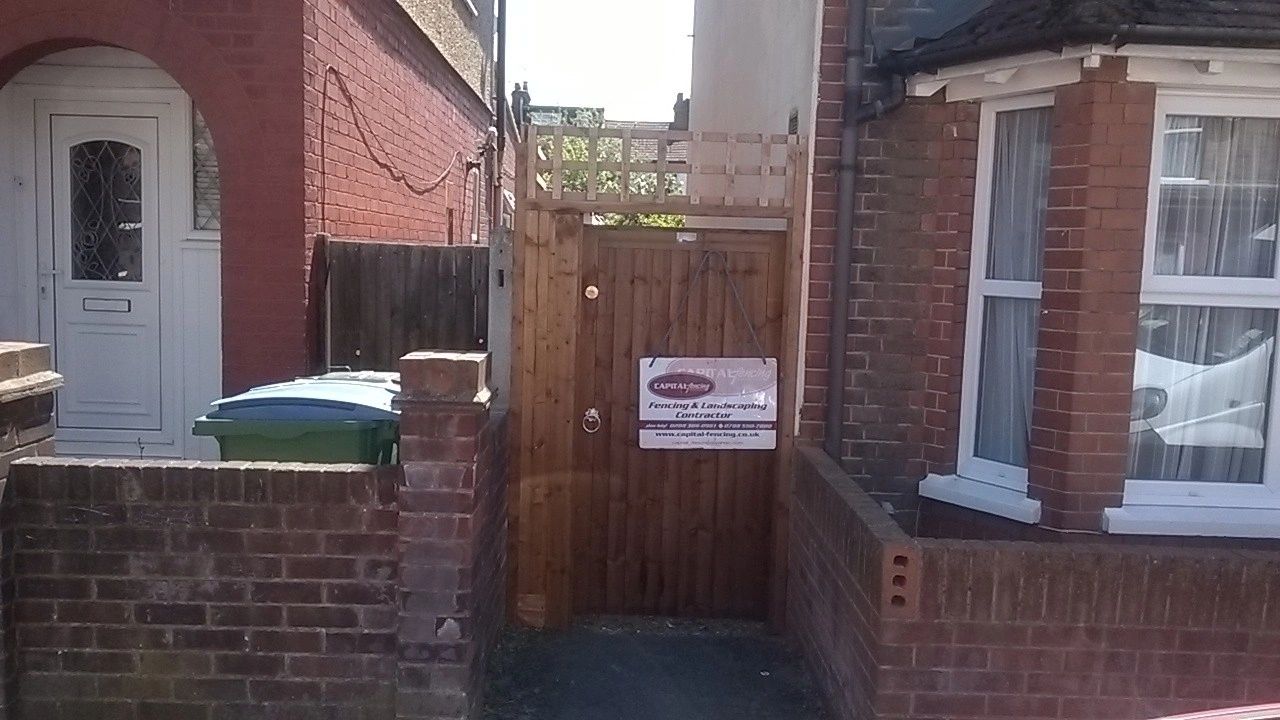
bespoke wooden gate installed by Capital Fencing in Borehamwood (WD6)double driveway gates installed by Capital Fencing in Borehamwood (WD6)hardwood side gate installed by Capital Fencing in Borehamwood (WD6)metal entrance gate installed by Capital Fencing in Borehamwood (WD6)

How we approach metal gates on Borehamwood properties

Choosing post hole diameter for the post size

A hole cut too close to the post's own width leaves no room for concrete to fully surround it, which weakens the base and gives water a direct channel down alongside the timber rather than a solid seal.

A generally quoted rule is a hole roughly three times the post's width, so a 100mm post wants in the region of a 300mm diameter hole, adjusted upward on poor ground or for taller, more heavily loaded posts such as gate posts.

Oversized holes aren't free either — they use more concrete and take longer to backfill and haunch neatly, so the aim is the right diameter for the post and ground rather than simply digging as wide as convenient.

Wheels and rollers on old sliding gates

Wheels on an older sliding gate wear unevenly over years of use, and a gate that starts to lean or drag to one side as it slides is often down to worn wheels rather than a bent frame.

Replacing worn wheel or roller assemblies is usually straightforward provided the track or guide rail underneath is still true.

Smallholdings

A smallholding often needs several different boundary specifications on one plot — stock fencing for grazing paddocks, a more secure perimeter around poultry runs to keep foxes out, and a conventional garden fence around the house itself.

Movement of livestock between fields is usually managed with gates rather than continuous fence removal, so gate positions need agreeing against the smallholder's actual rotation pattern rather than simply the shortest route.

Because smallholdings often combine agricultural and residential use on the same title, it's worth checking which parts of a boundary project count as agricultural permitted development and which fall under the standard residential rules.

Temporary fencing while a permanent boundary is rebuilt

Removing an old boundary fence before the new one is built leaves a gap that matters for security, for keeping pets or children contained, and for site safety around an open excavation.

A simple temporary screen — netting on stakes, or hurdles wired together — bridges that gap without committing to a full second install, and is worth agreeing with the client if the job will span more than a day.

On a site backing onto a road, path or shared area, a temporary barrier around open post holes overnight is also a basic precaution against someone stepping into an unmarked hole in the dark.

Garden doors set into a masonry wall

A garden door hung within a brick or block opening behaves differently to a gate hung between timber posts, since the fixings go into masonry rather than a post that can be dug out and replaced.

Frame fixings into old or soft mortar joints are a common failure point, and repairs often involve re-fixing into sound brick rather than simply tightening the same holes.

Maintenance intervals by material

Untreated or lightly treated softwood fencing generally needs a re-stain or re-oil every one to two years to keep its protective coating intact, while a well-detailed treated softwood fence left to weather naturally can go much longer between any active maintenance.

Composite and uPVC fencing need little more than an occasional wash down, since the material itself doesn't need a protective coating, though fixings and any timber sub-frame beneath it still age on their own separate schedule.

Metal railings and gates need their finish checked periodically for scratches or corrosion starting points, since a small breach in galvanising or powder coating left untreated will spread under the coating rather than staying contained.

Decking oil versus fence stain maintenance cycles

Decking oil is formulated to cope with foot traffic and standing water in a way that a vertical fence stain isn't, and typically needs reapplying annually on a well-used deck compared with the two-to-three year cycle for a fence.

The horizontal surface of a deck also collects standing water and UV exposure differently to a vertical panel face, wearing unevenly in high-traffic paths compared with less-used corners.

Clients used to a fence's maintenance rhythm sometimes underestimate how much more frequently a deck's finish needs attention, which is worth setting expectations on at the time of installation.

Tongue-and-groove privacy panels

Tongue-and-groove boards interlock edge to edge with no overlap, giving a genuinely solid, gap-free face that's the most private board profile available in timber fencing.

Because the boards key into each other rather than overlapping, the panel needs to be built with a small allowance for seasonal swelling, or the interlocking edges can bind and cup as the timber moves.

It's a heavier, stiffer panel than lap or slatted profiles, so it's usually paired with more substantial posts, and it's a common choice for pool or hot-tub screening where sightlines matter more than airflow.

Certificates of lawfulness for existing boundary structures

A Certificate of Lawfulness of Existing Use or Development can formally confirm that an existing boundary structure was lawfully built, which is useful where there's uncertainty or a dispute about historic permissions.

This is different from planning permission itself — it's a factual confirmation of lawful status, often sought before a property sale to resolve a conveyancing query.

Where a long-standing boundary fence's planning history is unclear, applying for this kind of certificate can settle the question more reliably than relying on assumption.

Protecting known cable and pipe runs during digging

Where a service run is known — marked by the utility company, visible from a meter or duct cover, or noted on a site plan — a physical marker or hand-dug trial pit at that point before general digging starts confirms its exact depth and route.

Once a service is located, leaving a visible marker such as a cane or spray line on the surface stops it being forgotten by whoever digs the next hole along the run, particularly on a multi-day job with different people digging on different days.

Ducted services are generally easier to work around than direct-buried cables since the duct itself gives some protection, but the duct can still be damaged by an auger or breaker if its depth isn't confirmed first.

Checking existing boundary alignment before a like-for-like rebuild

Rebuilding a fence on the line of an existing one assumes that existing line was accurate, which isn't always the case — old fences can have drifted from the true boundary over successive repairs and replacements.

A quick check against any available reference, such as a boundary marker, an adjoining wall, or a neighbour's fence that's known to be accurate, is worth doing before assuming the old line should simply be copied.

Where a discrepancy is found, it's a conversation for the client and neighbour to have before rebuilding, since quietly correcting or quietly perpetuating a boundary error both carry consequences beyond the fencing job itself.

Sheeting plants and borders during fencing works

Established shrubs and borders close to a fence line are easily damaged by dropped tools, spoil heaps or simply being walked over repeatedly during a multi-day job, so temporary boards or breathable sheeting laid over beds reduces incidental damage.

Concrete dust and cement splash can scorch foliage if it settles on leaves and isn't rinsed off promptly, which is worth flagging before mixing starts next to a prized border.

Where a plant genuinely sits in the way of a post position, agreeing with the client in advance whether it's moved, worked around, or the post offset avoids an awkward decision made on the spot mid-dig.

Sports clubs

Sports club boundaries need to withstand impact from balls and players far more than an ornamental garden fence, which usually means heavier-gauge mesh or rebound-rated panel rather than standard closeboard along pitch-facing runs.

Ball-stop netting on posts set back from the fence line is a common addition where a pitch runs close to a public path or road, and post spacing for that netting is tighter than for a standard fence line.

Clubhouse car parks and pitch perimeters are also often used for match-day parking, so access for fencing work needs scheduling around the fixture calendar rather than assumed to be free every weekend.

Using profile boards at corners

Profile boards — a horizontal board fixed between two pegs set back from the actual corner — let a string line be set, removed and reinstated at the exact same point throughout a job without disturbing the corner itself.

They're most useful where a run turns through an angle, since the intersecting lines from two boards mark the true corner point independently of any post already dug.

Leaving the boards in place until the last post is set and checked avoids the common error of the line creeping slightly as pegs get knocked or the string is re-tied.

We fabricate to the opening rather than cutting a stock gate down, so the gap at the meeting stiles is even top to bottom across WD6. We keep the metal gates process simple for Borehamwood clients: site visit, written quote, agreed start date, then in and out cleanly. No subcontracted labour, no chasing for an invoice at the end. Recent work on Brook Road and Furzehill Road. We orient jobs off Meadow Park (Boreham Wood FC).

Get In Touch

Get My Free Quote — 24h Response

No callout fee · Free site visit · Friendly local team covering London & Hertfordshire.

Call us
07885907880
or 02036484746
Email
capital_fencing@yahoo.com
WhatsApp
Message us anytime
Area
London & Hertfordshire
Payment
Card payments accepted

Pay by debit or credit card, bank transfer or cash once the work and price are agreed. No deposit taken online.

Request a Free Quote

We'll get back to you within 24 hours.

Free Site Visit No Callout Fee
Call WhatsAppQuote