
Serving Hackney
Hackney's Acoustic Fencing Team
An acoustic fence works on mass and sealed joints, not the panel style — a heavy, gap-free screen close to the noise source does more than any 'acoustic' label on its own.
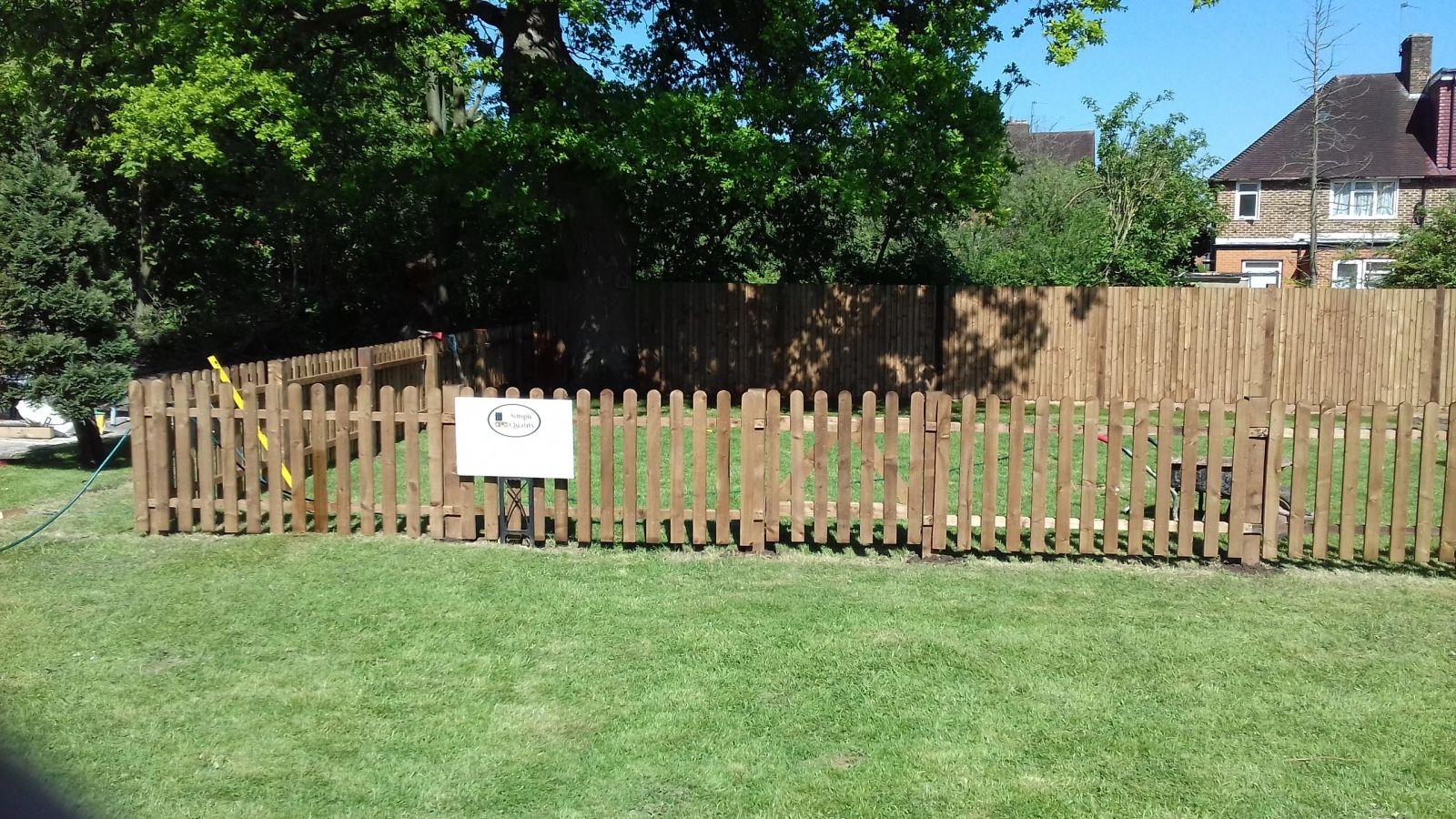
Around Hackney, acoustic fencing briefs are shaped by many boundaries are shared with three or four neighbours on victorian back-to-backs — clear ownership marks matter. Flanking noise reaches a listener by a path that goes around a barrier rather than through or over it — past an open end, through a gap at a gate, or via a shared side return — and can undermine an otherwise well-built central section. Well Street, Mare Street London Fields Broadway Market and London Fields are established local landmarks in the south of the borough. Hackney falls under Hackney Council, in the E5 postcode area, neighbouring waltham forest.
Why this comes up in Hackney
We keep a standing note on Hackney: many boundaries are shared with three or four neighbours on victorian back-to-backs — clear ownership marks matter. As a rough rule, doubling the distance from a point noise source reduces the sound level by a noticeable, broadly consistent amount in open ground, which is why moving a seating area further from a boundary can help almost as much as adding barrier height. Hackney falls under Hackney Council, in the E5 postcode area, neighbouring islington.
Flanking noise paths around a barrier
Flanking noise reaches a listener by a path that goes around a barrier rather than through or over it — past an open end, through a gap at a gate, or via a shared side return — and can undermine an otherwise well-built central section.
Checking for flanking paths at the ends of a run and at any openings is as important as the panel build itself, since sound will take the easiest available route regardless of how solid the main section is.
Temporary acoustic hoarding for construction sites
A temporary acoustic hoarding, sometimes required around a construction site near housing, uses a similar mass-and-seal principle to a permanent domestic barrier but is built for a fixed duration and easier removal rather than long-term weathering.
These hoardings are usually panelised for quick assembly and disassembly, trading some of the sealing refinement of a permanent build for speed of installation and removal once the works finish.
The distance-doubling rule of thumb
As a rough rule, doubling the distance from a point noise source reduces the sound level by a noticeable, broadly consistent amount in open ground, which is why moving a seating area further from a boundary can help almost as much as adding barrier height.
This rule applies most cleanly to a single point source in open space and becomes less reliable near reflective surfaces or with a source spread along a line, like a road, rather than concentrated at one point.
Surveying a noise problem before quoting
An acoustic survey looks at where the noise is actually coming from — road surface height, rail line level or playground boundary — rather than assuming a stock fence height will do the job, because the fence needs to break the direct line of sight to that specific source.
We also check what's already reducing noise on site, such as existing planting or a change in ground level, since that affects how much extra a new fence can realistically add.
Stepping panel height on a sloping acoustic boundary
Where the ground falls along a boundary that needs consistent acoustic screening, stepping the panel height with the slope keeps the top of the run at a consistent level relative to the noise source, rather than following the ground and creating a dip in coverage partway along.
A raked top edge, following the slope directly, can leave a section of the run lower relative to the source than intended, opening a partial sightline exactly where the ground falls away.
Fixing to an existing wall to add mass
Where an existing wall already forms part of the boundary but doesn't give enough height or mass for the noise involved, extending it upward or fixing an acoustic panel section to the top can add the extra performance needed without rebuilding the whole boundary.
The wall's structural condition and the fixing method both need checking first, since an old wall may not be able to safely carry the extra height or weight without additional support.
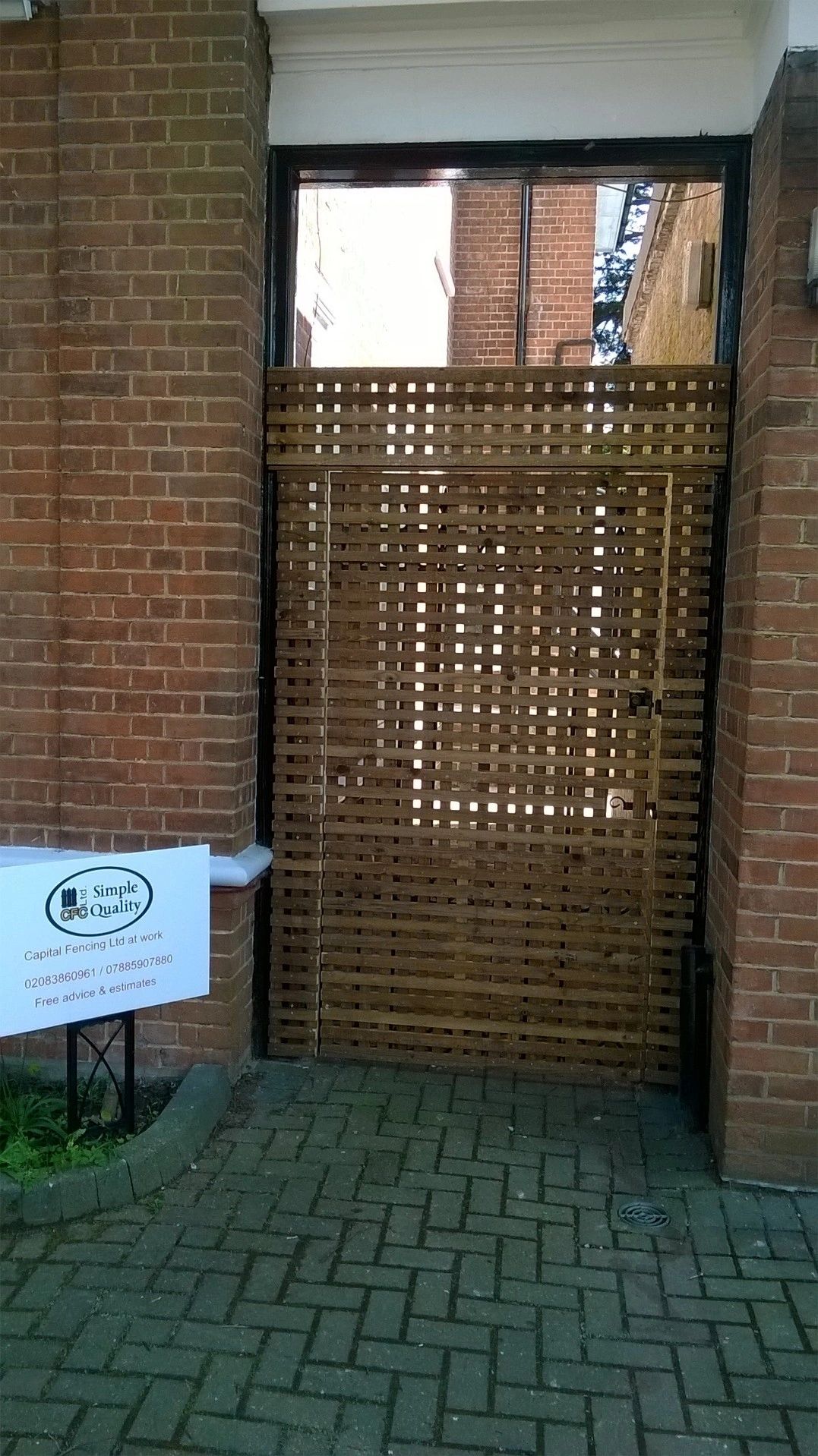
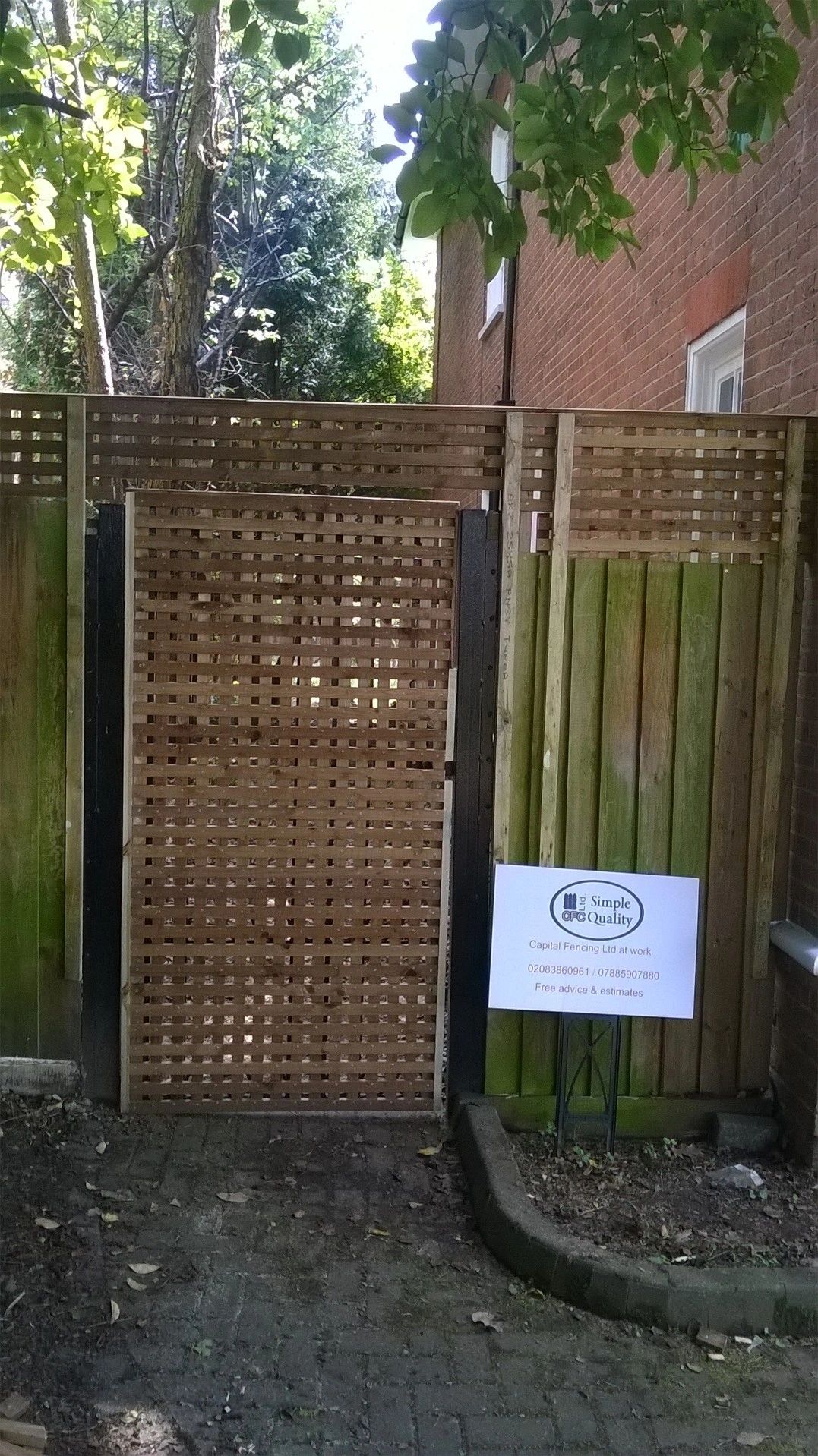
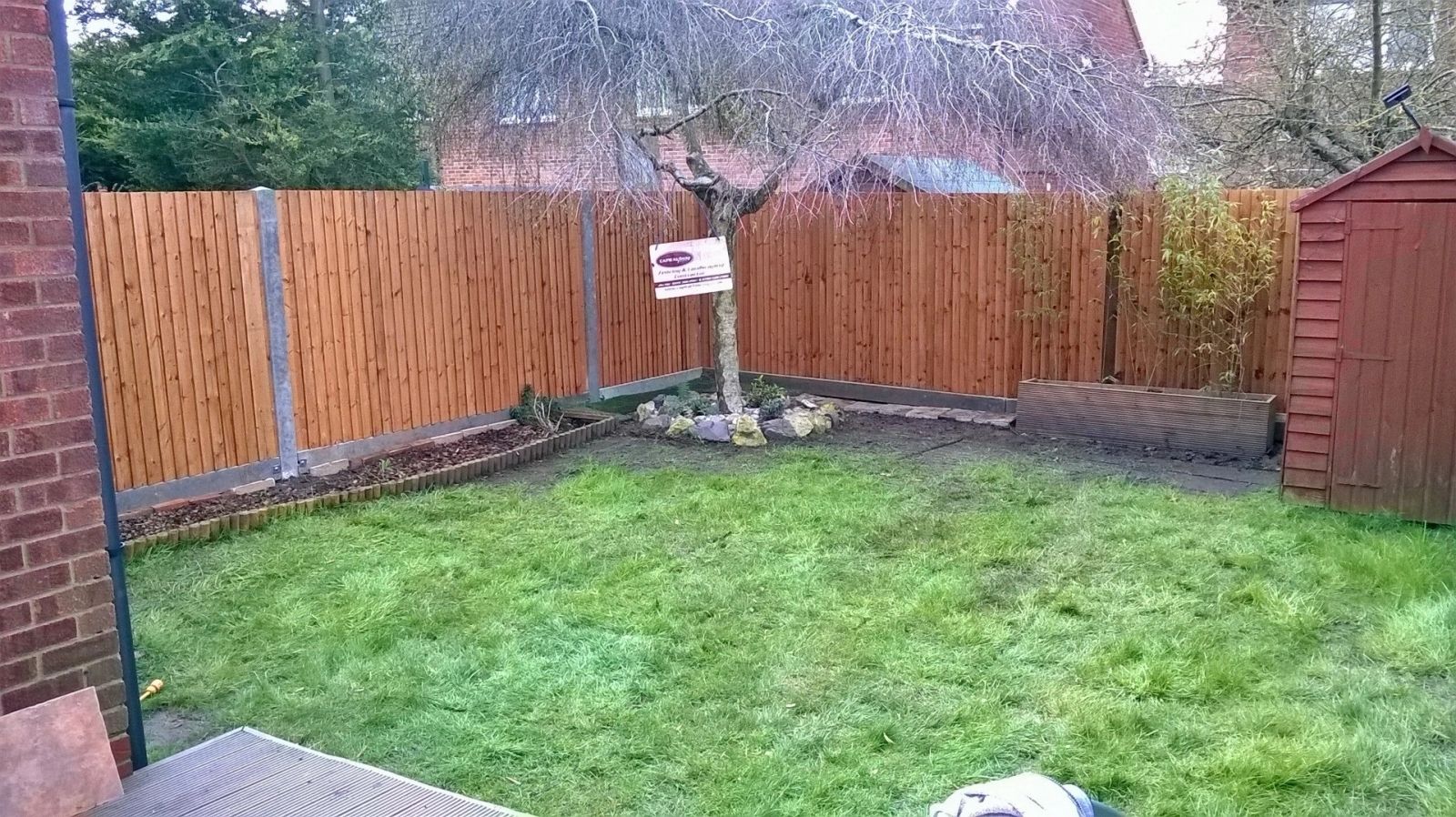
Hackney in one line: An acoustic survey looks at where the noise is actually coming from — road surface height, rail line level or playground boundary — rather than assuming a stock fence height will do the job, because the fence needs to break the direct line of sight to that specific source. Kingsland Road, Broadway Market Regent's Canal (Kingsland basin) Broadway Market and London Fields are established local landmarks in the south of the borough. Broadway Market and London Fields are established local landmarks in the south of the borough.
Frequently asked
Will an acoustic fence help with noise from a low, rumbling source?
Less than it helps with higher-frequency noise, since low-frequency sound diffracts over a barrier more readily regardless of the barrier's mass. Broadway Market, Amhurst Road Hackney Marshes The Regent's Canal and the River Lea both run through the borough, with Hackney Marshes forming a large area of open land on the eastern edge.
Does denser hedging or a green wall block noise like a fence?
Only slightly — foliage has very little mass and provides limited absorption, so it can complement a solid barrier but isn't a substitute for one.
Will planting in front of my fence improve the acoustic result?
Marginally — dense planting adds a small amount of extra absorption and can help visually, but the fence itself still does the main work. The Regent's Canal and the River Lea both run through the borough, with Hackney Marshes forming a large area of open land on the eastern edge.
Do I need planning permission for a taller acoustic boundary?
The same height rules apply as any boundary — we check the specific site's allowance before designing the height.
Why does an acoustic fence need a deeper foundation than a normal fence?
It carries more static weight and catches more wind load due to its solid face, so posts need a deeper, more substantial base to stay upright over time.
What's the difference in noise character between road, rail and aircraft?
Road noise is fairly continuous and mid-frequency, rail noise is intermittent with more low-frequency content, and aircraft noise arrives from overhead rather than along the ground.
What maintenance does an acoustic fence need?
Checking for joints opening up, warping boards or gaps at the base, since continuity of the seal is what the acoustic benefit depends on.
Is a stepped fence still effective on a slope?
Yes, provided it's stepped rather than raked — a raked panel can leave a gap at one end that lets sound straight through underneath.
Not sure a fence will make enough difference?
We'll assess your specific noise source on site and tell you honestly whether a fence upgrade is worth the spend. We're on site around Hackney via A10 Kingsland Road / A107 Mare Street regularly.
Book a noise assessmentGet My Free Quote — 24h Response
No callout fee · Free site visit · Friendly local team covering London & Hertfordshire.
Pay by debit or credit card, bank transfer or cash once the work and price are agreed. No deposit taken online.