London & Hertfordshire Free Site Visit
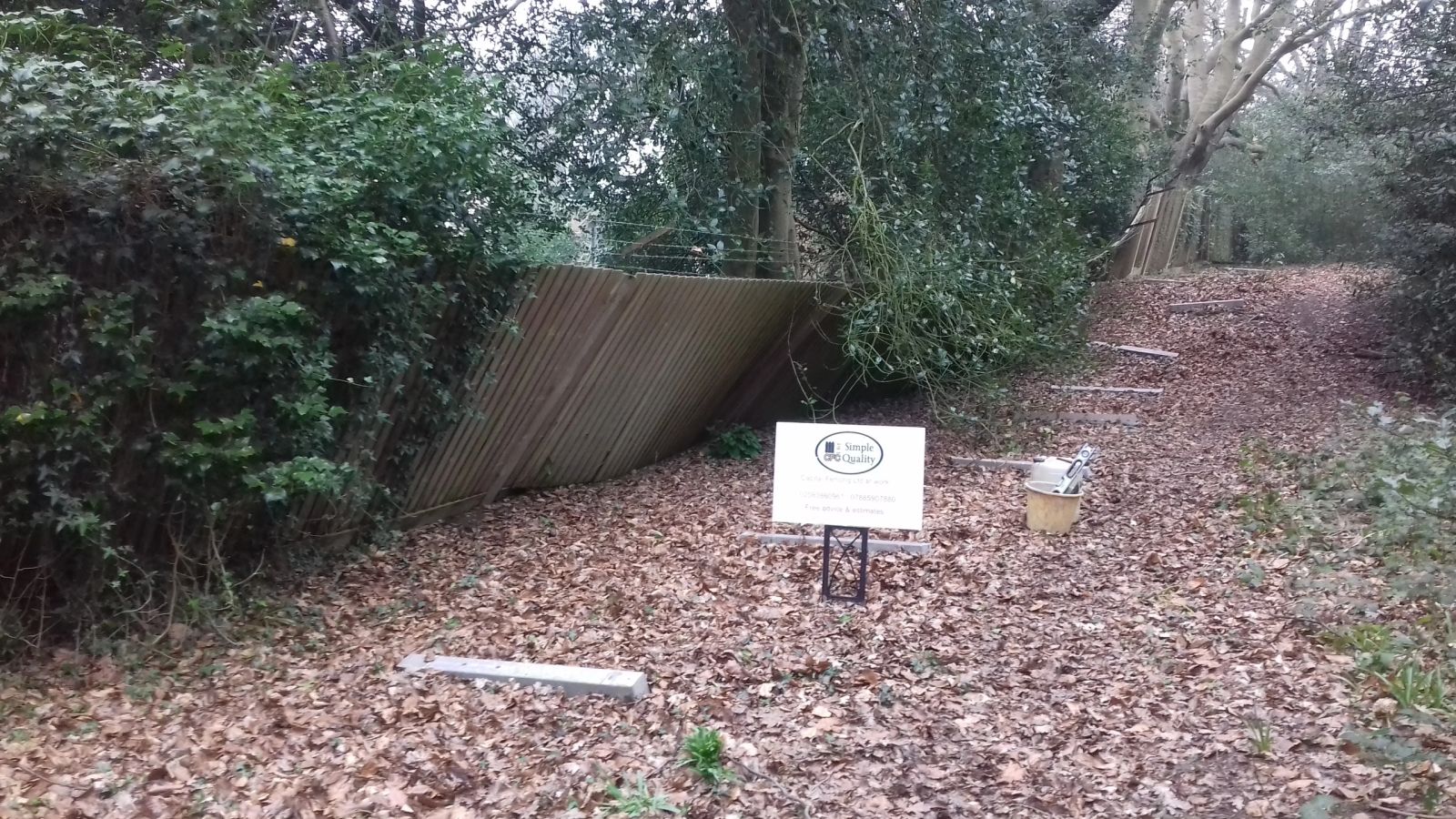
closeboard fence run installed by Capital Fencing in Hackney (E5)
Hackney · E5 / E8 / E9 / N1 / N16

School & Nursery Fencing in Hackney (E5)

If you're weighing school and nursery fencing for a property in Hackney, the first thing that matters is climbable geometry and finger-trap points at gate hinges — not the material choice. Once that's settled, bow-top 1.2m for EYFS boundaries is where most of our school and nursery fencing work in E5 lands, with 358 prison-mesh 1.8m for perimeter and MUGA as a considered alternative. Roads such as Amhurst Road and Well Street are typical of the local layout. Victoria Park (west edge) is a useful local reference point. The Regent's Canal and the River Lea both run through the borough, with Hackney Marshes forming a large area of open land on the eastern edge.

If you're weighing school and nursery fencing for a property in Hackney, the first thing that matters is climbable geometry and finger-trap points at gate hinges — not the material choice. Once that's settled, bow-top 1.2m for EYFS boundaries is where most of our school and nursery fencing work in E5 lands, with 358 prison-mesh 1.8m for perimeter and MUGA as a considered alternative. Roads such as Amhurst Road and Well Street are typical of the local layout. Victoria Park (west edge) is a useful local reference point. The Regent's Canal and the River Lea both run through the borough, with Hackney Marshes forming a large area of open land on the eastern edge.

Typical school and nursery fencing briefs in Hackney

  • 1.8m weld-mesh on galvanised posts around a primary school MUGA
  • matched pedestrian and vehicle gates with mag-lock and DDA-compliant pedestrian access
Default spec

How we build school and nursery fencing in Hackney

1.2m or 1.8m bow-top or 358 weld-mesh, hot-dip galvanised then RAL powder-coated posts, self-closing gates with anti-finger-trap hinges. On Hackney jobs we adjust for many boundaries are shared with three or four neighbours on victorian back-to-backs — clear ownership marks matter.

Property mix locally: Victorian terraces across Stoke Newington and De Beauvoir, plus post-war estates around Homerton and London Fields. Typical gardens: small rear gardens with mature planting; several plots border the Regent's Canal or Hackney Marshes. Postcodes we regularly service: E5, E8, E9, N1, N16.

we install to BS 1722-14 for bow-top and BS 1722-10 for weld-mesh, provide safeguarding-relevant sign-off notes, and can attend outside term time only.

Why this spec, for primary schools, nurseries and early-years settings

  • no horizontal rails at climbable heights — safeguarding-first geometry
  • hot-dip galvanised then powder-coated finishes carry a 25-year service life
  • welded rather than bolted joints so nothing works loose over a school year
What goes wrong

Common failure modes on school and nursery fencing

  • specifying decorative railings with climbable finials near a play area — trips a safeguarding audit every time
  • under-sized gate posts on double vehicle gates — they drop within a year on daily use

School & Nursery Fencing FAQs — Hackney

Do you install to BS 1722 for school fencing?

On school and nursery fencing jobs in Hackney (E5), our default answer is: 1.2m or 1.8m bow-top or 358 weld-mesh, hot-dip galvanised then RAL powder-coated posts, self-closing gates with anti-finger-trap hinges. For context: hot-dip galvanised then powder-coated finishes carry a 25-year service life. Installed to BS 1722 standards, with fitter details available on request.

What height should nursery outdoor fencing be?

Across Hackney we spec around many boundaries are shared with three or four neighbours on victorian back-to-backs — clear ownership marks matter, so on school and nursery fencing that usually means bow-top 1.2m for EYFS boundaries. We install to BS 1722-14 for bow-top and BS 1722-10 for weld-mesh, provide safeguarding-relevant sign-off notes, and can attend outside term time only.

Do you supply RAMS and public-liability certificate ahead of works?

Hackney coverage means we can survey most E5 addresses inside a week — primary schools, nurseries and early-years settings needing safeguarding-compliant boundaries. The honest trade-off is specifying decorative railings with climbable finials near a play area — trips a safeguarding audit every time — which is exactly what our default spec designs out.

Can pedestrian and vehicle gates share a controlled entry?

Practically: bow-top mesh replacing tired timber around a nursery outdoor area. That's the Hackney version of this job, not a generic one. The honest trade-off is specifying decorative railings with climbable finials near a play area — trips a safeguarding audit every time — which is exactly what our default spec designs out.

Can the job be scheduled inside a half-term break?

On school and nursery fencing jobs in Hackney (E5), our default answer is: 1.2m or 1.8m bow-top or 358 weld-mesh, hot-dip galvanised then RAL powder-coated posts, self-closing gates with anti-finger-trap hinges. The honest trade-off is specifying decorative railings with climbable finials near a play area — trips a safeguarding audit every time — which is exactly what our default spec designs out.

Recent school & nursery fencing work
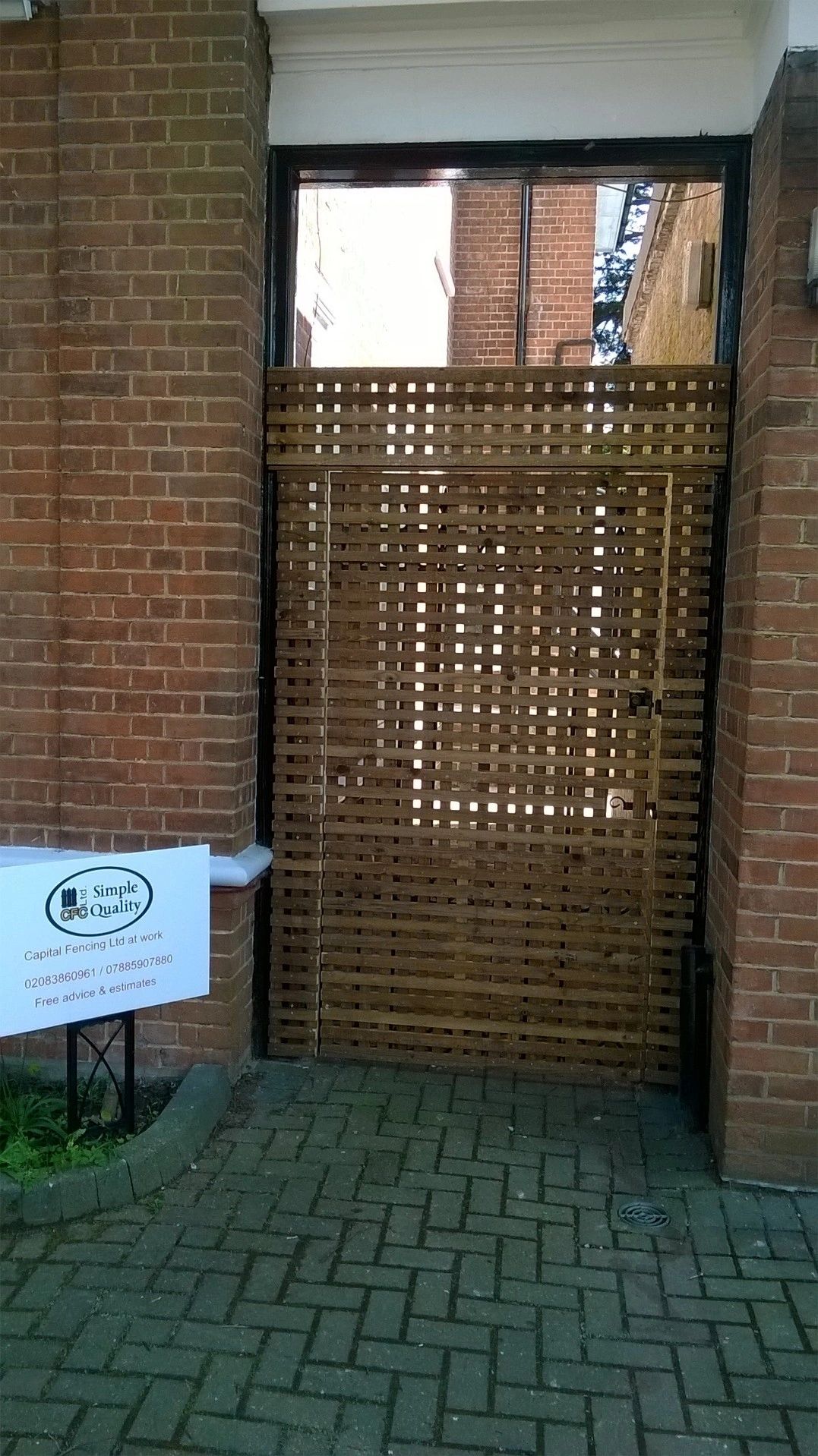
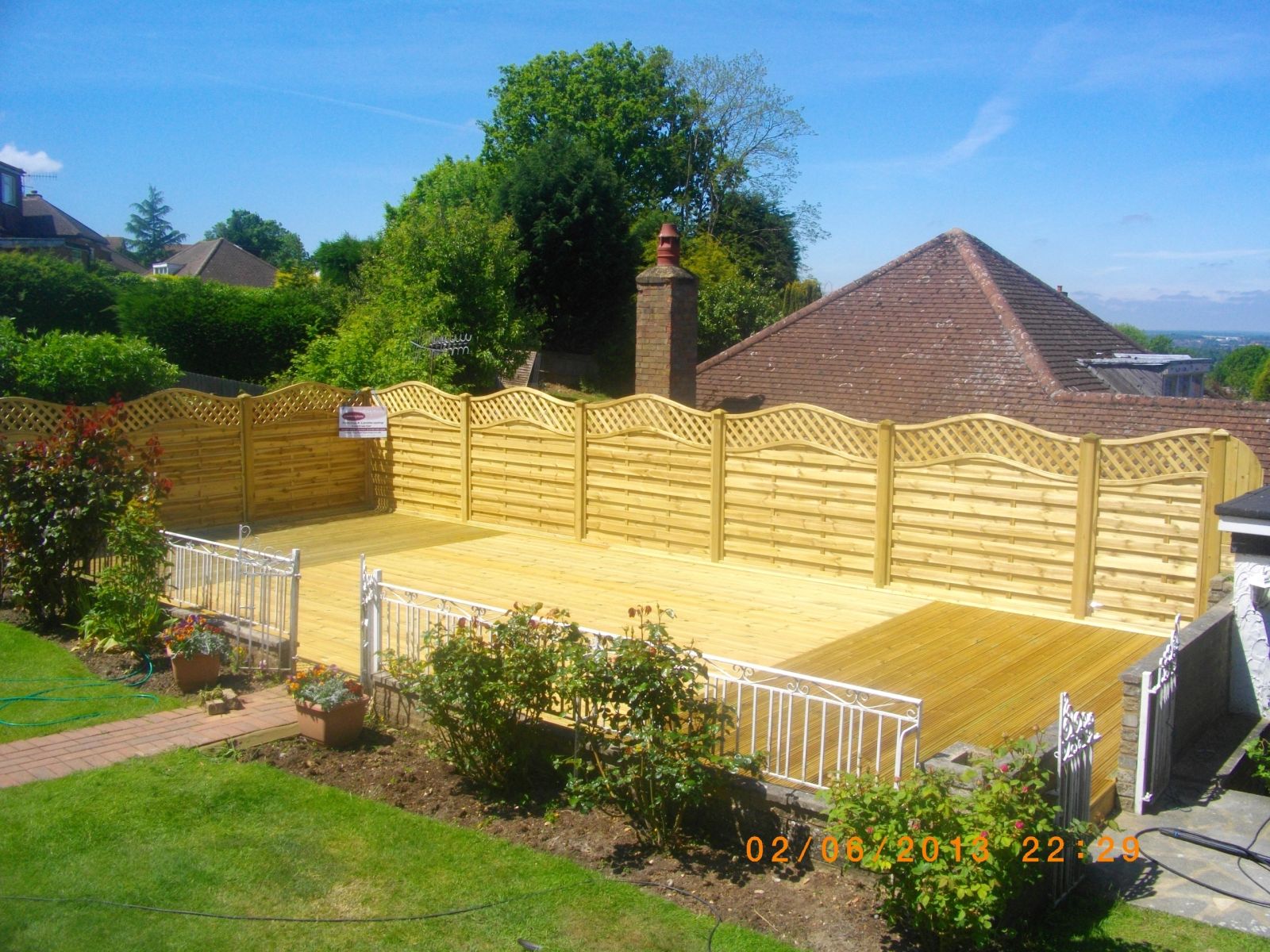
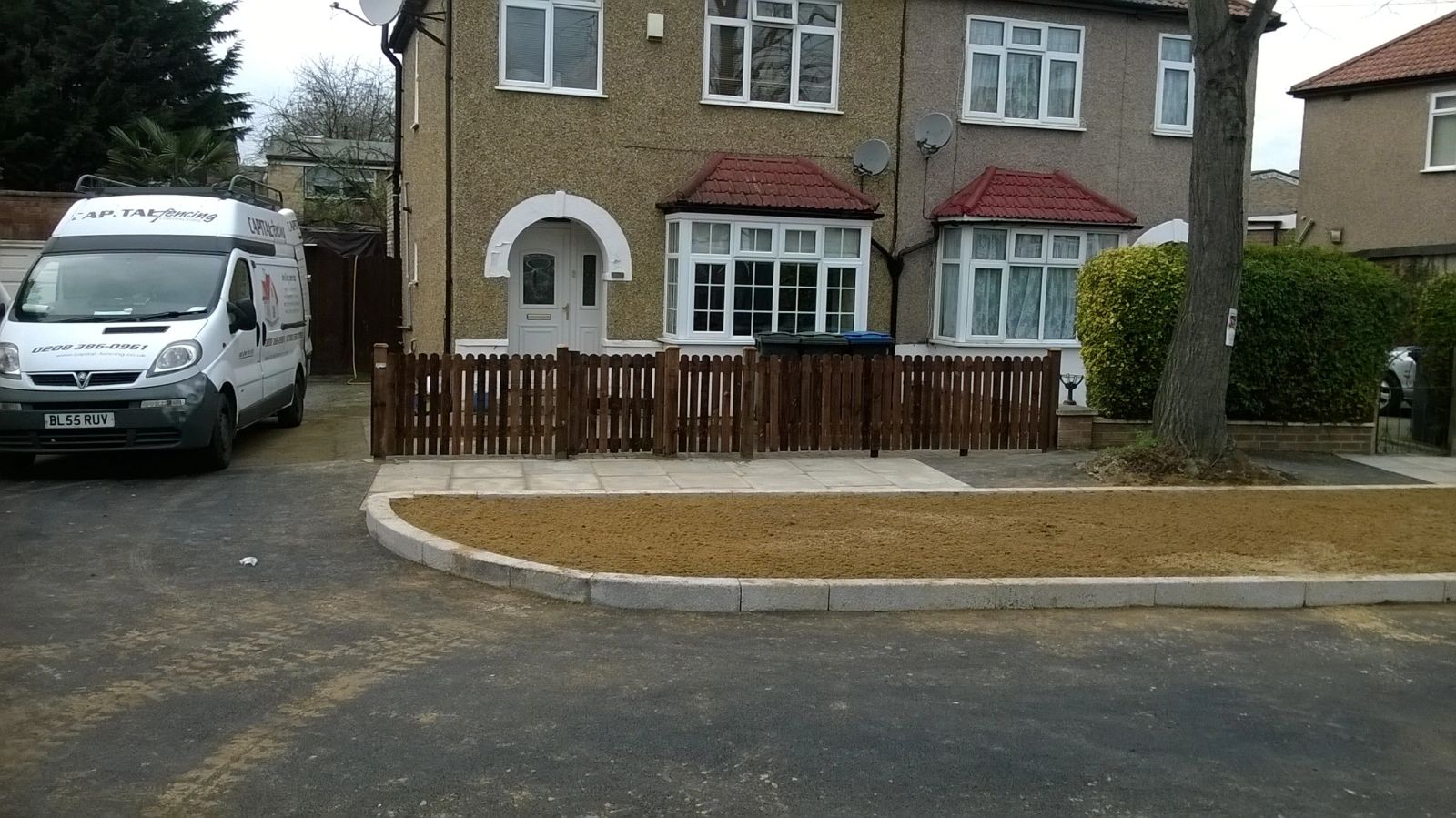
closeboard fence run installed by Capital Fencing in Hackney (E5)panel fence install installed by Capital Fencing in Hackney (E5)trellis-topped fence installed by Capital Fencing in Hackney (E5)bespoke decorative fence installed by Capital Fencing in Hackney (E5)

Local considerations across Hackney and islington

Hinge-post fixing and why it fails first

The hinge post carries the full weight of a gate every time it swings, and over years that repeated leverage is what pulls fixings loose or racks a timber frame out of square, far more than the latch side ever does.

A repair that only addresses the visible sag without checking the hinge post fixing itself tends to be a short-lived fix.

Testing timber moisture content before deciding on a repair

A moisture meter reading on a post or board gives a more reliable picture of remaining life than appearance alone, since timber can look weathered but still be structurally sound, or look reasonably clean-faced while being saturated and soft just beneath the surface.

This is particularly useful where a client is unsure whether a section needs full replacement or can be left, since a moisture reading gives a specific figure to base that decision on rather than a subjective visual judgement.

Matching a discontinued panel style

Panel profiles and slat widths change between manufacturers and over time, so a boundary installed a decade or more ago may use a profile that's no longer produced.

Where an exact match isn't available, the closest equivalent height and style is used and the mismatch is pointed out honestly rather than presented as an exact replacement.

Schedules of condition before nearby works

A schedule of condition is a dated record, often with photographs, of a boundary structure's state before nearby building work begins, used to settle any later dispute about damage caused during that work.

Where a neighbour is undertaking significant building work close to a shared boundary, requesting this kind of record beforehand is reasonable and protects both parties.

This is distinct from a full party wall agreement but is often produced as part of the wider party wall process where one applies.

Repositioning a post slightly off its original line

Where an original post position has proven to be a recurring failure point — sitting in a wet hollow, or close to a tree root that keeps disturbing it — repositioning it a short distance along the run can solve a problem that repeated resets in the same spot haven't.

This needs agreement on the boundary line first if the shift is more than a token amount, since moving a post changes where the fence physically sits relative to the boundary rather than just repairing it in place.

Straightening a leaning run

A run that's leaning uniformly along several bays usually points to a common cause — waterlogged ground, wind loading from one direction, or an original footing depth that was too shallow — rather than a fault with any single post.

Straightening involves resetting posts along the affected bays rather than pulling the fence back into line at the top, since forcing the panels straight without addressing the post bases just reintroduces the lean.

Checking a gate opening is square before building the gate

An opening that looks square by eye can still be a few centimetres out corner to corner, which only becomes obvious once a gate built to the nominal width won't hang without binding on one side.

Measuring both diagonals of the opening and comparing them is a quick way to confirm square — equal diagonals mean a true rectangle, unequal diagonals mean the posts have drifted out of parallel or the opening has racked.

Where an opening is slightly out of square and can't easily be corrected by resetting a post, building the gate with a small taper to match the actual opening is usually more practical than forcing the posts back into an exact rectangle.

Line wire spacing on a chain-link run

Chain-link relies on horizontal line wires threaded through the mesh at intervals to stop it sagging or being pushed out of shape between posts; wider spacing saves wire but lets the mesh bow more under a leaning load.

A security-rated chain-link run typically tightens this spacing compared with a low-cost agricultural install, along with a straining wire top and bottom rather than just one line.

Gate ironmongery on a security boundary

A security fence is only as strong as its weakest gate junction — commercial-grade hinges, drop bolts and hasps matched to the fence spec close the gap that a domestic-grade fitting would leave open.

Where a client wants electronic access control we fit the mechanical hardware to the same spec and refer the electronic side to a specialist, rather than mixing a heavy-duty fence with a light-duty latch.

Stabilising a pergola post that has started to rock

A pergola post rocks where its footing has cracked or where the post itself has begun rotting at the base, and because pergola posts often carry a roof structure rather than just a fence line, a rocking post carries more consequence if ignored.

Repair generally means breaking out and repouring the footing with the post braced upright and level while the concrete cures, and checking the beam fixings at the top of the post at the same time, since a post reset out of plumb strains the joinery above it.

Using profile boards at corners

Profile boards — a horizontal board fixed between two pegs set back from the actual corner — let a string line be set, removed and reinstated at the exact same point throughout a job without disturbing the corner itself.

They're most useful where a run turns through an angle, since the intersecting lines from two boards mark the true corner point independently of any post already dug.

Leaving the boards in place until the last post is set and checked avoids the common error of the line creeping slightly as pegs get knocked or the string is re-tied.

Fox digging beneath chicken runs and fence lines

Foxes are capable diggers and will exploit any soft ground at the base of a fence or run, particularly around poultry enclosures, so a below-ground barrier matters as much as the fence height itself.

An L-shaped buried apron of mesh, turned outward from the base of the fence rather than straight down, stops digging by making the animal hit an obstruction before it reaches the fence line itself, which is more reliable than depth alone.

This detail is worth specifying separately from the fence quote for anyone keeping poultry or small livestock, since standard fence installation doesn't normally include a buried predator barrier.

Prioritising repairs ahead of the windier months

A post or panel that's borderline rather than fully failed is more likely to come down completely once autumn and winter storms start, so repairs identified in summer are worth scheduling before the exposed season rather than left until something actually blows over.

This is particularly relevant on exposed boundaries or end bays that have already shown signs of movement, since those are the sections most likely to fail first under wind load.

Safety considerations on a storm-damage repair

A fallen panel or leaning post next to a road, a shared path or a play area is treated as a priority repair on safety grounds, and the damaged section is made safe on the first visit even if the full repair follows later.

Where a repair is next to a boundary with public access, work is fenced off or scheduled to avoid the busiest times of day.

Reading a scrape mark on the ground or paving

A worn arc or scrape mark on paving beneath a gate's swing shows exactly where the gate is currently dragging, and its position — near the hinge end, the latch end, or evenly across the arc — indicates whether the fault is a dropped hinge, a racked frame, or a ground level change.

This kind of visual evidence is often more reliable than the gate owner's description of when the problem started, since gradual drops are easy to underestimate.

Insurance paperwork after storm damage

Most household policies distinguish between storm damage to a fence, which is often covered subject to policy wording and excess, and general wear or rot, which typically isn't, so insurers commonly ask for photographs of the damage and sometimes of the fence's prior condition.

A dated photo of the boundary from before the storm, even an incidental one, can materially help a claim where the insurer disputes whether failure was storm-related or simply due to age.

This is a general description of how these claims are typically assessed rather than a statement about any specific insurer's policy, and terms, excesses and definitions of 'storm' vary between providers and should be checked in the policy document.

North-facing boundaries and slower drying

A north-facing boundary receives little or no direct sun through autumn and winter, so rainfall sits on the timber and in the surrounding ground noticeably longer than on a south-facing equivalent.

This affects concrete curing time as well as timber drying — a post base poured on a north-facing run in cold weather takes longer to reach working strength and shouldn't be loaded or backfilled early just because a south-facing base nearby has already set.

Over the life of the fence, the practical effect is usually a shorter repaint or restain interval on the shaded side than the rest of the same boundary.

Planning enforcement notices on unauthorised boundaries

Councils have enforcement powers to require unauthorised boundary structures to be altered or removed, usually triggered by a neighbour's complaint or a routine site visit for unrelated work.

There are time limits on enforcement action for most breaches, though these vary by the type of breach and don't apply to work within a conservation area or affecting a listed building in the same way.

Responding promptly and cooperatively to any enforcement contact from a council generally leads to a better outcome than ignoring it.

Drainage easements running under a fence line

Some boundaries have a formal drainage easement recorded against the title, protecting a buried pipe or watercourse that a neighbouring property has the right to maintain access to.

Fence posts set directly over or immediately alongside a protected drainage run can technically breach the terms of the easement even if the pipe itself isn't damaged during installation.

Checking the title register, and asking the water company to confirm any known drainage records, is sensible before digging post holes on an older plot with an unclear drainage history.

HMO licensing and boundary obligations

A licensed House in Multiple Occupation can carry specific conditions relating to the external areas of the property, including secure and well-maintained boundary fencing, safe means of escape through a rear garden, and bin storage screened from the street.

Licensing officers inspecting the property will check the condition of boundary structures as part of the wider fire safety and amenity standards, and a broken or unsafe fence can be flagged as a licence condition breach requiring remedy within a set period.

Landlords of licensed HMOs should treat boundary repair requests from the council's licensing team as time-limited compliance matters rather than routine maintenance to schedule at leisure.

Composite colour fade realism

Composite boards do fade slightly in their first year or two of UV exposure before settling to a stable colour, which is a normal part of the material rather than a fault, but it means a newly added run will look a shade brighter than an older adjoining one for a while.

Darker composite colours fade proportionally more than lighter ones and also run hotter in direct sun, which can matter for boards used on south-facing screening close to seating areas.

Manufacturers typically quote colour consistency rather than a fixed fade-free guarantee, so matching an extension to an existing composite run several years old is unlikely to be an exact colour match regardless of the batch ordered.

Boundary work near underpinning or subsidence repairs

A property that's had underpinning or subsidence repair work sometimes has ground disturbance extending into the garden near the boundary, which can affect where a new fence line can safely be dug without disturbing settled ground.

Where underpinning is recent, it's worth checking with whoever carried out the structural work before digging post holes nearby, since the settlement process can continue for some time after the visible repair is finished.

Cracking in an existing boundary wall running close to a subsidence-affected building is sometimes an early symptom worth reporting rather than just repairing cosmetically.

Primary schools, nurseries and early-years settings needing safeguarding-compliant boundaries — that's who this page is for. In Hackney and out to Hackney, we run the school and nursery fencing spec that survives many boundaries are shared with three or four neighbours on victorian back-to-backs — clear ownership marks matter. Roads such as Amhurst Road and Well Street are typical of the local layout. Victoria Park (west edge) is a useful local reference point. Broadway Market and London Fields are established local landmarks in the south of the borough.

Get In Touch

Get My Free Quote — 24h Response

No callout fee · Free site visit · Friendly local team covering London & Hertfordshire.

Call us
07885907880
or 02036484746
Email
capital_fencing@yahoo.com
WhatsApp
Message us anytime
Area
London & Hertfordshire
Payment
Card payments accepted

Pay by debit or credit card, bank transfer or cash once the work and price are agreed. No deposit taken online.

Request a Free Quote

We'll get back to you within 24 hours.

Free Site Visit No Callout Fee
Call WhatsAppQuote