London & Hertfordshire Free Site Visit

Hadley Wood: Fencing & Decking Within Barnet

Hadley Wood (EN4) is a distinct pocket within barnet, under Enfield Council — large 1920s and 1930s detached homes on wooded plots inside the golf-course belt, gardens very deep plots with mature specimen trees and long frontages. The recurring factor on jobs here is gated-frontage briefs dominate — timber automation gates with matching side-boundary joinery. Mews and courtyard properties: Mews and courtyard developments typically share a single vehicle access route and sometimes a communal boundary treatment around the whole courtyard rather than individual garden fences. Because the courtyard is often cobbled or block-paved right up to the building line, there's frequently no soil to dig a conventional post hole into, and fixings need to go into a paved base plate or bolted shoe instead of a concreted post. Using packers to correct a slightly out-of-true panel fit: A small gap between a panel edge and a post face, caused by a minor inconsistency in post spacing rather than a genuine error, can often be taken up with a thin timber packer rather than re-digging and resetting the post.

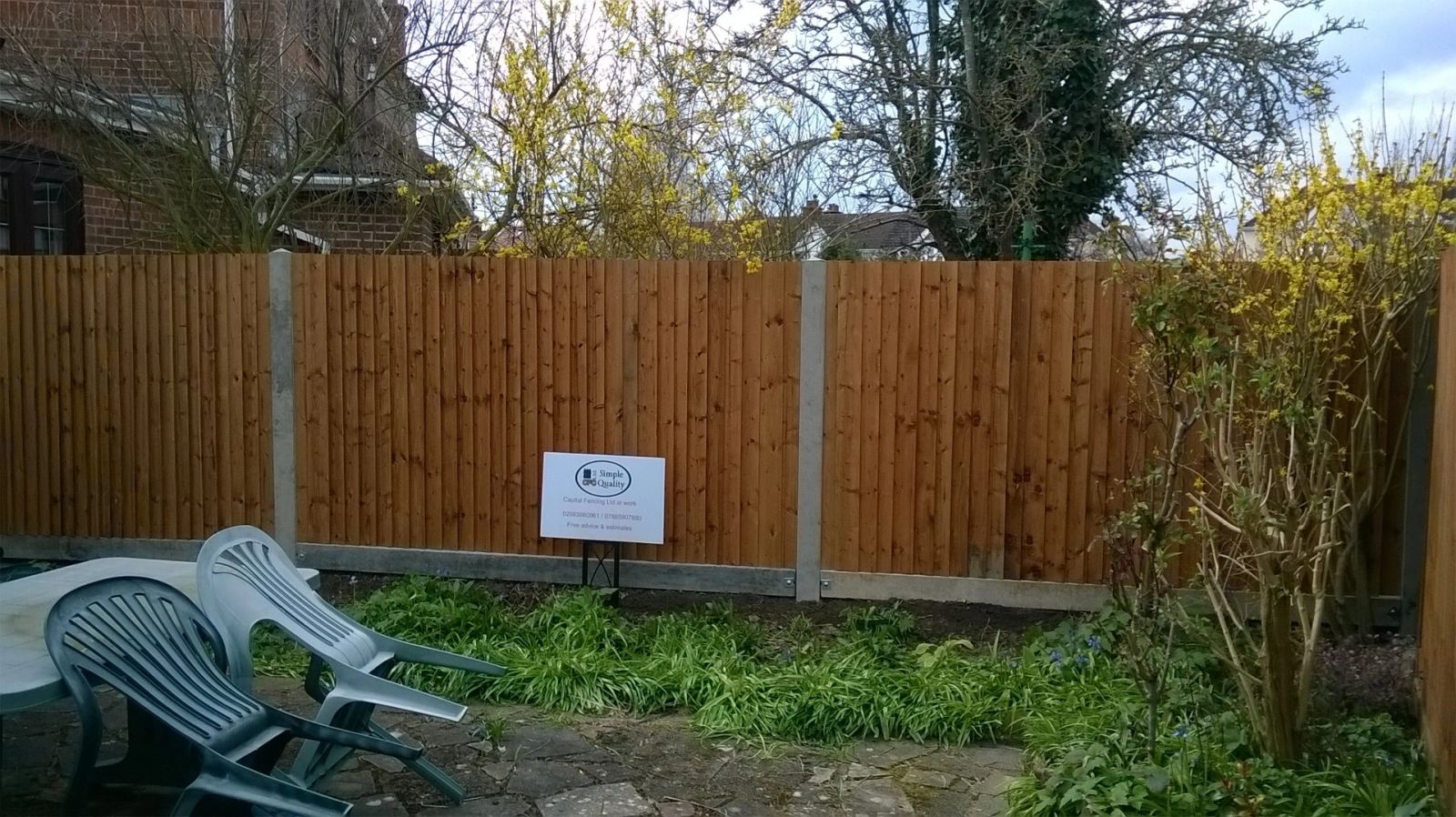
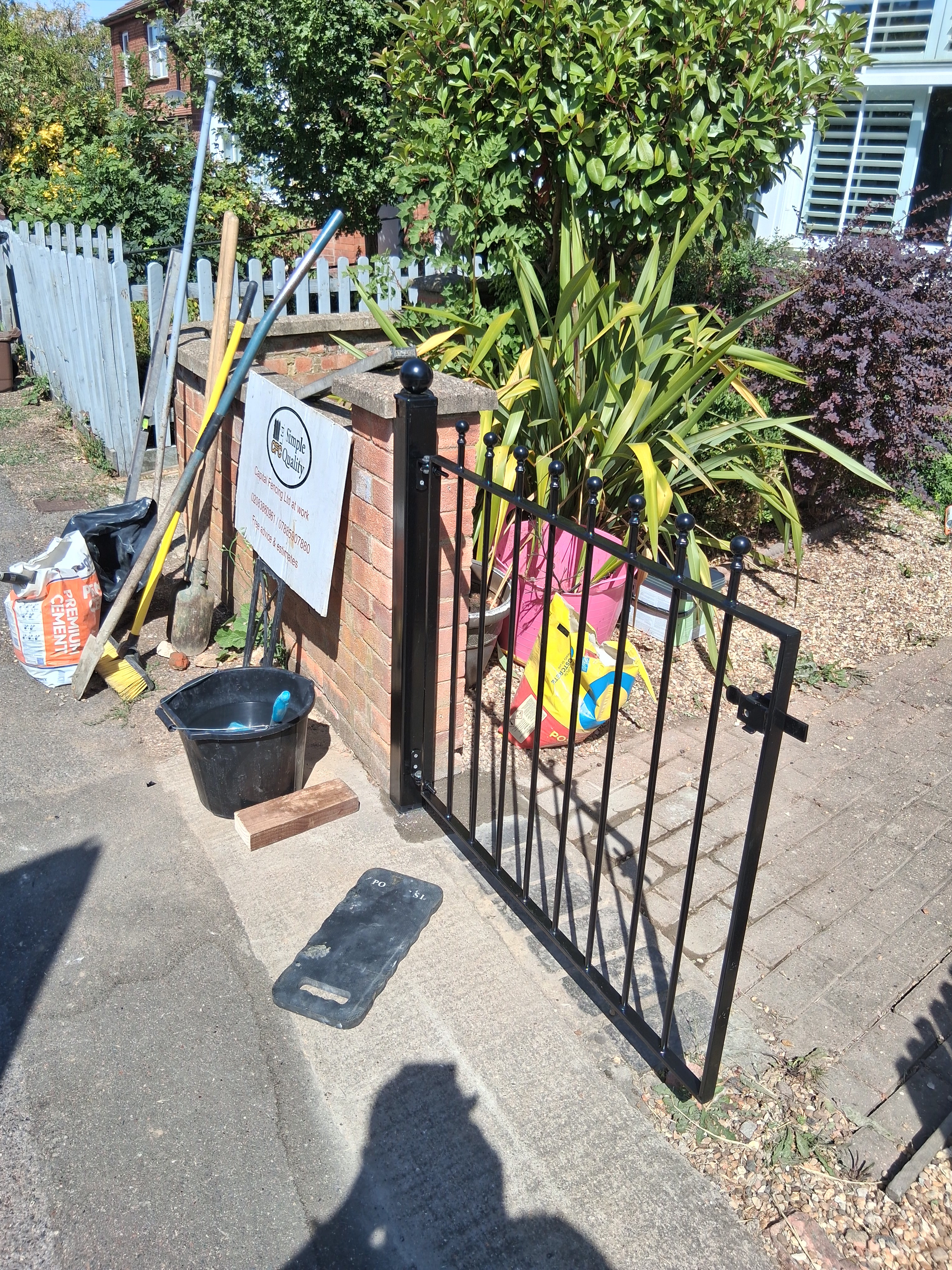
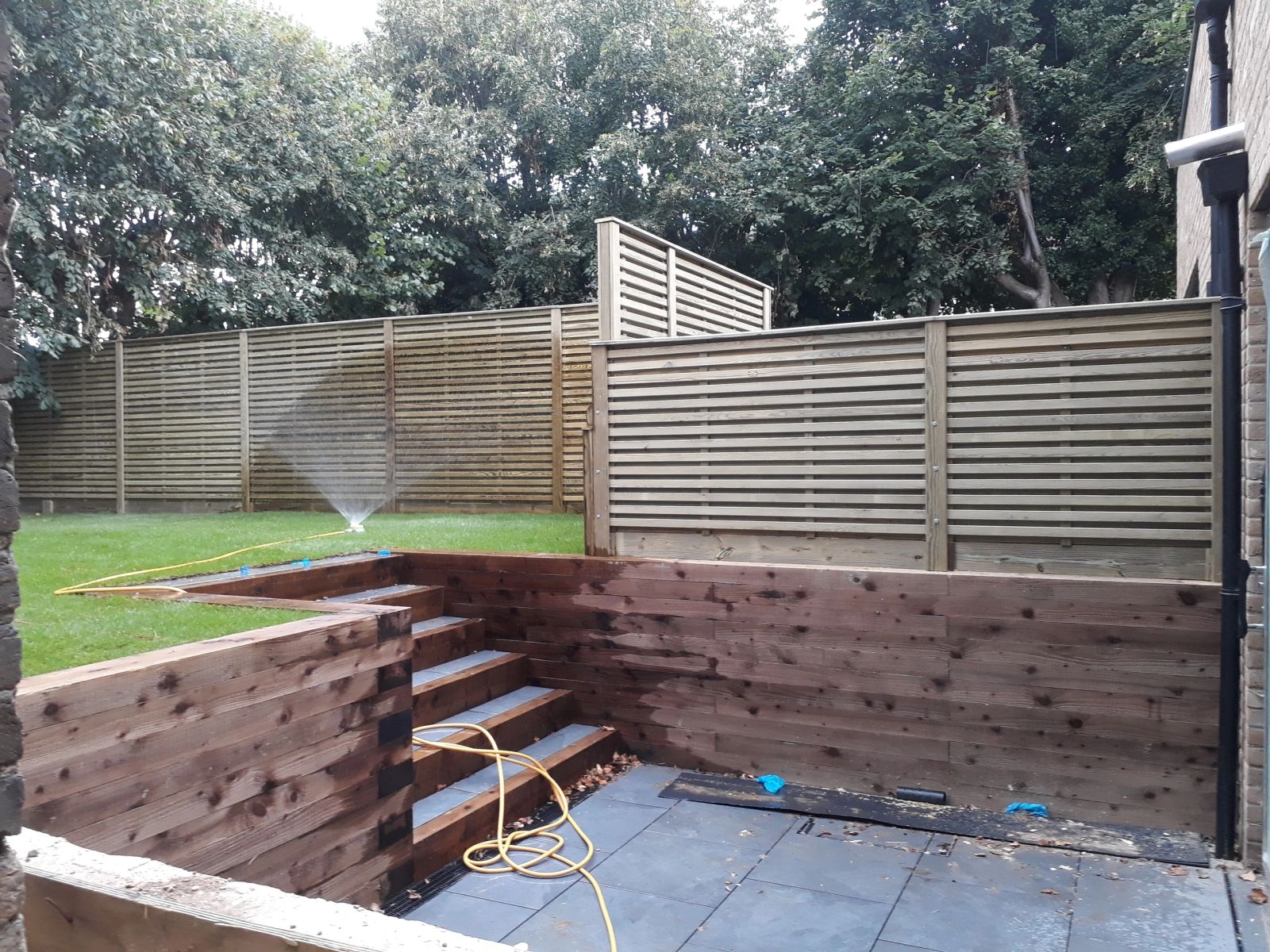
Capital Fencing project in Hadley Wood, EN4Capital Fencing project in Hadley Wood, EN4Capital Fencing project in Hadley Wood, EN4
EN4

Hadley Wood is part of our Barnet coverage under Enfield Council, with its own property mix and its own recurring brief.

Streets we regularly work on here: Beech Hill, Crescent West, Crescent East, Camlet Way. Local anchors: Trent Park boundary, Hadley Wood Golf Club, Hadley Wood station.

Hadley Wood is a low-density, wide-frontage suburb bordering Trent Park, with many properties set back behind established driveway gates. Camlet Way and Beech Hill sit on London clay over gravel, with mature oak tree cover typical of the area's historic parkland origins. The eastern edge of Hadley Wood borders Hadley Wood Golf Club.

Property & garden in Hadley Wood

Property: large 1920s and 1930s detached homes on wooded plots inside the golf-course belt

Gardens: very deep plots with mature specimen trees and long frontages

gated-frontage briefs dominate — timber automation gates with matching side-boundary joinery

Nearest arterial: A111 Cockfosters Road, M25 J24. Served from Hadley Wood (Great Northern). Nearby commercial anchors: Crescent East parade.

Practical points for boundary work in Hadley Wood

Mews and courtyard properties

Mews and courtyard developments typically share a single vehicle access route and sometimes a communal boundary treatment around the whole courtyard rather than individual garden fences.

Because the courtyard is often cobbled or block-paved right up to the building line, there's frequently no soil to dig a conventional post hole into, and fixings need to go into a paved base plate or bolted shoe instead of a concreted post.

Any alteration to a shared courtyard boundary usually needs the agreement of the other mews owners, since the fence is commonly held in joint ownership rather than allocated to one property.

Using packers to correct a slightly out-of-true panel fit

A small gap between a panel edge and a post face, caused by a minor inconsistency in post spacing rather than a genuine error, can often be taken up with a thin timber packer rather than re-digging and resetting the post.

Packers need fixing securely rather than simply wedged in, since a loose packer left to rattle under wind load will eventually work its way out and leave the original gap again.

Repeated packing along a run is a sign the underlying setting-out was slightly off rather than a one-off issue, and it's worth checking overall spacing again if more than an occasional panel needs correcting this way.

Downpipe discharge points near a fence base

A downpipe discharging directly onto open ground near a fence line, rather than into a proper drain or soakaway, concentrates a large volume of roof water at one specific point along the boundary during heavy rain.

Over time this creates a permanently saturated patch that behaves like a high water table locally, even though the rest of the garden drains normally.

Redirecting the discharge with a short length of pipe or a small soakaway a metre or two from the fence line resolves the issue far more effectively than trying to compensate with a more resistant post base.

Choosing post hole diameter for the post size

A hole cut too close to the post's own width leaves no room for concrete to fully surround it, which weakens the base and gives water a direct channel down alongside the timber rather than a solid seal.

A generally quoted rule is a hole roughly three times the post's width, so a 100mm post wants in the region of a 300mm diameter hole, adjusted upward on poor ground or for taller, more heavily loaded posts such as gate posts.

Oversized holes aren't free either — they use more concrete and take longer to backfill and haunch neatly, so the aim is the right diameter for the post and ground rather than simply digging as wide as convenient.

Dust and noise control in a tight garden

Cutting timber, breaking out old concrete bases or using a petrol auger all generate noise and dust that carries further in a small enclosed garden between close-set houses than on an open plot.

Local authorities can restrict noisy work hours under the Control of Pollution Act, and even where no formal restriction applies, starting before a reasonable hour or working into the evening is one of the fastest ways to draw a neighbour complaint.

Sheeting off concrete-cutting dust and keeping cut ends away from a neighbour's washing line or open windows is a small step that avoids most of the friction on a shared boundary job.

Delivery access and material drop-off

Fencing materials are heavy and awkward rather than especially bulky individually, but a full job's worth of posts, panels and gravel boards still needs a genuine drop-off point close to the work area rather than a kerbside stack carried the full plot length.

On restricted streets, agreeing a specific delivery slot with the supplier avoids a lorry blocking a road during school run or peak hours, which is often the point neighbours complain about a job rather than the noise of the work itself.

Where a driveway can take a small vehicle, checking headroom and turning space in advance saves a delivery being refused on the day and materials having to be hand-carried instead.

Services in Hadley Wood

Free quote for Hadley Wood

Send your postcode and a couple of photos — we'll get back with a written quote.

Hadley Wood — frequently asked

Is Hadley Wood within your standard travel area?

Yes — Hadley Wood is served from Hadley Wood (Great Northern), off A111 Cockfosters Road, and is inside our regular working patch.

Does delivery access and material drop-off come up much on jobs around Hadley Wood?

Fencing materials are heavy and awkward rather than especially bulky individually, but a full job's worth of posts, panels and gravel boards still needs a genuine drop-off point close to the work area rather than a kerbside stack carried the full plot length. On restricted streets, agreeing a specific delivery slot with the supplier avoids a lorry blocking a road during school run or peak hours, which is often the point neighbours complain about a job rather than the noise of the work itself. Where a driveway can take a small vehicle, checking headroom and turning space in advance saves a delivery being refused on the day and materials having to be hand-carried instead.

Do you cover barnet beyond just Hadley Wood?

Yes — Hadley Wood sits within our wider barnet coverage.

Is downpipe discharge points near a fence base something you plan for in Hadley Wood?

A downpipe discharging directly onto open ground near a fence line, rather than into a proper drain or soakaway, concentrates a large volume of roof water at one specific point along the boundary during heavy rain. Over time this creates a permanently saturated patch that behaves like a high water table locally, even though the rest of the garden drains normally. Redirecting the discharge with a short length of pipe or a small soakaway a metre or two from the fence line resolves the issue far more effectively than trying to compensate with a more resistant post base.

What should I know about choosing post hole diameter for the post size in Hadley Wood?

A generally quoted rule is a hole roughly three times the post's width, so a 100mm post wants in the region of a 300mm diameter hole, adjusted upward on poor ground or for taller, more heavily loaded posts such as gate posts. Oversized holes aren't free either — they use more concrete and take longer to backfill and haunch neatly, so the aim is the right diameter for the post and ground rather than simply digging as wide as convenient. A hole cut too close to the post's own width leaves no room for concrete to fully surround it, which weakens the base and gives water a direct channel down alongside the timber rather than a solid seal.

Does dust and noise control in a tight garden come up much on jobs around Hadley Wood?

Cutting timber, breaking out old concrete bases or using a petrol auger all generate noise and dust that carries further in a small enclosed garden between close-set houses than on an open plot. Local authorities can restrict noisy work hours under the Control of Pollution Act, and even where no formal restriction applies, starting before a reasonable hour or working into the evening is one of the fastest ways to draw a neighbour complaint. Sheeting off concrete-cutting dust and keeping cut ends away from a neighbour's washing line or open windows is a small step that avoids most of the friction on a shared boundary job.

Reached off A111 Cockfosters Road, near Hadley Wood (Great Northern). Downpipe discharge points near a fence base: A downpipe discharging directly onto open ground near a fence line, rather than into a proper drain or soakaway, concentrates a large volume of roof water at one specific point along the boundary during heavy rain. Over time this creates a permanently saturated patch that behaves like a high water table locally, even though the rest of the garden drains normally. Choosing post hole diameter for the post size: A hole cut too close to the post's own width leaves no room for concrete to fully surround it, which weakens the base and gives water a direct channel down alongside the timber rather than a solid seal.

Get In Touch

Get My Free Quote — 24h Response

No callout fee · Free site visit · Friendly local team covering London & Hertfordshire.

Request a Free Quote

We'll get back to you within 24 hours.

Free Site Visit No Callout Fee
Call WhatsAppQuote