London & Hertfordshire Free Site Visit
Fencing and gates coverage in Well End, Borehamwood

Well End: Fencing & Decking Within Borehamwood

Sitting inside borehamwood and administered by Hertsmere Borough Council, Well End (WD6) has its own character: rural-edge detached homes, equestrian properties and small commercial units, gardens large rural plots, often with paddock-style boundary work. What tends to drive the spec on a Well End job is stock-proof and post-and-rail combinations are the standard ask. Treatment class for decking joists versus visible boards: Decking joists sit closer to the ground and often in less ventilated conditions than the visible boards above them, so they generally warrant the same ground-contact-rated treatment class used for fence posts rather than the lighter treatment sometimes sufficient for above-ground fence panels. It's a detail that's easy to overlook when the visible decking timber is specified carefully but the substructure is treated as an afterthought, even though joist failure is a structural safety issue in a way that panel weathering isn't. Shared ownership properties and boundary consent: Shared ownership homeowners typically still need the housing association or landlord's consent for structural boundary alterations, in line with the terms of the lease, even though they own a share of the property.

WD6

Well End is part of our Borehamwood coverage under Hertsmere Borough Council, with its own property mix and its own recurring brief.

Property & garden in Well End

Property: rural-edge detached homes, equestrian properties and small commercial units

Gardens: large rural plots, often with paddock-style boundary work

stock-proof and post-and-rail combinations are the standard ask

Nearest arterial: A1, M25 J23. Served from Borehamwood (Thameslink). Nearby commercial anchors: Well End Lane equestrian / industrial mix.

Practical points for boundary work in Well End

Treatment class for decking joists versus visible boards

Decking joists sit closer to the ground and often in less ventilated conditions than the visible boards above them, so they generally warrant the same ground-contact-rated treatment class used for fence posts rather than the lighter treatment sometimes sufficient for above-ground fence panels.

It's a detail that's easy to overlook when the visible decking timber is specified carefully but the substructure is treated as an afterthought, even though joist failure is a structural safety issue in a way that panel weathering isn't.

Confirming the treatment class of joist timber specifically, not just assuming 'decking timber' covers the whole structure to the same standard, avoids a substructure that fails well before the visible boards show any sign of ageing.

Shared ownership properties and boundary consent

Shared ownership homeowners typically still need the housing association or landlord's consent for structural boundary alterations, in line with the terms of the lease, even though they own a share of the property.

This mirrors the position for full leaseholders in many respects, and skipping the consent step can create complications later, particularly when it comes to staircasing to full ownership or reselling.

Checking the specific lease terms, or asking the shared ownership provider directly, avoids doing boundary work that technically breaches the agreement.

Timber moisture content testing

A pin-type moisture meter measures electrical resistance between two probes pushed into the timber's surface, giving a reasonably reliable reading of moisture content near the surface but not necessarily reflecting the core of a thick section.

Fencing timber delivered at above roughly 20% moisture content is more prone to significant post-installation shrinkage and movement than timber closer to its long-term equilibrium moisture content for outdoor use.

Because timber left stacked outdoors and uncovered reabsorbs moisture from rain and humidity, a moisture reading taken on delivery can differ significantly from the same stack a fortnight later if it hasn't been kept covered.

When a boundary camera becomes part of a wider dispute

Boundary and fencing disagreements sometimes escalate to include complaints about cameras, lighting or noise, which can broaden a straightforward property dispute into several overlapping issues at once.

Keeping these strands separate in any correspondence — addressing the boundary question and any camera or nuisance concern individually — tends to keep discussions more focused and productive.

Where a dispute has genuinely broadened like this, a mediator or solicitor experienced in neighbour disputes more generally, rather than boundary-only expertise, may be the more useful next step.

Capping rails and their function

A capping rail sits along the top edge of a closeboard or panel run, covering the end grain of the vertical boards in the same way a post cap protects a post top.

Beyond weather protection it also ties the tops of the boards together, reducing the individual movement that otherwise shows up as a wavy top line after a few seasons of wetting and drying.

It's usually a shallow, weathered profile rather than flat stock, so it sheds water off the fence face instead of holding a bead of moisture along the top edge.

Timber grades and treatment

Pressure-treated softwood is graded by the treatment's intended service life — timber rated for ground contact (Use Class 4) should always be used for posts, while a lighter Use Class 3 treatment is normally sufficient for panels and boards that don't touch soil.

Tanalised or vacuum-pressure-treated stock takes preservative deeper into the timber than a surface-dipped batch, which matters most at cut ends, where the untreated core is exposed and should always be re-treated on site.

Hardwoods like oak or iroko don't need chemical preservative to the same degree but cost more upfront and behave differently as they season, so the choice is really about budget and maintenance appetite rather than one being simply 'better'.

Services in Well End

Well End — frequently asked

What areas of Well End do you cover?

We cover all of Well End (WD6), under Hertsmere Borough Council.

How does "timber moisture content testing" affect fencing or decking work in Well End?

Because timber left stacked outdoors and uncovered reabsorbs moisture from rain and humidity, a moisture reading taken on delivery can differ significantly from the same stack a fortnight later if it hasn't been kept covered. A pin-type moisture meter measures electrical resistance between two probes pushed into the timber's surface, giving a reasonably reliable reading of moisture content near the surface but not necessarily reflecting the core of a thick section. Fencing timber delivered at above roughly 20% moisture content is more prone to significant post-installation shrinkage and movement than timber closer to its long-term equilibrium moisture content for outdoor use.

What's the most common issue you plan around in Well End?

Stock-proof and post-and-rail combinations are the standard ask.

Is when a boundary camera becomes part of a wider dispute something you plan for in Well End?

Keeping these strands separate in any correspondence — addressing the boundary question and any camera or nuisance concern individually — tends to keep discussions more focused and productive. Where a dispute has genuinely broadened like this, a mediator or solicitor experienced in neighbour disputes more generally, rather than boundary-only expertise, may be the more useful next step. Boundary and fencing disagreements sometimes escalate to include complaints about cameras, lighting or noise, which can broaden a straightforward property dispute into several overlapping issues at once.

Capping rails and their function — what does that mean for a job in Well End?

Beyond weather protection it also ties the tops of the boards together, reducing the individual movement that otherwise shows up as a wavy top line after a few seasons of wetting and drying. It's usually a shallow, weathered profile rather than flat stock, so it sheds water off the fence face instead of holding a bead of moisture along the top edge. A capping rail sits along the top edge of a closeboard or panel run, covering the end grain of the vertical boards in the same way a post cap protects a post top.

How does "timber grades and treatment" affect fencing or decking work in Well End?

Hardwoods like oak or iroko don't need chemical preservative to the same degree but cost more upfront and behave differently as they season, so the choice is really about budget and maintenance appetite rather than one being simply 'better'. Pressure-treated softwood is graded by the treatment's intended service life — timber rated for ground contact (Use Class 4) should always be used for posts, while a lighter Use Class 3 treatment is normally sufficient for panels and boards that don't touch soil. Tanalised or vacuum-pressure-treated stock takes preservative deeper into the timber than a surface-dipped batch, which matters most at cut ends, where the untreated core is exposed and should always be re-treated on site.
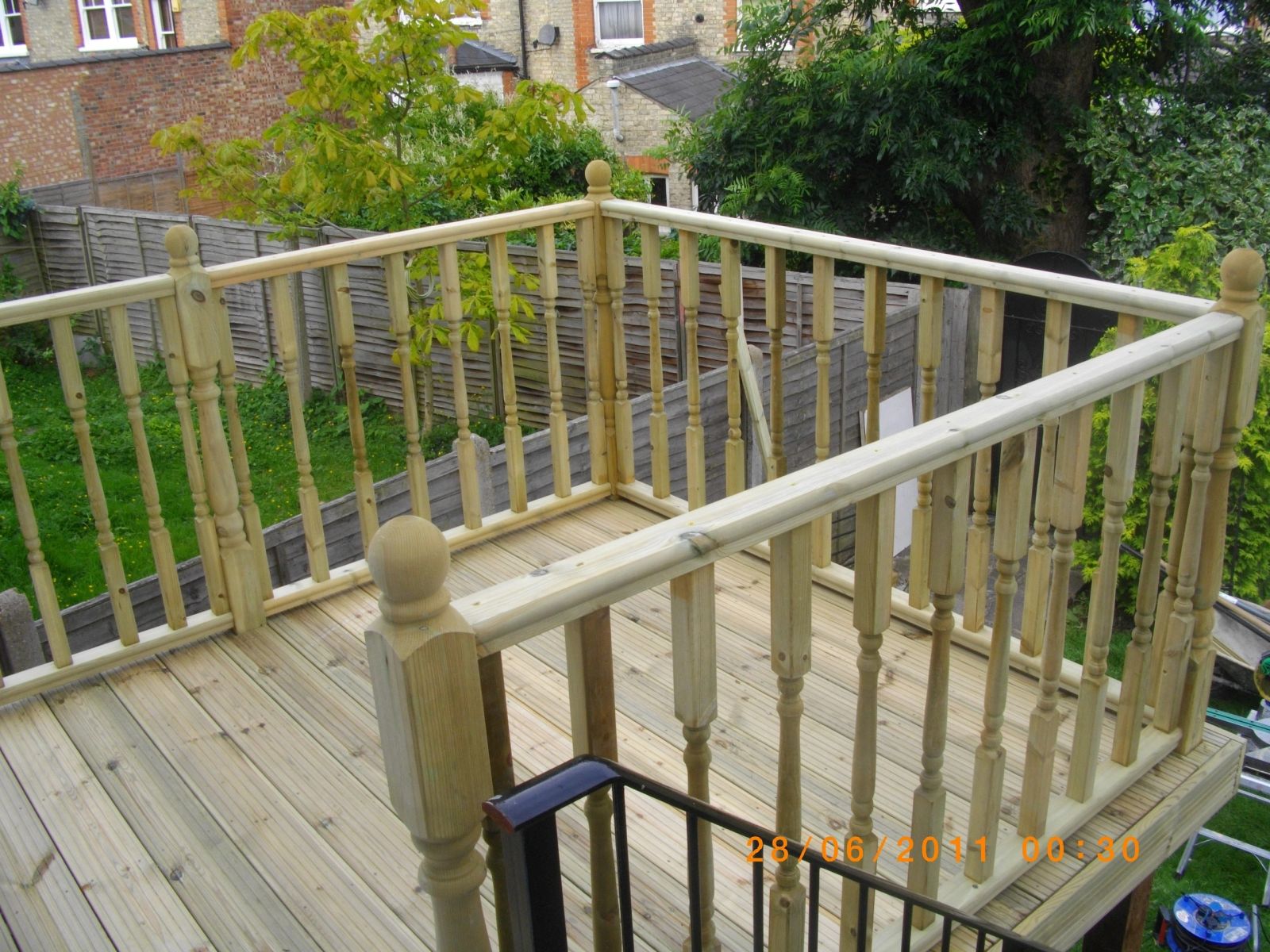
Capital Fencing project in Well End, WD6Capital Fencing project in Well End, WD6Capital Fencing project in Well End, WD6

A1 runs through this pocket, with Borehamwood (Thameslink) nearby. Timber moisture content testing: A pin-type moisture meter measures electrical resistance between two probes pushed into the timber's surface, giving a reasonably reliable reading of moisture content near the surface but not necessarily reflecting the core of a thick section. Fencing timber delivered at above roughly 20% moisture content is more prone to significant post-installation shrinkage and movement than timber closer to its long-term equilibrium moisture content for outdoor use. When a boundary camera becomes part of a wider dispute: Boundary and fencing disagreements sometimes escalate to include complaints about cameras, lighting or noise, which can broaden a straightforward property dispute into several overlapping issues at once.

Get In Touch

Get My Free Quote — 24h Response

No callout fee · Free site visit · Friendly local team covering London & Hertfordshire.

Request a Free Quote

We'll get back to you within 24 hours.

Free Site Visit No Callout Fee
Call WhatsAppQuote