London & Hertfordshire Free Site Visit
Fencing and gates coverage in Highbury, Islington

Highbury: Fencing & Decking Within Islington

Sitting inside islington and administered by Islington Council, Highbury (N5) has its own character: victorian terraces around highbury fields and mansion blocks near the station, gardens compact walled rear gardens with mature planting. What tends to drive the spec on a Highbury job is highbury fields conservation area — timber-only visible boundaries at the front. Fencing shared or communal garden spaces: Communal gardens shared by several properties usually need any new fencing agreed by the group or managing body rather than one resident acting unilaterally, since a partition can change how the whole space is used. Where a communal garden includes mature planting or trees under a collective management plan, new fence lines need checking against that plan rather than just against the ground itself. Spirit level versus laser level for checking a run: A spirit level checks a single post is plumb and a single panel is level, but confirming that an entire run stays level or follows a consistent fall over 20 or 30 metres is far quicker and more reliable with a rotating laser level set at a fixed height.

N5

Highbury is part of our Islington coverage under Islington Council, with its own property mix and its own recurring brief.

Property & garden in Highbury

Property: Victorian terraces around Highbury Fields and mansion blocks near the station

Gardens: compact walled rear gardens with mature planting

Highbury Fields Conservation Area — timber-only visible boundaries at the front

Nearest arterial: A1 Holloway Road, A406 (15 min). Served from Highbury & Islington (Victoria / Overground). Nearby commercial anchors: Highbury Barn, Holloway Road.

Practical points for boundary work in Highbury

Fencing shared or communal garden spaces

Communal gardens shared by several properties usually need any new fencing agreed by the group or managing body rather than one resident acting unilaterally, since a partition can change how the whole space is used.

Where a communal garden includes mature planting or trees under a collective management plan, new fence lines need checking against that plan rather than just against the ground itself.

Access routes for maintenance vehicles or refuse collection through a communal garden also need to stay clear when planning new subdivisions with fencing.

Spirit level versus laser level for checking a run

A spirit level checks a single post is plumb and a single panel is level, but confirming that an entire run stays level or follows a consistent fall over 20 or 30 metres is far quicker and more reliable with a rotating laser level set at a fixed height.

On a stepped run, a laser also makes it straightforward to confirm each step drops by the same consistent amount rather than checking each post in isolation and hoping the cumulative effect looks even.

A basic spirit level remains the more practical tool for quick checks during a single post's installation, since setting up a laser for every individual post would slow the job without adding useful accuracy at that scale.

Flying freeholds and unusual boundary shapes

A flying freehold occurs where part of one property, such as a room, overhangs part of another below it, and can produce boundary arrangements in the garden that don't follow an obviously straight or logical line.

Properties with this kind of unusual legal history sometimes have correspondingly unusual title plan boundaries in the garden area, which are worth checking carefully rather than assumed from the visible layout.

Where a garden boundary looks like it doesn't match the physical shape of the buildings above, that's a sign worth investigating with the title documents before fencing work begins.

Treatment standards and use classes for timber

British and European standards define timber 'use classes' according to exposure — Use Class 4 covers timber in ground contact, such as fence posts, and requires a deeper level of preservative treatment than Use Class 3 cladding or rails that are exposed to weather but not buried.

Specifying Use Class 3 timber for a post that goes into the ground is one of the most common causes of early rot failure, since the treatment simply isn't rated for sustained soil contact and moisture.

A reputable timber merchant should be able to confirm the use class and treatment certificate for structural components, and it's worth asking for it explicitly rather than assuming 'tanalised' automatically means suitable for ground contact.

EV charging cables and boundary fence gates

Where an electric vehicle charge point is fitted near a boundary, cable routing sometimes needs to cross under or through a gate or fence gap, which is worth considering at the design stage rather than retrofitting a channel later.

Trailing a charging cable across a public footway to reach a car isn't permitted in most areas without specific council-approved cable channel provision, which is a separate matter from the fence itself.

Checking the council's position on any cable crossing a footway, alongside the fence and gate design, avoids two separate problems being discovered one after the other.

Ground-line collars on timber posts

A plastic or metal collar fitted around a timber post at the point where it enters the ground creates a physical break between the post and the surrounding soil, reducing direct abrasion and moisture wicking at that specific zone.

Ground level is where oxygen, moisture and soil organisms are all present together in the right combination for decay fungi to thrive, which is why this narrow band is disproportionately where post failure originates compared with either the fully buried or fully exposed sections.

A collar doesn't replace preservative treatment but adds a secondary physical barrier specifically targeted at this highest-risk zone, similar in principle to the extra retention already specified for ground-contact use-class timber.

Services in Highbury

Highbury — frequently asked

Treatment standards and use classes for timber — what does that mean for a job in Highbury?

A reputable timber merchant should be able to confirm the use class and treatment certificate for structural components, and it's worth asking for it explicitly rather than assuming 'tanalised' automatically means suitable for ground contact. British and European standards define timber 'use classes' according to exposure — Use Class 4 covers timber in ground contact, such as fence posts, and requires a deeper level of preservative treatment than Use Class 3 cladding or rails that are exposed to weather but not buried. Specifying Use Class 3 timber for a post that goes into the ground is one of the most common causes of early rot failure, since the treatment simply isn't rated for sustained soil contact and moisture.

Do you cover islington beyond just Highbury?

Yes — Highbury sits within our wider islington coverage.

Flying freeholds and unusual boundary shapes — what does that mean for a job in Highbury?

Properties with this kind of unusual legal history sometimes have correspondingly unusual title plan boundaries in the garden area, which are worth checking carefully rather than assumed from the visible layout. Where a garden boundary looks like it doesn't match the physical shape of the buildings above, that's a sign worth investigating with the title documents before fencing work begins. A flying freehold occurs where part of one property, such as a room, overhangs part of another below it, and can produce boundary arrangements in the garden that don't follow an obviously straight or logical line.

What should I know about ground-line collars on timber posts in Highbury?

A plastic or metal collar fitted around a timber post at the point where it enters the ground creates a physical break between the post and the surrounding soil, reducing direct abrasion and moisture wicking at that specific zone. Ground level is where oxygen, moisture and soil organisms are all present together in the right combination for decay fungi to thrive, which is why this narrow band is disproportionately where post failure originates compared with either the fully buried or fully exposed sections. A collar doesn't replace preservative treatment but adds a secondary physical barrier specifically targeted at this highest-risk zone, similar in principle to the extra retention already specified for ground-contact use-class timber.
What areas of Highbury do you cover?

We cover all of Highbury (N5), under Islington Council.

Is ev charging cables and boundary fence gates something you plan for in Highbury?

Trailing a charging cable across a public footway to reach a car isn't permitted in most areas without specific council-approved cable channel provision, which is a separate matter from the fence itself. Checking the council's position on any cable crossing a footway, alongside the fence and gate design, avoids two separate problems being discovered one after the other. Where an electric vehicle charge point is fitted near a boundary, cable routing sometimes needs to cross under or through a gate or fence gap, which is worth considering at the design stage rather than retrofitting a channel later.

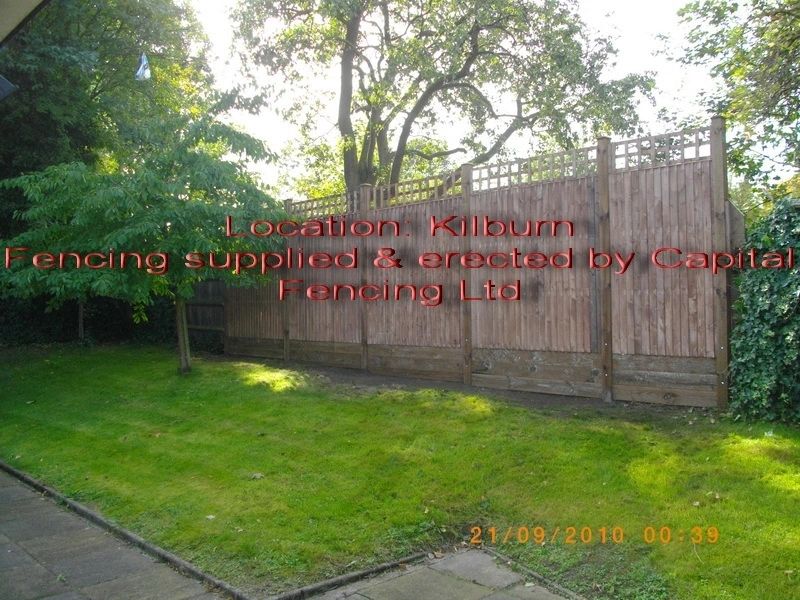
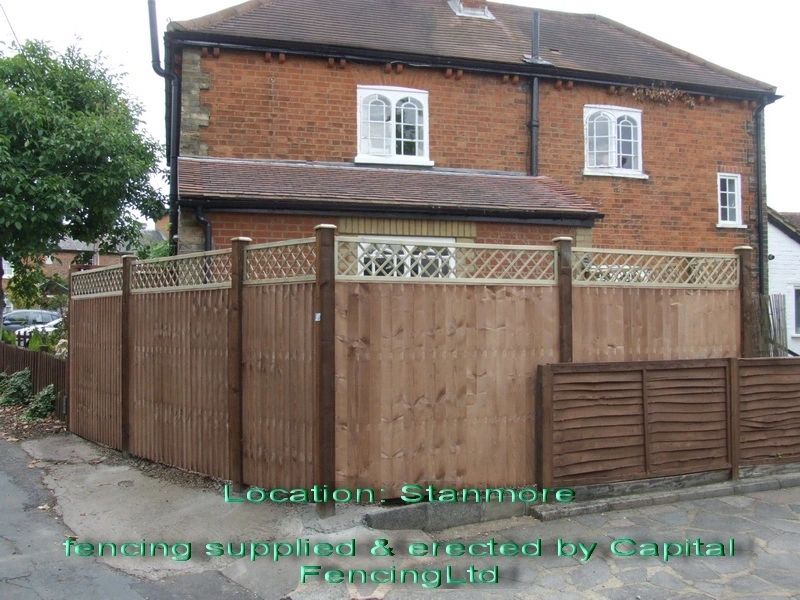
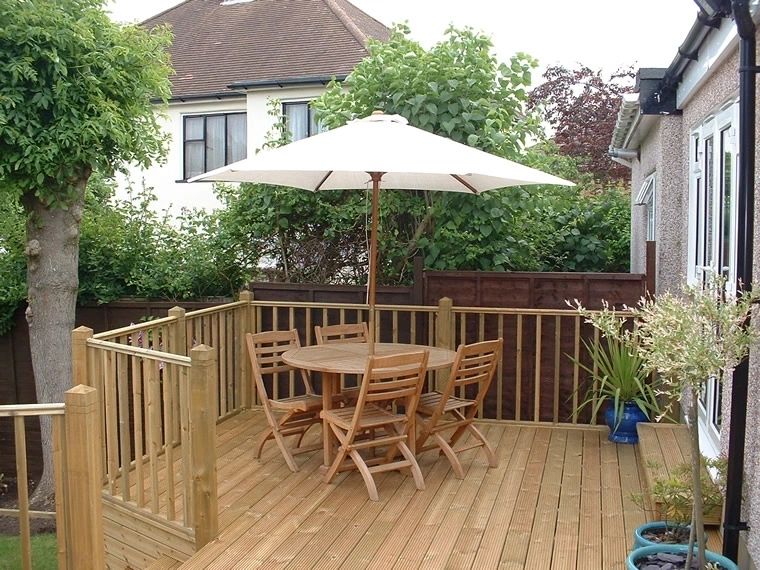
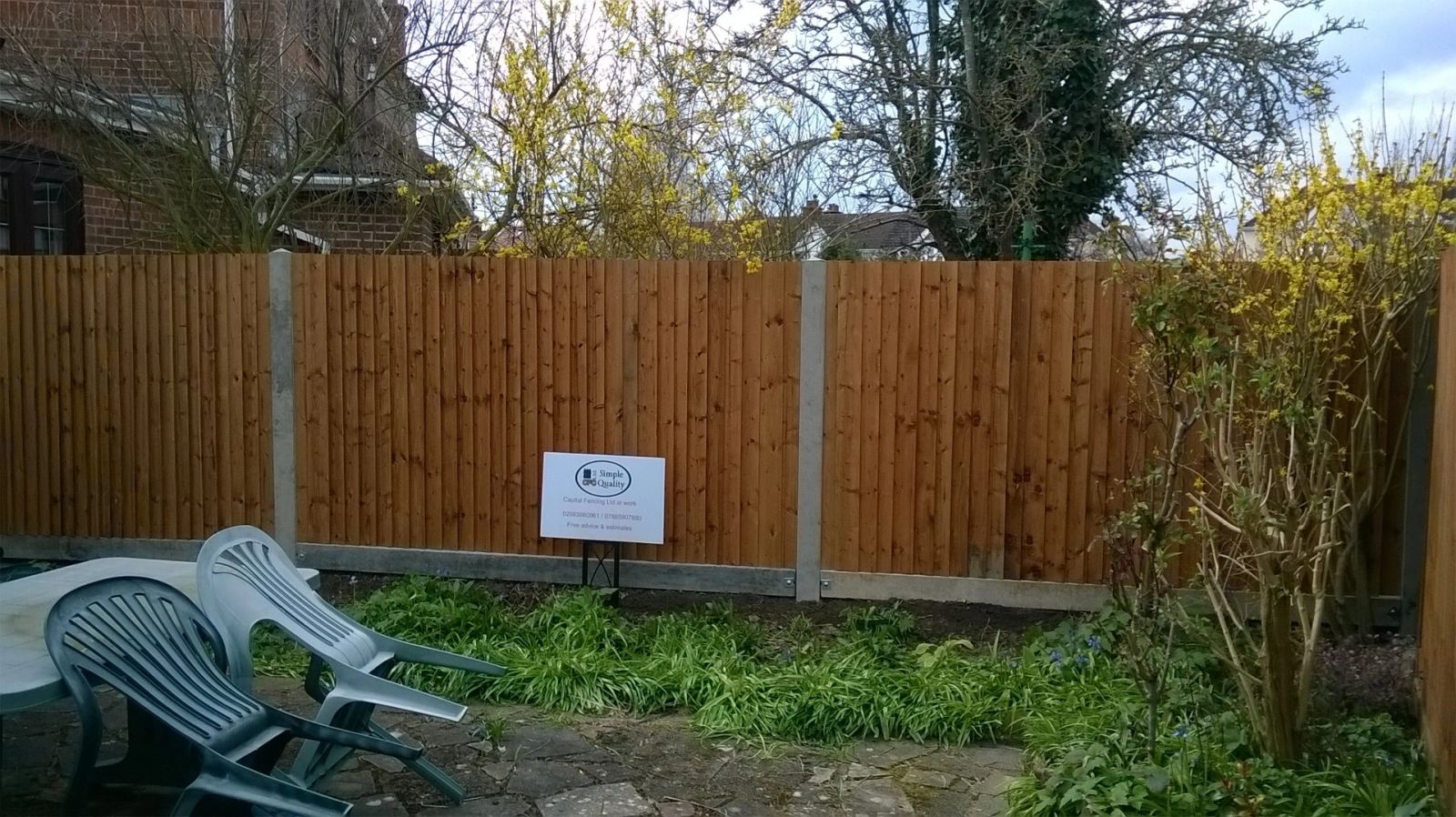
Capital Fencing project in Highbury, N5Capital Fencing project in Highbury, N5Capital Fencing project in Highbury, N5

A1 Holloway Road runs through this pocket, with Highbury & Islington (Victoria / Overground) nearby. Flying freeholds and unusual boundary shapes: A flying freehold occurs where part of one property, such as a room, overhangs part of another below it, and can produce boundary arrangements in the garden that don't follow an obviously straight or logical line. Properties with this kind of unusual legal history sometimes have correspondingly unusual title plan boundaries in the garden area, which are worth checking carefully rather than assumed from the visible layout. Treatment standards and use classes for timber: British and European standards define timber 'use classes' according to exposure — Use Class 4 covers timber in ground contact, such as fence posts, and requires a deeper level of preservative treatment than Use Class 3 cladding or rails that are exposed to weather but not buried.

Get In Touch

Get My Free Quote — 24h Response

No callout fee · Free site visit · Friendly local team covering London & Hertfordshire.

Request a Free Quote

We'll get back to you within 24 hours.

Free Site Visit No Callout Fee
Call WhatsAppQuote