London & Hertfordshire Free Site Visit
bespoke wooden gate installed by Capital Fencing in Islington (N1)
Islington · N1 / N5 / N7 / N19 / EC1

Side return gate across Islington — Islington

We approach side-return gates in Islington from the failure end backwards. Fitting a full-weight hardwood gate on domestic pin hinges — drops within six months — that's the single most common thing we're called back to fix, and it's the first thing our spec addresses. Roads such as Offord Road and Cross Street are typical of the local layout. Regent's Canal (City Road basin) is a useful local reference point. Islington is largely built up with Georgian and Victorian terraced housing, much of it within conservation areas covering streets such as Barnsbury and Canonbury.

We approach side-return gates in Islington from the failure end backwards. Fitting a full-weight hardwood gate on domestic pin hinges — drops within six months — that's the single most common thing we're called back to fix, and it's the first thing our spec addresses. Roads such as Offord Road and Cross Street are typical of the local layout. Regent's Canal (City Road basin) is a useful local reference point. Islington is largely built up with Georgian and Victorian terraced housing, much of it within conservation areas covering streets such as Barnsbury and Canonbury.

Typical side-return gates briefs in Islington

  • matched pedestrian and bin-store gate serving a shared side alley between two flats
  • tongue-and-groove side gate framed on adjustable ball-race hinges to cope with seasonal timber movement

Why this spec, for London terraces and semis with a narrow alley between the house and the neighbouring wall

  • framed builds don't drop the way board-and-batten side gates do in year two
  • adjustable hinges handle the seasonal timber movement every London side gate experiences
  • made to the exact opening — no packing pieces, no gaps for burglars or foxes
Default spec

How we build side-return gates in Islington

44mm framed hardwood or planed softwood, tongue-and-groove infill, adjustable ball-race hinges, closing stop and drop-bolt. On Islington jobs we adjust for conservation-area consent plus tight rear-mews access makes bespoke gate and boundary work the norm.

Property mix locally: Georgian terraces around Barnsbury and Canonbury, Victorian streets in Highbury, and dense mansion blocks. Typical gardens: compact walled rear gardens with rear-mews access on parts of Barnsbury and De Beauvoir. Postcodes we regularly service: N1, N5, N7, N19, EC1.

Where side-return gates isn't the right answer

  • openings under 700mm where a person can't comfortably pass with a bin — a fixed panel is often the honest answer
  • shared alley gates where freehold consent from both parties hasn't been agreed

Side Return Gates FAQs — Islington

Softwood or hardwood for a London side gate?

On side-return gates jobs in Islington (N1), our default answer is: 44mm framed hardwood or planed softwood, tongue-and-groove infill, adjustable ball-race hinges, closing stop and drop-bolt. The honest trade-off is fitting a full-weight hardwood gate on domestic pin hinges — drops within six months — which is exactly what our default spec designs out.

Can bin-store and pedestrian access share one gate?

Across Islington we spec around conservation-area consent plus tight rear-mews access makes bespoke gate and boundary work the norm, so on side-return gates that usually means iroko hardwood on galvanised ironmongery for 15+ year service. The honest trade-off is fitting a full-weight hardwood gate on domestic pin hinges — drops within six months — which is exactly what our default spec designs out.

How wide can a single side gate span before it needs a wheel?

Islington coverage means we can survey most N1 addresses inside a week — London terraces and semis with a narrow alley between the house and the neighbouring wall. The honest trade-off is fitting a full-weight hardwood gate on domestic pin hinges — drops within six months — which is exactly what our default spec designs out.

Is a drop-bolt necessary as well as a lock?

Practically: hardwood side gate between a rendered wall and a brick pier, 780mm opening, drop-bolt into a concrete slab socket. That's the Islington version of this job, not a generic one. We'll walk you through framed builds don't drop the way board-and-batten side gates do in year two on the site visit before you commit.

Can you match the gate to my existing side-return fencing?

On side-return gates jobs in Islington (N1), our default answer is: 44mm framed hardwood or planed softwood, tongue-and-groove infill, adjustable ball-race hinges, closing stop and drop-bolt. The honest trade-off is fitting a full-weight hardwood gate on domestic pin hinges — drops within six months — which is exactly what our default spec designs out.

Recent side return gates work
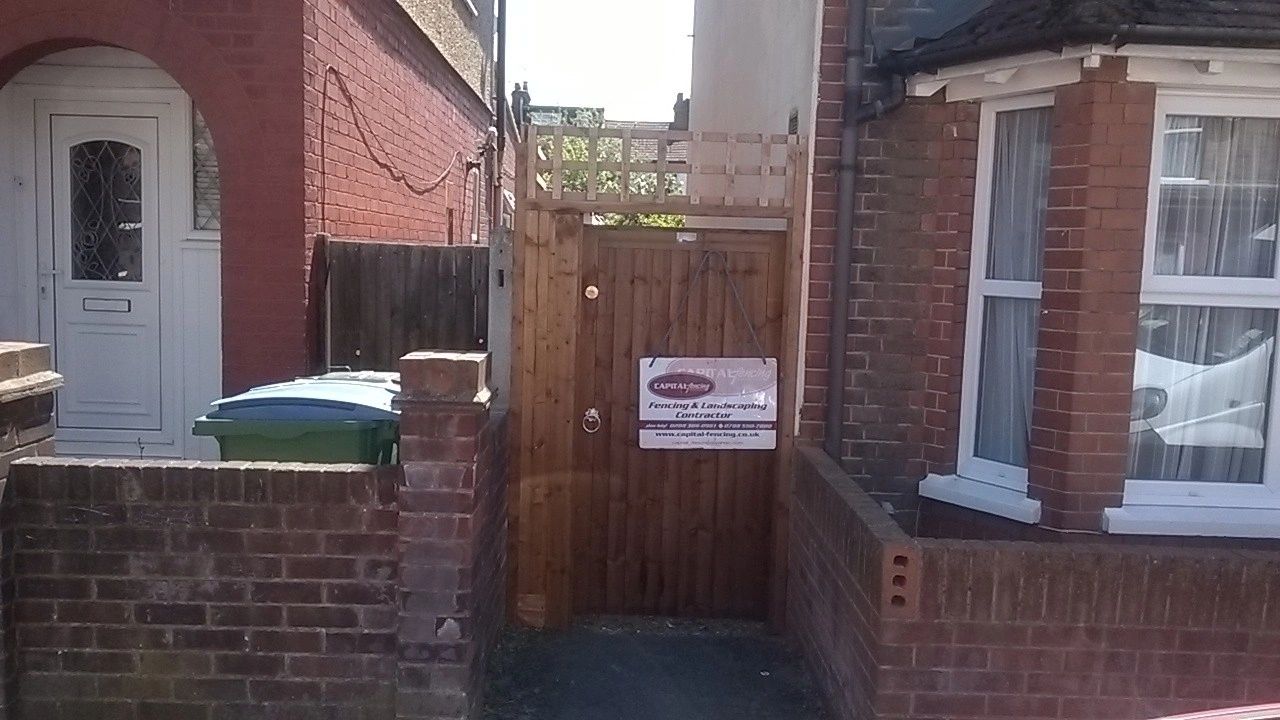
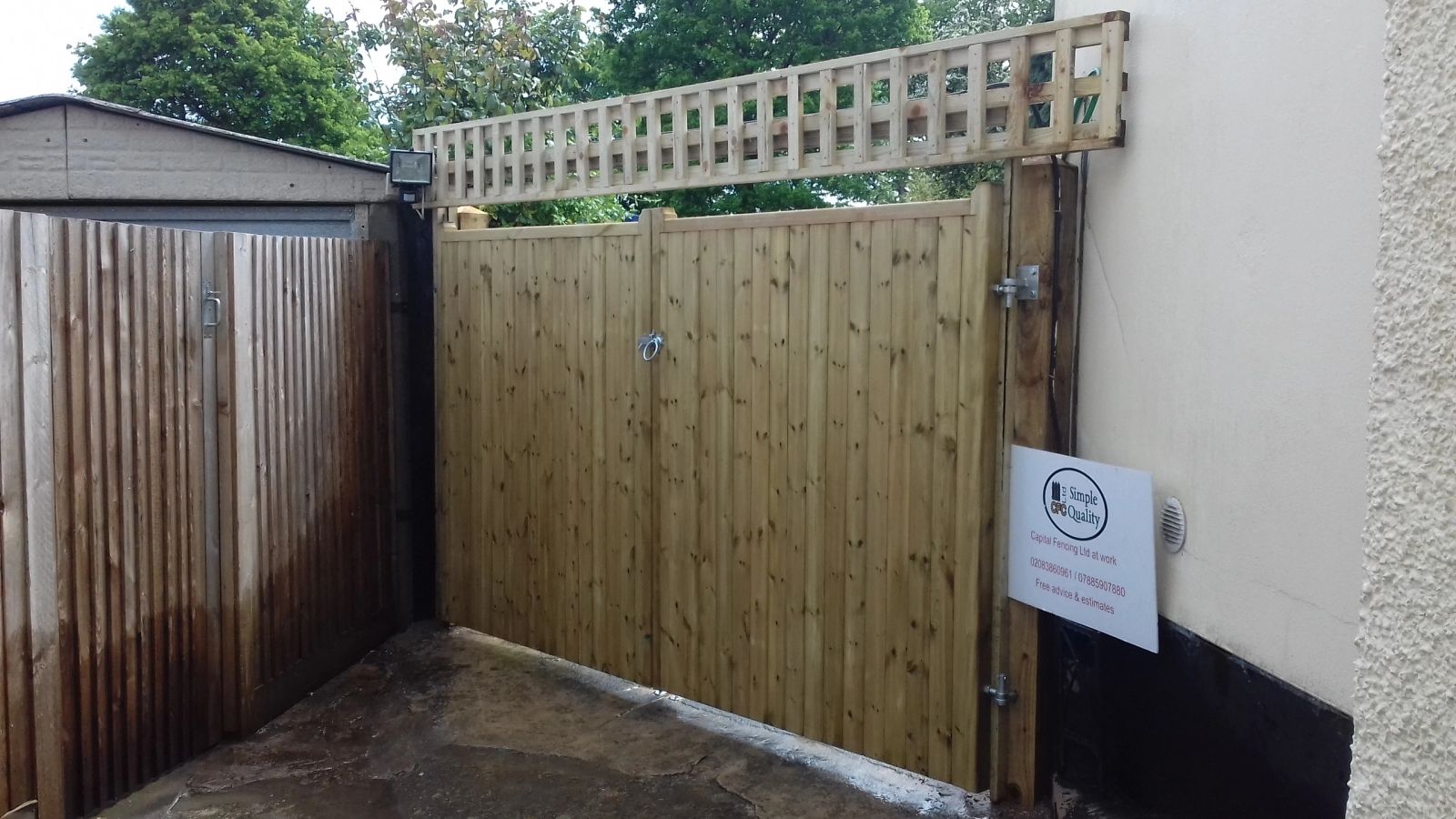
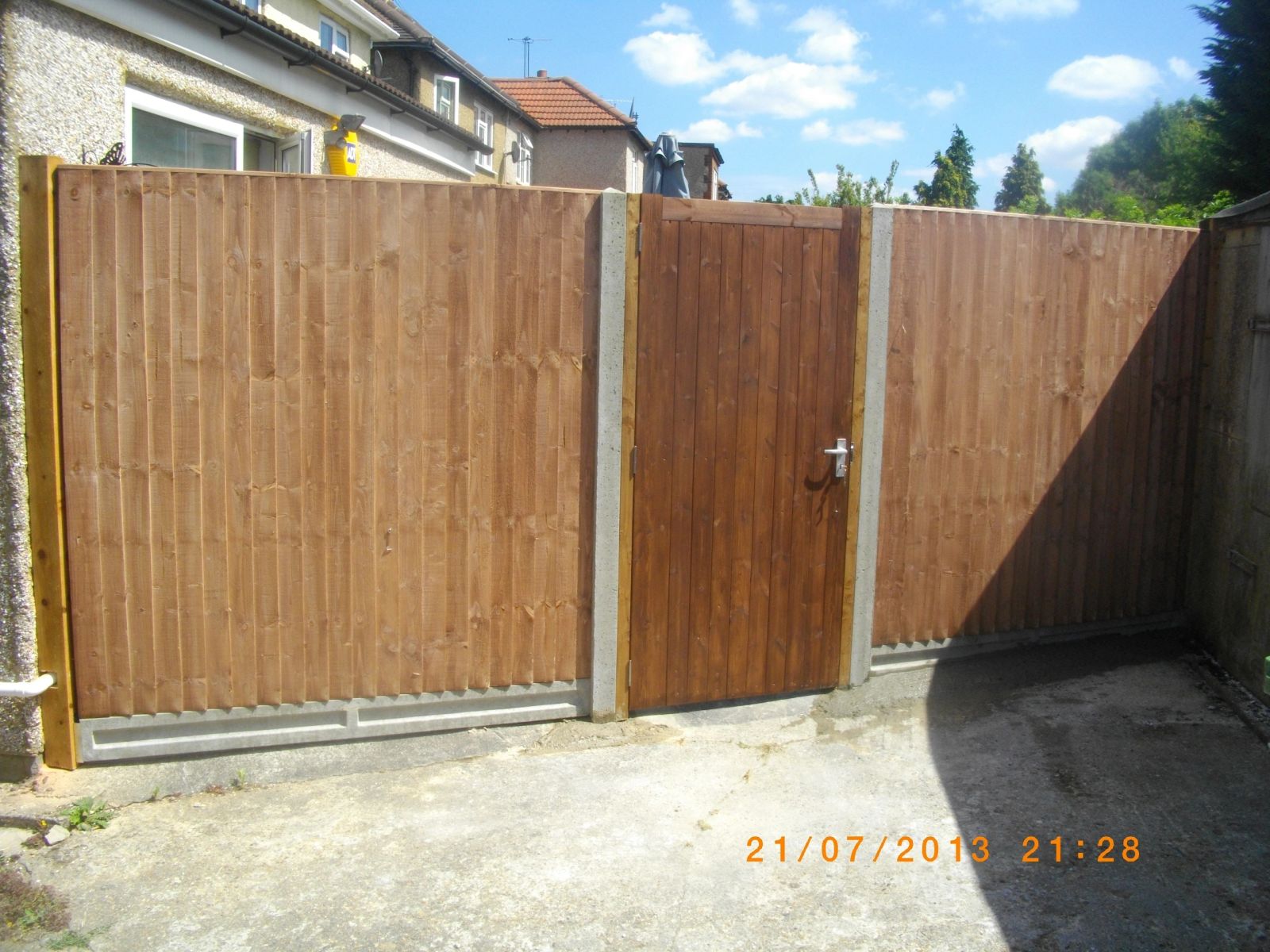
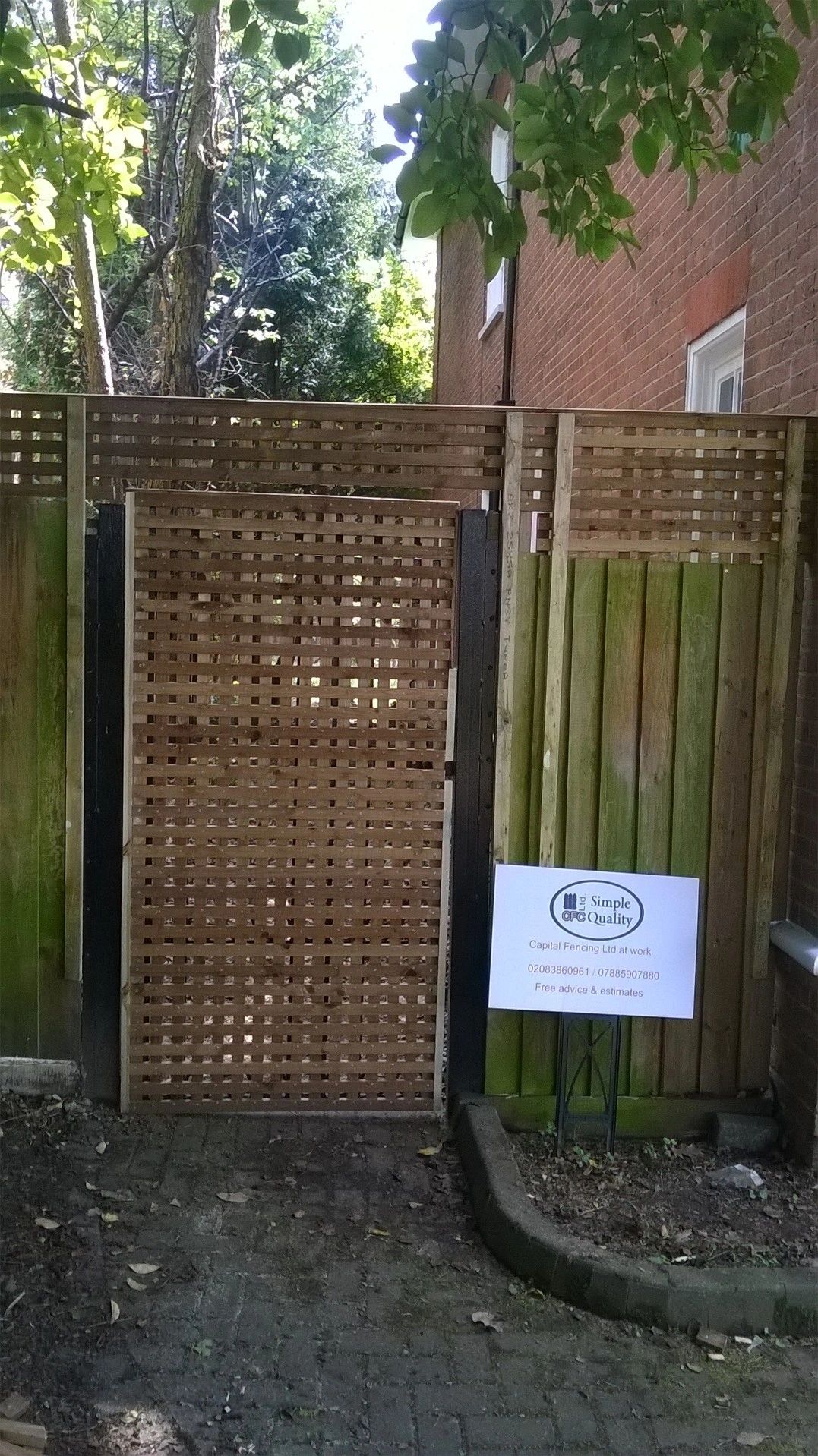
bespoke wooden gate installed by Capital Fencing in Islington (N1)double driveway gates installed by Capital Fencing in Islington (N1)hardwood side gate installed by Capital Fencing in Islington (N1)metal entrance gate installed by Capital Fencing in Islington (N1)

How we approach side return gates on Islington properties

Simple maintenance that prevents gate failure

Checking hinge screws are still tight and that the gate still closes flush against the frame once or twice a year catches the early stages of sag before it becomes a full repair job.

A gate that's starting to catch on the ground is far cheaper to fix at that stage than after the frame has racked further out of square.

Side gates on narrow plots

A side gate typically sits in a tighter opening than a driveway or garden gate, often between the house wall and a boundary fence, which limits post size and leaves little room for a wide frame or heavy bracing.

Access for materials and tools is also restricted on these jobs, so repairs are usually planned around what can be carried through the gap by hand rather than what a fully equipped van pitch would allow.

Trees and roots near a gate opening

Root growth near a gate post can lift the post slightly over time, which throws off the gate's swing even when the hinges and gate face are otherwise sound — we check for this before assuming the fault is purely in the ironmongery.

Where a protected tree sits close to a gate opening, any post repair nearby is checked against that protection first.

Detached plots with a paddock or field edge

Detached properties backing onto a paddock, field or grazing land need a boundary that does two jobs at once — keeping the garden private and, if livestock use the adjoining land, keeping animals off the garden side.

A standard close-boarded fence isn't stock-proof on its own; where horses or cattle are present on the other side, a stock fence or post-and-rail set slightly inside the garden fence is the usual belt-and-braces approach.

Field boundaries also see more vegetation growth and root pressure from hedgerows than a typical suburban fence line, so posts often need resetting or straightening more often than an equivalent garden boundary.

Listed and period properties

A listed building's curtilage can bring garden walls, railings and even historic fence posts within the scope of listed building consent, regardless of the general permitted development rules that would apply to an unlisted house next door.

Cast iron railings removed during wartime salvage are a common feature many period properties never had reinstated, and some conservation officers now encourage sympathetic replacement rather than modern panel fencing on street-facing boundaries.

Consent applications for listed curtilage work typically want a heritage-appropriate material and jointing method specified up front, so it's worth involving the conservation officer before, not after, a design is finalised.

Checking older painted timber for lead content before sanding during repair

Fences and gates painted before the phase-out of lead-based paints can still carry old lead paint layers beneath more recent coats, and sanding that back during a repair without checking risks creating lead-contaminated dust.

Where a fence's paint history is unknown and it's old enough to plausibly include lead paint, it's safer to test before mechanically sanding, and to use wet sanding or careful hand scraping with contained waste disposal if lead is present.

Drainage easements running under a fence line

Some boundaries have a formal drainage easement recorded against the title, protecting a buried pipe or watercourse that a neighbouring property has the right to maintain access to.

Fence posts set directly over or immediately alongside a protected drainage run can technically breach the terms of the easement even if the pipe itself isn't damaged during installation.

Checking the title register, and asking the water company to confirm any known drainage records, is sensible before digging post holes on an older plot with an unclear drainage history.

Ledger board fixing to an existing wall

A ledger board bolted to an existing house wall to support one edge of a deck needs to be fixed through masonry into structural material, with a damp-proof membrane strip behind it and flashing above to stop water tracking into the wall build-up.

Fixing a ledger to a cavity wall needs care to avoid bridging the cavity or compressing insulation, and on a rendered or clad wall the fixings need to reach the structural leaf behind the finish rather than just gripping the surface material.

Where the wall build-up is unclear or the deck is heavily loaded, a free-standing beam and post arrangement independent of the house wall avoids the risk altogether.

What happens if a boundary structure needs planning permission

Where a proposed fence, wall or gate exceeds permitted development limits, a standard planning application goes to the local authority, who assess it against the same character and amenity considerations as any other householder application.

A refusal can be appealed to the Planning Inspectorate, though that process takes months rather than weeks, which is worth factoring into any timeline for a boundary structure that's likely to need consent.

It's almost always faster and cheaper to design within permitted development limits from the outset than to plan around needing consent, unless there's a strong reason the extra height or coverage is necessary.

Signage and lawful notices on a security boundary

Signage warning of CCTV, guard dogs or electric fencing has to be truthful and visible from the approach it's warning about — a sign for a feature that doesn't exist, or one hidden from view, offers no legal protection and can mislead.

Where a boundary carries a genuine hazard such as an electrified topping, specific warning signage at defined intervals is generally a legal requirement, not an optional extra.

Matching paint or stain colour to an existing scheme

Replacing or refinishing a single gate on a property with an established fence or gate colour scheme needs the new finish matched as closely as possible, since a slightly different tone stands out far more on a single gate than it would across a whole run of fencing.

Weathering of the existing scheme also needs accounting for, since a colour matched to a faded existing finish can look mismatched again once the new work weathers at a different rate.

Frost heave effects on shallow-set posts

Frost heave occurs when water in saturated soil freezes and expands, lifting the ground surface and any shallowly set post embedded in it, sometimes by several millimetres each freeze-thaw cycle over a winter.

Posts set below the typical frost penetration depth for the region are far less affected, since the freezing zone that drives heave rarely reaches that far down, which is one reason recommended minimum depths are deeper in areas with harder winters.

A post that's visibly risen slightly over a hard winter, without any sign of the concrete cracking, has often been affected by heave rather than a failed footing, and it can sometimes settle back as the ground thaws.

Handling scope changes discovered once a repair is underway

A repair quoted from an initial inspection sometimes turns out larger once work starts — a post probed as sound at the surface but soft further down, or a neighbouring post found to be equally close to failure.

Agreeing a clear process for confirming any change in scope with the client before continuing, rather than proceeding on assumption, avoids disputes about what was and wasn't included in the original repair.

Choosing stainless fixings for repairs in exposed or salt-affected locations

Standard galvanised fixings corrode faster than usual in locations exposed to road salt spray or coastal air, so a repair in that kind of setting is a reasonable point to upgrade to stainless steel fixings even where the original installation used galvanised.

The extra cost of stainless fixings on a small repair is minor compared with the labour of redoing the same repair again in a few years once galvanised fixings have failed in that environment.

Boundary fencing near a service riser or meter cupboard

A boundary fence positioned close to a gas, electric or water meter cupboard needs to leave clear access for the utility to read or maintain the meter without needing a key to the fence itself, which sometimes means a lockable inspection gate or a section that opens independently of the main line.

Utility providers generally have a minimum clearance requirement in front of a meter cupboard door, and a fence encroaching on that clearance can be flagged at inspection even if the rest of the boundary is compliant.

Post-repair adjustment after settling

A newly concreted or reset gate post can settle slightly in the weeks after installation, particularly in looser or made-up ground, which can throw a freshly hung gate's swing or latch alignment out again.

A follow-up adjustment to hinges or the latch keep after the post has settled is normal practice rather than a sign the original repair was done incorrectly.

Trellis toppers for extra height and privacy

Adding a trellis topper to an existing or new fence is a common way to gain extra height for climbing plants or additional privacy without exceeding permitted development limits for a solid boundary.

Because trellis is inherently more open than solid panel, it doesn't usually count the same way toward the 2m height rule in every case, but it's still worth checking with the local authority since interpretations vary.

A trellis topper needs its own bracing where it's more than a token height, since a tall panel of trellis catching wind behaves more like a sail than most people expect.

Feather-edge board replacement

Individual feather-edge boards on a closeboard fence can be replaced one at a time without disturbing the rest of the run, since each board overlaps the next and is fixed independently to the arris rails.

Matching the taper and width of the existing boards matters more here than on a panel fence, since a mismatched board is visible immediately in a close-run overlap.

Where the adopted highway boundary actually sits

The legal edge of an adopted public highway doesn't always match the visible edge of the tarmac or verge, and can extend further onto what looks like private land in some cases.

Erecting a fence, wall or gate on adopted highway land without authorisation is a separate issue from planning permission, and the highway authority can require its removal.

Where there's any doubt about the exact highway boundary, the local highway authority can usually confirm the extent of the adopted highway against its own records.

Ground socket drainage and silting

A ground socket for a drop bolt or cane bolt needs to drain freely, since a socket that fills with rainwater and silt over time stops the bolt seating fully even when the bolt itself is straight and undamaged.

Clearing and, where needed, adding a small drainage path beneath the socket is a low-cost fix that's often overlooked in favour of replacing the bolt.

Ground conditions and base preparation

Clay ground swells and shrinks with the seasons, which can work a post loose over a few winters if the base wasn't set deep enough to begin with; free-draining ground behaves very differently and usually needs less depth for the same stability.

We test ground on site rather than assume — a boundary that looks straightforward from the surface can hide rubble, old foundations or a high water table that changes how a base is built.

Fencing around front-garden parking

Converting part of a front garden to off-street parking usually needs a dropped kerb from the highway authority, and any remaining boundary fencing needs to respect the same visibility and access rules as the parking itself.

A low wall or open railing at the front, rather than a solid fence, is common on parking conversions so the parked vehicle doesn't look boxed in and sightlines for reversing onto the road stay clear.

Permeable paving is often a planning condition on larger front-garden parking areas to manage surface water run-off, which can indirectly affect where a boundary fence's own drainage needs to go.

Side Return Gates across N1, N5, N7, N19, EC1 is a regular run for us. We'll quote honestly, tell you if side-return gates isn't the right answer for your site, and book the job in within a week or two of a signed quote. measured, quoted and installed by the same small crew. Roads such as Barnsbury Street and Offord Road are typical of the local layout. Islington Green is a useful local reference point. The Regent's Canal passes through the borough via the City Road Basin, and Highbury Fields is one of its largest open spaces.

Get In Touch

Get My Free Quote — 24h Response

No callout fee · Free site visit · Friendly local team covering London & Hertfordshire.

Call us
07885907880
or 02036484746
Email
capital_fencing@yahoo.com
WhatsApp
Message us anytime
Area
London & Hertfordshire
Payment
Card payments accepted

Pay by debit or credit card, bank transfer or cash once the work and price are agreed. No deposit taken online.

Request a Free Quote

We'll get back to you within 24 hours.

Free Site Visit No Callout Fee
Call WhatsAppQuote