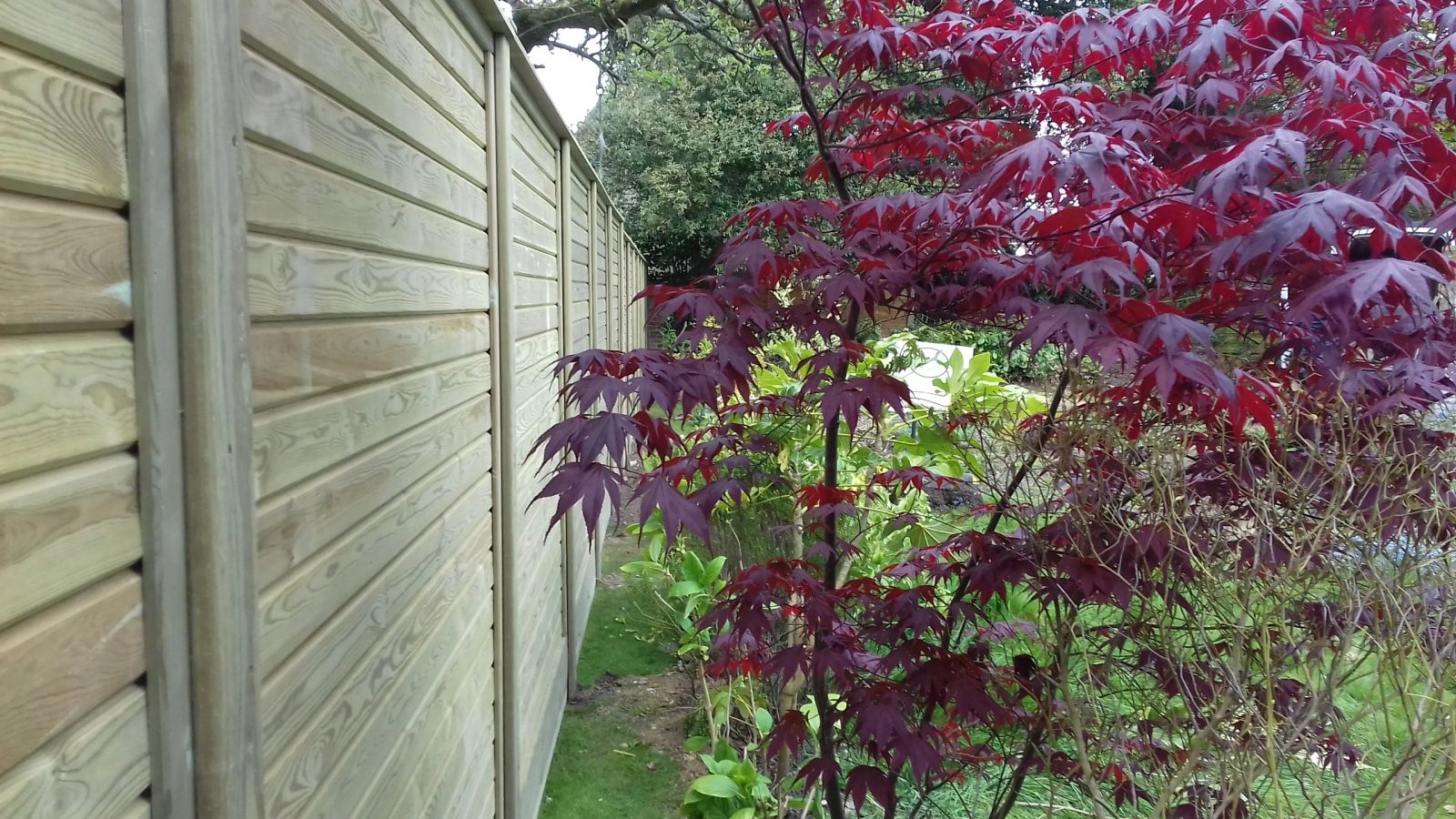
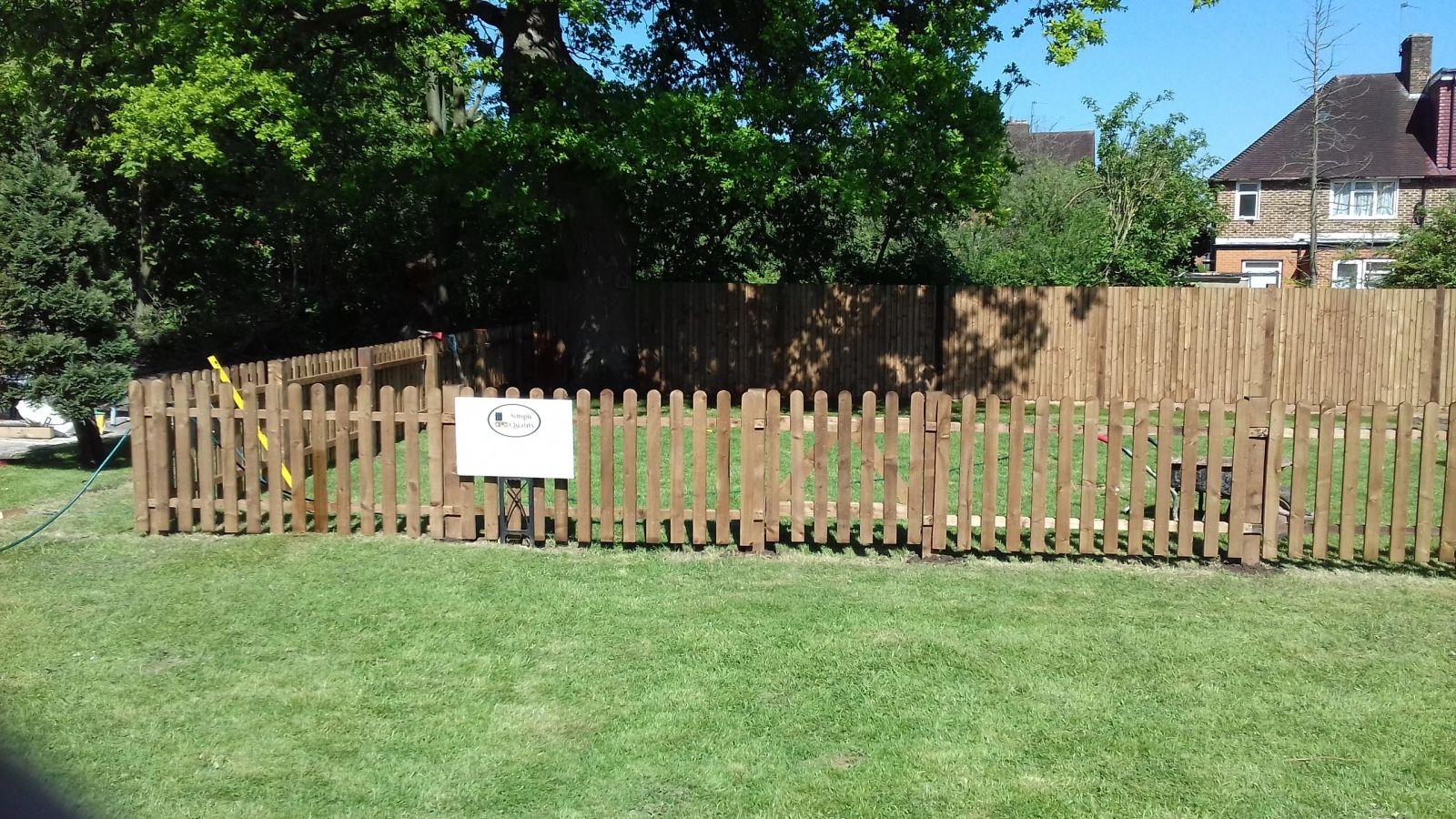
Trees, roots and protected planting near a secure line
Mature trees on or near a boundary change post positions more than most clients expect — a protected tree's root protection area can rule out a straight post line altogether, and we offset posts around roots rather than cutting through them.
Where a tree is covered by a preservation order, work near it is checked against that restriction before any post hole is dug.
Cleat fixing at pale-to-rail junctions
Pales are commonly bolted to rails through a cleat rather than welded, because a bolted cleat can be replaced individually if a pale is damaged, whereas a welded joint means cutting into the rail to make a repair.
Cleats are punched to match the pale profile so the fixing sits flush rather than proud, and a mismatched cleat left loose is one of the more common defects found on an older palisade run at survey stage.
Agreeing a shared contribution to a boundary fence
There's no automatic legal requirement in England for a neighbour to contribute to the cost of a boundary fence, even where both sides benefit from it, unless the deeds specifically say otherwise.
Many boundary fences are replaced by agreement between neighbours splitting the cost informally, but this is a private arrangement rather than something either side can compel.
Getting any agreed contribution, choice of style, and who instructs the contractor written down in an email beforehand avoids a common source of friction once the invoice arrives.
Security at a garage flank wall boundary junction
A garage flank wall often forms part of the boundary line itself, and the gap between the end of the garage and the next boundary feature is a common blind spot that gets missed when a security upgrade focuses only on the open fence sections either side.
Where a flank wall is lower than the rest of the boundary's security height, an additional short fence run or topping across just that gap brings the whole line back up to a consistent standard.
Fencing shared or communal garden spaces
Communal gardens shared by several properties usually need any new fencing agreed by the group or managing body rather than one resident acting unilaterally, since a partition can change how the whole space is used.
Where a communal garden includes mature planting or trees under a collective management plan, new fence lines need checking against that plan rather than just against the ground itself.
Access routes for maintenance vehicles or refuse collection through a communal garden also need to stay clear when planning new subdivisions with fencing.
Delivery vehicle tail-lift noise
A tail-lift lowering or raising on a delivery vehicle produces a distinct hydraulic whine followed by a metallic clunk as it locks, a short but recognisable noise event separate from the vehicle's engine or reversing alarm.
Because tail-lift use tends to happen at a fixed unloading point, a barrier positioned to break sightline to that specific spot is often more useful than a barrier along the vehicle's whole approach route.
Prescriptive easements from long use
An easement — such as a right of way or right to run services — can sometimes arise through long, uninterrupted use of land even where nothing was ever formally granted in writing, known as a prescriptive easement.
Establishing whether one genuinely exists is a legal question with specific tests around the nature and duration of the use, not something settled by opinion on site.
Where a longstanding informal path or access crosses a boundary being fenced, it's worth raising the history with a solicitor rather than assuming it can simply be closed off.
A plot facing a motorway slip road
A slip road combines merging and accelerating traffic with the general flow of the adjoining carriageway, and the acceleration component can be louder at close range than steady-speed traffic on the main lanes themselves.
Because a slip road often sits on an embankment or elevated section relative to nearby housing, the barrier height needed to break the sightline to the road surface can be greater than for a plot facing a road at the same ground level.
Corner plots and highway sightlines
A boundary fronting a road used by vehicles is limited to 1m under permitted development, but corner plots have a second constraint: the highway authority's visibility splay, which can require even lower boundary treatment near a junction so drivers can see pedestrians and oncoming traffic.
These splays are measured as a triangle from a set point back along both roads and are sometimes fixed by a planning condition on the original build rather than by the general permitted development rules.
A solid fence built to the letter of the 1m rule can still be a highway safety problem on a tight corner, so it's worth checking the local plan or asking planning before finalising height on a corner boundary.
Basketball hoop and ball-bounce noise
The repeated impact noise of a ball bouncing on a hard driveway surface, or striking a hoop backboard, is an impulsive sound rather than a continuous one, and impulsive noise tends to be judged as more intrusive than steady noise of a similar average level.
A barrier reduces the airborne carry of that impact noise into a neighbouring garden, though the underlying activity and its timing remain outside what any fence can control.
Stainless steel grades near salted roads
Grade 304 stainless steel resists general corrosion well but can develop surface pitting when regularly exposed to chloride from de-icing salt spray thrown up by passing traffic.
Grade 316 stainless includes molybdenum, which significantly improves resistance to chloride pitting, and is the more appropriate specification for fixings and fittings on roadside fencing subject to winter gritting.
The cost difference between the two grades is usually small relative to the fitting itself, so specifying 316 near a heavily gritted road is generally worth it for the extended service life alone.