
Stevenage
Fence Repairs Near Stevenage
Most fence repairs are one of four jobs — a post, a panel, a gravel board or a full spurred run — and knowing which one you actually need is what keeps the bill down.
Get a quote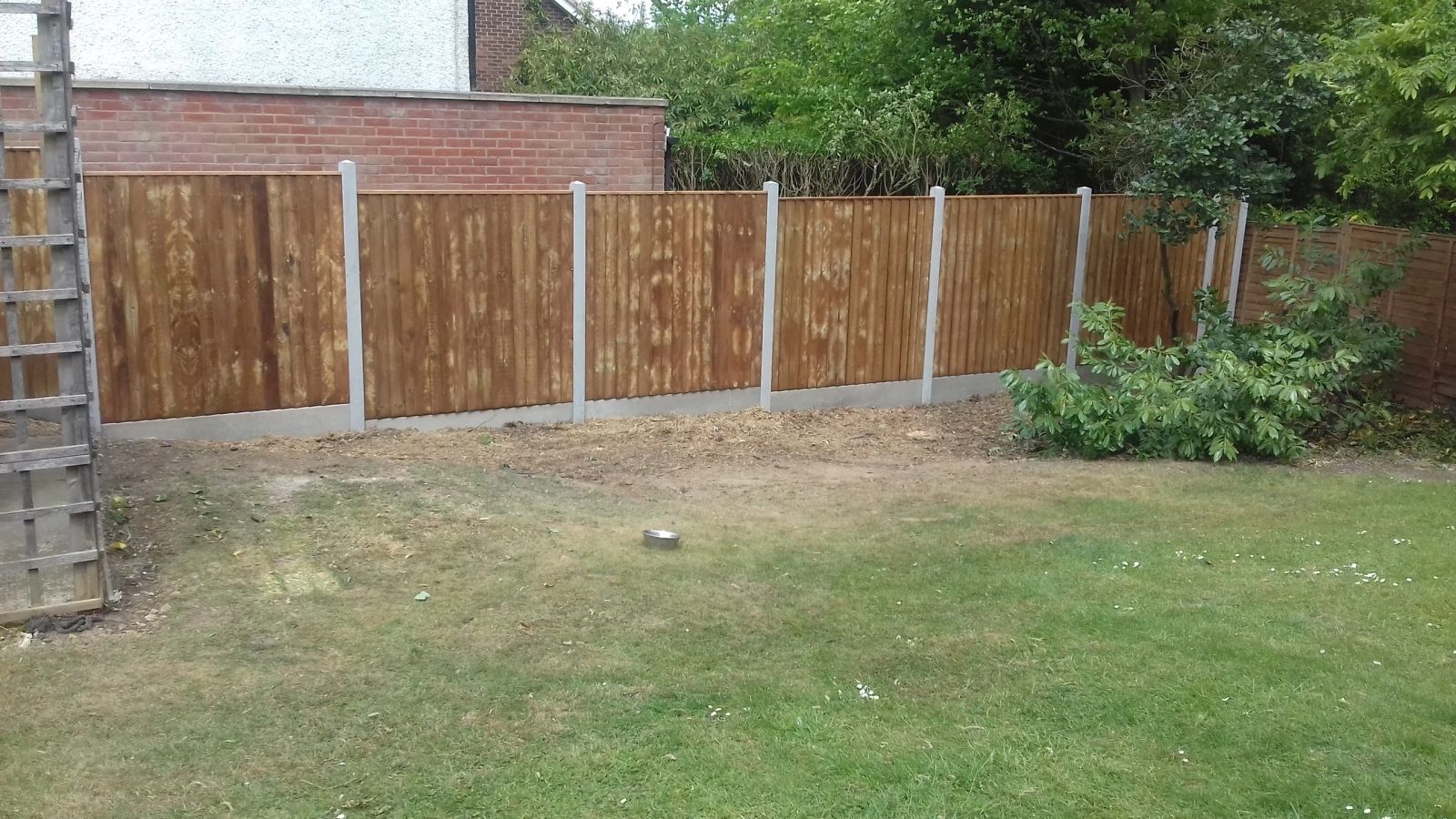
Fence Repairs in Stevenage usually comes down to one thing first: prioritising repairs ahead of the windier months. A post or panel that's borderline rather than fully failed is more likely to come down completely once autumn and winter storms start, so repairs identified in summer are worth scheduling before the exposed season rather than left until something actually blows over. High Street (Old Town), Six Hills Way Six Hills tumuli The pedestrian underpass network built into the New Town design means much of Bedwell and Chells has limited rear vehicle access. Stevenage falls under Stevenage Borough Council, in the SG1 postcode area, neighbouring hitchin.
Prioritising repairs ahead of the windier months
A post or panel that's borderline rather than fully failed is more likely to come down completely once autumn and winter storms start, so repairs identified in summer are worth scheduling before the exposed season rather than left until something actually blows over.
This is particularly relevant on exposed boundaries or end bays that have already shown signs of movement, since those are the sections most likely to fail first under wind load.
Why storm damage clusters at certain bays
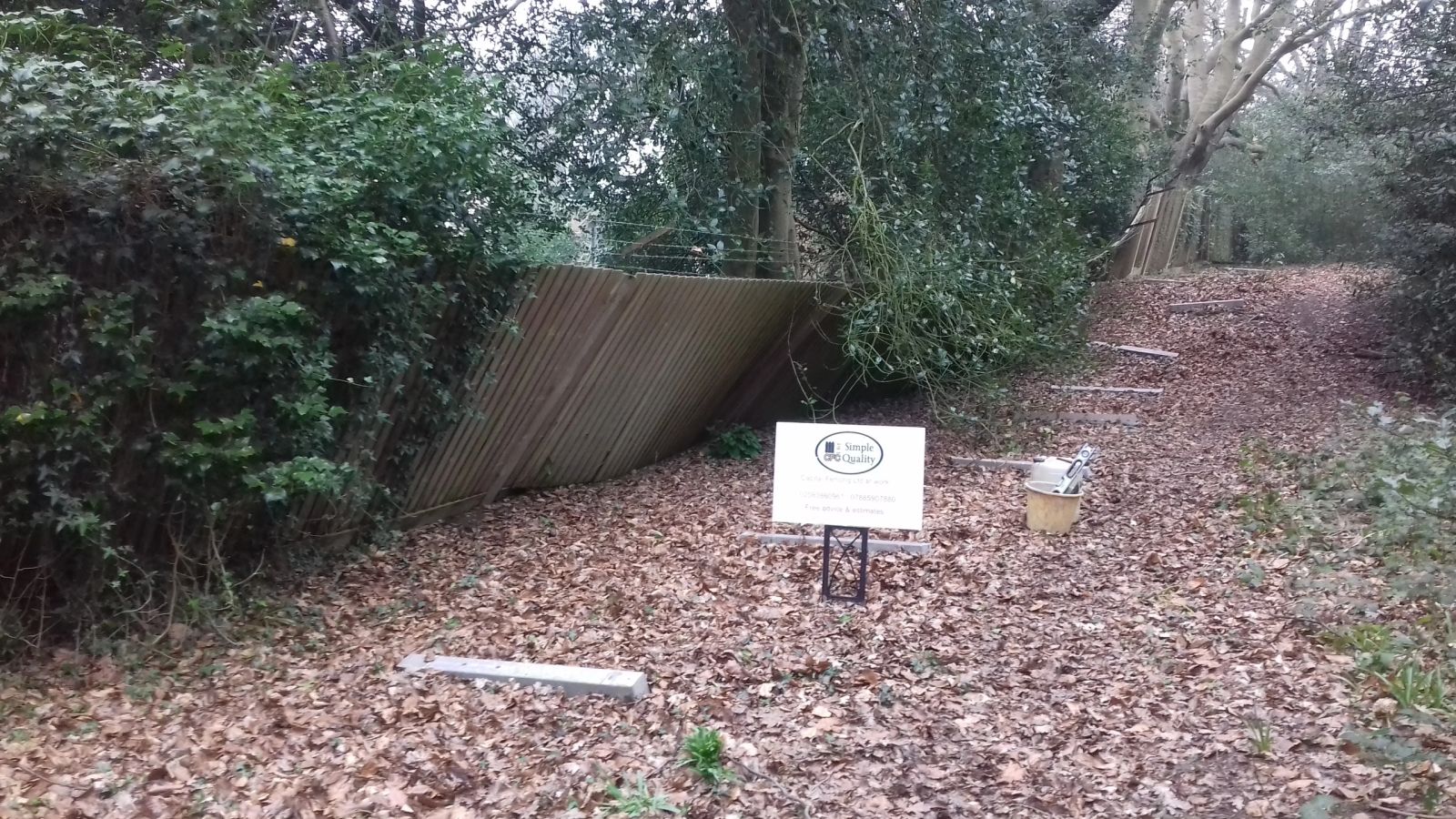
Storm damage rarely hits a run evenly — a bay at the end of a straight run, or one next to a gap such as a gate, usually takes more wind load than the bays either side and fails first.
When repairing storm damage we check the bays either side of the failure too, since a post that's been leaned on hard by a falling neighbour is often compromised even if it's still standing.
Working around overhead power or telecoms lines during repair
A post repair beneath an overhead service line limits how tall equipment or extended tools can be used safely, and any post reset in that position needs the same overhead clearance considered as it would during a new installation.
Where a line runs close to the repair, checking clearance and, if needed, contacting the network operator before starting is worth doing even for what looks like a routine single-post job.
Ironmongery checks during a fence repair
A repair visit is a natural point to check any gate ironmongery on the same boundary, since hinges and latches wear on a similar timescale to the timber around them and a worn hinge left unaddressed puts extra strain on a newly repaired gate post.
We flag any ironmongery that's due for replacement rather than only fixing the panel or post that prompted the call-out.
Repairing an end post fixed against a house or garage wall
An end post bolted to masonry rather than set in its own footing fails differently — usually at the wall fixings rather than at ground level — and repair means checking whether the wall fixing itself has corroded or worked loose in the masonry.
Where the original fixing type has degraded, refitting with a heavier-duty or better-protected fixing is generally worth the small extra effort over simply replacing like-for-like into the same drilled holes.
Noise and timing considerations on a repair
Cutting timber or breaking out old concrete can be noisy, and giving a neighbour advance notice of a repair on a shared boundary avoids unnecessary friction, particularly on a terraced row where several gardens sit close together.
Timing louder stages of a repair to reasonable hours is a simple courtesy that costs nothing and reduces complaints on tightly packed sites.
Frequently asked
Does ground type affect how a fence is repaired?
Yes — clay ground that's shifted seasonally is a common underlying cause of post failure, and a repair on clay sometimes needs a deeper reset than the original spec. Shephall Way, Chells Way Stevenage station Stevenage Old Town, predating the New Town, sits within a conservation area with its own historic street pattern.
Can old fence panel profiles be matched exactly?
We match as closely as current stock allows, and we're upfront if an older or discontinued profile can't be matched exactly.
Should cut ends of new fence timber be treated separately?
Yes — end grain exposed by cutting on site draws in moisture faster than the factory-treated face, so sealing cut ends at the time of cutting is worthwhile. Stevenage's New Town estates were built around cul-de-sac layouts, with many rear boundaries meeting at three-way corners typical of the 1950s masterplan.
Why does the gravel board rot before the rest of the fence?
It sits closest to ground level and takes the most soil contact and splashback, so it's usually the first timber component to fail.
How often should a repaired section of fence be checked afterward?
Roughly the same interval as the rest of the fence, typically an annual check, with a closer look after the first full winter following the repair.
Can individual feather-edge boards be replaced without redoing the whole panel?
Yes — each board is fixed independently to the arris rails, so a single damaged board can be swapped without disturbing the rest of the run.
Is there a risk of hitting pipes or cables when digging out a post repair?
The risk is lower when digging in the same spot as the original footing, but any repair that shifts the post position should still be checked against known service runs first.
Do you upgrade timber gravel boards to concrete during a repair?
Often, yes — swapping to concrete gravel boards at repair time is one of the simplest ways to add years to a fence line.
Ironmongery checks during a fence repair is the detail that decides most fence repairs jobs here — a repair visit is a natural point to check any gate ironmongery on the same boundary, since hinges and latches wear on a similar timescale to the timber around them and a worn hinge left unaddressed puts extra strain on a newly repaired gate post. Chells Way, Six Hills Way Roebuck retail park Six Hills Way runs alongside the Six Hills, a scheduled ancient monument comprising a row of Roman-era burial mounds. Stevenage's New Town estates were built around cul-de-sac layouts, with many rear boundaries meeting at three-way corners typical of the 1950s masterplan.
Get My Free Quote — 24h Response
No callout fee · Free site visit · Friendly local team covering London & Hertfordshire.
Pay by debit or credit card, bank transfer or cash once the work and price are agreed. No deposit taken online.