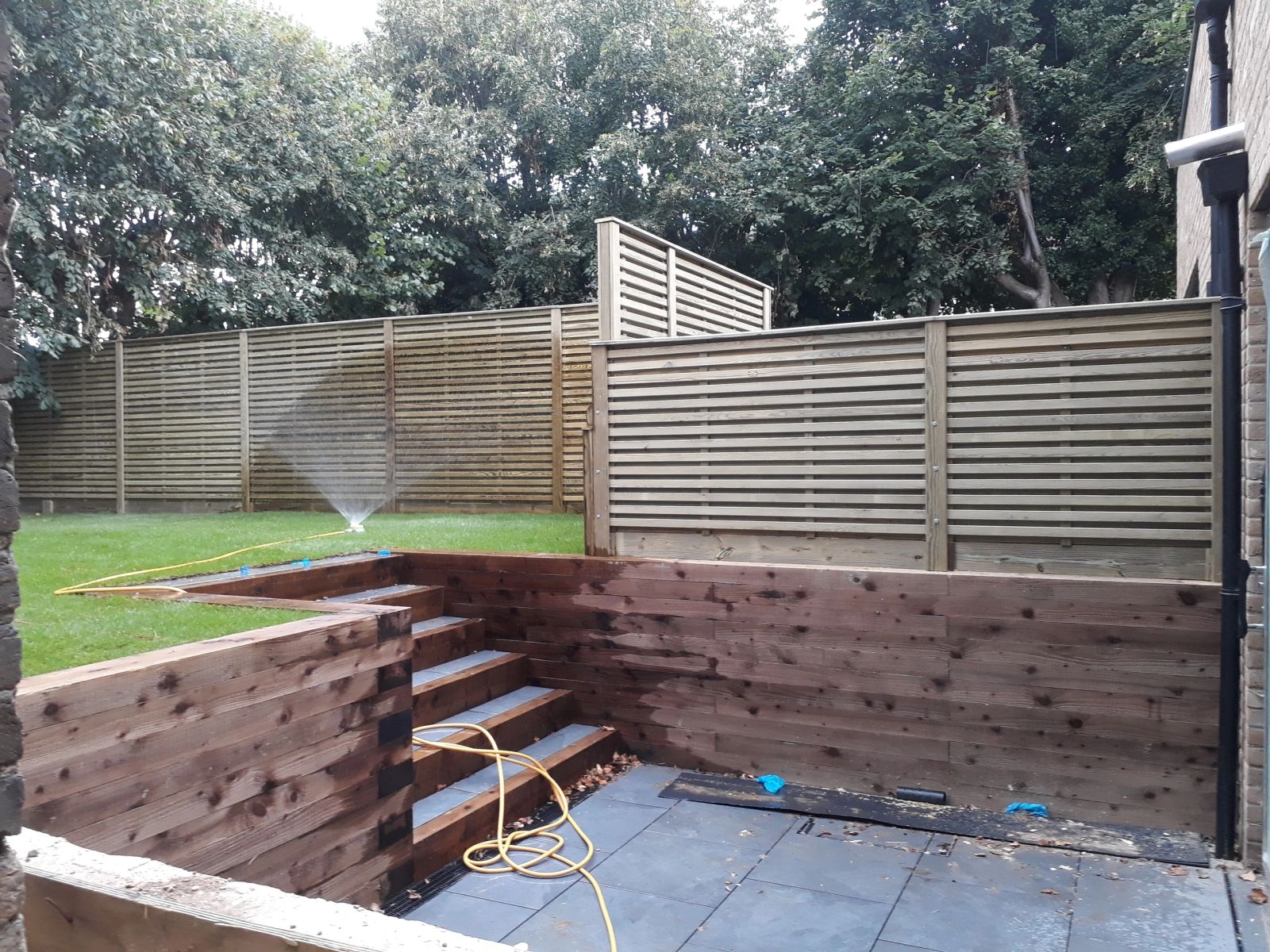
Stevenage Borough Council is the local authority for Stevenage (SG1, SG2); the housing stock leans toward post-war planned housing across chells, shephall and bedwell, plus older properties in stevenage old town, and gardens tend to be modest rectangular plots, typically flat, with rear access alleyways on the planned estates. What tends to drive the spec on a Stevenage job is shared-with-neighbour fence runs are the norm — quotes need to cover boundary checks first. Wire supports for climbing plants on a fence: Climbers like clematis or trained fruit need their own tensioned wire or trellis support rather than relying on the fence panel itself, since the twisting and clinging growth habit can distort thin battens over time. Vine eyes and straining wire fixed into posts, not into panel infill, spreads the load onto the structural timber rather than the part of the fence most likely to need replacing first. Movement joints in timber cladding: Timber cladding boards fixed edge to edge without any allowance for seasonal expansion can buckle or split as the boards swell in wet weather and have nowhere to expand into.
Property: post-war planned housing across Chells, Shephall and Bedwell, plus older properties in Stevenage Old Town
Gardens: modest rectangular plots, typically flat, with rear access alleyways on the planned estates
shared-with-neighbour fence runs are the norm — quotes need to cover boundary checks first
Under Stevenage Borough Council, covering SG1, SG2. Nearest arterial: A602 / A1(M), A1(M) J7 / J8. Served from Stevenage (East Coast Main Line). Local commercial anchors: Gunnels Wood industrial area, Pin Green industrial estate.
Streets we regularly work on: Walkern Road, Lytton Way, Broadhall Way, Shephall Way. Local anchors: Stevenage station, Six Hills tumuli, Roebuck retail park.
Stevenage's New Town estates were built around cul-de-sac layouts, with many rear boundaries meeting at three-way corners typical of the 1950s masterplan. The pedestrian underpass network built into the New Town design means much of Bedwell and Chells has limited rear vehicle access. Six Hills Way runs alongside the Six Hills, a scheduled ancient monument comprising a row of Roman-era burial mounds. Stevenage Old Town, predating the New Town, sits within a conservation area with its own historic street pattern.
Practical points for boundary work in Stevenage
Wire supports for climbing plants on a fence
Climbers like clematis or trained fruit need their own tensioned wire or trellis support rather than relying on the fence panel itself, since the twisting and clinging growth habit can distort thin battens over time.
Vine eyes and straining wire fixed into posts, not into panel infill, spreads the load onto the structural timber rather than the part of the fence most likely to need replacing first.
Planning wire runs at the time a fence is built, rather than drilling into finished posts later, avoids weakening a post at exactly the point that already carries the most load.
Movement joints in timber cladding
Timber cladding boards fixed edge to edge without any allowance for seasonal expansion can buckle or split as the boards swell in wet weather and have nowhere to expand into.
A small gap left between board ends, or a slightly loose fixing pattern that allows a board to expand slightly within its fixing slots, accommodates this movement without transferring stress into the board itself.
The required gap varies by species and board width, since wider boards and more moisture-reactive species move more in absolute terms than narrow boards of a stable species for the same change in humidity.
Made ground and buried rubble
Plots built on old industrial land, demolished outbuildings or infilled yards often have a layer of brick, concrete or hardcore sitting a foot or two down rather than natural subsoil.
An auger that hits rubble at 300-400mm usually means hand-digging or breaking out that layer rather than fighting it, because a post set on top of loose fill will rock within a year regardless of how much concrete goes round it.
It's worth budgeting extra time for this on any plot with a known history of redevelopment, rather than assuming a standard dig will go to plan.
Hardwood versus composite decking movement
Hardwood decking boards, like any solid timber, shrink and swell across their width with moisture changes, which is why they're laid with a consistent gap between boards rather than tight-butted, and why that gap can look different in a dry summer compared with a wet winter.
Composite boards move less with moisture but expand and contract more with temperature than timber, so the gapping and fixing method used has to account for a different kind of movement rather than assuming timber spacing rules apply directly.
Both need their end cuts sealed or capped where boards are cut to length on site, since a cut end is the point most likely to take on water and start to degrade first.
Hardstanding and uneven levels
Where a fence line crosses from a garden onto a patio, driveway or other hardstanding, post bases usually need core-drilling into the existing slab rather than a dug hole, which is a different technique and a different price than fencing over soil.
A change in level along a run — a step up to a raised patio, or a drop to a lower side passage — needs the fence height measured consistently from the ground it's actually protecting, not from an average across the whole run.
Getting this detail wrong is one of the more common reasons a finished fence ends up looking uneven even though every panel was fitted correctly on its own section.
Green belt and stock-proof boundaries
Plots backing onto green belt land, paddocks or working farmland often need a genuinely stock-proof boundary rather than a decorative garden fence, particularly where livestock graze the adjoining field.
Post-and-rail with stock netting, or a taller close-boarded run where privacy also matters, both do the job, but a standard panel fence with gaps at the base is routinely pushed through or under by sheep and larger dogs.
Any new boundary on green belt land should also be checked against local planning policy, since green belt designation adds another layer of restriction on top of the usual permitted development rules.
Is hardstanding and uneven levels something you plan for in Stevenage?
Getting this detail wrong is one of the more common reasons a finished fence ends up looking uneven even though every panel was fitted correctly on its own section. Where a fence line crosses from a garden onto a patio, driveway or other hardstanding, post bases usually need core-drilling into the existing slab rather than a dug hole, which is a different technique and a different price than fencing over soil. A change in level along a run — a step up to a raised patio, or a drop to a lower side passage — needs the fence height measured consistently from the ground it's actually protecting, not from an average across the whole run.
Is made ground and buried rubble something you plan for in Stevenage?
Plots built on old industrial land, demolished outbuildings or infilled yards often have a layer of brick, concrete or hardcore sitting a foot or two down rather than natural subsoil. An auger that hits rubble at 300-400mm usually means hand-digging or breaking out that layer rather than fighting it, because a post set on top of loose fill will rock within a year regardless of how much concrete goes round it. It's worth budgeting extra time for this on any plot with a known history of redevelopment, rather than assuming a standard dig will go to plan.
What's the typical garden like in Stevenage?
Modest rectangular plots, typically flat, with rear access alleyways on the planned estates is typical, alongside post-war planned housing across chells, shephall and bedwell, plus older properties in stevenage old town.
How does "green belt and stock-proof boundaries" affect fencing or decking work in Stevenage?
Any new boundary on green belt land should also be checked against local planning policy, since green belt designation adds another layer of restriction on top of the usual permitted development rules. Plots backing onto green belt land, paddocks or working farmland often need a genuinely stock-proof boundary rather than a decorative garden fence, particularly where livestock graze the adjoining field. Post-and-rail with stock netting, or a taller close-boarded run where privacy also matters, both do the job, but a standard panel fence with gaps at the base is routinely pushed through or under by sheep and larger dogs.
What's the most common issue you plan around in Stevenage?
Shared-with-neighbour fence runs are the norm — quotes need to cover boundary checks first.
How does "hardwood versus composite decking movement" affect fencing or decking work in Stevenage?
Composite boards move less with moisture but expand and contract more with temperature than timber, so the gapping and fixing method used has to account for a different kind of movement rather than assuming timber spacing rules apply directly. Both need their end cuts sealed or capped where boards are cut to length on site, since a cut end is the point most likely to take on water and start to degrade first. Hardwood decking boards, like any solid timber, shrink and swell across their width with moisture changes, which is why they're laid with a consistent gap between boards rather than tight-butted, and why that gap can look different in a dry summer compared with a wet winter.
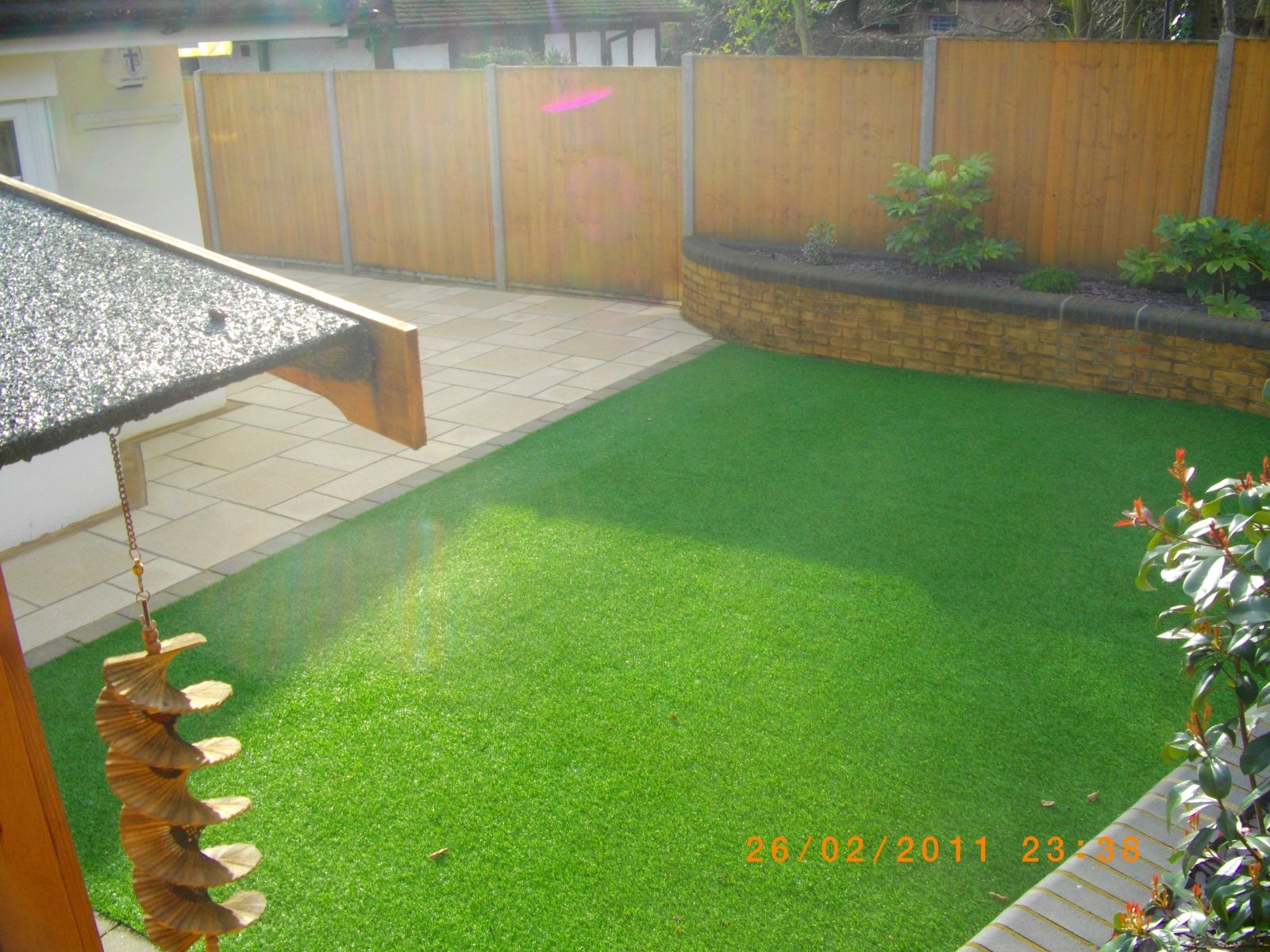
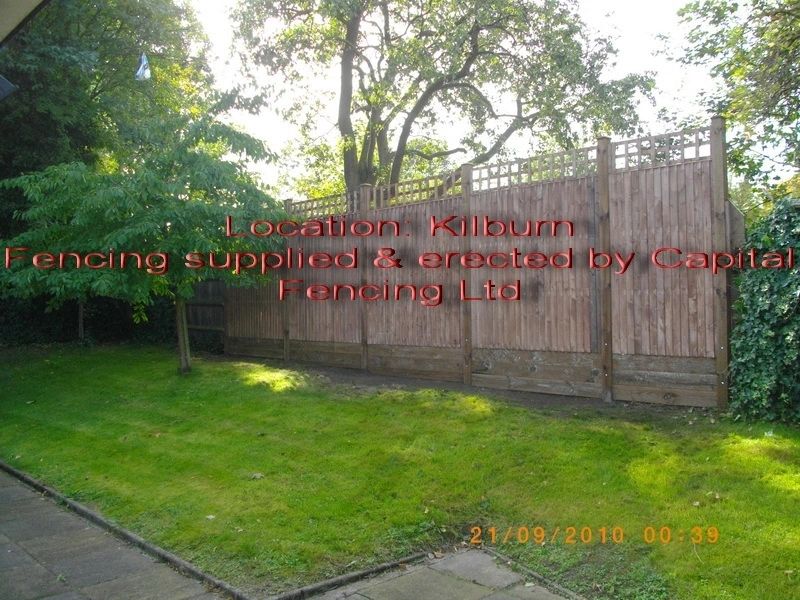
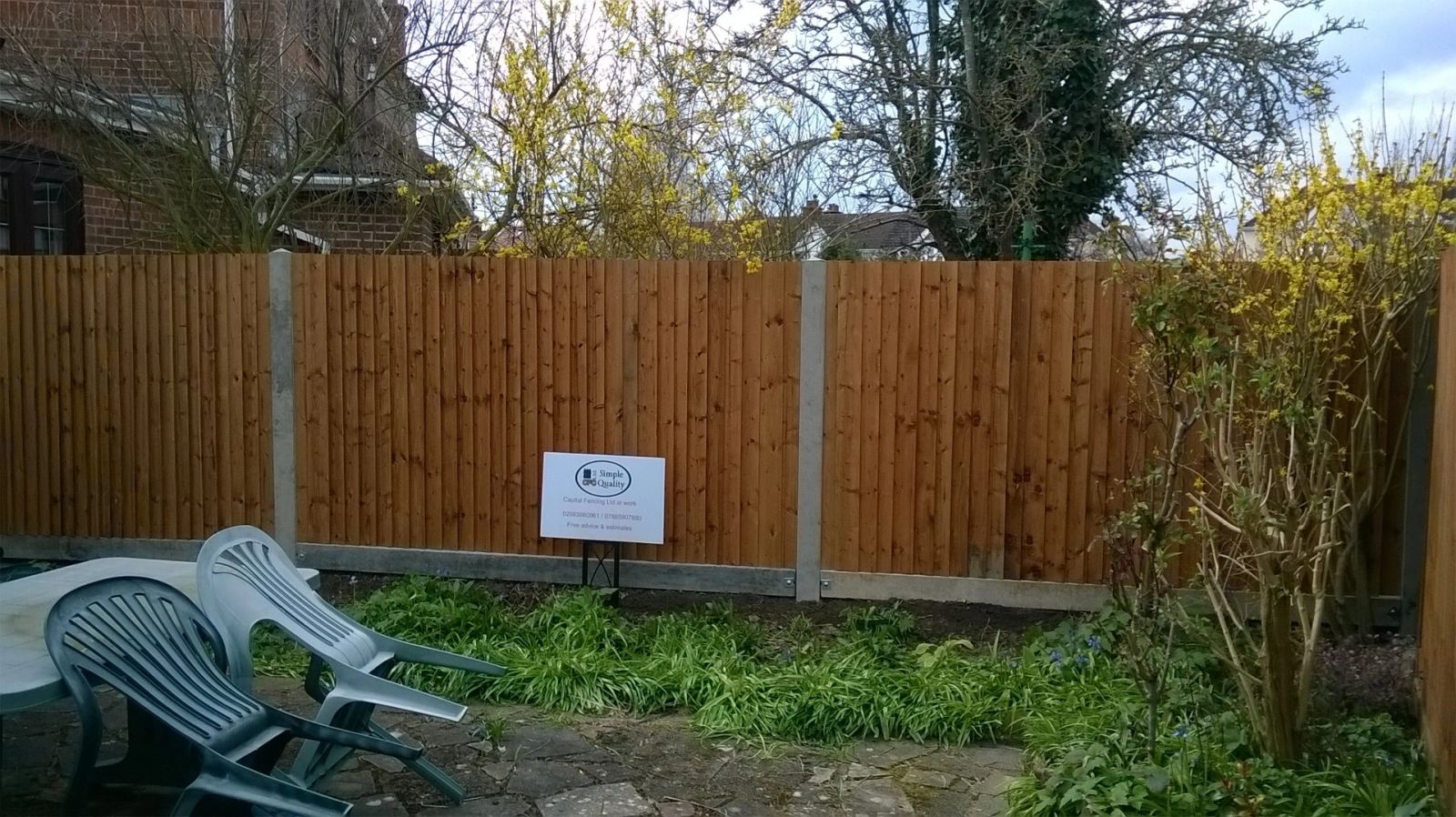
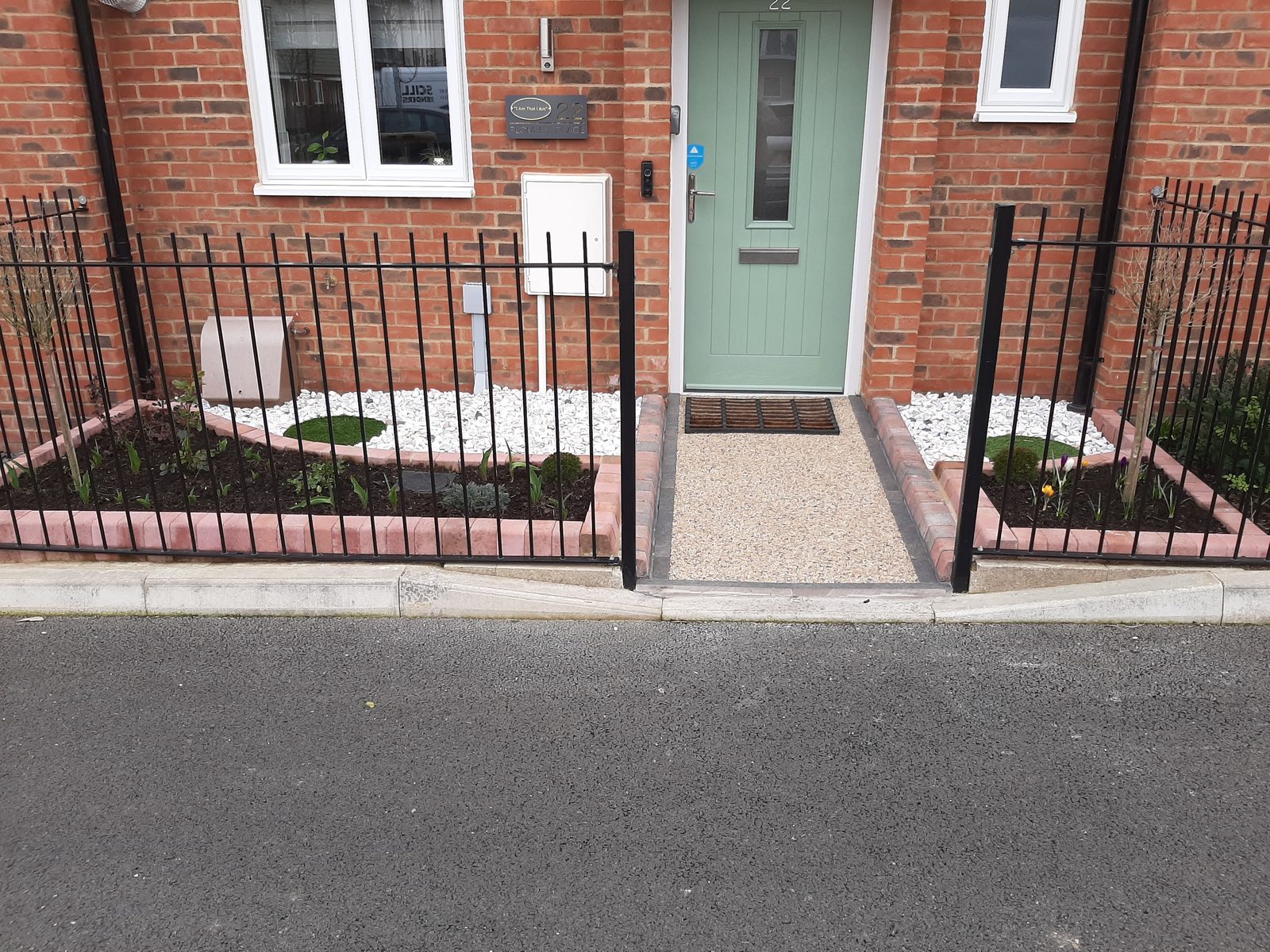
Some of our projects
We work this patch off A602 / A1(M), close to A1(M) J7 / J8, via Stevenage (East Coast Main Line). Made ground and buried rubble: Plots built on old industrial land, demolished outbuildings or infilled yards often have a layer of brick, concrete or hardcore sitting a foot or two down rather than natural subsoil. An auger that hits rubble at 300-400mm usually means hand-digging or breaking out that layer rather than fighting it, because a post set on top of loose fill will rock within a year regardless of how much concrete goes round it. Hardwood versus composite decking movement: Hardwood decking boards, like any solid timber, shrink and swell across their width with moisture changes, which is why they're laid with a consistent gap between boards rather than tight-butted, and why that gap can look different in a dry summer compared with a wet winter.
Get In Touch
Get My Free Quote — 24h Response
No callout fee · Free site visit · Friendly local team covering London & Hertfordshire.