London & Hertfordshire Free Site Visit
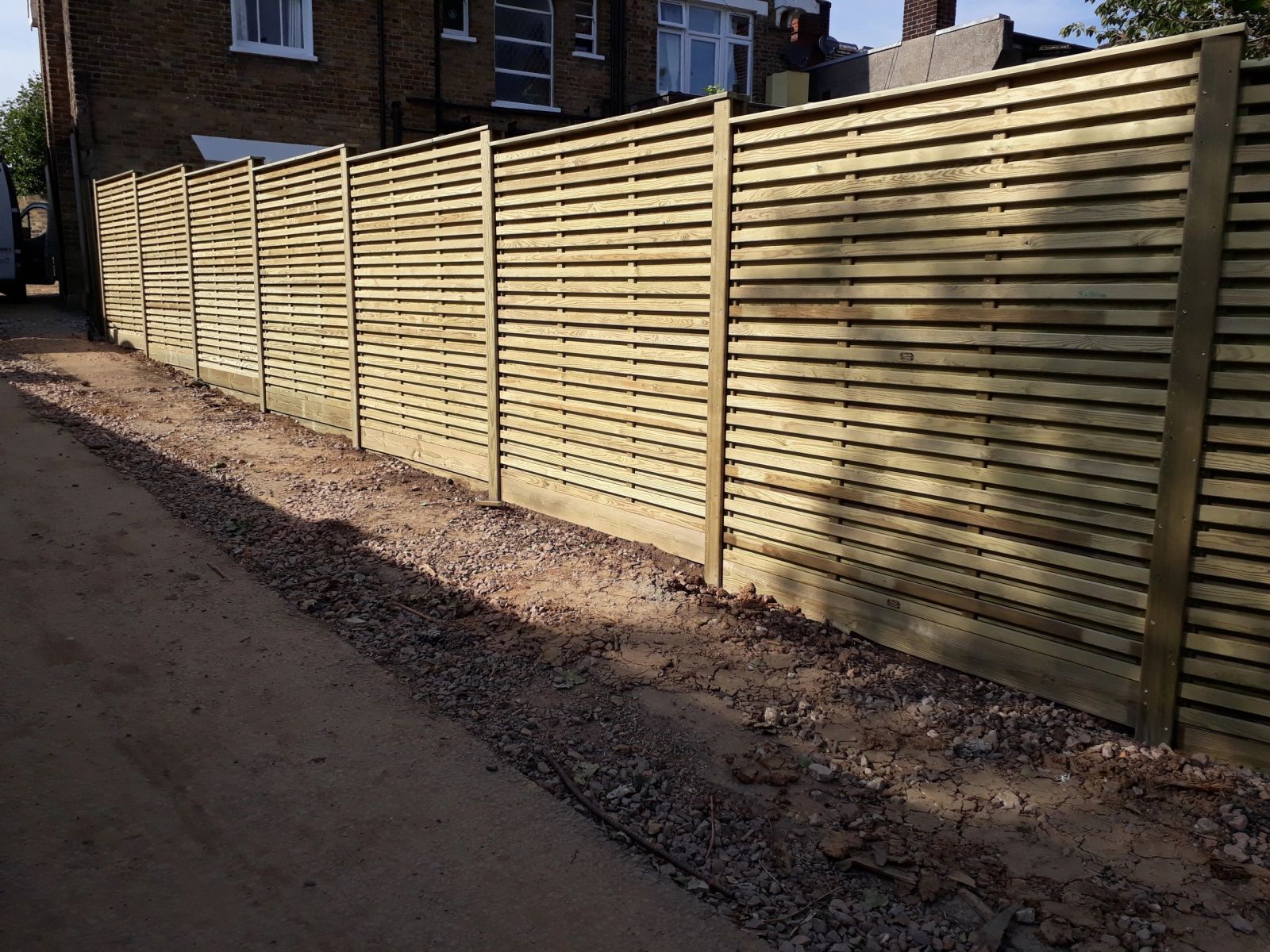
closeboard fence run installed by Capital Fencing in Stevenage (SG1)
Stevenage · SG1 / SG2

Landlord fencing across Stevenage — Stevenage Borough

If you're weighing landlord-grade fencing for a property in Stevenage, the first thing that matters is tenancy turnaround windows and inventory sign-off — not the material choice. Once that's settled, pressure-treated closeboard on concrete posts is where most of our landlord-grade fencing work in SG1 lands, with 6ft overlap panels with concrete posts and gravel boards as a considered alternative. Roads such as Six Hills Way and Walkern Road are typical of the local layout. Fairlands Valley Park is a useful local reference point. The pedestrian underpass network built into the New Town design means much of Bedwell and Chells has limited rear vehicle access.

If you're weighing landlord-grade fencing for a property in Stevenage, the first thing that matters is tenancy turnaround windows and inventory sign-off — not the material choice. Once that's settled, pressure-treated closeboard on concrete posts is where most of our landlord-grade fencing work in SG1 lands, with 6ft overlap panels with concrete posts and gravel boards as a considered alternative. Roads such as Six Hills Way and Walkern Road are typical of the local layout. Fairlands Valley Park is a useful local reference point. The pedestrian underpass network built into the New Town design means much of Bedwell and Chells has limited rear vehicle access.

What goes wrong

Common failure modes on landlord-grade fencing

  • cheapest lap panels racking in wind because posts were shallow — we always concrete to 600mm minimum on landlord work
  • using bare softwood posts on ground contact — three winters and they're gone
Default spec

How we build landlord-grade fencing in Stevenage

6ft closeboard on concrete posts with gravel boards, mid-rail capped, softwood side gate with padlock hasp. On Stevenage jobs we adjust for shared-with-neighbour fence runs are the norm — quotes need to cover boundary checks first.

Property mix locally: post-war planned housing across Chells, Shephall and Bedwell, plus older properties in Stevenage Old Town. Typical gardens: modest rectangular plots, typically flat, with rear access alleyways on the planned estates. Postcodes we regularly service: SG1, SG2.

we bill via one purchase order across a portfolio, provide before/after photos for the inventory clerk, and can be on and off site inside a tenancy void.

Why this spec, for buy-to-let owners and letting agents

  • individual boards or single panels can be swapped without touching the whole run
  • concrete posts and gravel boards keep the ground contact off the timber — that's where landlord fences usually fail
  • one crew, one price sheet across multiple properties — inventory-friendly for portfolio owners

Typical landlord-grade fencing briefs in Stevenage

  • boundary run replaced between two tenancies inside a single working week
  • cheapest defensible spec that will still stand up to the next storm and inventory

Landlord Fencing FAQs — Stevenage

Can before-and-after photos be provided for the inventory?

On landlord-grade fencing jobs in Stevenage (SG1), our default answer is: 6ft closeboard on concrete posts with gravel boards, mid-rail capped, softwood side gate with padlock hasp. The honest trade-off is cheapest lap panels racking in wind because posts were shallow — we always concrete to 600mm minimum on landlord work — which is exactly what our default spec designs out.

Who owns the fence — landlord or neighbour — and does it matter to the quote?

Across Stevenage we spec around shared-with-neighbour fence runs are the norm — quotes need to cover boundary checks first, so on landlord-grade fencing that usually means pressure-treated closeboard on concrete posts. The honest trade-off is cheapest lap panels racking in wind because posts were shallow — we always concrete to 600mm minimum on landlord work — which is exactly what our default spec designs out.

What's the cheapest defensible spec you'd stand behind for a rental?

Stevenage Borough coverage means we can survey most SG1 addresses inside a week — buy-to-let owners and letting agents needing durable boundaries between tenancies. We bill via one purchase order across a portfolio, provide before/after photos for the inventory clerk, and can be on and off site inside a tenancy void.

Do you invoice per property or per portfolio?

Practically: boundary run replaced between two tenancies inside a single working week. That's the Stevenage version of this job, not a generic one. The honest trade-off is cheapest lap panels racking in wind because posts were shallow — we always concrete to 600mm minimum on landlord work — which is exactly what our default spec designs out.

Can you match existing fencing across neighbouring rental plots?

On landlord-grade fencing jobs in Stevenage (SG1), our default answer is: 6ft closeboard on concrete posts with gravel boards, mid-rail capped, softwood side gate with padlock hasp. For context: concrete posts and gravel boards keep the ground contact off the timber — that's where landlord fences usually fail. One crew, one price sheet, before-and-after photos as standard.

Recent landlord fencing work
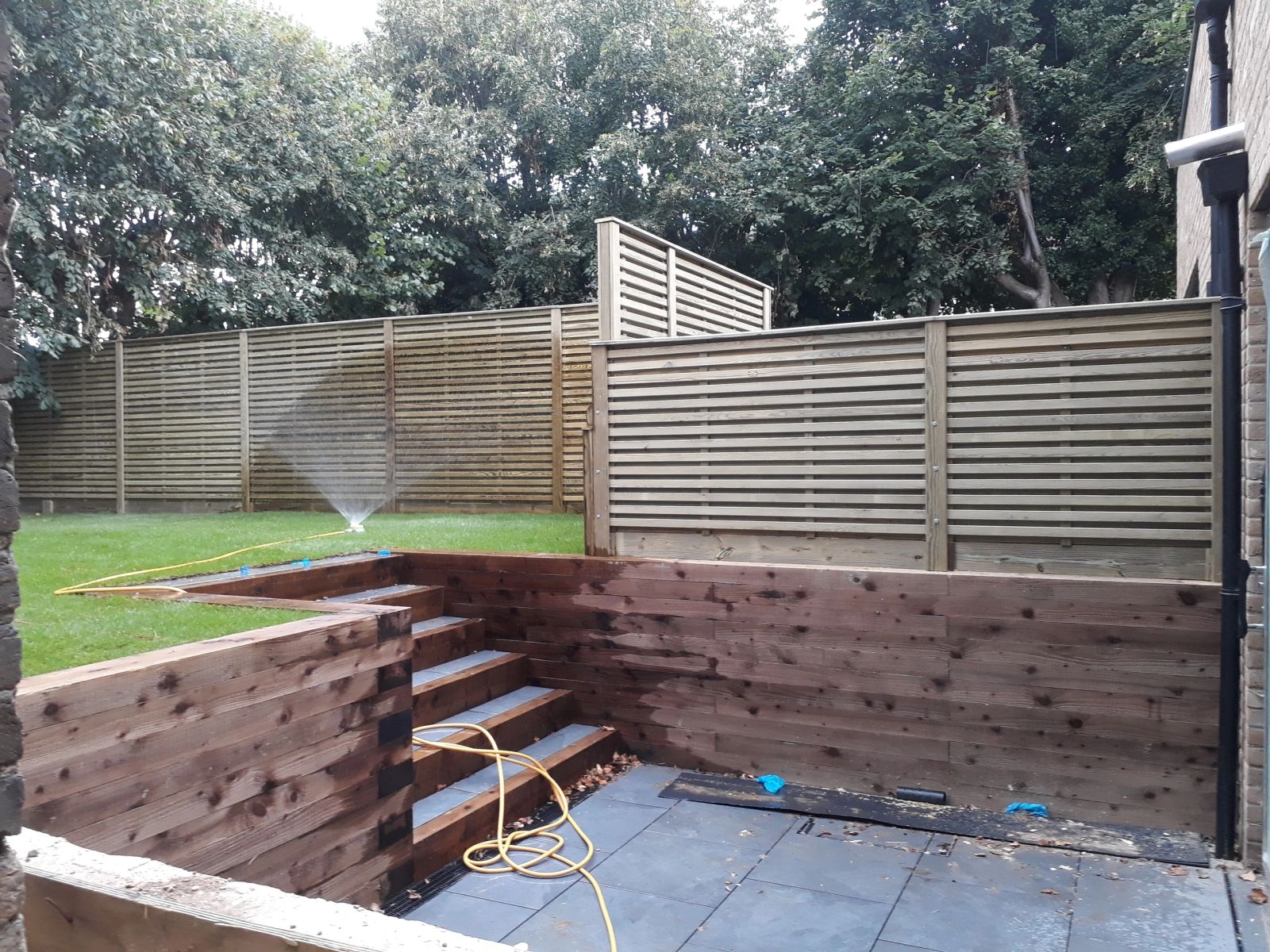
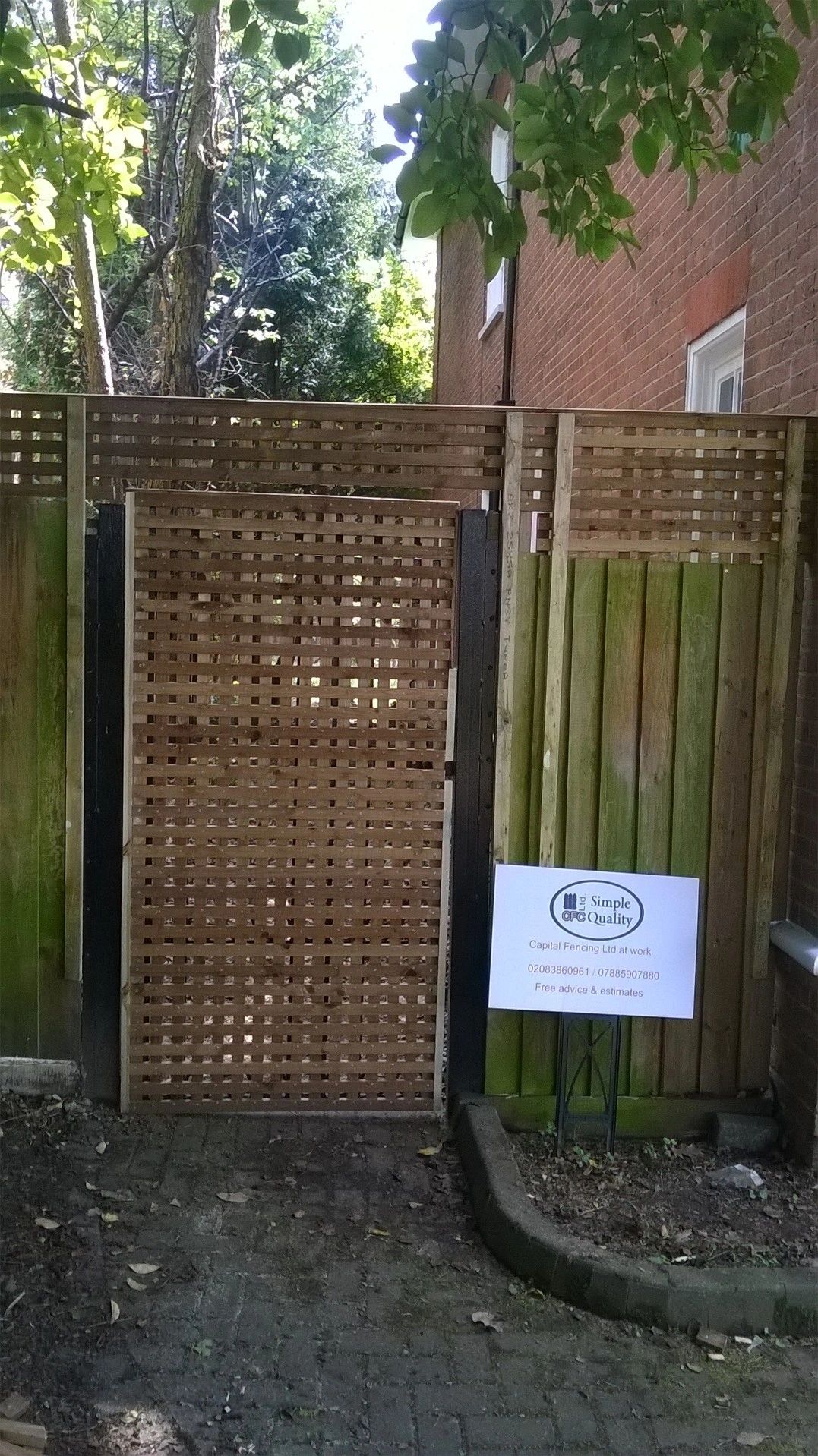
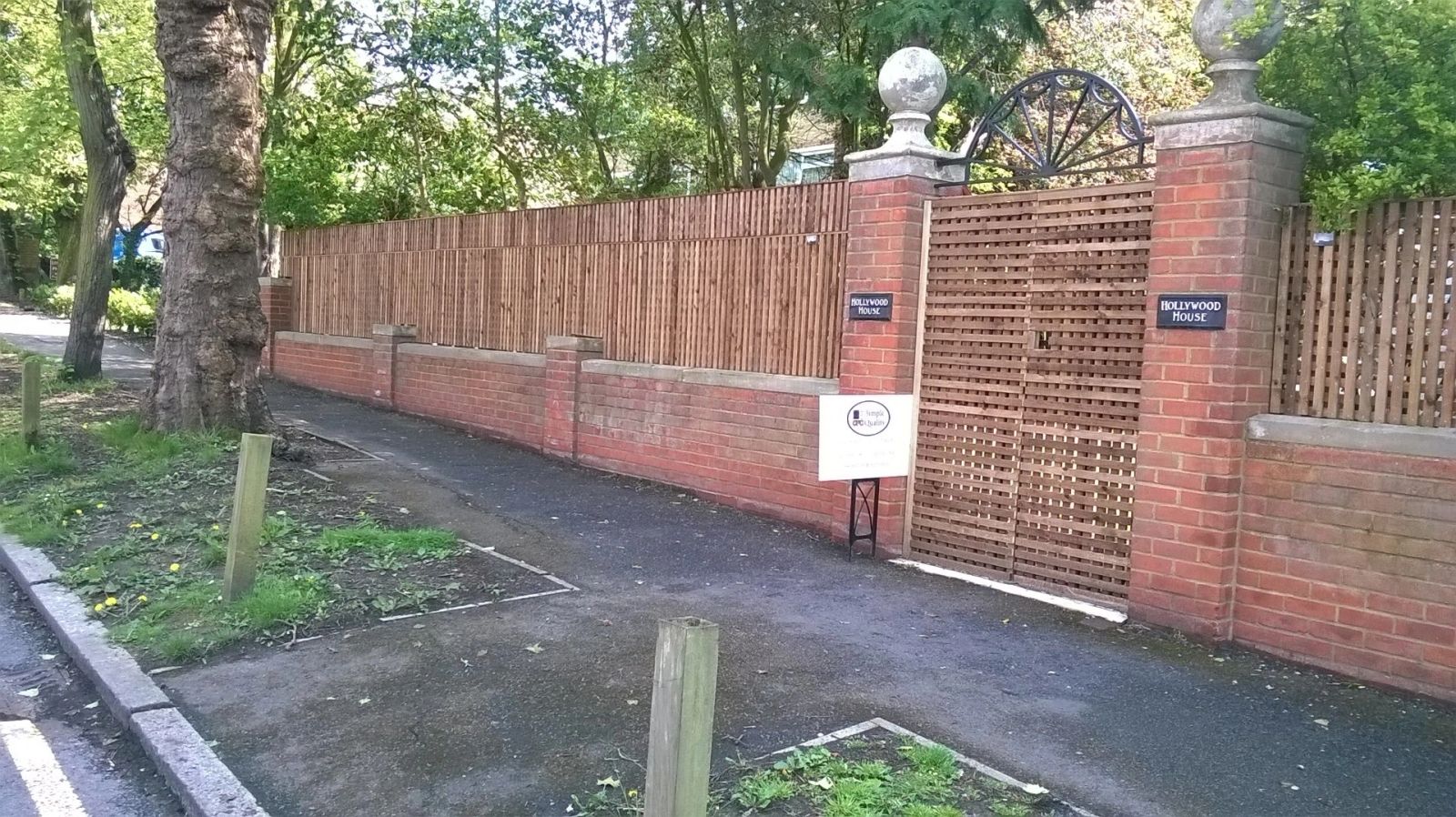
closeboard fence run installed by Capital Fencing in Stevenage (SG1)panel fence install installed by Capital Fencing in Stevenage (SG1)trellis-topped fence installed by Capital Fencing in Stevenage (SG1)bespoke decorative fence installed by Capital Fencing in Stevenage (SG1)

Before you book landlord fencing in Stevenage

Electrified topping wire basics

An electrified topping wire adds a pulsed low-current deterrent above an existing fence line and is installed to specific clearance and signage rules rather than fitted freely, since it counts as a controlled hazard.

Specialist installers handle the energiser and wiring; the fencing contractor's role is limited to providing insulated brackets and a structurally sound top line for the wire to run along.

Boards splitting along the line of the fixing nail

A board that splits at a nail has usually been fixed too close to its edge or fixed with the nail driven into an existing check in the grain, and the split then runs further with each wet-dry cycle until the board finally lets go.

Repair is either refixing with screws set further from the edge and pre-drilled to avoid a repeat split, or replacing the board outright where the split has already reached the board's full width.

Carrying out a final walk-round check before calling a job complete

A final check along the full run — hinges swinging freely, caps seated, fixings tight, gravel boards sitting flush — catches small issues that are quick to fix on the day but awkward to revisit once tools and materials have left site.

Checking gate latches and bolts actually engage properly under normal use, not just that they look fitted, avoids a callback for something that would have taken moments to adjust while still on site.

A brief look at the surrounding area — cleared spoil, protected surfaces returned to their original state, tools accounted for — is as much a part of finishing the job properly as the fence itself.

Protecting a driveway surface during on-site concrete mixing

Mixing concrete directly on a resin-bound, block-paved or stamped concrete driveway risks permanent staining if spilt mix isn't cleared immediately, since cement staining bonds into a porous surface far more readily than it wipes off.

A mixing board or tray, and a bucket of clean water kept nearby to rinse tools and any spillage straight away, are simple precautions that cost little time compared with the alternative of professionally cleaning a stained driveway afterwards.

Where a mixer is used rather than hand-mixing, positioning it so any spill or overflow lands on a protected area rather than the finished surface is worth doing before the first batch rather than after the first mess.

Fitting post caps correctly to shed water

A post cap that doesn't fully overhang the post's top edge on all sides leaves a lip where water can track back under the cap and sit on the end grain, defeating much of its purpose.

Pyramid or weathered profile caps shed water faster than a flat cap, which matters more on an exposed post than a sheltered one, though either performs better than no cap at all on a cut post top.

Caps fixed with a single central nail can work loose and rock in wind, letting water in at the edges; a bead of exterior adhesive under the cap in addition to fixings gives a more weathertight result.

Wheels and rollers on old sliding gates

Wheels on an older sliding gate wear unevenly over years of use, and a gate that starts to lean or drag to one side as it slides is often down to worn wheels rather than a bent frame.

Replacing worn wheel or roller assemblies is usually straightforward provided the track or guide rail underneath is still true.

Concrete spur repairs to a rotten post base

A concrete spur bolted alongside a post that's rotted at the base lets the sound timber above stay in use without a full replacement, provided enough good timber remains above the rot to take the bolts.

The spur is set into its own fresh concrete footing rather than simply strapped to the old base, since the old footing has usually already failed along with the timber.

Downpipe discharge points near a fence base

A downpipe discharging directly onto open ground near a fence line, rather than into a proper drain or soakaway, concentrates a large volume of roof water at one specific point along the boundary during heavy rain.

Over time this creates a permanently saturated patch that behaves like a high water table locally, even though the rest of the garden drains normally.

Redirecting the discharge with a short length of pipe or a small soakaway a metre or two from the fence line resolves the issue far more effectively than trying to compensate with a more resistant post base.

Care homes

Care home boundaries need to manage two directions of risk at once: keeping the site secure from outside, and, where residents live with dementia, preventing unsupervised exit through a garden gate that looks like a normal feature of the grounds.

Gates onto care home gardens are often specified with a delayed-release or coded latch rather than a simple thumb-turn, agreed with the home's management against its own care regulator requirements.

Access for contractors on an occupied care site usually needs coordinating around resident routines and quiet hours rather than a standard domestic working day.

Matching hinge fixing type to post material

A hinge that's designed to be screwed into timber needs a different fixing approach entirely on a steel or concrete post, and retrofitting a timber-style hinge onto the wrong post material without adapting the fixing method is a common cause of early failure.

Confirming the post material before selecting hinge hardware avoids ordering fittings that then need substituting on site.

Spirit level versus laser level for checking a run

A spirit level checks a single post is plumb and a single panel is level, but confirming that an entire run stays level or follows a consistent fall over 20 or 30 metres is far quicker and more reliable with a rotating laser level set at a fixed height.

On a stepped run, a laser also makes it straightforward to confirm each step drops by the same consistent amount rather than checking each post in isolation and hoping the cumulative effect looks even.

A basic spirit level remains the more practical tool for quick checks during a single post's installation, since setting up a laser for every individual post would slow the job without adding useful accuracy at that scale.

Choosing gate ironmongery

A gate is only as good as its hinges and latch — undersized hinges are the single most common reason a timber gate sags and starts dragging on the ground within a year or two.

Heavier gates, especially solid hardwood or wide driveway gates, need hinges rated for the actual weight rather than whatever came in the hardware pack, plus a diagonal bracing batten on the frame to stop it racking out of square.

Galvanised or stainless fixings are worth the small extra cost over standard zinc-plated ones anywhere exposed to weather, since a rusted hinge pin is a common and avoidable reason for an otherwise sound gate to fail.

The typical sequence for installing a fence run

A well-run fencing job generally sets out the full line first, digs and concretes every post before fixing anything else, and only starts hanging panels, rails or boards once every post has had time to cure.

Fixing panels to posts before the concrete has cured risks knocking a post out of true, which is why rushing straight from digging into panel-fitting on the same visit is usually avoided on anything beyond a very small repair.

Working this way also means any post that turns out to be misaligned is caught and corrected before panels are cut to fit it, rather than after, when correcting the post means undoing finished work.

Roller bearing lubrication schedules

Sliding gate rollers with sealed bearings need far less frequent attention than an open bearing type, but neither should be left ungreased indefinitely, since grit working into a bearing accelerates wear regardless of the seal.

A roller that's started to squeal or feels rough when turned by hand has usually already lost some grease or picked up grit, and catching this before the bearing fails outright is cheaper than a full roller replacement.

Zinc-aluminium coatings

Zinc-aluminium alloy coatings, sold under various trade names, combine zinc's sacrificial protection with aluminium's more stable barrier properties, generally giving longer service life than pure zinc galvanising in the same environment.

They're commonly used on wire products and fixings destined for coastal or heavily salted road environments, where standard galvanising alone corrodes faster than inland applications.

The trade-off is that these coatings are usually applied by wire-drawing or continuous coil coating processes rather than batch hot-dip immersion, which limits them to certain product types rather than large fabricated steelwork.

Snow load and drifting against capping

Snow rarely loads a vertical fence face directly, but it drifts and settles along the top of a run, especially against capping or trellis toppers that catch and hold it rather than shedding it.

A sustained thaw-freeze cycle on wet capping timber is a common cause of splitting, since water trapped in the grain expands as it freezes and opens up hairline cracks that widen each winter.

A capping profile with a slight fall to shed water, rather than a flat top, reduces how much moisture sits there in the first place.

Upgrading security at a farm gateway

A farm gateway is a common target for rural theft of machinery, fuel and livestock, and a five-bar field gate on its own offers little more than a visual boundary marker, so a security upgrade typically adds a padlockable hasp, a stronger hinge set and sometimes a second inner gate as a layered deterrent.

Positioning a gate slightly back from the road with a locked field gate behind an open highway gate can slow a vehicle-based theft attempt without obstructing the farmer's own daily access.

Highways not yet adopted on newer estates

On newer housing estates, roads and footways can remain unadopted by the council for a period after construction, sometimes maintained instead under a bond by the developer.

This can affect whether the 1m road-facing fence height limit strictly applies yet in the same way, since the technical definition of a highway used by vehicles depends partly on adoption status.

Checking with the council whether a specific new estate's roads have been formally adopted is worth doing before assuming which height limit applies to a road-facing boundary.

Adverse possession and long-standing boundary drift

Where a fence has sat in the same slightly-wrong position for many years without objection, the land enclosed on the wrong side can sometimes be claimed through adverse possession, though registered land now has a stricter process than the old twelve-year rule for unregistered land.

A successful claim generally needs factual possession (using the land as an owner would, such as fencing it in and maintaining it) plus an intention to possess, sustained over the qualifying period, and the registered owner gets a chance to object once an application is made.

Replacing an old fence exactly on its existing (rather than legally correct) line can inadvertently continue a possession claim, so where a genuine discrepancy is known it's worth raising it with the neighbour rather than quietly perpetuating it.

Adverse possession and long-standing fence lines

Adverse possession is the legal principle by which someone can, in limited circumstances, gain rights over land they've occupied openly and continuously for a long period, even if it belongs on paper to someone else.

A fence that has sat in the same position for many years, accepted by both sides, can sometimes become evidence in this kind of claim, though the legal tests are specific and not automatically met just by time passing.

This is a specialist area of property law, so anyone facing a genuine dispute along these lines is better served by a solicitor than general guidance.

Places of worship

Boundary fencing around a church, mosque, synagogue or other place of worship often needs to work around a burial ground, memorial garden or community hall use that changes access patterns through the week rather than a simple daily schedule.

Many places of worship are listed buildings or sit within a conservation area, which brings the same consent considerations as a listed private house to any boundary wall or railing repair.

Because these sites often host services or events with unpredictable footfall, agreeing working hours and access routes with whoever manages the building in advance avoids clashing with a ceremony or gathering.

Dog day-care and kennels

Commercial dog day-care and kennel boundaries need to be genuinely dig-proof and jump-proof rather than just visually enclosing, which usually means a below-ground kick board or buried mesh apron along the base as well as adequate fence height.

Licensing under the Animal Welfare (Licensing of Activities Involving Animals) Regulations sets minimum boundary standards for kennels and day-care premises, and an inspector will check fence condition as part of renewal.

Double-gated airlock entries, where an inner and outer gate can't be open at the same time, are a common feature at the perimeter to stop dogs escaping through a single opened gate.

On landlord-grade fencing in Stevenage you get the same crew from first site visit to hand-over. That's the whole model — small team, portfolio-friendly spec, written quote before we start. Roads such as Shephall Way and High Street (Old Town) are typical of the local layout. Stevenage Old Town is a useful local reference point. Six Hills Way runs alongside the Six Hills, a scheduled ancient monument comprising a row of Roman-era burial mounds.

Get In Touch

Get My Free Quote — 24h Response

No callout fee · Free site visit · Friendly local team covering London & Hertfordshire.

Call us
07885907880
or 02036484746
Email
capital_fencing@yahoo.com
WhatsApp
Message us anytime
Area
London & Hertfordshire
Payment
Card payments accepted

Pay by debit or credit card, bank transfer or cash once the work and price are agreed. No deposit taken online.

Request a Free Quote

We'll get back to you within 24 hours.

Free Site Visit No Callout Fee
Call WhatsAppQuote