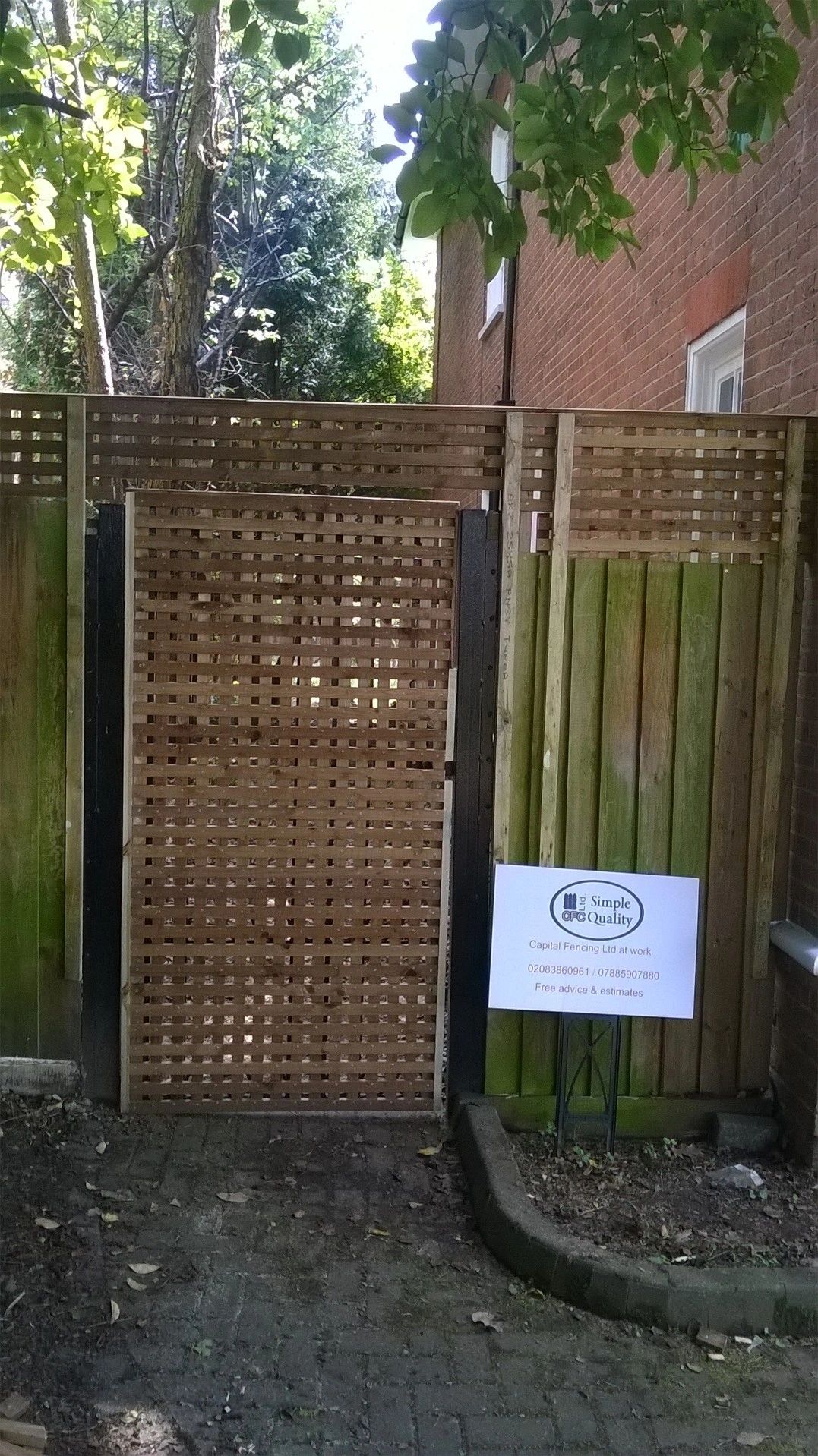
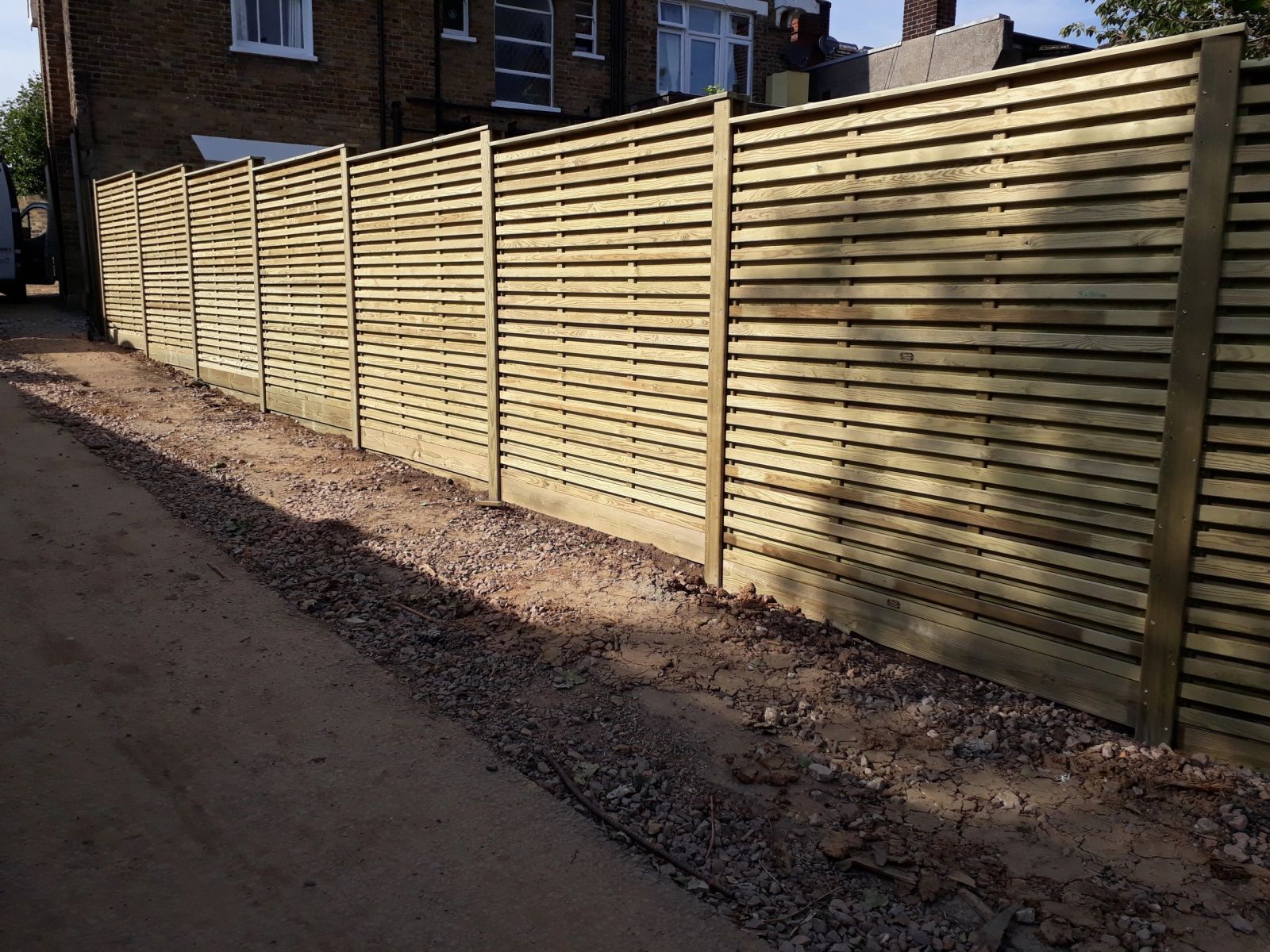
Vertical picket infill on top of a mesh security panel
Adding a row of vertical steel pickets above a mesh panel gives extra height without the wind loading of a full-height solid mesh extension, and the picket spacing is kept tight enough that it doesn't create a new set of usable footholds.
This detail is common where a boundary needs to reach a taller overall height for a later phase of a site's security review without replacing the mesh panels already installed at the lower level.
The difference between an informal and a legal boundary
The 'legal' boundary is whatever the title deeds and any supporting documents actually define, whereas the 'physical' or informal boundary is simply where a fence, hedge or wall happens to stand today.
Over years of incremental replacement, these two things can drift apart without anyone intending it, particularly where each new fence has been built slightly inside the previous one's line for convenience.
Where a discrepancy is suspected, this is worth raising as a documents question rather than assuming the current physical fence line is automatically correct.
Timber species and on-site workability
Workability describes how easily a timber can be sawn, planed, nailed and screwed without splitting, tearing or blunting tools excessively, and it varies considerably between species independent of durability or strength.
Straight-grained, moderate-density softwoods like redwood pine are generally easier to work on site than dense hardwoods or highly figured timber with interlocked or wavy grain, which can tear out during cutting or planing.
A timber chosen purely for durability or appearance without considering workability can significantly slow on-site fitting, particularly where a lot of site cutting and drilling is needed rather than factory-machined components.
Conservation covenants affecting boundary land
A relatively newer legal tool, the conservation covenant, allows landowners to agree binding restrictions on land use for conservation purposes, which can in principle extend to boundary treatments on affected plots.
These are still uncommon on ordinary residential properties but more likely on larger plots, smallholdings, or land near protected habitats.
Checking the title register for any registered covenant of this kind is worth doing on larger or more unusual plots before assuming standard rules apply.
Aluminium and steel railings
Aluminium railings are lighter, don't rust, and hold a powder-coated finish well without the ongoing maintenance steel needs, which makes them common for low-boundary and pool-safety railings where upkeep is meant to be minimal.
Steel railings are heavier and stiffer for the same section size, which suits taller or higher-security applications, but the finish has to be maintained — a scratch through galvanising or powder coating exposes bare steel to rust from that point.
Both are usually supplied as welded panels between posts rather than built up rail-by-rail on site, so panel width and post spacing need to be agreed before ordering rather than adjusted afterward.
Decking board profiles and grooves
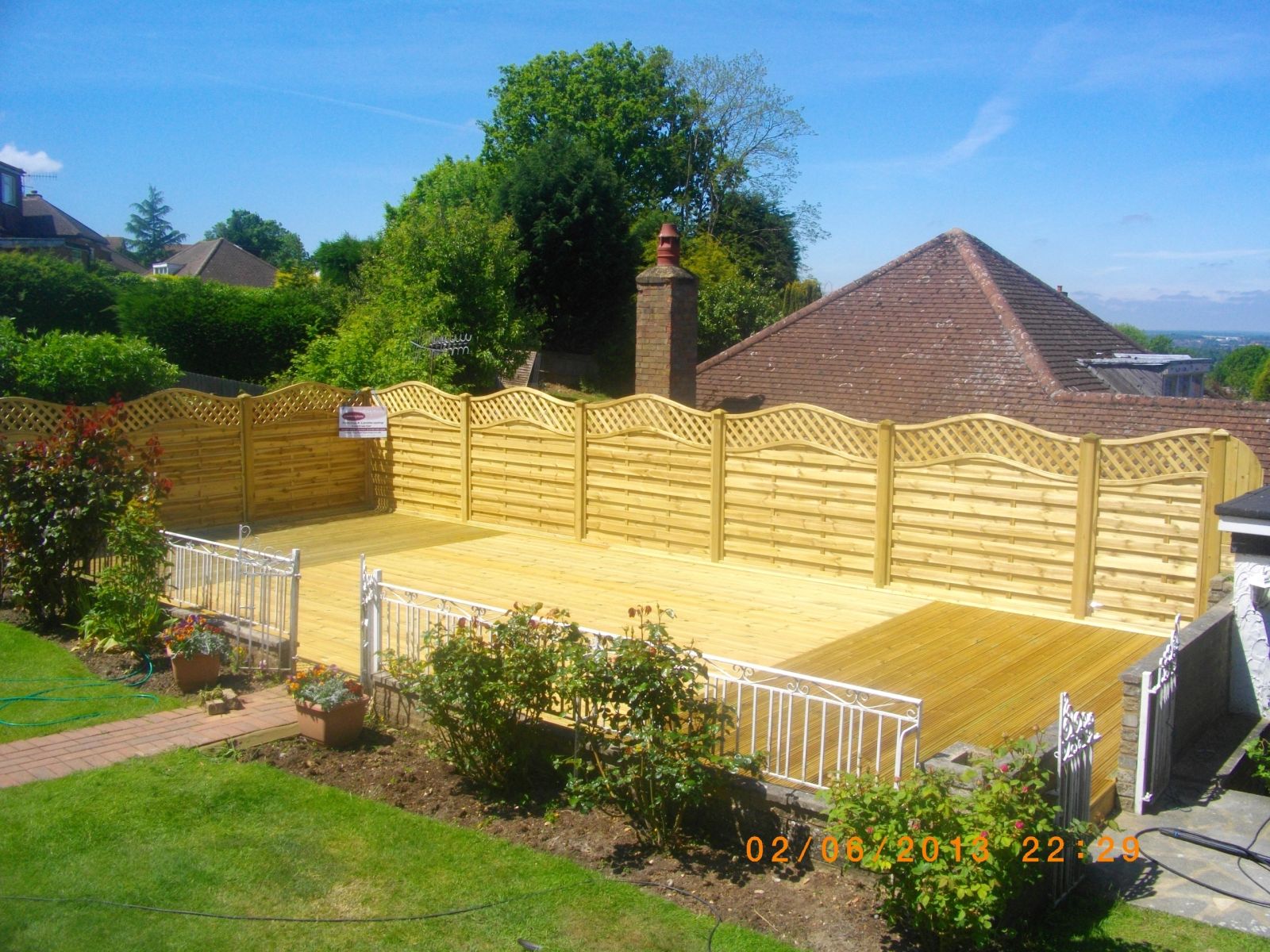
Timber decking boards commonly come grooved (ribbed) on the top face for grip, reversible to a smooth face for a more contemporary look, or with a rounded profile that sheds water more readily but offers less traction underfoot.
Grooved boards trap dirt and moisture in the channels more than a smooth or rounded profile, so they need more regular brushing or washing to avoid becoming slippery with algae, particularly in shaded, damp positions.
Composite boards are usually extruded with a fixed groove or embossed texture rather than milled, and the profile is generally part of a wider system with matching edge trims rather than a feature that can be mixed freely between board types.
Block management and communal consultation
Managing agents for blocks of flats are usually required to consult leaseholders on works above a set cost threshold under a Section 20 process, which applies to significant boundary or fencing works charged through the service charge.
That consultation period adds real time to a project timeline compared with a private garden job, so it's worth building the notice period into the schedule rather than assuming work can start once a quote is accepted.
Communal boundary decisions also tend to involve balancing several flats' differing views on privacy, light and appearance, which a single homeowner job never has to negotiate.
Keeping new-build estates consistent
Uniform estates built to a single developer specification often have an unwritten (or sometimes written, via estate covenant) expectation that boundary fencing matches the original height, colour and panel style across the whole street.
Departing from that pattern on a single plot — a taller fence, a different stain colour, an unusual gate style — tends to stand out more starkly on a visually consistent estate than it would on a street of individually built houses.
Where a management company or residents' association enforces an estate covenant, it's worth checking the permitted specification before ordering materials, since a non-compliant fence can sometimes have to be replaced at the owner's cost.
Chalk ground in south Hertfordshire
South Hertfordshire sits over Chiltern chalk in places, ground that's generally stable and free-draining but can be extremely hard and slow to auger once you're through a thin topsoil layer.
Chalk doesn't shrink and swell the way clay does, so posts set in it are less prone to seasonal loosening, though a shattered or fractured chalk band can still leave voids that need packing rather than assuming solid bearing.
Where chalk is close to the surface, hand tools or a breaker attachment are sometimes quicker than persisting with a standard auger.
Fitting post caps correctly to shed water
A post cap that doesn't fully overhang the post's top edge on all sides leaves a lip where water can track back under the cap and sit on the end grain, defeating much of its purpose.
Pyramid or weathered profile caps shed water faster than a flat cap, which matters more on an exposed post than a sheltered one, though either performs better than no cap at all on a cut post top.
Caps fixed with a single central nail can work loose and rock in wind, letting water in at the edges; a bead of exterior adhesive under the cap in addition to fixings gives a more weathertight result.
When a Party Wall Act notice might apply
The Party Wall etc. Act 1996 mainly concerns shared walls between buildings and excavations near a neighbour's structure, and doesn't generally apply to an ordinary timber garden fence.
It can become relevant where work involves a masonry party fence wall genuinely astride the boundary, or excavation for posts close enough to a neighbour's foundations to fall within the Act's distance rules.
Where there's doubt about whether notice is needed, a party wall surveyor or solicitor can confirm this far more reliably than guessing on site.