London & Hertfordshire Free Site Visit
closeboard fence run installed by Capital Fencing in Mill Hill (NW7)
Mill Hill · NW7

Commercial Yard Fencing in Mill Hill — Built for daily cycle counts, vehicle turning circles and CCTV integration

Capital Fencing installs commercial yard fencing across Mill Hill and out toward edgware and finchley. What separates a commercial yard fencing job from a standard boundary is the detail: 2.4m palisade perimeter with anti-climb spike and matching double vehicle gates. That's the work, not the marketing. Roads such as Milespit Hill and Uphill Road are typical of the local layout. Mill Hill East station is a useful local reference point. Nan Clark's Lane borders the Totteridge Valley green belt, where development and boundary changes are restricted by planning policy.

Capital Fencing installs commercial yard fencing across Mill Hill and out toward edgware and finchley. What separates a commercial yard fencing job from a standard boundary is the detail: 2.4m palisade perimeter with anti-climb spike and matching double vehicle gates. That's the work, not the marketing. Roads such as Milespit Hill and Uphill Road are typical of the local layout. Mill Hill East station is a useful local reference point. Nan Clark's Lane borders the Totteridge Valley green belt, where development and boundary changes are restricted by planning policy.

Typical commercial yard fencing briefs in Mill Hill

  • hoop-top mesh around a client-visitor forecourt where palisade would look wrong
  • 358 weld-mesh perimeter with CCTV pole mounts integrated into the line posts
Default spec

How we build commercial yard fencing in Mill Hill

2.4m palisade or 358 weld-mesh, hot-dip galvanised then RAL-coded powder-coat, concrete-set 100SHS or 76CHS line posts. On Mill Hill jobs we adjust for the mill hill conservation area on the ridgeway has strict rules on materials and finishes.

Property mix locally: large detached homes on the Ridgeway, 1930s semis around the Broadway, and modern infill near Mill Hill East. Typical gardens: spacious plots — many of the Ridgeway properties have gardens deep enough for full landscaping schemes. Postcodes we regularly service: NW7.

Why this spec, for trade yards, self-storage sites, workshops and small industrial units

  • hot-dip galvanised then powder-coated finishes carry a 25-year service life on a working yard
  • gate posts sized for daily commercial cycle counts rather than domestic once-a-day operation
  • we co-ordinate with the alarm and CCTV installer so cabling routes through the posts, not around them
What goes wrong

Common failure modes on commercial yard fencing

  • specifying domestic-grade hinges on a gate opening 40 times a day — six-month failure
  • not accounting for the fork-lift or delivery vehicle turning circle — the corner post gets clipped in month one

Commercial Yard Fencing FAQs — Mill Hill

Can you integrate CCTV poles into the fence line?

On commercial yard fencing jobs in Mill Hill (NW7), our default answer is: 2.4m palisade or 358 weld-mesh, hot-dip galvanised then RAL-coded powder-coat, concrete-set 100SHS or 76CHS line posts. We'll walk you through hot-dip galvanised then powder-coated finishes carry a 25-year service life on a working yard on the site visit before you commit.

What's the lead time on made-to-measure commercial gates?

Across Mill Hill we spec around the mill hill conservation area on the ridgeway has strict rules on materials and finishes, so on commercial yard fencing that usually means palisade for hard perimeter security. The honest trade-off is specifying domestic-grade hinges on a gate opening 40 times a day — six-month failure — which is exactly what our default spec designs out.

How long does hot-dip galvanised fencing last on a working yard?

Barnet coverage means we can survey most NW7 addresses inside a week — trade yards, self-storage sites, workshops and small industrial units. The honest trade-off is specifying domestic-grade hinges on a gate opening 40 times a day — six-month failure — which is exactly what our default spec designs out.

Do you provide out-of-hours install for occupied sites?

Practically: 2.4m palisade perimeter with anti-climb spike and matching double vehicle gates. That's the Mill Hill version of this job, not a generic one. For context: gate posts sized for daily commercial cycle counts rather than domestic once-a-day operation. Hot-dip galvanised, RAL-coded and installed to a 25-year service life.

Palisade or weld-mesh — which fits my site?

On commercial yard fencing jobs in Mill Hill (NW7), our default answer is: 2.4m palisade or 358 weld-mesh, hot-dip galvanised then RAL-coded powder-coat, concrete-set 100SHS or 76CHS line posts. The honest trade-off is specifying domestic-grade hinges on a gate opening 40 times a day — six-month failure — which is exactly what our default spec designs out.

Recent commercial yard fencing work
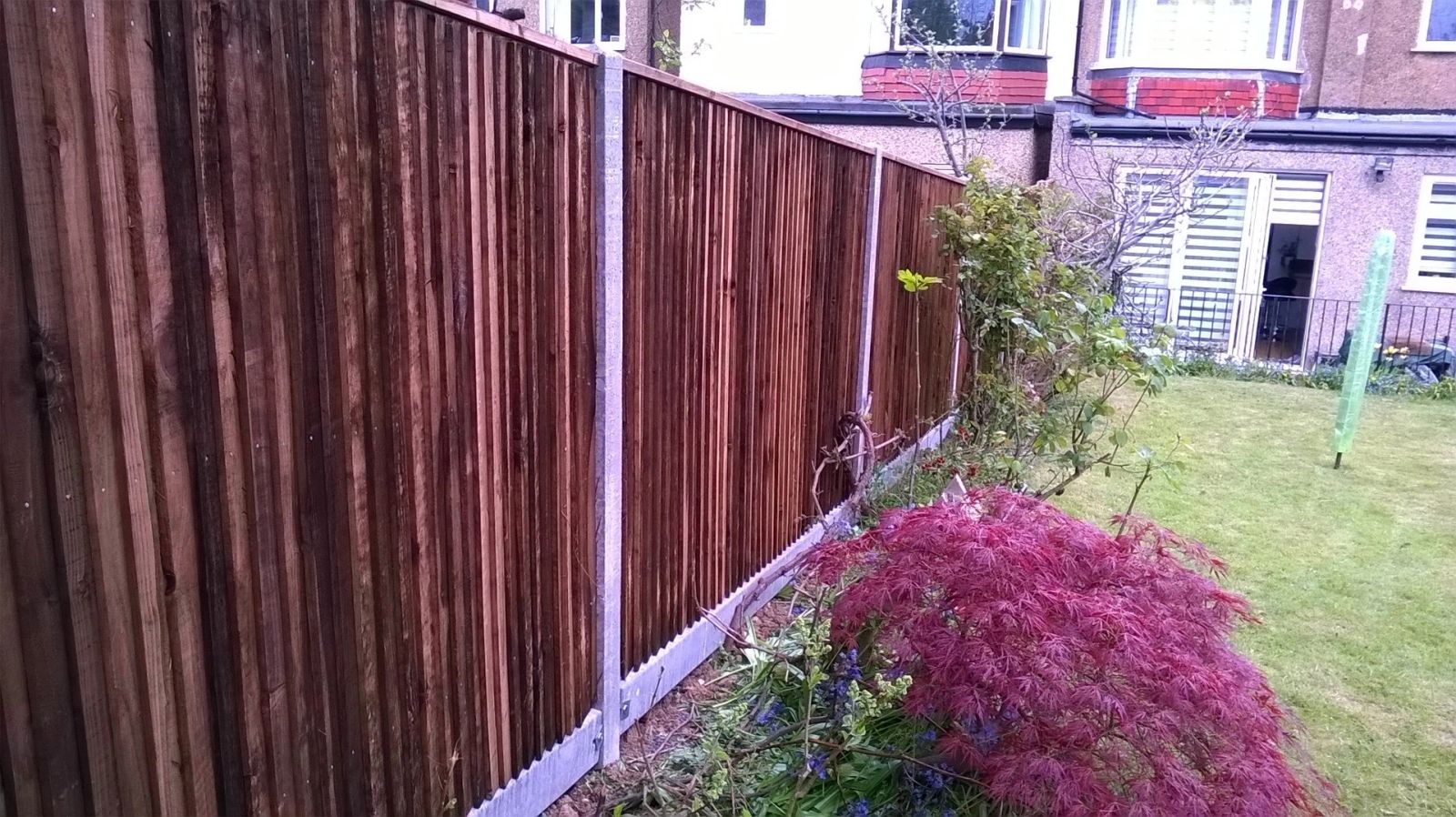
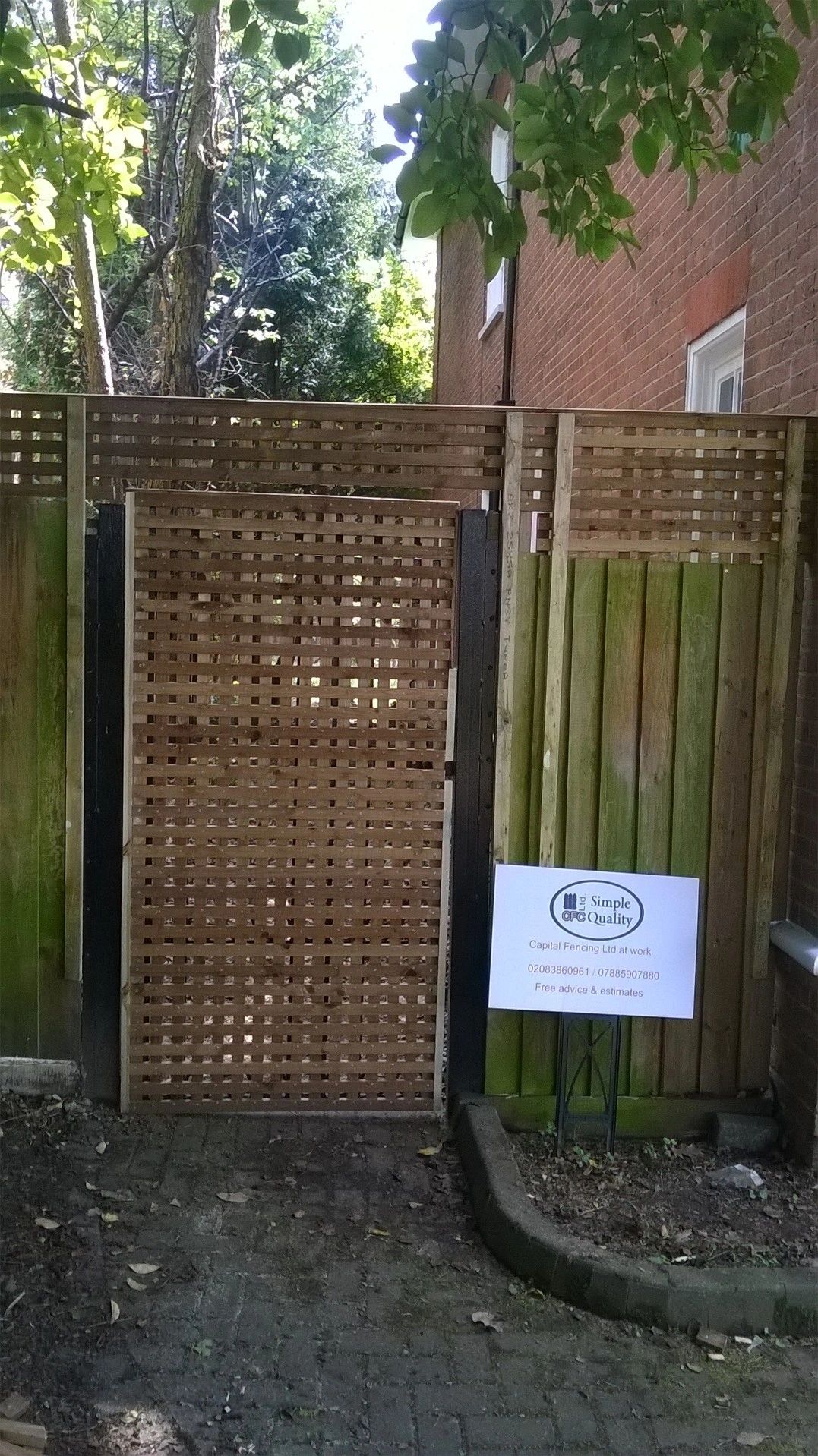
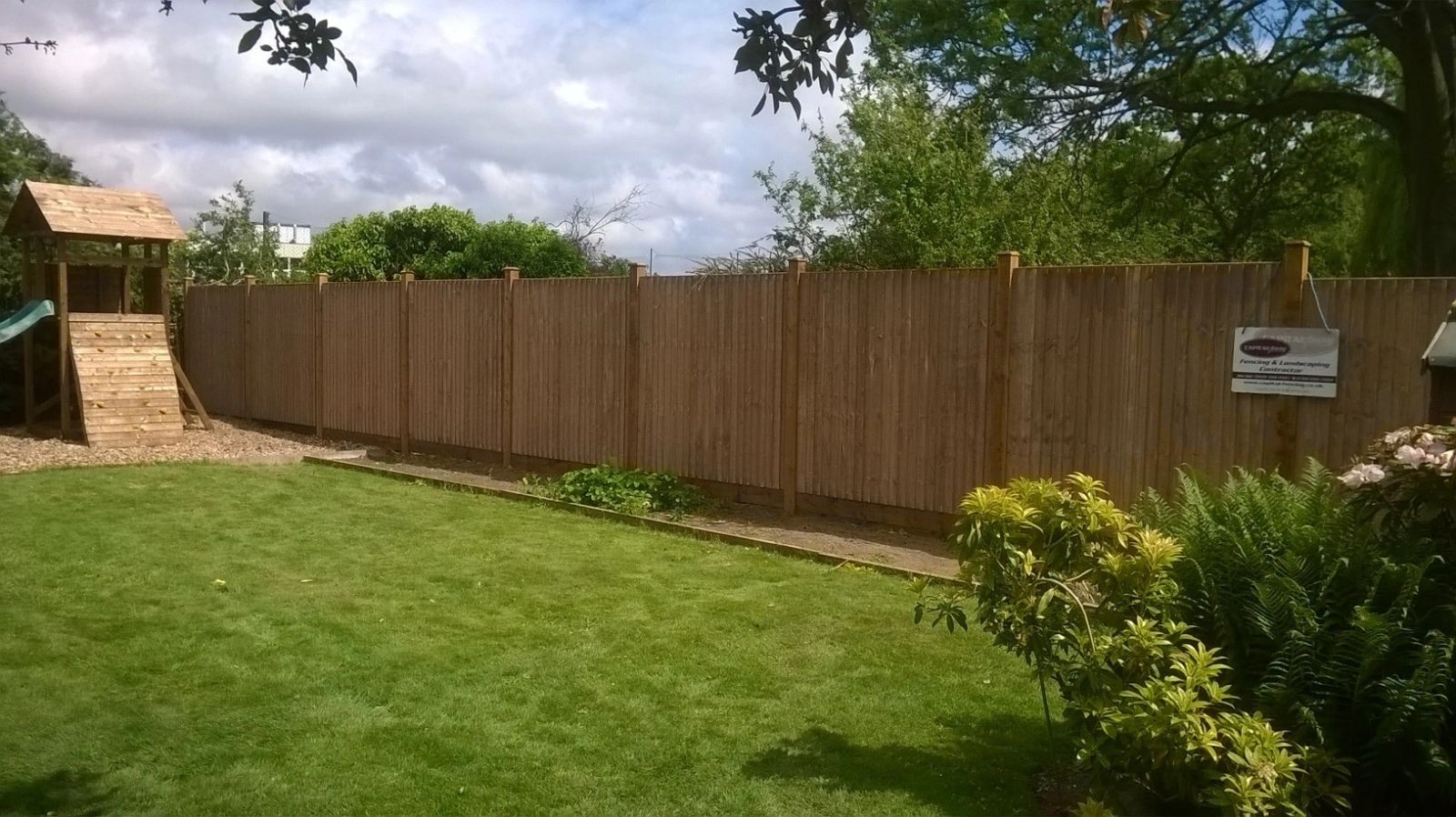
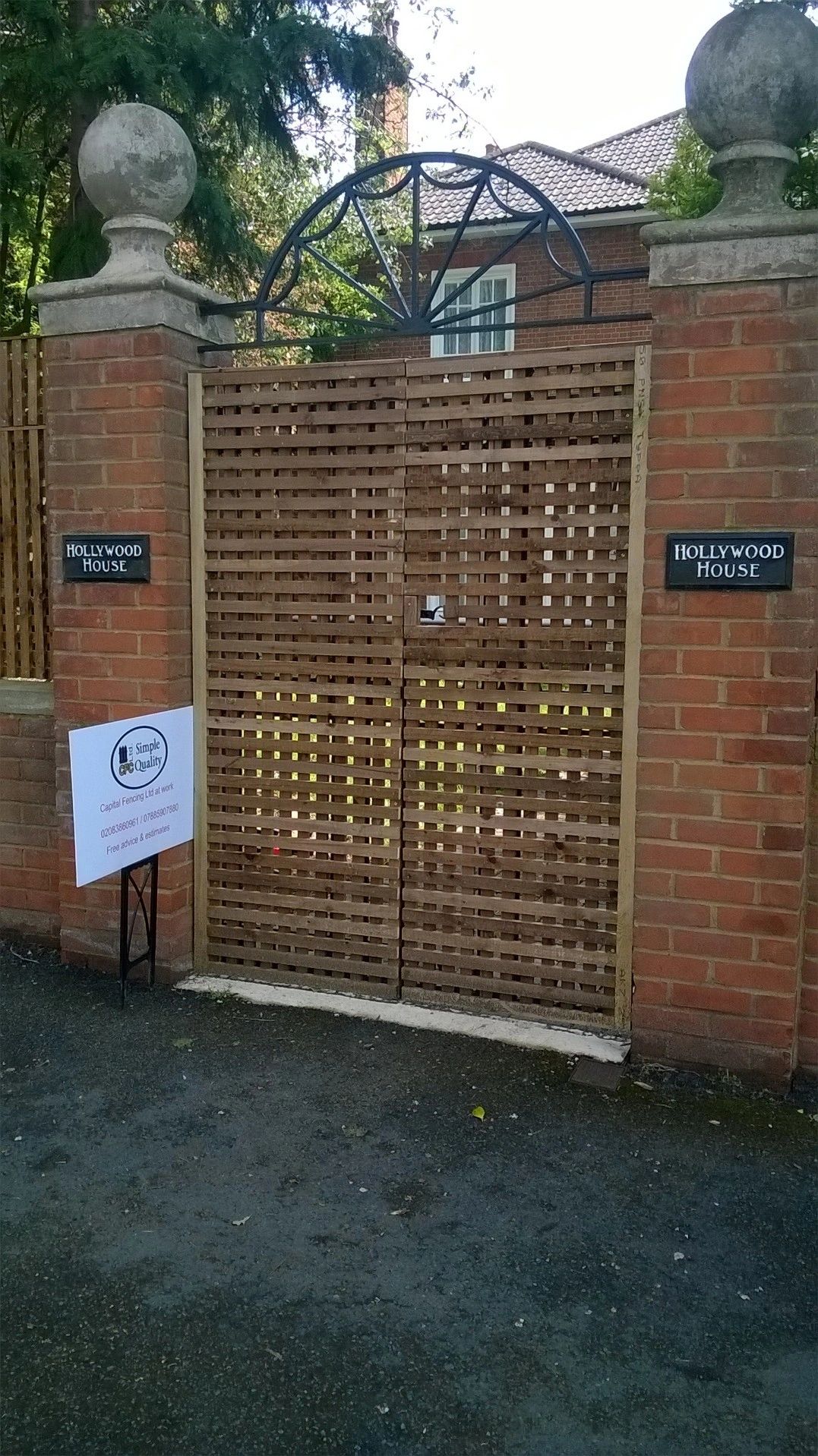
closeboard fence run installed by Capital Fencing in Mill Hill (NW7)panel fence install installed by Capital Fencing in Mill Hill (NW7)trellis-topped fence installed by Capital Fencing in Mill Hill (NW7)bespoke decorative fence installed by Capital Fencing in Mill Hill (NW7)

How we approach commercial yard fencing on Mill Hill properties

Powder coating versus galvanising for steel security fencing

Hot-dip galvanising bonds a zinc layer to the steel that self-heals minor scratches through sacrificial corrosion, making it the more durable base finish for an exposed or coastal boundary.

Powder coating adds colour and a smoother surface but relies on the coating staying intact — galvanised-then-powder-coated steel combines both, giving corrosion protection under a decorative finish, and is the usual spec where appearance matters as much as longevity.

Establishing who owns the boundary

Title deeds don't always mark ownership clearly, and a security upgrade is exactly the kind of work that surfaces a dispute if the existing line is assumed rather than checked. Where a boundary is shared, we recommend confirming ownership and getting neighbour agreement in writing before work starts, particularly on a line that's being made taller or more solid than what's there now.

On terraced rows this matters more than on a detached plot, because a shared rear boundary can affect several neighbours at once.

Electrified topping wire basics

An electrified topping wire adds a pulsed low-current deterrent above an existing fence line and is installed to specific clearance and signage rules rather than fitted freely, since it counts as a controlled hazard.

Specialist installers handle the energiser and wiring; the fencing contractor's role is limited to providing insulated brackets and a structurally sound top line for the wire to run along.

Gate design on exposed, high-wind sites

A gate on an exposed hilltop or coastal-facing plot experiences far higher wind loading than an equivalent gate in a sheltered urban garden, and a solid-boarded gate in particular acts like a sail under those conditions, putting extra strain on hinges and latch.

Specifying heavier-duty hinges, a lower solid-to-open ratio in the infill, or additional bracing are all ways to address this on a site known to be exposed.

Timber versus metal post stiffness comparison

A steel or reinforced concrete post of comparable cross-sectional size is generally stiffer than an equivalent timber post, meaning it deflects less under the same wind load, though timber has the advantage of some flexibility that can absorb sudden impact loads without snapping.

Timber's stiffness also varies with moisture content and species in a way that steel's doesn't, meaning a timber post's real-world performance is less predictable across seasons than a steel post's largely temperature-independent behaviour.

Mixed systems using steel posts with timber panelling attempt to combine steel's structural predictability with timber's more traditional appearance, at the cost of managing the dissimilar-material fixing and corrosion issues that come with it.

Post-war estates and uniform frontages

Post-war council and private estates were often built with a consistent low front boundary — dwarf wall, hedge or short picket — as part of the original street design, and some retain a restrictive covenant or estate management scheme controlling what can replace it.

Swapping a low picket for a tall close-boarded front fence on these estates can breach the covenant even where planning permission wouldn't be needed under general permitted development rules.

It's worth checking the original conveyance or asking the estate's management company before ordering material, since covenant breaches are a civil matter between neighbours or the management company rather than something the council enforces.

Realistic maintenance intervals

Pressure-treated softwood fencing generally wants a re-application of preservative or stain every two to three years to keep the surface protected, more often on a south-facing run that gets constant UV exposure.

Gate hinges and latches are worth checking annually for movement or corrosion, since a small adjustment caught early avoids the gate racking out of square and needing a rebuild.

Decking boards benefit from a yearly clean to clear leaf litter and algae from the gaps, which is what actually causes most of the slipperiness people blame on the timber itself.

Retaining structures below a fence line

Where a retaining wall or sleeper structure holds back a level change directly under a fence, the fence and the retaining structure are doing two different jobs and shouldn't be treated as one build.

A timber fence post bolted into the top of a retaining wall relies entirely on that wall's own stability, so any doubt about the wall's condition needs resolving before new fencing is fixed to it.

Water draining from the raised bed above a retaining structure often exits at its base, which is worth accounting for when choosing post fixings and base materials at that point in the run.

Concrete cure time before a post can be loaded

A post set in fast-setting postcrete can usually take light loading within an hour or two, but a full concrete footing needs several days of cure before it should be relied on for the lateral loading a security fence or gate applies.

Fitting a heavy gate leaf to a post before its footing has properly cured can rock the post out of plumb before the concrete has reached working strength, which is a common avoidable cause of an early lean on a new installation.

What aftercare actually covers

A written warranty on fencing, gates or decking should say clearly what's covered — usually workmanship and post stability — versus what naturally weathers over time, like colour fade or minor timber checking, which isn't a defect.

It's worth asking what happens if a panel is damaged by a storm or a fallen branch, since that's typically outside a workmanship warranty and may be a buildings insurance matter instead.

Keeping the original quote, spec sheet and any photos from the day of installation makes any future warranty conversation faster, since it confirms exactly what was fitted and to what standard.

Decking substructure ventilation

A decking substructure needs airflow underneath it to dry out after rain, which is why ground-level decks are built with a ventilation gap rather than sitting directly on solid paving or soil, and why skirting the underside solid on all sides is a common cause of premature substructure rot.

Low decks close to the ground are the highest risk, since there's little room for cross-ventilation, and some ground preparation — a weed membrane and gravel bed rather than bare soil — helps keep humidity down in that void.

Composite deck boards themselves tolerate damp better than timber, but a timber joist substructure underneath a composite deck still needs the same ventilation and ground clearance as it would under timber boards.

Frost heave effects on shallow-set posts

Frost heave occurs when water in saturated soil freezes and expands, lifting the ground surface and any shallowly set post embedded in it, sometimes by several millimetres each freeze-thaw cycle over a winter.

Posts set below the typical frost penetration depth for the region are far less affected, since the freezing zone that drives heave rarely reaches that far down, which is one reason recommended minimum depths are deeper in areas with harder winters.

A post that's visibly risen slightly over a hard winter, without any sign of the concrete cracking, has often been affected by heave rather than a failed footing, and it can sometimes settle back as the ground thaws.

Planning enforcement risk of over-height fences

A fence built above permitted development limits without consent is a breach of planning control, and councils generally have four years from substantial completion to take enforcement action against an operational breach like an over-height structure.

Enforcement typically starts with an informal request to reduce the height or apply retrospectively, escalating to a formal enforcement notice with an appeal right and, ultimately, prosecution for non-compliance if ignored.

A complaint from a neighbour is the most common trigger for enforcement action on garden boundaries, so an unauthorised over-height fence can sit unchallenged for years and then become an active case very quickly once someone reports it.

Measuring height from natural ground level

Permitted development height limits are measured from the natural ground level on the lower side of the boundary, not from any raised bed, deck or hardstanding that's been added since, which matters wherever one side of a plot has been built up.

On a level change between neighbouring gardens, the higher ground effectively gives that side a taller fence relative to the lower garden even though the fence itself is a uniform height along its top rail.

Councils measuring a disputed fence will normally use the original survey level or historic photos where the ground has since been altered, so changing levels doesn't retrospectively legalise an over-height fence.

Who maintains a grass verge next to a boundary

A grass verge between a garden boundary and the road is often owned and maintained by the local council as part of the adopted highway, rather than by the adjoining property owner.

This affects where a fence can legally be positioned, since building onto highway land, even a seemingly unused verge, generally needs authorisation.

Where the extent of a verge and its ownership isn't obvious, the local highway authority can usually confirm it against their adopted highway records.

Rights of way crossing a boundary line

A right of way recorded on a title can allow a third party — a neighbour, or sometimes the public — to cross land that would otherwise be private, which affects where a continuous fence line can practically go.

Fencing across a recognised right of way without providing for continued access can itself become a legal problem, regardless of who owns the underlying land.

Checking the title register for registered rights of way before finalising a fence layout is worthwhile wherever a path, gate or informal shortcut already crosses the plot.

Care homes

Care home boundaries need to manage two directions of risk at once: keeping the site secure from outside, and, where residents live with dementia, preventing unsupervised exit through a garden gate that looks like a normal feature of the grounds.

Gates onto care home gardens are often specified with a delayed-release or coded latch rather than a simple thumb-turn, agreed with the home's management against its own care regulator requirements.

Access for contractors on an occupied care site usually needs coordinating around resident routines and quiet hours rather than a standard domestic working day.

Capping rails and finials

A capping rail along the top of a fence run does more than tidy the appearance — it sheds rainwater off the end grain of vertical boards, which is otherwise the fastest point for water to soak in and start rot.

Decorative finials on posts are largely an aesthetic choice, but a domed or sloped post cap still serves the same water-shedding purpose as a capping rail along a panel top.

Skipping a capping rail to save cost on a budget job is one of the more common reasons a fence's boards fail from the top down within a few years, even when the rest of the construction is sound.

Fixing into a rendered wall without cracking the render

Render sits as a relatively thin, brittle coat over the masonry beneath it, so drilling straight through without care can crack or blow a patch of render around the hole rather than leaving a clean fixing point.

Marking and drilling a pilot hole slowly through the render layer first, before switching to full hammer action once through into the masonry, reduces the chance of the render cracking outward from the drill's initial impact.

Where render is already loose or hollow-sounding when tapped near the intended fixing point, it's worth choosing a different spot or repairing that patch of render first rather than fixing into a surface that's already failing.

Digging near land drains

Older gardens, especially those on heavier clay, sometimes have unrecorded clay pipe or perforated plastic land drains laid to relieve waterlogging, and these rarely appear on any plan.

Hitting one with an auger usually shows up as a sudden drop in resistance followed by water pooling in the hole from a direction that doesn't match the water table generally on site.

A damaged land drain should be reconnected or rerouted rather than just backfilled over, since a broken run can redirect water against a post base for years afterwards.

Dropped kerbs and boundary gate positions

A dropped kerb is authorised for a specific width and position, and a gate or fence opening that doesn't line up with it can create a technically unauthorised vehicle crossing over the footway.

Where a driveway gate is being repositioned or widened, it's worth checking whether the dropped kerb needs to be extended or moved to match, which is a separate application to the council's highways department.

Parking a vehicle over a kerb that hasn't been properly dropped, even briefly during works, can also draw attention from the local authority in some areas.

Ivy and climber damage to fencing

Ivy and other vigorous climbers work their tendrils into joints and between boards, prising fixings apart gradually and trapping moisture against the timber underneath the growth.

Removing the growth as part of a repair often reveals damage that was hidden by the foliage, so the full extent of the repair sometimes isn't clear until the climber has been cut back.

Commercial Yard Fencing across NW7 is a regular run for us. We'll quote honestly, tell you if commercial yard fencing isn't the right answer for your site, and book the job in within a week or two of a signed quote. hot-dip galvanised, RAL-coded and installed to a 25-year service life. Roads such as Devonshire Road and The Ridgeway are typical of the local layout. Totteridge Valley footpath is a useful local reference point. The newer estates around Mill Hill East were built over shallower topsoil above clay, typical of the area's underlying geology.

Get In Touch

Get My Free Quote — 24h Response

No callout fee · Free site visit · Friendly local team covering London & Hertfordshire.

Call us
07885907880
or 02036484746
Email
capital_fencing@yahoo.com
WhatsApp
Message us anytime
Area
London & Hertfordshire
Payment
Card payments accepted

Pay by debit or credit card, bank transfer or cash once the work and price are agreed. No deposit taken online.

Request a Free Quote

We'll get back to you within 24 hours.

Free Site Visit No Callout Fee
Call WhatsAppQuote