London & Hertfordshire Free Site Visit
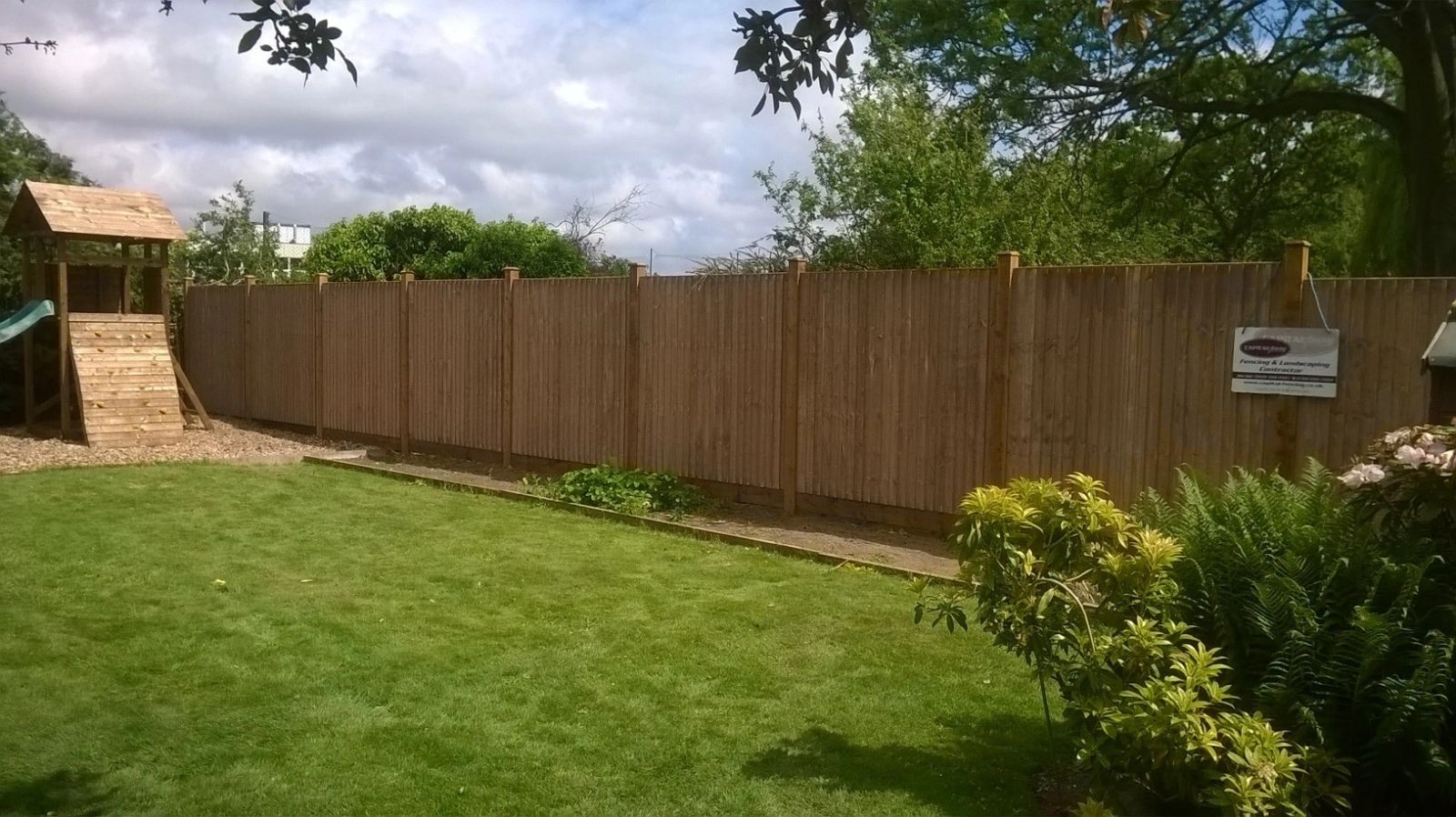
closeboard fence run installed by Capital Fencing in Mill Hill (NW7)
Mill Hill · NW7

Dog-Proof Fencing in Mill Hill (NW7)

Dog-proof fencing in Mill Hill is one of our regular briefs — dog owners needing a boundary a dog can't dig under, climb or push through. On large detached homes on the ridgeway with spacious plots — many of the Ridgeway properties have gardens deep enough for full landscaping schemes, the failure mode we see most often is the one we design out first. Roads such as Wise Lane and Nan Clark's Lane are typical of the local layout. Totteridge Valley footpath is a useful local reference point. Nan Clark's Lane borders the Totteridge Valley green belt, where development and boundary changes are restricted by planning policy.

Dog-proof fencing in Mill Hill is one of our regular briefs — dog owners needing a boundary a dog can't dig under, climb or push through. On large detached homes on the ridgeway with spacious plots — many of the Ridgeway properties have gardens deep enough for full landscaping schemes, the failure mode we see most often is the one we design out first. Roads such as Wise Lane and Nan Clark's Lane are typical of the local layout. Totteridge Valley footpath is a useful local reference point. Nan Clark's Lane borders the Totteridge Valley green belt, where development and boundary changes are restricted by planning policy.

Typical dog-proof fencing briefs in Mill Hill

  • gap-free gate lines with a drop bolt and a low kicker plate to stop nose-under escapes
  • 1.8m solid boundary with anti-climb top so a larger breed can't jump or scramble

Why this spec, for dog owners

  • no gaps at ground level — the single most common escape point on standard fencing
  • hinges and drop-bolts sized so a dog leaning on the gate can't work it open
  • buried mesh apron stops digging without spoiling the finished look above ground
Default spec

How we build dog-proof fencing in Mill Hill

1.8m closeboard, no gaps under 40mm, 150mm concrete kicker or 300mm buried mesh apron, closing gate with drop-bolt into a socket. On Mill Hill jobs we adjust for the mill hill conservation area on the ridgeway has strict rules on materials and finishes.

Property mix locally: large detached homes on the Ridgeway, 1930s semis around the Broadway, and modern infill near Mill Hill East. Typical gardens: spacious plots — many of the Ridgeway properties have gardens deep enough for full landscaping schemes. Postcodes we regularly service: NW7.

Where dog-proof fencing isn't the right answer

  • very small terrier breeds that can squeeze under 40mm — full mesh apron is the right answer
  • conservation frontages where a mesh apron is not permitted; a brick kicker course is the alternative

Dog-Proof Fencing FAQs — Mill Hill

Do you fit anti-climb toppers on residential boundaries?

On dog-proof fencing jobs in Mill Hill (NW7), our default answer is: 1.8m closeboard, no gaps under 40mm, 150mm concrete kicker or 300mm buried mesh apron, closing gate with drop-bolt into a socket. For context: hinges and drop-bolts sized so a dog leaning on the gate can't work it open. Measured, quoted and installed by the same small crew.

How do I stop a dog digging under the fence?

Across Mill Hill we spec around the mill hill conservation area on the ridgeway has strict rules on materials and finishes, so on dog-proof fencing that usually means closeboard with kicker plate. We'll walk you through no gaps at ground level — the single most common escape point on standard fencing on the site visit before you commit.

Are hit-and-miss fences OK for dog gardens?

Barnet coverage means we can survey most NW7 addresses inside a week — dog owners needing a boundary a dog can't dig under, climb or push through. For context: hinges and drop-bolts sized so a dog leaning on the gate can't work it open. Measured, quoted and installed by the same small crew.

Can existing fencing be adapted rather than replaced?

Practically: closeboard set into a shallow concrete kicker so a small breed can't dig underneath. That's the Mill Hill version of this job, not a generic one. For context: hinges and drop-bolts sized so a dog leaning on the gate can't work it open. Measured, quoted and installed by the same small crew.

What height fence will stop a Labrador jumping?

On dog-proof fencing jobs in Mill Hill (NW7), our default answer is: 1.8m closeboard, no gaps under 40mm, 150mm concrete kicker or 300mm buried mesh apron, closing gate with drop-bolt into a socket. We'll walk you through no gaps at ground level — the single most common escape point on standard fencing on the site visit before you commit.

Recent dog-proof fencing work
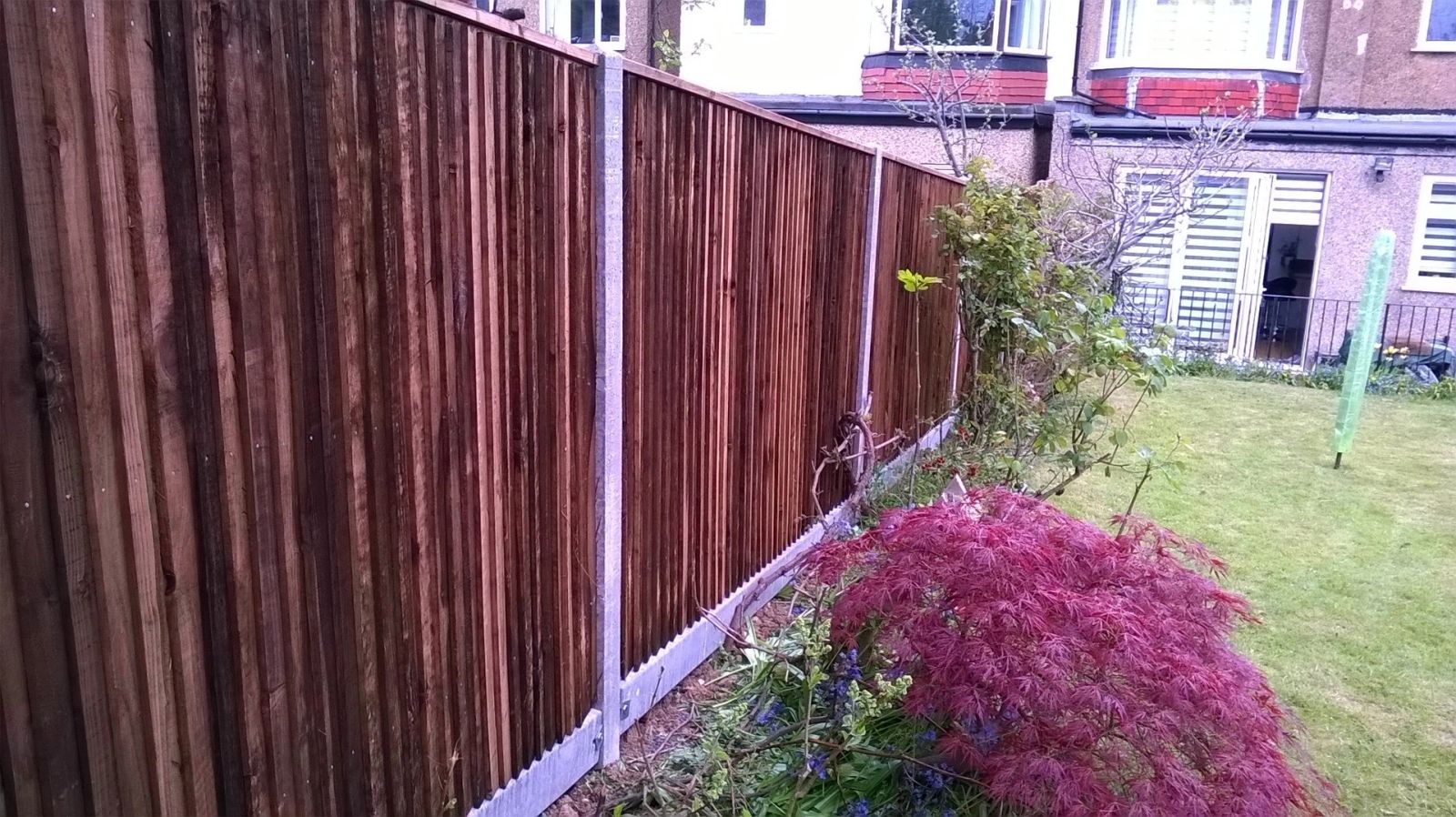
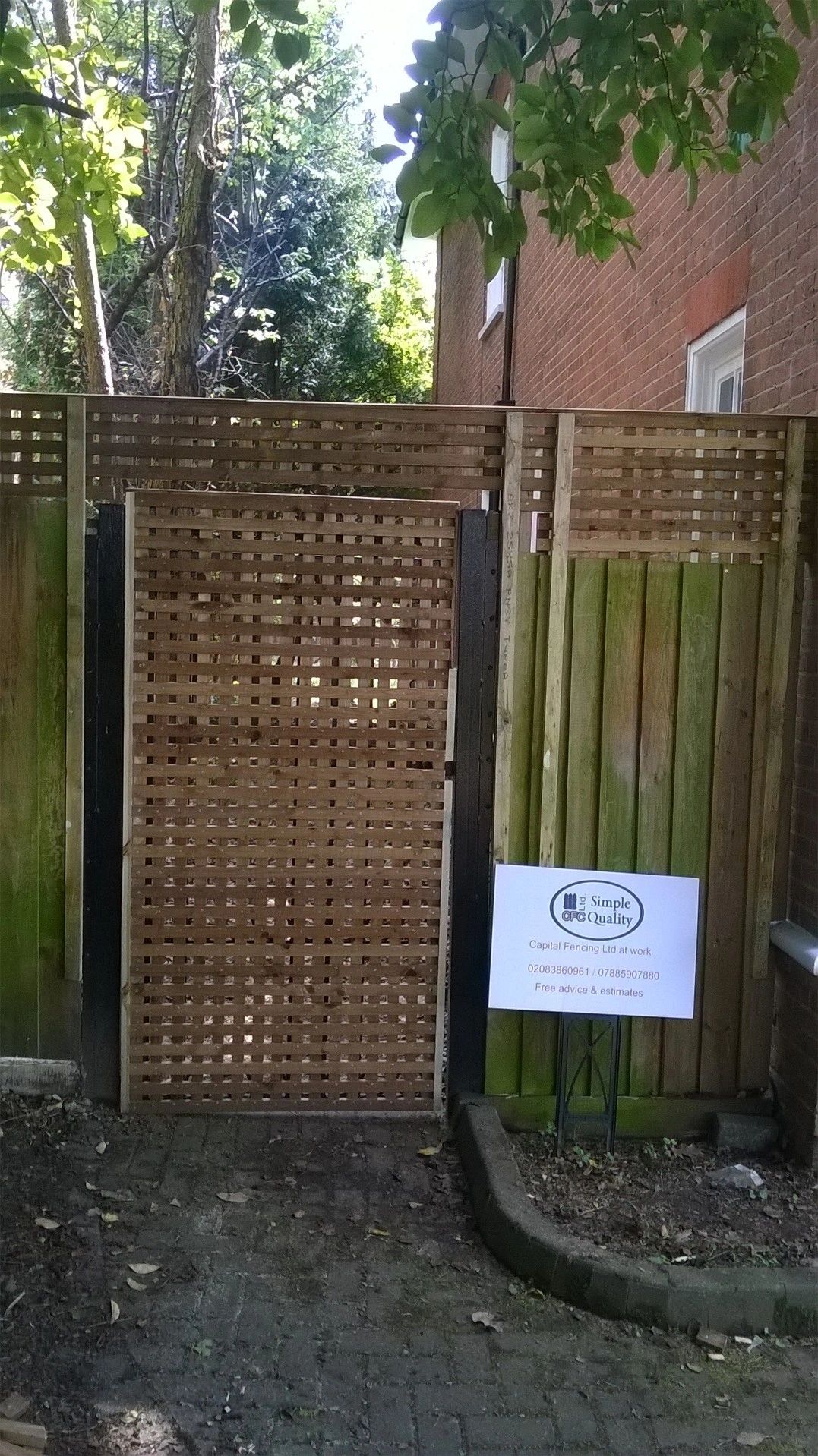
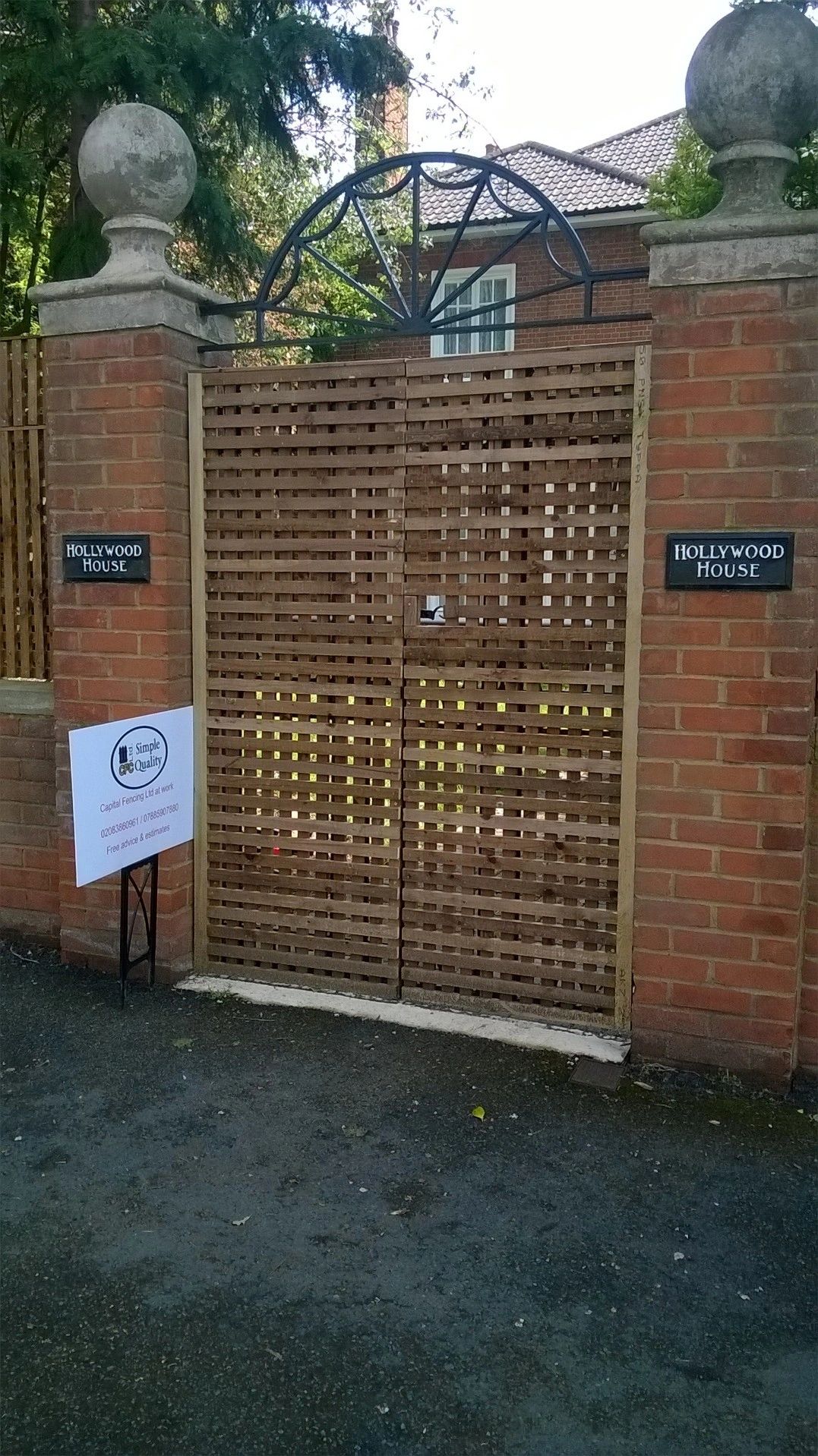
closeboard fence run installed by Capital Fencing in Mill Hill (NW7)panel fence install installed by Capital Fencing in Mill Hill (NW7)trellis-topped fence installed by Capital Fencing in Mill Hill (NW7)bespoke decorative fence installed by Capital Fencing in Mill Hill (NW7)

Dog-Proof Fencing in Mill Hill: the practical detail

Accessible gate access and reasonable adjustment

A security gate on a route used by the public or by staff and visitors needs to accommodate wheelchair users and people with limited grip strength, which affects latch height, opening force and whether a keypad or fob system is reachable from a seated position.

Retrofitting accessible hardware to an existing gate is usually straightforward, but it's cheaper and simpler to specify it correctly at the point of ordering than to identify the gap only after a complaint or an access audit.

Perimeter fencing around a car park

A car park perimeter combines security fencing with vehicle containment at points where a car could roll or be driven through the line, so kerbs, wheel stops or a heavier post spec are used at vulnerable edges rather than a uniform light-duty fence throughout.

Pedestrian gaps left for a footpath through the car park need their own gate or bollard treatment, since an open pedestrian route through an otherwise secure line is an easy way round the fence entirely.

Drainage easements running under a fence line

Some boundaries have a formal drainage easement recorded against the title, protecting a buried pipe or watercourse that a neighbouring property has the right to maintain access to.

Fence posts set directly over or immediately alongside a protected drainage run can technically breach the terms of the easement even if the pipe itself isn't damaged during installation.

Checking the title register, and asking the water company to confirm any known drainage records, is sensible before digging post holes on an older plot with an unclear drainage history.

Post caps and end-grain protection

A timber post's end grain sits at the top, cut across the fibres, and that exposed grain draws in water far faster than the treated face of the post, which is why an unprotected post top is often the first place rot takes hold.

A weathered or pyramid-cut post cap sheds water off the end grain instead of letting it pool, and a cap that oversails the post slightly also keeps water from tracking down the sides at the joint.

It's a small, low-cost detail that's frequently skipped on budget jobs, and its absence is a reliable way to predict which posts in an older fence will need replacing first.

Closing dampers to prevent slamming

A hydraulic or pneumatic closing damper fitted alongside a self-closing spring slows the last part of the gate's travel, preventing the slam that a spring alone produces and reducing wear on the frame, latch and keep.

Dampers are a common retrofit on gates that were fitted with a spring only, once the noise or repeated impact damage from slamming becomes a nuisance.

Fencing compared with a boundary wall

A masonry boundary wall generally costs more and takes longer to build than an equivalent length of timber fencing, but needs far less routine maintenance over its lifetime and can outlast several generations of fence replacement.

Walls also carry their own structural considerations — foundation depth, movement joints on longer runs, and retaining requirements on a sloping plot — that a fence largely avoids.

Mixing the two, a low wall topped with railings or a timber panel, is a common way to get some of a wall's permanence and kerb appeal without the full cost of a wall along an entire boundary.

Mesh tensioning on a chain-link or weld-mesh run

Mesh that's fitted slack sags between posts and can be pulled or climbed more easily, so a straining wire and turnbuckle at each end of a run tension the mesh evenly before it's clipped or tied to the line wires.

Re-tensioning is a routine maintenance task on an older mesh run, since posts settling slightly or ground movement over a season will slacken a mesh that was originally taut.

Article 4 directions and lost permitted development rights

An Article 4 direction is a specific order a council can make to remove some or all permitted development rights across a defined area, often a conservation area but sometimes a single estate or street with particular character to protect.

Where one applies, work that would normally be permitted development elsewhere — a new front boundary wall, a taller side fence, even a gate replacement in some cases — needs a full planning application instead.

Article 4 areas are listed on the council's own planning pages or can be confirmed by a quick call to duty planning, and it's worth checking before ordering materials rather than finding out at inspection stage.

Scribing a gravel board to uneven ground

Ground level rarely runs perfectly straight between two posts, so a gravel board cut square often leaves a gap under one end and digs into the ground at the other unless it's scribed to follow the actual contour.

Scribing means holding the board in position, marking the ground profile onto its face, and cutting along that line so the board's bottom edge follows the undulation rather than an assumed flat datum.

On concrete gravel boards this isn't possible after casting, so uneven ground either needs the board bedded on a shaped mortar bed or a timber board used instead where the ground profile is particularly irregular.

Balancing tight mesh apertures against airflow around plant equipment

A tight-aperture high-security mesh gives strong resistance to climbing and reach-through, but wrapped closely around outdoor plant equipment such as chillers or generators it can restrict airflow needed for the equipment to run efficiently.

Setting the mesh enclosure at a slight distance from the equipment casing, or specifying a marginally larger aperture where the site's threat assessment allows it, keeps most of the security benefit while avoiding an airflow restriction that could affect equipment performance.

Copper-based timber preservatives

Modern timber preservatives commonly use copper compounds as the primary biocide, since copper is effective against fungal decay and is less toxicologically hazardous than the older chromated copper arsenate formulations largely phased out for domestic use.

Copper-treated timber can accelerate corrosion in fixings made from certain metals, particularly plain steel and some aluminium alloys, in a similar way to oak's tannic acid reaction, which is why treated timber often specifies compatible fixing types.

Hot-dip galvanised and stainless steel fixings both perform acceptably with copper-treated timber, whereas untreated mild steel or some aluminium fixings can corrode noticeably faster in direct, damp contact with it.

Routing deck lighting cable away from standing water

Low-voltage deck lighting cable run beneath boards needs to be kept clear of any point where water is likely to pool, since even low-voltage cable connectors degrade faster in permanently wet conditions than in the intermittent dampness the rest of the substructure sees.

Routing cable along the higher side of a deck's fall, rather than through the lowest point where water naturally collects, is a simple planning step that extends the life of an otherwise reliable lighting installation.

Any cable joints beneath a deck should use fully waterproof-rated connectors rather than standard household connectors, given the substructure environment is functionally outdoors and damp regardless of overall deck condition.

Dust and noise control in a tight garden

Cutting timber, breaking out old concrete bases or using a petrol auger all generate noise and dust that carries further in a small enclosed garden between close-set houses than on an open plot.

Local authorities can restrict noisy work hours under the Control of Pollution Act, and even where no formal restriction applies, starting before a reasonable hour or working into the evening is one of the fastest ways to draw a neighbour complaint.

Sheeting off concrete-cutting dust and keeping cut ends away from a neighbour's washing line or open windows is a small step that avoids most of the friction on a shared boundary job.

Tree root damage to a shared boundary structure

Where a neighbour's tree roots have visibly damaged a shared boundary wall or fence footing, resolving responsibility for repair can depend on tree ownership, the nature of any easement, and whether prior warning was given about root damage.

This is a fact-specific question rather than one with a single automatic answer, and can occasionally end up needing legal advice where the cost of repair is significant.

Documenting the damage with photographs and dates as it develops is useful evidence regardless of which direction a later conversation about responsibility takes.

Diagnosing rot at the ground line versus mid-post

Ground-line rot sits just below and just above soil level, where moisture cycles wet and dry fastest and fungal decay does most of its damage; a probe test at that band catches most failures before they're visible above ground.

Rot higher up the post, mid-height under a rail bracket or where a panel clip traps water, is a different failure mode caused by standing moisture rather than soil contact, and needs the fixing checked as well as the timber.

Adjusting post heights when repairing a fence on sloping ground

A fence stepped down a slope has posts of varying heights above ground even though the panels themselves are a standard size, and a repaired post needs to match the stepped height of its neighbours rather than a single standard measurement.

Getting this wrong on a repair creates a visible kink in the top line of an otherwise consistent stepped run, so measuring the actual height of the posts either side of the repair matters more here than on a level run.

Cutting a panel down for a short bay

A lap or closeboard panel can usually be cut down in width by removing boards from one edge and refixing the cut edge to the panel's own frame, provided there's still a batten or rail to fix into once the cut is made.

Concrete panels generally can't be cut at all, which is one of the practical reasons timber is chosen over concrete gravel-board-and-panel systems on an irregular boundary with several odd-width bays.

Whatever is cut, the new edge needs its own vertical support — either an extra batten screwed to the frame or, for a wider cut-down section, a slip post — so the panel doesn't flex or drop at the trimmed end.

Roller bearing lubrication schedules

Sliding gate rollers with sealed bearings need far less frequent attention than an open bearing type, but neither should be left ungreased indefinitely, since grit working into a bearing accelerates wear regardless of the seal.

A roller that's started to squeal or feels rough when turned by hand has usually already lost some grease or picked up grit, and catching this before the bearing fails outright is cheaper than a full roller replacement.

CDM regulations on domestic and commercial jobs

The Construction (Design and Management) Regulations 2015 apply to domestic projects as well as commercial ones, though on a domestic job the homeowner's CDM duties normally pass automatically to the contractor or principal contractor rather than sitting with the client directly.

On a commercial or public sector site, or a domestic job involving more than one contractor, formal duty-holder roles (principal designer, principal contractor) need to be identified and a construction phase plan put in place before work starts.

Even a straightforward domestic fencing job benefits from basic CDM thinking — safe access, checking for overhead cables or buried services, and clear site boundaries during the works — regardless of whether the formal paperwork threshold is met.

Thermally modified timber

Thermal modification heats timber to high temperatures in a low-oxygen environment, which alters its cell structure to reduce moisture absorption and improve decay resistance without adding any chemical preservative.

The process also darkens the timber throughout its thickness, which means a scratch or cut face shows a similar colour to the surface rather than exposing paler untreated wood underneath.

The heat treatment reduces the timber's flexural strength somewhat, so thermally modified timber is more commonly specified for cladding and decorative boarding than for load-bearing posts and rails.

When a boundary camera becomes part of a wider dispute

Boundary and fencing disagreements sometimes escalate to include complaints about cameras, lighting or noise, which can broaden a straightforward property dispute into several overlapping issues at once.

Keeping these strands separate in any correspondence — addressing the boundary question and any camera or nuisance concern individually — tends to keep discussions more focused and productive.

Where a dispute has genuinely broadened like this, a mediator or solicitor experienced in neighbour disputes more generally, rather than boundary-only expertise, may be the more useful next step.

Conservation area consent for boundary works

Conservation area status doesn't ban fence or wall replacement outright, but it does mean the council can ask for materials and detailing that match the street's traditional character, and demolition of an existing wall over a certain height can itself need consent.

Removing or lowering a historic brick boundary wall is the case most likely to need permission, since unlike a simple fence swap it counts as demolition of a structure that contributes to the area's appearance.

The safest route on any period property is a short pre-application check with the conservation officer, since 'like for like' replacement is treated differently to a change of material or height.

Dog-Proof Fencing across NW7 is a regular run for us. We'll quote honestly, tell you if dog-proof fencing isn't the right answer for your site, and book the job in within a week or two of a signed quote. measured, quoted and installed by the same small crew. Roads such as Wise Lane and Uphill Road are typical of the local layout. Mill Hill East station is a useful local reference point. The newer estates around Mill Hill East were built over shallower topsoil above clay, typical of the area's underlying geology.

Get In Touch

Get My Free Quote — 24h Response

No callout fee · Free site visit · Friendly local team covering London & Hertfordshire.

Call us
07885907880
or 02036484746
Email
capital_fencing@yahoo.com
WhatsApp
Message us anytime
Area
London & Hertfordshire
Payment
Card payments accepted

Pay by debit or credit card, bank transfer or cash once the work and price are agreed. No deposit taken online.

Request a Free Quote

We'll get back to you within 24 hours.

Free Site Visit No Callout Fee
Call WhatsAppQuote