London & Hertfordshire Free Site Visit
closeboard fence run installed by Capital Fencing in Edgware (HA8)
Edgware · HA8

Landlord Fencing in Edgware — Built for tenancy turnaround windows and inventory sign-off

Landlord Fencing in Edgware is a specific brief for us — buy-to-let owners and letting agents needing durable boundaries between tenancies. The default local answer isn't a stock catalogue drop: it's 6ft closeboard on concrete posts with gravel boards, mid-rail capped, softwood side gate with padlock hasp. On Edgware sites we also spec around side-return access on edgware semis is genuinely narrow — long panels often have to come up over the garage, which is where a lot of landlord-grade fencing jobs quietly fail two years in. Roads such as Whitchurch Lane and Station Road are typical of the local layout. Canons Park is a useful local reference point. Edgware developed rapidly after the Northern line was extended to the area in the 1920s, and much of its housing dates from that period of suburban expansion.

Landlord Fencing in Edgware is a specific brief for us — buy-to-let owners and letting agents needing durable boundaries between tenancies. The default local answer isn't a stock catalogue drop: it's 6ft closeboard on concrete posts with gravel boards, mid-rail capped, softwood side gate with padlock hasp. On Edgware sites we also spec around side-return access on edgware semis is genuinely narrow — long panels often have to come up over the garage, which is where a lot of landlord-grade fencing jobs quietly fail two years in. Roads such as Whitchurch Lane and Station Road are typical of the local layout. Canons Park is a useful local reference point. Edgware developed rapidly after the Northern line was extended to the area in the 1920s, and much of its housing dates from that period of suburban expansion.

Typical landlord-grade fencing briefs in Edgware

  • matched fencing across three or four adjacent rental plots owned by one landlord
  • boundary run replaced between two tenancies inside a single working week

Why this spec, for buy-to-let owners and letting agents

  • individual boards or single panels can be swapped without touching the whole run
  • concrete posts and gravel boards keep the ground contact off the timber — that's where landlord fences usually fail
  • one crew, one price sheet across multiple properties — inventory-friendly for portfolio owners
Default spec

How we build landlord-grade fencing in Edgware

6ft closeboard on concrete posts with gravel boards, mid-rail capped, softwood side gate with padlock hasp. On Edgware jobs we adjust for side-return access on edgware semis is genuinely narrow — long panels often have to come up over the garage.

Property mix locally: 1930s semis built around the Tube extension, plus newer flats near the town centre. Typical gardens: rectangular suburban gardens, mostly flat, often with mature fruit trees. Postcodes we regularly service: HA8.

we bill via one purchase order across a portfolio, provide before/after photos for the inventory clerk, and can be on and off site inside a tenancy void.

Where landlord-grade fencing isn't the right answer

  • listed buildings and conservation frontages where painted picket or estate railings are the only compliant option
  • commercial forecourts needing bar-and-rail or palisade rather than domestic-grade timber

Landlord Fencing FAQs — Edgware

Do you invoice per property or per portfolio?

On landlord-grade fencing jobs in Edgware (HA8), our default answer is: 6ft closeboard on concrete posts with gravel boards, mid-rail capped, softwood side gate with padlock hasp. For context: concrete posts and gravel boards keep the ground contact off the timber — that's where landlord fences usually fail. One crew, one price sheet, before-and-after photos as standard.

Do you handle the removal and skip for the old fence?

Across Edgware we spec around side-return access on edgware semis is genuinely narrow — long panels often have to come up over the garage, so on landlord-grade fencing that usually means pressure-treated closeboard on concrete posts. For context: concrete posts and gravel boards keep the ground contact off the timber — that's where landlord fences usually fail. One crew, one price sheet, before-and-after photos as standard.

Can you turn a rental boundary around between tenancies?

Barnet coverage means we can survey most HA8 addresses inside a week — buy-to-let owners and letting agents needing durable boundaries between tenancies. We bill via one purchase order across a portfolio, provide before/after photos for the inventory clerk, and can be on and off site inside a tenancy void.

What's the cheapest defensible spec you'd stand behind for a rental?

Practically: boundary run replaced between two tenancies inside a single working week. That's the Edgware version of this job, not a generic one. The honest trade-off is cheapest lap panels racking in wind because posts were shallow — we always concrete to 600mm minimum on landlord work — which is exactly what our default spec designs out.

Who owns the fence — landlord or neighbour — and does it matter to the quote?

On landlord-grade fencing jobs in Edgware (HA8), our default answer is: 6ft closeboard on concrete posts with gravel boards, mid-rail capped, softwood side gate with padlock hasp. We bill via one purchase order across a portfolio, provide before/after photos for the inventory clerk, and can be on and off site inside a tenancy void.

Recent landlord fencing work
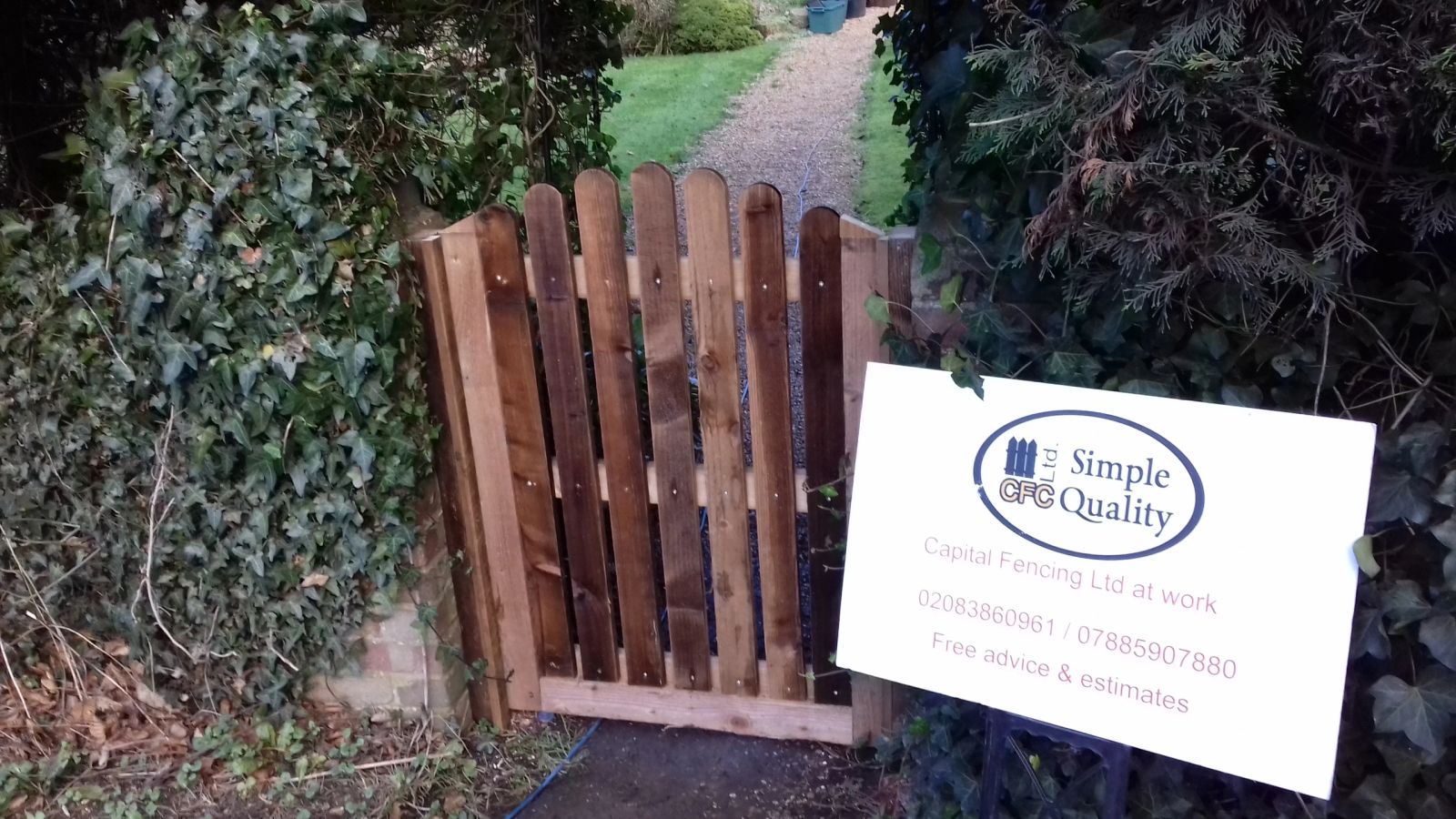
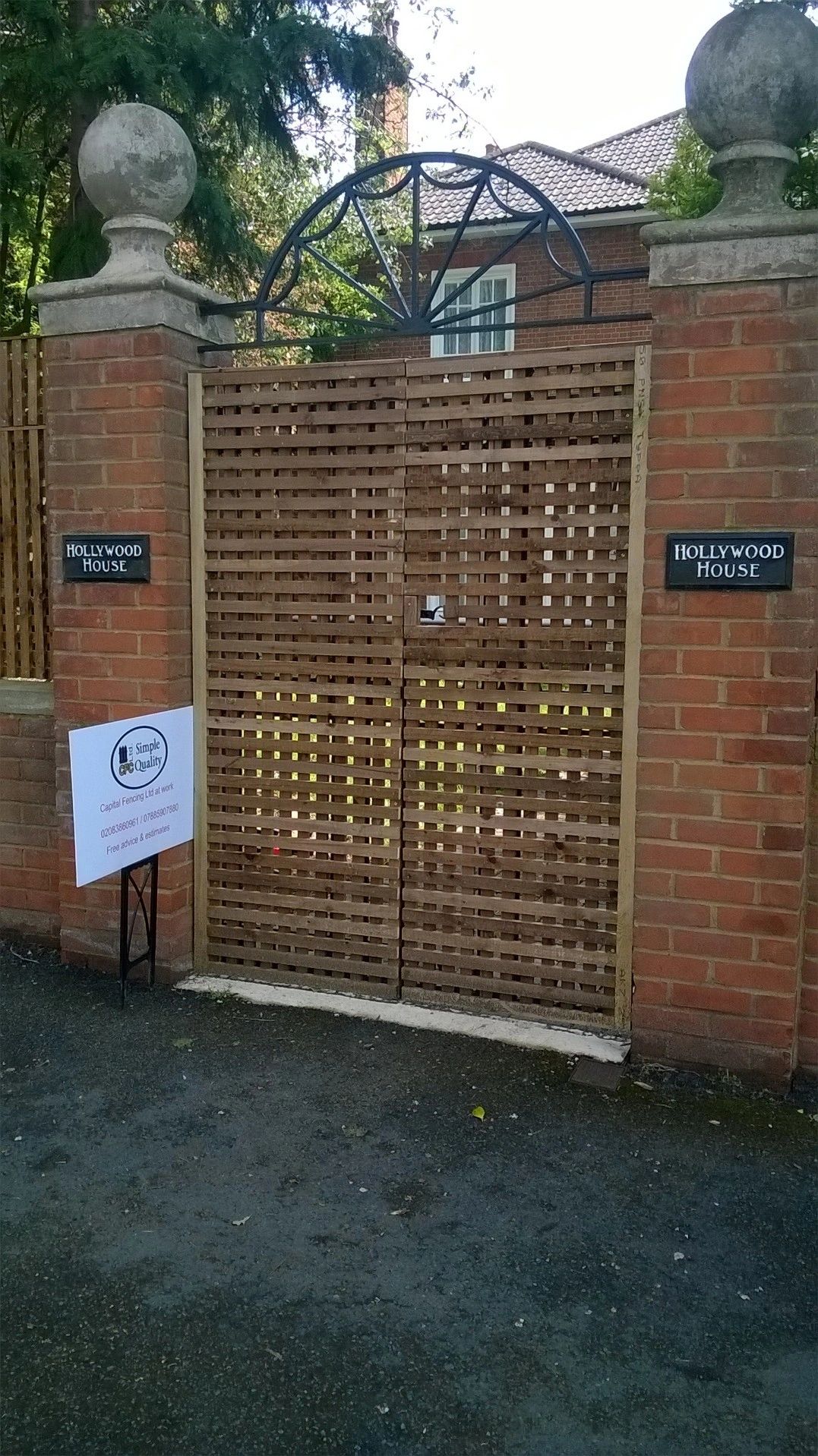
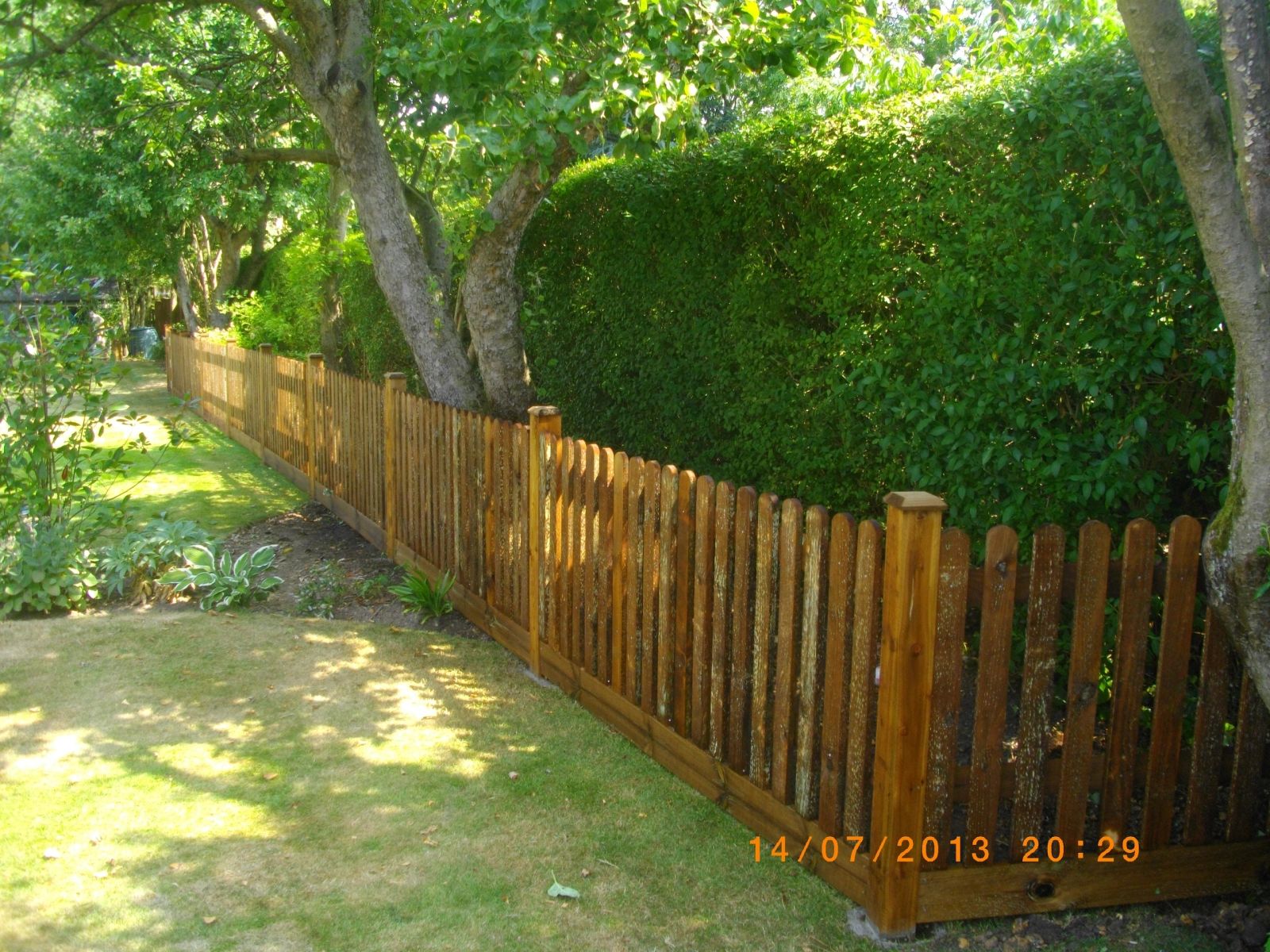
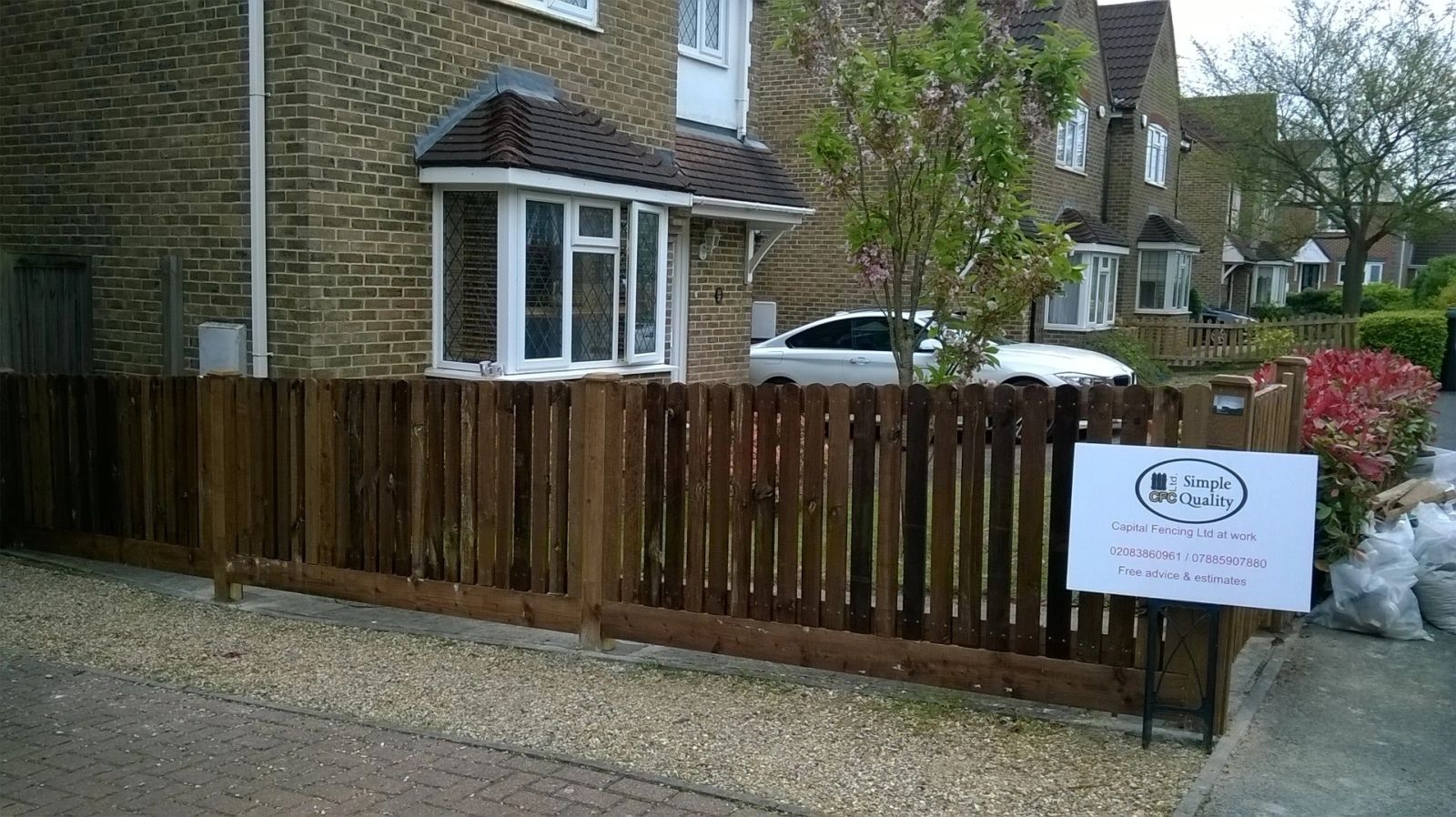
closeboard fence run installed by Capital Fencing in Edgware (HA8)panel fence install installed by Capital Fencing in Edgware (HA8)trellis-topped fence installed by Capital Fencing in Edgware (HA8)bespoke decorative fence installed by Capital Fencing in Edgware (HA8)

Site notes: landlord fencing in HA8

Overhanging branches and the right to prune

A landowner has the right to cut back branches or roots that cross the boundary from a neighbour's tree, up to the boundary line, without needing the tree owner's permission, but the cut material technically remains the tree owner's property and should be offered back.

That right doesn't extend to entering the neighbour's land to do the work without consent, and it's overridden where the tree is protected by a Tree Preservation Order or sits within a conservation area, in which case council notice is needed first.

Cutting back further than necessary to clear the boundary, or in a way that damages the tree's health, can itself expose the pruning party to a claim, so proportionate, boundary-line-only cutting is the safer approach.

Checking and shakes as timber dries

Checking refers to small surface splits that open along the grain as the outer face of a timber dries and shrinks faster than the still-damp core, and it's a normal, largely cosmetic feature of drying softwood rather than a structural fault.

Shakes are a related but distinct defect present in the standing tree or log itself, such as a separation between growth rings, and can run deeper into a section than surface checking.

A moderate amount of surface checking on a post or rail doesn't usually compromise strength, but a shake running the length of a load-bearing post is worth inspecting before use, since it can concentrate stress along that plane.

Corner visibility splays affecting fence height specifically

Some corner plots have a specific visibility splay condition attached to their planning history that limits fence, hedge or wall height at the junction to well below the normal 1m road-facing limit.

This is separate from the general permitted development height rule and takes precedence where it applies, since it's usually tied to road safety at a specific junction.

Checking the property's planning history for this kind of condition before fencing a corner plot boundary avoids building something that later needs cutting back.

Gravel terraces of the Lea and Colne valleys

The river terraces along the Lea and Colne valleys are largely sand and gravel over clay, ground that drains quickly and digs easily compared with the heavier clays further from the rivers.

Free-draining gravel is generally kinder to timber posts since water doesn't pool against the base, but loose gravel can also slump back into an open hole faster than clay, making a wider working hole necessary to get concrete properly around the post.

Where the gravel sits directly over a clay band, augers can hit a hard, sticky transition partway down that slows digging without warning.

Commercial and site boundary fencing

Commercial boundaries — industrial units, retail yards, small business premises — usually prioritise security and low maintenance over appearance, which points toward galvanised steel palisade, weldmesh or heavy-duty timber closeboard rather than decorative panel fencing.

Access control matters more here too: wide vehicle gates need clearances checked against delivery vehicle turning circles, not just car dimensions, and a site with out-of-hours deliveries may need lockable pedestrian access separate from the main gate.

Any work adjoining a public footpath or road also needs to think about temporary hoarding and public safety during installation, not just the finished boundary.

Cantilever sliding gate basics

A cantilever sliding gate has no ground track and instead balances on internal rollers running along a buried or surface-mounted beam, avoiding the debris problems of a ground-track design but needing a longer counterbalanced section behind the opening.

This type is more common on wider commercial or rural openings than standard domestic driveways because of the extra length needed either side of the gap.

Checking for older asbestos-containing gravel boards before repair

Some older fence installations used asbestos-cement gravel boards or panels, which look similar to concrete at a glance but need identifying and handling differently if disturbed during a repair.

Where a boundary fence predates the ban on asbestos cement products and shows a grey fibrous-looking board rather than standard reinforced concrete, it's worth having it checked before cutting, breaking or disposing of it as ordinary waste.

Timber shrinkage and swelling across seasons

Timber gate frames swell slightly in wet weather and shrink back in dry conditions, and a gate built with no allowance for that movement can bind in one season and rattle loose in another.

A small design gap at the latch side accommodates this movement without needing seasonal adjustment of the hardware itself.

Fitting band-and-gudgeon hinges correctly

A band-and-gudgeon hinge splits into a band that's strapped across the gate and a gudgeon pin fixed to the post, and the two need to be perfectly vertical relative to each other or the gate will bind or swing awkwardly through its full arc.

Getting the gudgeon pins plumb and in line during fitting matters more with this hinge type than with a butt hinge, since there's no simple way to adjust alignment after fixing.

Meeting stiles on double gates

Where two leaves of a double gate meet in the middle, the meeting stiles need to stay flush and aligned with each other for the latch or bolt arrangement to work, and seasonal movement or a dropped hinge on either leaf throws this alignment off first.

We check both leaves together rather than adjusting one side in isolation, since a fix on one leaf alone can leave the meeting point mismatched.

Quiet hours and noise considerations for works

Most local authorities publish informal guidance or byelaws on acceptable working hours for noisy construction activity, often something like weekday daytime hours with reduced or no work on Sundays.

While a single day of fence post digging rarely needs a formal noise permit of the kind larger construction sites require, persistent early or late working can still attract a noise complaint under general nuisance law.

Checking the council's standard hours guidance, and simply letting immediate neighbours know when noisier work like post drilling will happen, tends to avoid most complaints before they start.

Pergola and screen timbers

Pergola posts generally need a larger section than a fence post of the same height, since they carry a horizontal beam and roof structure rather than just resisting wind on a flat panel, and undersized posts show up as noticeable sway at the top rather than immediate failure.

Softwood pergolas are almost always pressure-treated given the exposure, while a hardwood pergola can be left to weather untreated in the same way an oak gate can, at a higher initial material cost.

Screening timbers fixed to or beside a pergola structure follow the same gap and profile logic as free-standing slatted fencing, so the same trade-offs between privacy, light and wind loading apply.

Boundary fencing on land in a flood risk zone

Properties within a designated flood risk zone can be subject to additional requirements around solid boundary structures that might obstruct floodwater flow across the site.

A solid close-boarded fence can behave differently to a more open picket or post-and-rail design when it comes to how water moves through a garden during a flood event.

Where flood risk mapping shows a property is affected, checking with the local authority or Environment Agency for any relevant guidance is sensible before choosing a boundary style.

Realistic maintenance intervals

Pressure-treated softwood fencing generally wants a re-application of preservative or stain every two to three years to keep the surface protected, more often on a south-facing run that gets constant UV exposure.

Gate hinges and latches are worth checking annually for movement or corrosion, since a small adjustment caught early avoids the gate racking out of square and needing a rebuild.

Decking boards benefit from a yearly clean to clear leaf litter and algae from the gaps, which is what actually causes most of the slipperiness people blame on the timber itself.

Exposed plots and wind funnelling between buildings

Wind doesn't just hit a fence head-on — gaps between buildings, especially in newer estate layouts with narrow side passages, can funnel and accelerate wind locally well beyond the general forecast for the area.

A fence positioned at the end of such a gap can see significantly higher loading than an identical run a few metres away in the lee of a building.

Recognising these funnelling positions at quote stage, and specifying heavier posts or a part-open panel design there, is more reliable than treating an entire plot as uniformly exposed or sheltered.

Powder coating versus galvanising for steel security fencing

Hot-dip galvanising bonds a zinc layer to the steel that self-heals minor scratches through sacrificial corrosion, making it the more durable base finish for an exposed or coastal boundary.

Powder coating adds colour and a smoother surface but relies on the coating staying intact — galvanised-then-powder-coated steel combines both, giving corrosion protection under a decorative finish, and is the usual spec where appearance matters as much as longevity.

Water ingress at the bottom rail

The bottom rail of a gate sits closest to splash-back from the ground and holds moisture longer than any other part of the frame, making it the most common place for rot to start on an otherwise sound gate.

Where a repair addresses bottom-rail rot, raising ground clearance slightly or improving drainage underneath is worth doing at the same time to slow the same failure recurring.

Where neighbours disagree on sharing a repair cost

A boundary fence repair is sometimes split between neighbours by informal agreement, but there's no automatic legal requirement for a neighbour to contribute unless the deeds specifically say so, and disagreement over cost-sharing is common enough to plan for.

In practice it's simpler to quote the repair to whichever party is instructing the work and let that client resolve any cost-sharing conversation separately, rather than trying to split an invoice between two parties who haven't agreed terms.

How garden slope affects water shedding along a fence base

On a sloped garden, water naturally runs along the base of a fence line toward the lowest point, which means the downhill end of a run often sits in wetter ground than the uphill end even though both were built to the same specification.

This uneven exposure is a common reason why one end of an otherwise uniform fence needs gravel board replacement years before the rest.

A shallow cross-fall drainage channel or a slightly raised gravel board at the low point can intercept some of this flow before it pools against the timber.

Security fencing around a builders' compound

A builders' compound holding plant, materials and fuel needs a higher standard of fencing than the general site hoarding, since compound contents are a specific theft target and are often left unattended overnight or over a weekend.

Anti-climb toppings, a single monitored access gate and lighting are more commonly justified on a compound than on the wider site perimeter, given the concentration of value inside a relatively small footprint.

Overhanging roofline drip lines onto a boundary

A fence running close to a house or outbuilding without gutters, or with a gutter that overshoots during heavy rain, can sit directly under a concentrated drip line that soaks one section of the run far more than the rest.

Over time this shows up as a localised patch of accelerated rot or algae growth that doesn't match the general weathering pattern of the rest of the boundary.

Where this can't be resolved by fixing the guttering itself, a slightly increased offset from the wall or a more resistant board section at that specific point avoids repeat localised failure.

Diagonal bracing struts on gate posts

A diagonal timber or metal strut run from partway up a gate post back to a buried anchor or second post resists the twisting and leaning force a heavy gate exerts on its hinge post over time, particularly on wide or heavy gates.

Without bracing, that twisting load is carried entirely by the post's own embedment in the ground, which can gradually work the post out of true even where the concrete footing itself remains intact.

Bracing is generally specified based on gate weight and width rather than applied universally, since a light pedestrian gate rarely generates enough leverage to need it while a wide vehicle gate almost always does.

Landlord Fencing across HA8 is a regular run for us. We'll quote honestly, tell you if landlord-grade fencing isn't the right answer for your site, and book the job in within a week or two of a signed quote. one crew, one price sheet, before-and-after photos as standard. Roads such as Station Road and Hale Lane are typical of the local layout. Canons Park is a useful local reference point. Canons Park, on the town's edge, was once part of the grounds of Canons House and retains covenants affecting some streets.

Get In Touch

Get My Free Quote — 24h Response

No callout fee · Free site visit · Friendly local team covering London & Hertfordshire.

Call us
07885907880
or 02036484746
Email
capital_fencing@yahoo.com
WhatsApp
Message us anytime
Area
London & Hertfordshire
Payment
Card payments accepted

Pay by debit or credit card, bank transfer or cash once the work and price are agreed. No deposit taken online.

Request a Free Quote

We'll get back to you within 24 hours.

Free Site Visit No Callout Fee
Call WhatsAppQuote