London & Hertfordshire Free Site Visit
closeboard fence run installed by Capital Fencing in Edgware (HA8)
Edgware · HA8

Sloping Garden Fencing in Edgware — Built for how the structure performs under real use, not a showroom drawing

Sloping Garden Fencing in Edgware is a specific brief for us — homeowners with gardens that fall or rise across the boundary — stepped or racked builds. The default local answer isn't a stock catalogue drop: it's closeboard on 100×100 pressure-treated posts, stepped in 150mm gravel-board increments or racked where the slope is gentle enough. On Edgware sites we also spec around side-return access on edgware semis is genuinely narrow — long panels often have to come up over the garage, which is where a lot of sloping-garden fencing jobs quietly fail two years in. Roads such as Station Road and High Street are typical of the local layout. Edgware bus station is a useful local reference point. Edgware developed rapidly after the Northern line was extended to the area in the 1920s, and much of its housing dates from that period of suburban expansion.

Sloping Garden Fencing in Edgware is a specific brief for us — homeowners with gardens that fall or rise across the boundary — stepped or racked builds. The default local answer isn't a stock catalogue drop: it's closeboard on 100×100 pressure-treated posts, stepped in 150mm gravel-board increments or racked where the slope is gentle enough. On Edgware sites we also spec around side-return access on edgware semis is genuinely narrow — long panels often have to come up over the garage, which is where a lot of sloping-garden fencing jobs quietly fail two years in. Roads such as Station Road and High Street are typical of the local layout. Edgware bus station is a useful local reference point. Edgware developed rapidly after the Northern line was extended to the area in the 1920s, and much of its housing dates from that period of suburban expansion.

What goes wrong

Common failure modes on sloping-garden fencing

  • using panels on any slope over 300mm across the bay — the panel drops one end and rots at the sunken corner
  • not draining behind sleeper retainers — the ground pushes the fence out within two seasons
Default spec

How we build sloping-garden fencing in Edgware

closeboard on 100×100 pressure-treated posts, stepped in 150mm gravel-board increments or racked where the slope is gentle enough. On Edgware jobs we adjust for side-return access on edgware semis is genuinely narrow — long panels often have to come up over the garage.

Property mix locally: 1930s semis built around the Tube extension, plus newer flats near the town centre. Typical gardens: rectangular suburban gardens, mostly flat, often with mature fruit trees. Postcodes we regularly service: HA8.

Why this spec, for homeowners with gardens that fall or rise across the boundary — stepped or racked builds

  • stepped builds keep the fence line legally correct even where the ground doesn't cooperate
  • closeboard suits stepping better than panel — no wasted panels cut to slope
  • sleeper-and-fence combined lines mean one contractor for what's usually two trades

Typical sloping-garden fencing briefs in Edgware

  • retaining sleepers under fencing to level a garden with a two-course drop to the neighbour
  • stepped closeboard down a 900mm fall across a 15m rear boundary

Sloping Garden Fencing FAQs — Edgware

How do you keep water off the low end of a stepped run?

On sloping-garden fencing jobs in Edgware (HA8), our default answer is: closeboard on 100×100 pressure-treated posts, stepped in 150mm gravel-board increments or racked where the slope is gentle enough. We'll walk you through stepped builds keep the fence line legally correct even where the ground doesn't cooperate on the site visit before you commit.

Do I need retaining sleepers before the fence?

Across Edgware we spec around side-return access on edgware semis is genuinely narrow — long panels often have to come up over the garage, so on sloping-garden fencing that usually means closeboard on stepped gravel boards. The honest trade-off is using panels on any slope over 300mm across the bay — the panel drops one end and rots at the sunken corner — which is exactly what our default spec designs out.

Can you match a neighbour's stepped boundary starting point?

Barnet coverage means we can survey most HA8 addresses inside a week — homeowners with gardens that fall or rise across the boundary — stepped or racked builds. We'll walk you through stepped builds keep the fence line legally correct even where the ground doesn't cooperate on the site visit before you commit.

Who is liable when the ground falls onto a neighbour's plot?

Practically: stepped closeboard down a 900mm fall across a 15m rear boundary. That's the Edgware version of this job, not a generic one. We'll walk you through stepped builds keep the fence line legally correct even where the ground doesn't cooperate on the site visit before you commit.

What's the biggest drop you can span in one bay?

On sloping-garden fencing jobs in Edgware (HA8), our default answer is: closeboard on 100×100 pressure-treated posts, stepped in 150mm gravel-board increments or racked where the slope is gentle enough. For context: closeboard suits stepping better than panel — no wasted panels cut to slope. Structural spans and post depths calculated, not guessed.

Recent sloping garden fencing work
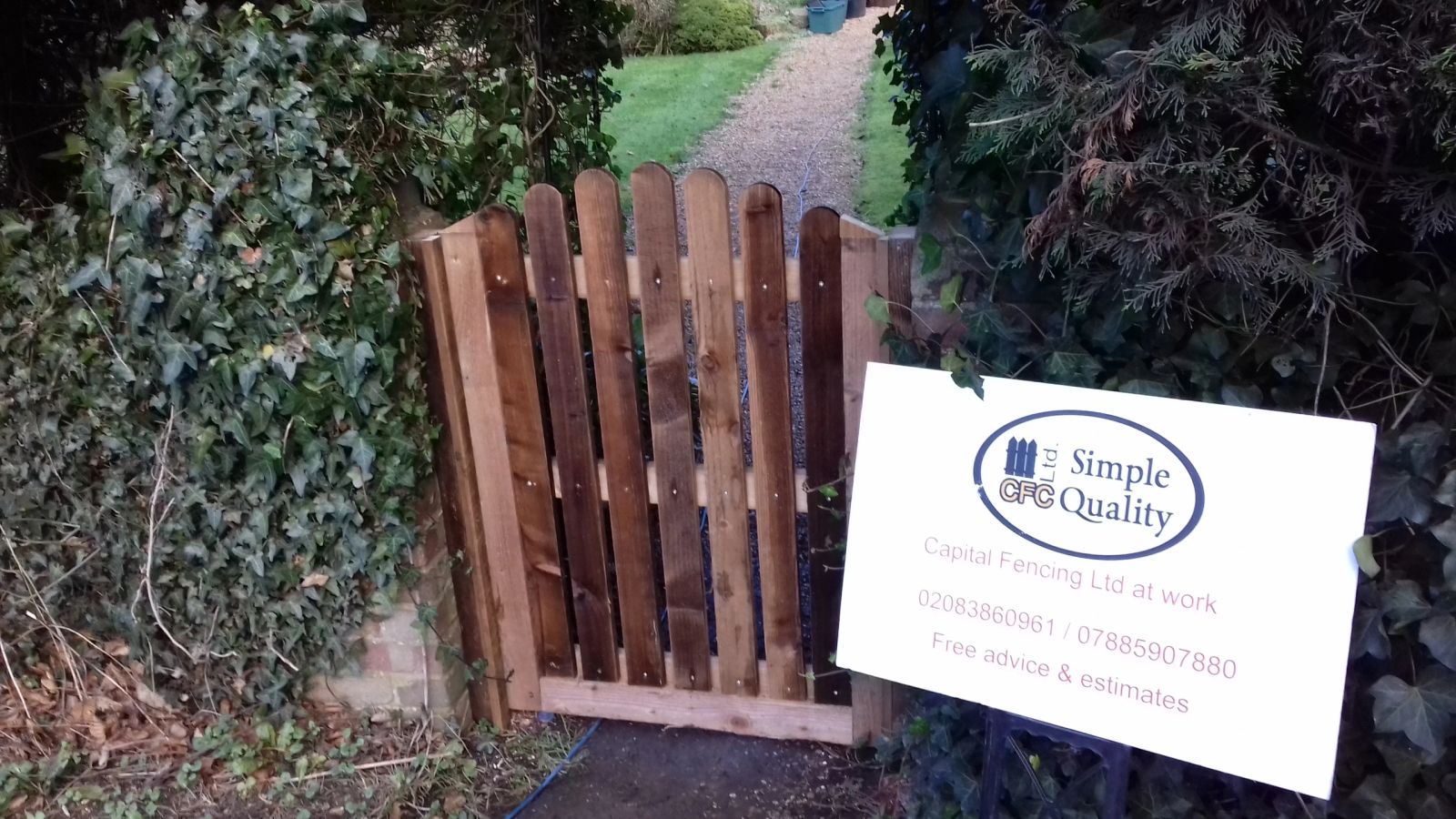
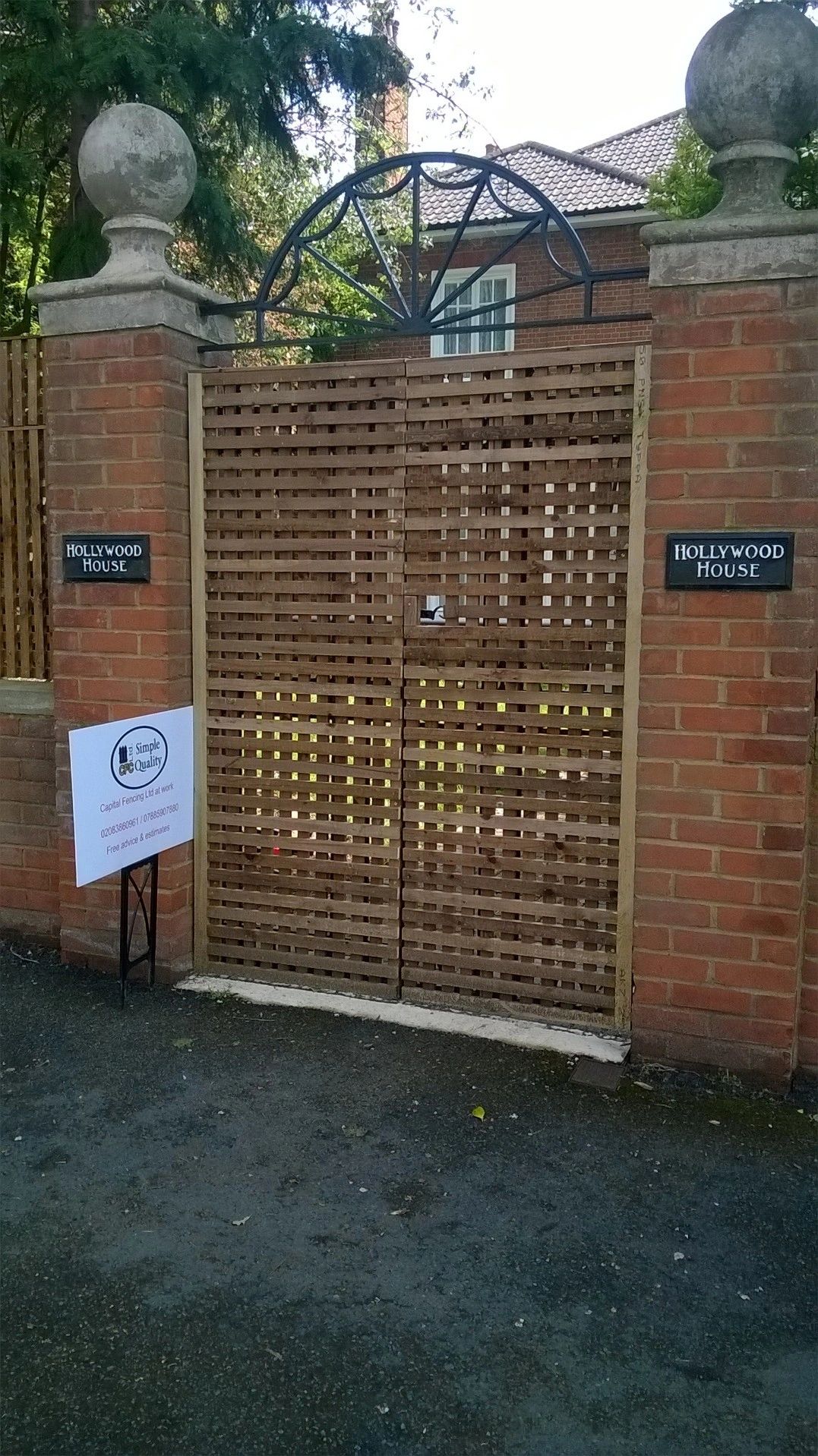
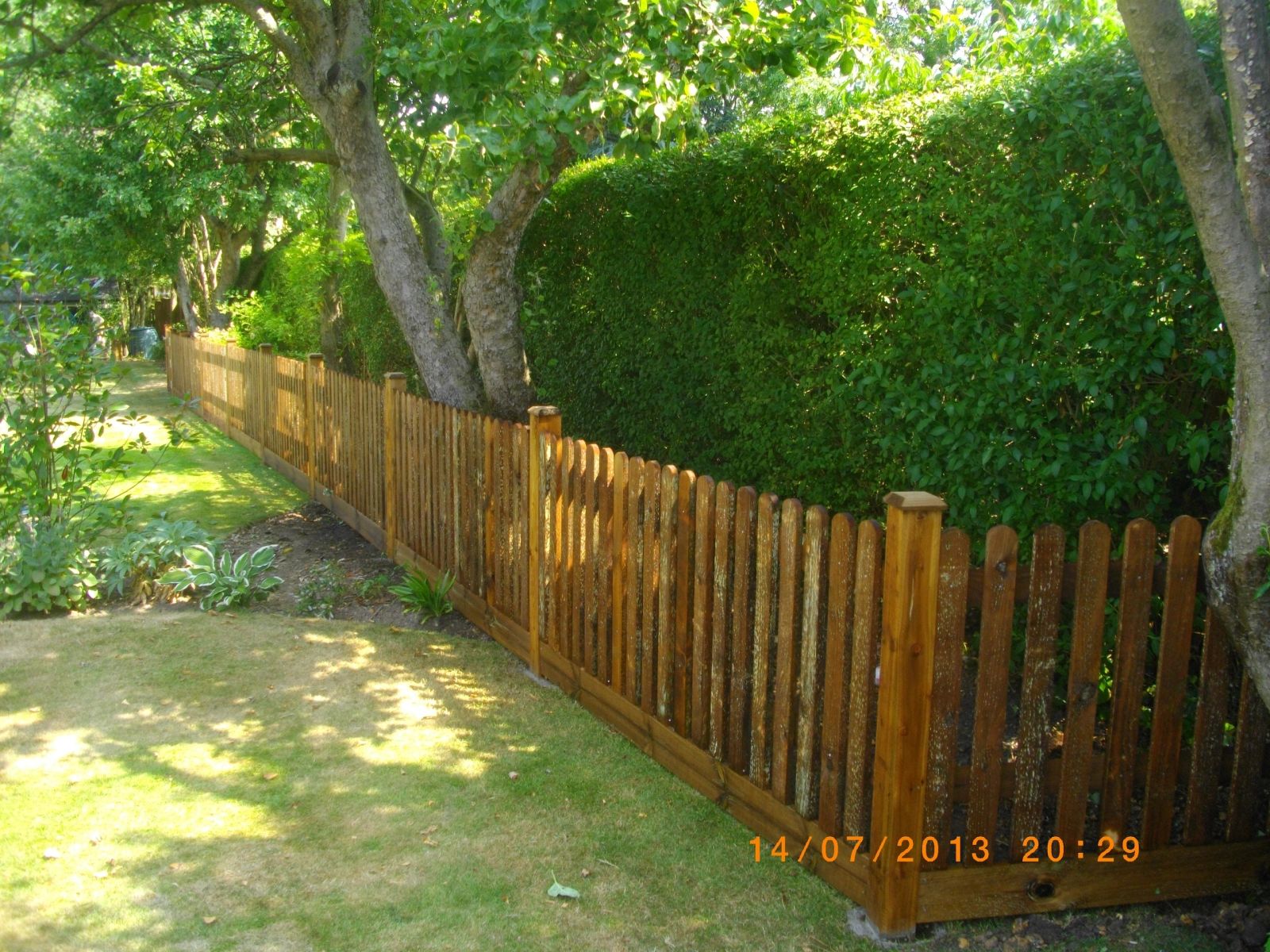
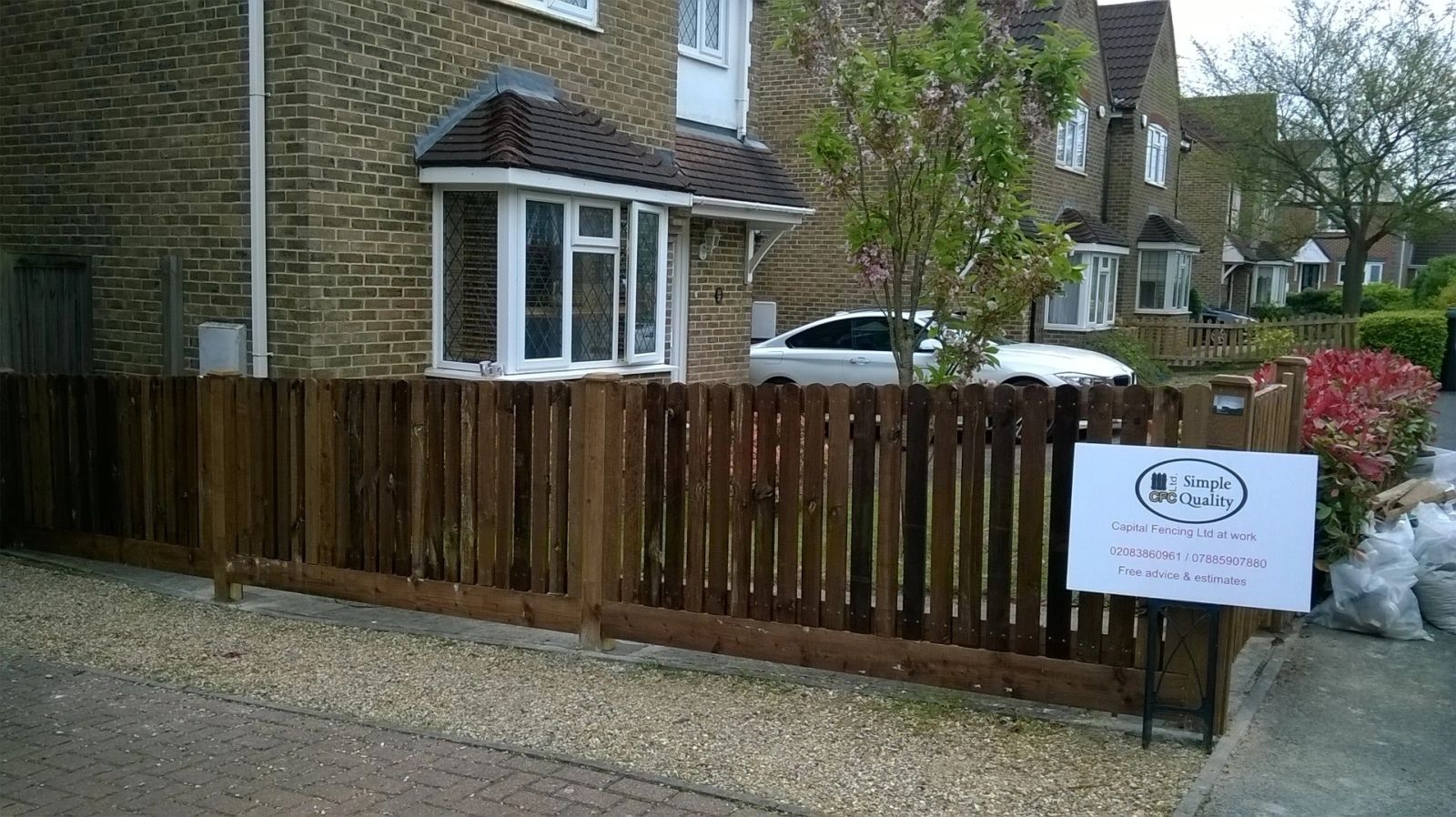
closeboard fence run installed by Capital Fencing in Edgware (HA8)panel fence install installed by Capital Fencing in Edgware (HA8)trellis-topped fence installed by Capital Fencing in Edgware (HA8)bespoke decorative fence installed by Capital Fencing in Edgware (HA8)

Sloping Garden Fencing in Edgware: the practical detail

Checking planning conditions before repairing a boundary near a listed building

A fence adjoining or visible from a listed building can be subject to planning conditions that affect even a like-for-like repair, particularly if the fence itself is considered part of the setting or curtilage.

Where that applies, it's worth confirming what's actually restricted before starting work, since some conditions only affect changes in height, material or appearance rather than a straightforward repair that keeps the fence as it was.

Washing off mould before treatment

Black mould spotting, distinct from green algae, tends to appear on shaded timber with poor airflow behind it, such as a fence panel sitting close against dense shrub planting on one side.

A proprietary fungicidal wash left to dwell before rinsing removes far more of the surface growth than a plain water wash, which can spread spores across the surface rather than lifting them off.

Cutting back planting to restore airflow behind the affected section addresses the underlying cause; treating the timber alone without improving ventilation usually sees the mould return within a year.

Prioritising repairs ahead of the windier months

A post or panel that's borderline rather than fully failed is more likely to come down completely once autumn and winter storms start, so repairs identified in summer are worth scheduling before the exposed season rather than left until something actually blows over.

This is particularly relevant on exposed boundaries or end bays that have already shown signs of movement, since those are the sections most likely to fail first under wind load.

Wildlife gaps for hedgehog movement

A small gap of around 130mm square cut into the base of a solid fence panel, sometimes called a hedgehog highway, lets hedgehogs move between connected gardens without needing to dig under or go around a continuous boundary.

This is increasingly requested by clients aware of declining hedgehog populations and is straightforward to incorporate into a new close-boarded panel, ideally agreed with the neighbouring property so the gaps line up on both sides of the boundary.

The gap doesn't compromise the fence's structural performance if it's cut cleanly within a single board rather than across a post or rail.

Licences for scaffold or skip on the highway

Placing a skip, scaffold or hoarding on the public highway, including the pavement outside a property, needs a licence from the council's highways team, arranged before the item arrives rather than after a complaint.

Licences typically specify lighting, cones or barriers around the obstruction overnight, a maximum duration, and sometimes a requirement for the skip to be removed or covered at weekends, with conditions varying between boroughs.

Unlicensed obstructions can result in a fixed penalty or a requirement to remove the item at short notice, so on any job needing highway space for materials or waste it's worth building the licence lead time into the programme.

Capping rails and finials

A capping rail along the top of a fence run does more than tidy the appearance — it sheds rainwater off the end grain of vertical boards, which is otherwise the fastest point for water to soak in and start rot.

Decorative finials on posts are largely an aesthetic choice, but a domed or sloped post cap still serves the same water-shedding purpose as a capping rail along a panel top.

Skipping a capping rail to save cost on a budget job is one of the more common reasons a fence's boards fail from the top down within a few years, even when the rest of the construction is sound.

Stumps in the fence line

An old hedge or tree stump sitting directly on the new fence line needs grinding or digging out before a post can go in, since a post set against or on top of decaying root wood will eventually settle as that timber breaks down.

Stump grinding leaves a mix of wood chip and soil that compacts poorly, so backfilling a post hole in that material generally needs a wider excavation and imported hardcore rather than reusing the arisings.

Where a stump is close to but not on the line, it's often quicker to shift the post position slightly than to fully remove a large root system.

Planed versus sawn timber faces

Sawn timber retains the rough, slightly fibrous surface left by the mill saw, which holds paint and stain better initially but can also hold moisture and dirt in the surface fibres for longer after rain.

Planed, or PAR (planed all round), timber has a smooth, machined finish that looks tidier and is more pleasant to handle, but its closed surface can mean stain sits on top rather than soaking in, needing more frequent reapplication.

Fencing components are commonly specified as sawn for structural parts like posts and rails and planed for visible features like capping, reflecting the balance between weathering performance and finished appearance.

What happens after storm damage to a fence

A fence panel blown over in a storm is usually a buildings insurance matter rather than a workmanship warranty claim, since even a correctly installed fence can fail under genuinely severe wind loading.

Photographing the damage before clearing debris, and checking whether posts have snapped versus panels simply blowing out of their slots, both help establish whether a straightforward panel swap or a full rebuild with new posts is needed.

Where storm damage recurs on the same run, it's usually a sign the original specification wasn't suited to how exposed that particular boundary is, which is worth addressing at the rebuild stage rather than repeating the same spec.

Conservation area material rules

Inside a conservation area, the council can restrict fence height, colour and material even within otherwise-permitted development limits, usually through an Article 4 direction that removes some of the usual PD rights.

The common ask is close-boarded or picket timber in a natural or traditionally painted finish rather than modern composite or bright stains, particularly on frontages visible from the street.

For a listed building itself, or land within its curtilage, listed building consent can apply even to a garden fence, so it's worth a call to the conservation officer before committing to a spec.

Cane bolts on double gates

A cane bolt is a long sliding bolt dropped into a separate ground socket some distance below the gate, giving more holding leverage against wind or knock than a short drop bolt on a wide double-gate leaf.

They're common on wider vehicle gates where a standard drop bolt alone doesn't give enough resistance to the leaf swinging in wind.

Levelling ground before building a decking substructure

A decking frame built over uneven ground without first levelling or terracing the site ends up with support posts of wildly inconsistent length, which is harder to get right and more prone to individual post settlement than a site graded roughly level first.

Removing turf and topsoil under the deck footprint rather than building over it also reduces the organic material that would otherwise decompose and settle unevenly under the structure.

Where the ground has a genuine and significant fall, working out whether to terrace the ground itself or simply vary support post heights is a decision made before any joists are cut, since it changes the whole substructure design.

Covenants restricting side and rear fence height

Some estates carry covenants limiting side or rear boundary fence height below the normal 2m permitted development figure, often to preserve sightlines or a particular street character.

These restrictions are private and enforced separately from planning law, meaning a fence could comply fully with planning rules and still breach the estate's covenant.

It's worth checking the title register for this kind of restriction on any estate where neighbouring gardens seem to share an unusually consistent boundary height.

Staining versus painting: different maintenance cycles

A translucent or semi-transparent stain penetrates the timber surface and wears gradually, so re-application every two to three years is a top-up rather than a full strip-back, and overlap patches between old and new coats blend reasonably well.

Opaque exterior paint or solid-colour masonry-style coatings sit on the surface as a film, which looks crisper initially but is prone to flaking and cracking as the timber moves seasonally, and once it starts to fail it usually needs full removal rather than a top coat.

Clients choosing paint for a specific colour should budget for that more disruptive maintenance cycle rather than assuming it behaves like a stain with a different finish.

Measuring height from natural ground level

Permitted development height limits are measured from the natural ground level on the lower side of the boundary, not from any raised bed, deck or hardstanding that's been added since, which matters wherever one side of a plot has been built up.

On a level change between neighbouring gardens, the higher ground effectively gives that side a taller fence relative to the lower garden even though the fence itself is a uniform height along its top rail.

Councils measuring a disputed fence will normally use the original survey level or historic photos where the ground has since been altered, so changing levels doesn't retrospectively legalise an over-height fence.

Transition detail from decking down to lawn or planting

The edge where a deck meets an adjoining lawn or border needs a defined transition — a fascia board with a small step down, or a gravel or edging strip — rather than boards simply stopping at soil level, which otherwise leads to soil and organic matter migrating up against the deck edge.

That buildup against an unprotected deck edge holds moisture against the timber in exactly the way a raised bed built too close to a fence does, and is a common cause of localised rot along an otherwise sound deck perimeter.

A simple edging detail agreed at the design stage costs little compared with the deck itself but noticeably protects the vulnerable soil-contact edge.

Fitting band-and-gudgeon hinges correctly

A band-and-gudgeon hinge splits into a band that's strapped across the gate and a gudgeon pin fixed to the post, and the two need to be perfectly vertical relative to each other or the gate will bind or swing awkwardly through its full arc.

Getting the gudgeon pins plumb and in line during fitting matters more with this hinge type than with a butt hinge, since there's no simple way to adjust alignment after fixing.

A physical boundary survey versus the title plan

A chartered surveyor's physical boundary survey measures the actual position of fences, walls and other features on the ground, which can differ noticeably from the general boundary shown on a Land Registry plan.

These two sources sometimes tell different stories on older plots, particularly where fences have shifted, been rebuilt slightly off-line, or the original conveyance plan was drawn at a small scale.

For a routine fence replacement this rarely matters, but where a genuine discrepancy is suspected, a professional survey carries more evidential weight than either party's assumption.

Ecology checks and protected species on boundary sites

Removing a mature hedge, dense scrub or an old fence with ivy growth can disturb species protected under the Wildlife and Countryside Act, and on larger or commercial sites a preliminary ecological appraisal is often required before consent is granted for the works.

Bats in particular can roost in gaps behind old fascia boards, dense ivy or timber sheds attached to a boundary, and disturbing a roost is an offence regardless of whether it was known about in advance.

Where a boundary feature shows signs of established wildlife use, a short ecological check before removal is a reasonable precaution on any job larger than a routine domestic fence swap.

Fast-setting post mix performance in cold, exposed conditions

Fast-setting post-fix concrete generates heat as it cures, which normally helps it set reliably even in cool weather, but on a genuinely exposed and cold site that heat can be carried away faster than it's generated, slowing or compromising the cure.

In these conditions a longer undisturbed curing period, or a mix formulated for cold-weather use, gives a more reliable result than assuming a fast-set product will behave the same as it would in a sheltered garden.

Posts loaded too soon after pouring on an exposed site — by wind rather than by the installer — are a genuine risk that doesn't apply in the same way to a sheltered, still garden.

Setting gate posts before the rest of a fence run

Gate posts carry more load and need tighter tolerances on spacing and plumb than intermediate fence posts, so they're normally set and checked first, with the rest of the run measured out relative to the confirmed gate opening rather than the other way round.

Where a gate is ordered to a bespoke size, its exact opening width has to be locked in before that section of the run is built, since a fence panel either side can absorb small adjustments far more easily than a made-to-measure gate can.

A gate post is also usually set with extra depth or a wider concrete base than a standard fence post, given the additional leverage a swinging gate applies, so it needs its own dig rather than being treated the same as its neighbours.

Spoil volume and removal

Digging a full run of post holes generates more spoil than most clients expect, particularly on clay where the dug material swells in volume compared with its compacted state in the ground.

Spoil that can't be spread thinly elsewhere on the plot without smothering lawn or borders usually needs skip or licensed grab-lorry removal, which should be agreed and costed before the dig starts rather than after a pile has built up on the lawn.

Heavy clay spoil left on grass for more than a day or two will usually kill it, so covering or removing arisings promptly matters if the lawn is staying.

Sloping Garden Fencing across HA8 is a regular run for us. We'll quote honestly, tell you if sloping-garden fencing isn't the right answer for your site, and book the job in within a week or two of a signed quote. structural spans and post depths calculated, not guessed. Roads such as Hale Lane and Whitchurch Lane are typical of the local layout. Canons Park is a useful local reference point. Canons Park, on the town's edge, was once part of the grounds of Canons House and retains covenants affecting some streets.

Get In Touch

Get My Free Quote — 24h Response

No callout fee · Free site visit · Friendly local team covering London & Hertfordshire.

Call us
07885907880
or 02036484746
Email
capital_fencing@yahoo.com
WhatsApp
Message us anytime
Area
London & Hertfordshire
Payment
Card payments accepted

Pay by debit or credit card, bank transfer or cash once the work and price are agreed. No deposit taken online.

Request a Free Quote

We'll get back to you within 24 hours.

Free Site Visit No Callout Fee
Call WhatsAppQuote