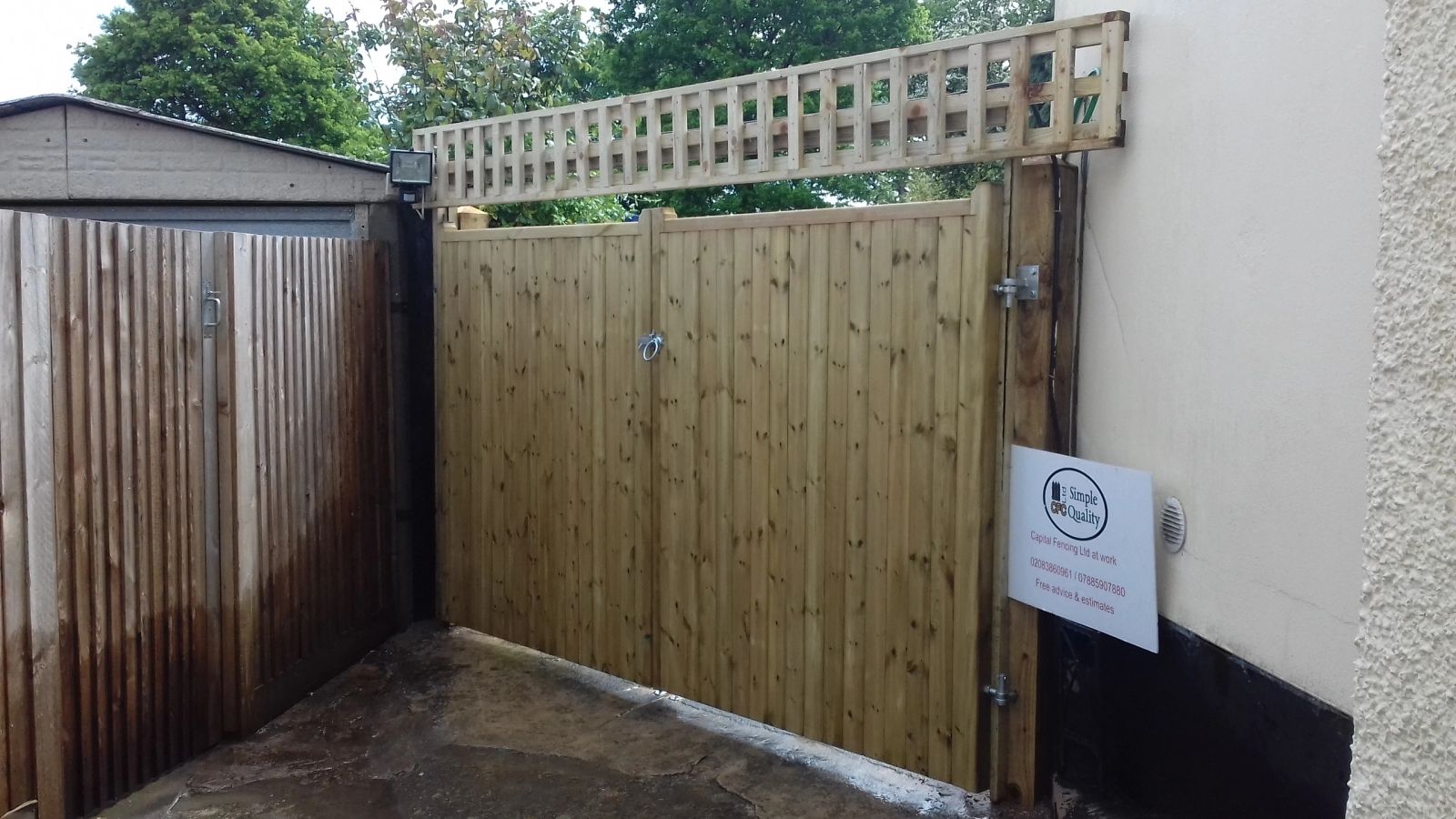
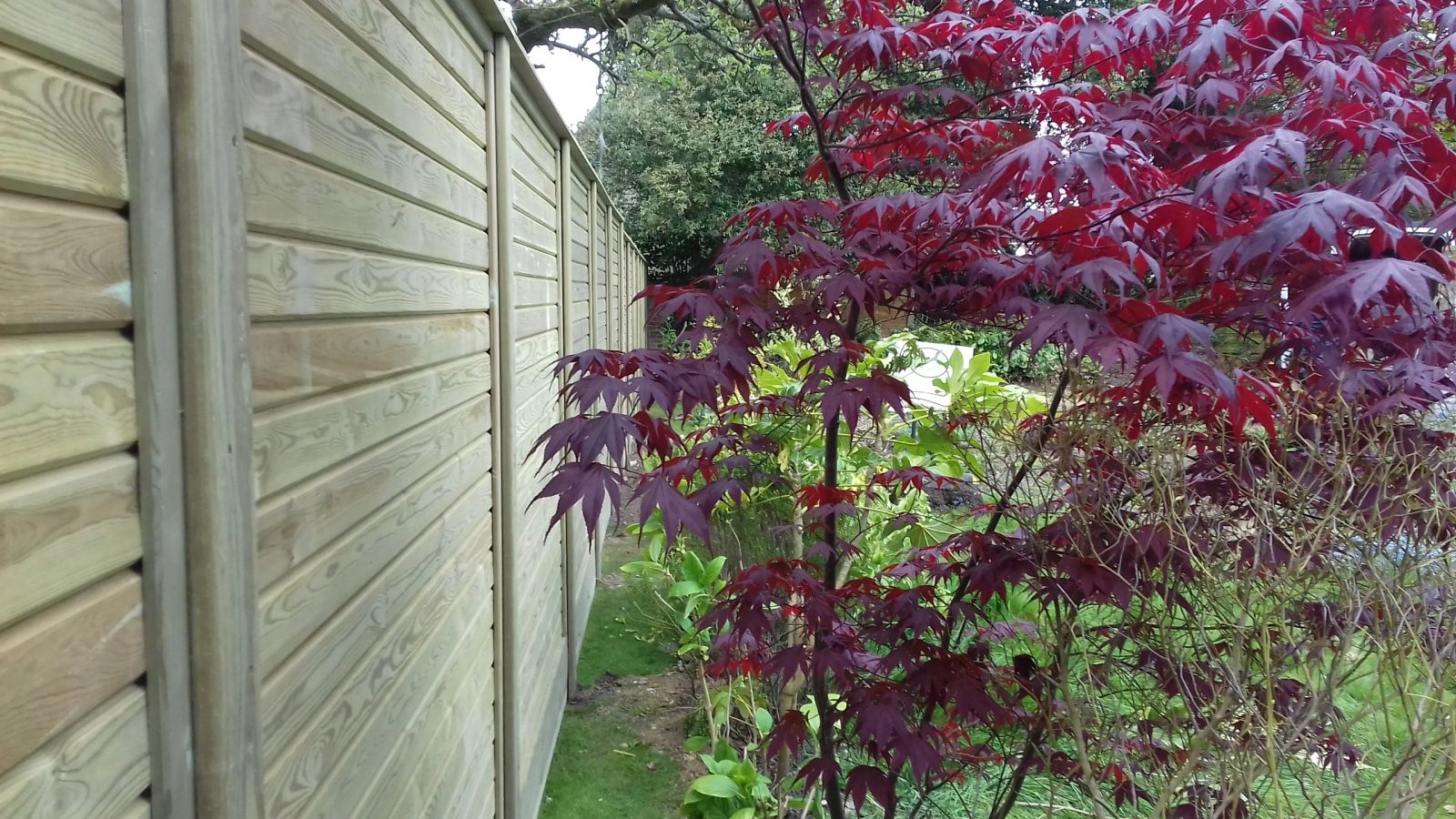
Alley gates on shared rear access
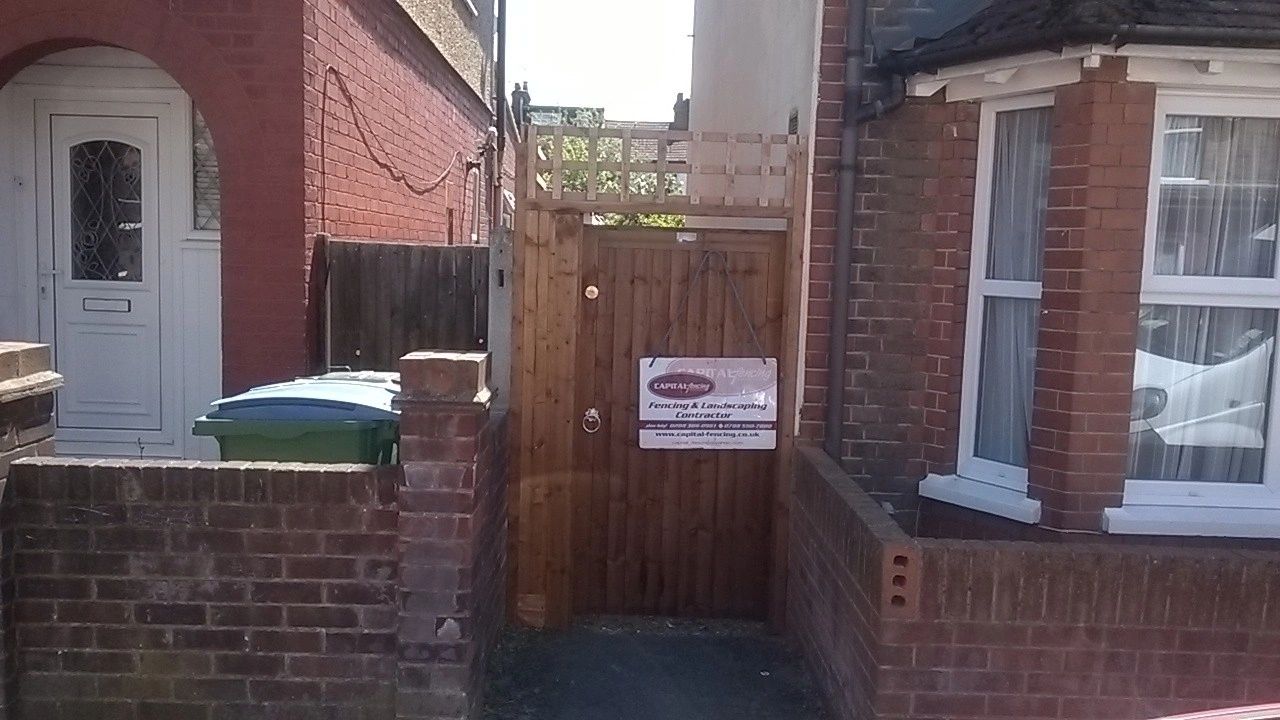
An alley gate closes off a shared rear passage between terraced properties and is typically installed and maintained under an agreement between several households or with local authority involvement, rather than by a single owner.
Repairs on these gates often need to account for multiple keyholders and heavier-than-domestic use, since several households pass through the same gate daily.
Diffraction depends on frequency
Sound diffracts, or bends, over a barrier's top edge more easily at low frequencies than at high frequencies, which is why a barrier tends to be more effective against a car's high-pitched tyre roar than against a lorry's low engine rumble.
This frequency dependence is one reason a barrier that clearly helps with one noise source can feel less effective against another nearby source with different frequency content, even at the same measured level.
Composite acoustic panels
Composite acoustic panels use layered synthetic or engineered materials rather than solid timber, and can offer consistent factory-controlled mass and sealing without the moisture-related movement of timber.
They're less common on typical domestic boundaries than timber double-skin builds, partly because run lengths involved don't always suit the panel sizes composite systems are built around.
Questions to ask any fencing contractor
Worth asking directly: who owns the boundary being worked on, what happens if buried obstructions are found, and whether waste removal and disposal are included in the price rather than charged separately afterwards.
It's also reasonable to ask what post-setting method will be used for the specific ground conditions on site, since a contractor who hasn't looked at soil type before quoting depth and concrete volume is guessing rather than specifying.
Asking how a contractor handles a shared boundary with a neighbour who hasn't been consulted is a good test of whether they've thought through the ownership question at all, rather than just the fence itself.
Quiet hours and noise considerations for works
Most local authorities publish informal guidance or byelaws on acceptable working hours for noisy construction activity, often something like weekday daytime hours with reduced or no work on Sundays.
While a single day of fence post digging rarely needs a formal noise permit of the kind larger construction sites require, persistent early or late working can still attract a noise complaint under general nuisance law.
Checking the council's standard hours guidance, and simply letting immediate neighbours know when noisier work like post drilling will happen, tends to avoid most complaints before they start.
Telling a buildings insurer about boundary changes
Some buildings insurance policies ask to be told about certain changes to a property, and a small number specifically mention boundary walls or fences depending on the insurer's wording.
This is less about the fence itself and more about making sure existing cover for storm or accidental damage properly reflects what's actually there.
Checking a policy's terms, or simply asking the insurer, before or after significant boundary work avoids an unpleasant surprise if a claim is ever needed.
The typical sequence for installing a fence run
A well-run fencing job generally sets out the full line first, digs and concretes every post before fixing anything else, and only starts hanging panels, rails or boards once every post has had time to cure.
Fixing panels to posts before the concrete has cured risks knocking a post out of true, which is why rushing straight from digging into panel-fitting on the same visit is usually avoided on anything beyond a very small repair.
Working this way also means any post that turns out to be misaligned is caught and corrected before panels are cut to fit it, rather than after, when correcting the post means undoing finished work.
Security fencing directly alongside a public footpath
A fence running hard against a public footpath needs anti-climb toppings avoided or set back for pedestrian safety, and any gate opening onto the footpath must not swing out into it, since an outward-opening gate on a shared path is both a trip hazard and often a rights-of-way issue.
Where the footpath is well used, sightlines along the path are kept open at any pinch point rather than allowed to be blocked entirely by a solid fence, partly for personal safety of path users after dark.
How fence height is measured against ground level
Height is measured from the ground level immediately adjacent to the fence, which matters on a sloping or stepped site because the same fence can appear to comply on one side and exceed a limit on the other if ground level either side differs.
Where a fence sits on a raised bank or retaining structure, some planning assessments measure from the lower ground level rather than the top of the bank, so it's worth checking the specific basis being applied before finalising a height that's close to a limit.
Cantilever sliding gate basics
A cantilever sliding gate has no ground track and instead balances on internal rollers running along a buried or surface-mounted beam, avoiding the debris problems of a ground-track design but needing a longer counterbalanced section behind the opening.
This type is more common on wider commercial or rural openings than standard domestic driveways because of the extra length needed either side of the gap.
Temporary hoarding compared with a permanent boundary fence
Temporary site hoarding erected during building works is generally treated differently under planning rules to a permanent boundary fence, often allowed for a limited period without full permission where it's clearly temporary and related to authorised works.
Problems arise where hoarding intended as temporary is left in place indefinitely once building work finishes, which can then be treated as an unauthorised permanent structure.
Anyone planning to convert temporary site hoarding into a permanent boundary feature should check whether separate permission is needed rather than assuming continuity is automatic.
Compost bins and damp concentration against a fence
A compost bin or heap placed directly against a fence line concentrates moisture and organic decay right at the timber surface, which is a common and avoidable cause of localised rot on an otherwise healthy run.
A gap of even a few hundred millimetres between the bin and the fence, or a bin set on a hard base rather than directly against timber, avoids this concentrated exposure.
It's a detail worth raising with clients at handover, since it's the kind of everyday garden use that isn't obvious as a fence maintenance issue until the damage has already occurred.