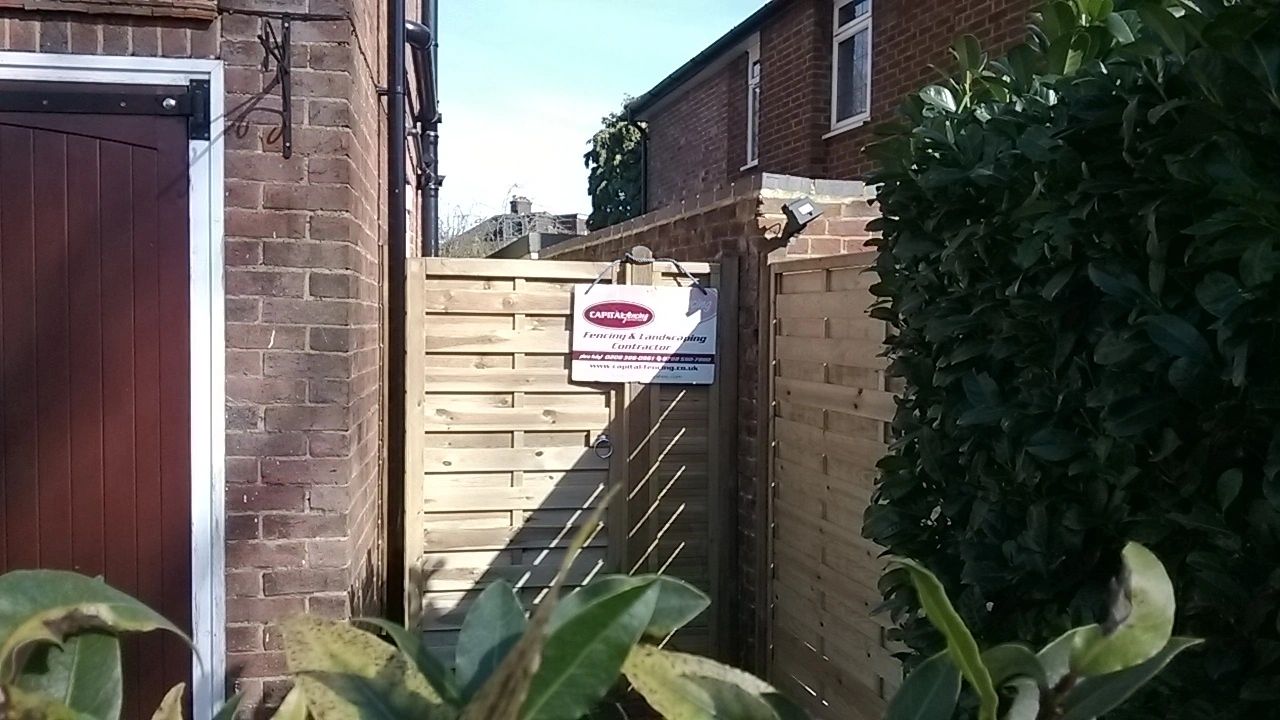
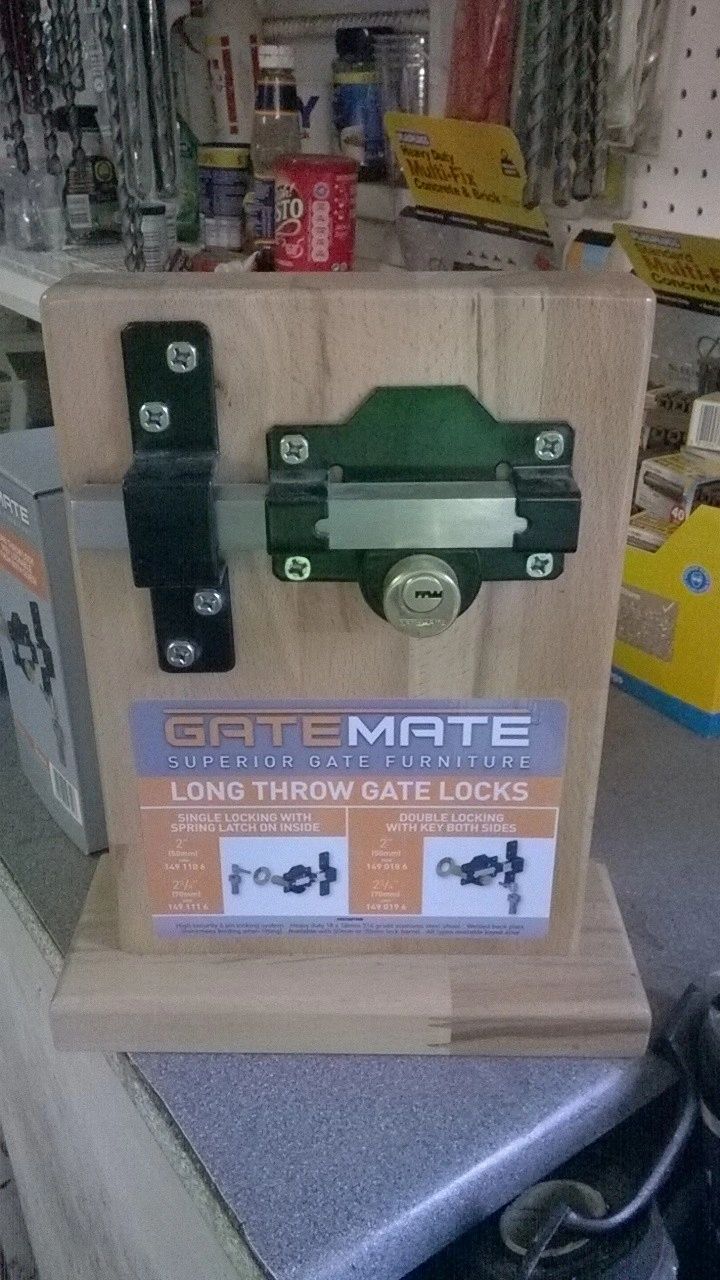
Child-safe latch heights
Positioning a latch or lock out of easy reach of a young child is common general practice on a garden gate, particularly one near water, a driveway or a road, though the appropriate height depends on the specific site and use.
This is a design choice worth discussing at repair or replacement stage rather than simply refitting a latch at its original height by default.
Post fixing for a heavier double-skin panel
A double-skin acoustic panel is considerably heavier than a standard lap-panel fence, so the post and base spec has to be upgraded to carry that extra weight over the long term, not just at installation.
A post that's undersized for the load will lean within a couple of seasons, which opens gaps at the joints and undoes the sealed-joint principle the whole build depends on.
Vehicle and impact loading on perimeter fencing
A boundary next to a car park, loading bay or farm track needs posts and panels sized for accidental impact loading, not just wind and climbing loads, because a reversing vehicle applies a very different force to the same run.
Where impact is a realistic risk, a kerb, bollard or heavier-gauge post is used to take the hit rather than relying on the fence panel itself to absorb it.
Wayleaves and easements crossing a boundary
Some plots have a legal wayleave or easement allowing a utility company access to overhead lines or buried infrastructure crossing the garden, which can restrict what's built directly above or around that strip of land.
A shared access easement giving a neighbour a right of way across part of a garden also affects fence planning, since blocking that route — even with an otherwise perfectly legal fence — can breach the easement's terms.
These details are usually in the property's title register rather than obvious on the ground, so it's worth checking before finalising a boundary line that crosses anything unusual.
Shared ownership properties and boundary consent
Shared ownership homeowners typically still need the housing association or landlord's consent for structural boundary alterations, in line with the terms of the lease, even though they own a share of the property.
This mirrors the position for full leaseholders in many respects, and skipping the consent step can create complications later, particularly when it comes to staircasing to full ownership or reselling.
Checking the specific lease terms, or asking the shared ownership provider directly, avoids doing boundary work that technically breaches the agreement.
Safety standards for automated gates
Automated gates fall under machinery safety regulations, which means a force-limiting device or safety edge to stop the gate on contact with an obstruction, and photocells or other sensors to detect someone in the gate's path, aren't optional extras.
A risk assessment covering the specific installation — proximity to a public footpath, likely pedestrian use, manual override in a power cut — should be part of any automation job, not an afterthought once the gate's already built.
Annual servicing of the motor, safety sensors and mechanical stops keeps an automated gate compliant and catches wear before it becomes a safety issue rather than just an inconvenience.
Panel orientation and sun exposure
A dense, dark-faced acoustic panel absorbs more solar heat through the day than an open fence, and on a south-facing run that can mean noticeably higher surface temperatures, which affects both comfort near the fence and the timber's long-term movement.
Lighter facing colours or a slight setback from a seating area reduce this effect, and it's worth considering alongside the purely acoustic decisions when planning a south-facing solid boundary.
Seasonal ground conditions affecting installation
Clay ground shrinks and cracks in a dry summer and swells again over winter, which can loosen a post fixed during one season and tightened again by movement in another — installation timing is factored into how deep and how set a post needs to be.
A frozen or waterlogged base isn't workable for concreting, so winter installations sometimes need a delayed pour or a temporary prop until ground conditions allow the footing to cure properly.
Protecting lawn edges along a new fence line
Digging post holes and levelling ground along a boundary inevitably disturbs a strip of lawn either side of the new line, and that strip is worth marking out and treating as a working area from the start rather than letting the disturbed area creep wider as the job progresses.
Turf lifted carefully in one piece before digging starts can sometimes be relaid afterwards rather than reseeded, which gives a faster-recovering edge than bare soil left to regrow from seed.
Where reseeding is the only realistic option, timing the final reinstatement for a season when grass seed actually establishes reliably avoids a bare strip sitting exposed for months after the fencing itself is finished.
Shared private water sources crossing a boundary
Some older rural properties share a private water supply, such as a well or borehole, with pipework running across one or more boundaries under a recorded easement.
Fencing work that might disturb this kind of shared supply pipe needs particular care, since interrupting it can affect a neighbour's water supply entirely, not just a garden feature.
Checking the title for any recorded private water supply arrangement is worth doing on older rural properties before any boundary groundworks proceed.
Matching an existing run
Extending or partially replacing a fence next to an existing run that's staying in place means matching post spacing, panel height, board profile and finish as closely as the existing materials allow.
Exact colour matching on stained or painted timber that's weathered for a few seasons is rarely possible with a fresh coat, so the realistic aim is a close, deliberate match rather than an invisible join.
Where the existing run uses a discontinued panel size or profile, the practical options are sourcing reclaimed stock, having a bespoke run made to match, or agreeing a visible but tidy transition point with the client upfront.
Industrial press and stamping noise
A stamping press or similar industrial machine produces sharp, repeated impact noise that can carry significant low-frequency content, and low-frequency impact noise is notably difficult for a garden-scale timber barrier to attenuate.
Where a residential boundary backs onto light industrial premises using this kind of equipment, a fence can reduce the higher-frequency component of the noise but rarely resolves the low-frequency thump on its own.