
How it's done
Can You Build Decking in Winter?
Last updated
The short answer
Decking can be built in winter when the ground, forecast and product requirements allow it. Frozen or waterlogged soil, unsuitable concrete curing conditions, saturated materials and slippery access may require changes or delays. Finishing oils and stains should only be applied when the timber and weather meet their instructions.
At a glance
- Main factor
- Actual ground and weather, not the month
- May delay
- Frozen ground or saturated access
- Follow instructions
- Concrete, boards and coating requirements
- Plan for
- Short days and safe stopping points
Decking can be built in winter when ground and weather conditions allow. Wet access, frozen ground, curing conditions and saturated timber need planning rather than a fixed seasonal rule.
Winter is not automatically the wrong time to build a deck. A dry, accessible garden with workable ground can be perfectly suitable, and completing the structure outside the busiest gardening months can leave it ready for warmer weather.
The season does change the risks. Rain reaches places that stay dry in summer, daylight is shorter, and frozen or waterlogged ground can alter the preparation. This guide explains what we consider before agreeing a winter installation.
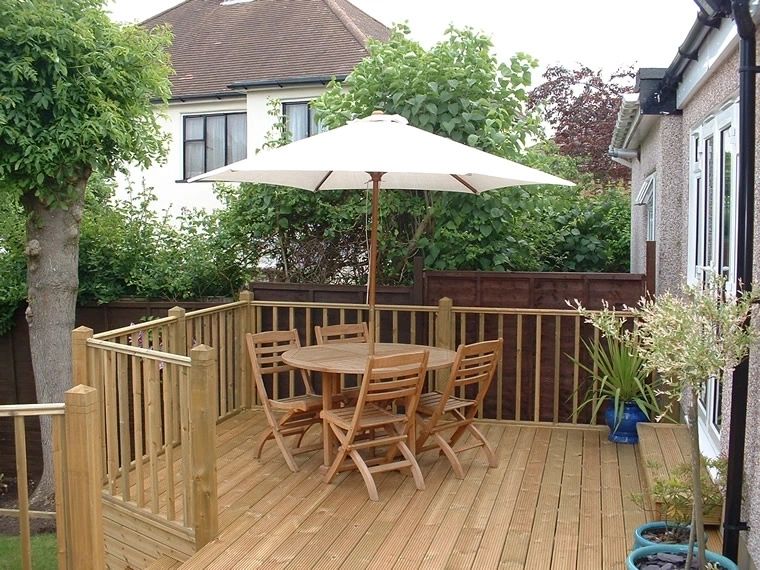
Ground conditions matter more than the month
A lawn that drains freely may remain easy to work through much of the winter, while a low clay garden can become saturated after a short wet spell. Digging and transporting materials across soft ground creates mess and can compact the area needed for the finished garden.
We look at the actual site rather than making a decision from the calendar. If support holes cannot be formed properly or the ground is frozen, waiting for improved conditions may be the responsible choice.
Concrete and cold weather
Concrete and other setting materials need conditions compatible with their instructions. Very low temperatures and frost can affect the normal curing process, while excessive water in a hole can change the mix and weaken the result.
That does not mean every cold day stops work. It means the forecast, ground temperature and product requirements have to be considered, with freshly set supports protected where necessary rather than loaded prematurely.
Timber moisture during installation
Boards and framing timber may arrive wet or absorb moisture during transport and storage. They need appropriate protection without sealing them away from all airflow. The condition of the timber at fitting affects how gaps and fixings should be approached.
A wet board can later dry and move, so installation is not judged only by how tight everything looks on the day. Suitable storage, spacing and protected cut ends remain important throughout the job.
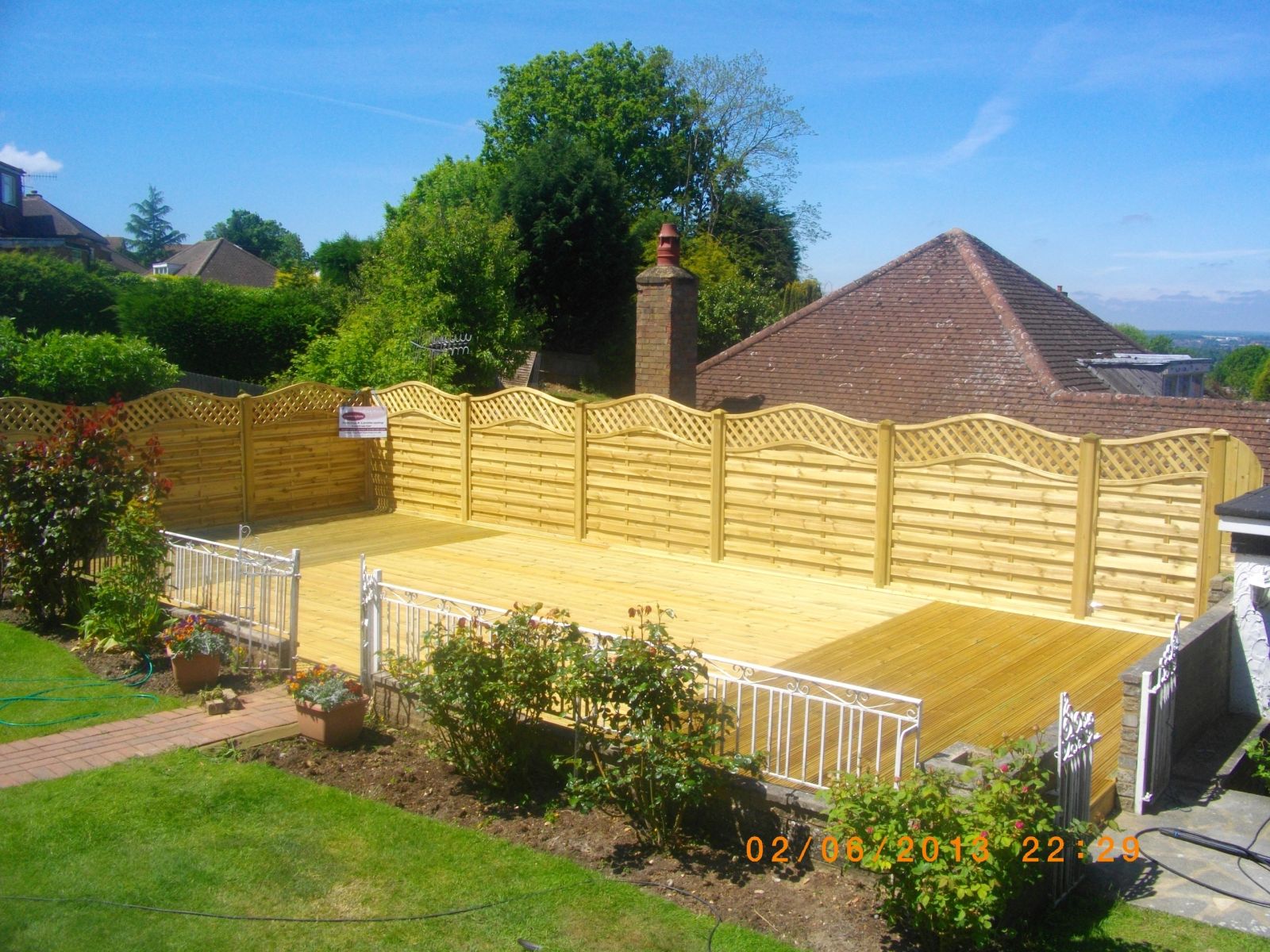
Composite boards in lower temperatures
Composite responds to temperature as well as the fixing system used. Manufacturer instructions may include particular handling, cutting and clearance requirements in colder conditions. Those details belong in the installation plan.
Cold weather does not remove the need for normal expansion allowances. A board fitted tightly in winter can behave differently when warmer weather arrives, so the product specification still governs the work.
Shorter days and safe access
There is less natural light for setting out levels, cutting accurately and clearing the site. Work may therefore be arranged differently from a summer build, with enough time left to make everything safe before dark.
Wet paths and steps also affect the route used to carry boards and tools. Protecting the house and garden, providing stable walkways and keeping the work area tidy become even more important when surfaces are slippery.
Protecting an unfinished garden
A deck build temporarily changes how the garden drains and where people can walk. Excavated soil needs placing where it will not wash back into holes or across paving, and open support positions must be managed safely overnight.
If weather interrupts the sequence, the partially built frame and stored materials should remain secure. A clear plan for stopping and restarting avoids rushing a stage simply because rain is expected.
Finishes and when to apply them
Paints, oils and stains have their own temperature and moisture requirements, and newly fitted treated timber may also need time before its first coating. Winter completion of the structure does not mean a finish must be applied immediately in unsuitable conditions.
- Follow the coating product's drying guidance
- Use clean, dry timber when applying a finish
- Do not trap visible surface moisture under a rushed coat
- Separate the structural build from any later finishing visit
Planning a winter quotation
Send current photographs of the garden, access route and proposed deck area, including any places that already hold water. Rough dimensions and the board material you prefer help us discuss the likely sequence.
We can then give a written estimate and explain any weather dependent stages. A visit confirms the ground and levels once you are ready, with timing based on the site and forecast rather than a promise that winter weather will cooperate every day.
Frequently asked
Is winter a bad time to install decking?
Not automatically. Suitable ground and weather can allow a good installation, while frozen or waterlogged ground and unsuitable curing conditions may require delays.
Can deck footings be concreted in cold weather?
Only when conditions and the product instructions allow proper placement and curing. Frost, excess water and early loading need particular care.
Can I oil new decking in winter?
Only if the timber and weather meet the coating manufacturer's requirements. It is often better to separate finishing from the build than coat damp timber in poor conditions.
Will wet timber cause problems later?
Boards and framing need suitable storage and installation details that allow for subsequent movement. Good gaps, fixings, ventilation and protected cuts all matter.
Planning a deck before spring?
Send current photos of the ground and access. We will explain the build sequence and which stages depend on suitable weather.