
Care & longevity
How to Look After Decking Through the Year
Last updated
The short answer
Looking after decking comes down to three habits: keep the gaps between boards clear so water drains, clean the boards once or twice a year, and re-oil or stain timber when the finish wears. Composite needs cleaning but no oiling. A yearly walk round to check for soft board ends, lifted screws and loose rails catches problems early.
At a glance
- Most important job
- Keep board gaps clear of leaves and soil
- Cleaning
- Brush and mild deck cleaner, once or twice a year
- Timber finish
- Oil or stain in a dry spell when it wears
- Composite
- Clean only, no oiling
A deck rarely fails all at once. It fails at the dirty gaps, the shaded corner and the board end nobody looked at, so a little regular attention goes a long way.
Most of the decks we are asked to repair across London and Hertfordshire were built well enough. What let them down was a few years of leaves packed between the boards, a planter left in one spot and a finish that wore away without anyone noticing. None of that is expensive to prevent.
This guide covers the routine care we suggest for the decks we build, in softwood, hardwood and composite. It is written for owners who want to do the simple jobs themselves and know when a problem has gone past cleaning and needs a repair.
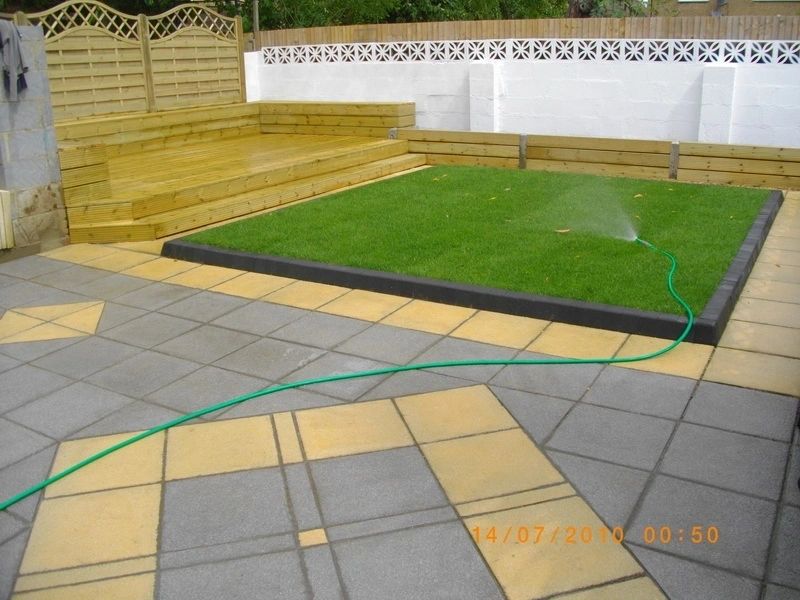
Keep the gaps open
The gaps between boards are there so rain can drain away and air can reach the frame underneath. Once they fill with leaves, soil and seed husks, water sits on the board edges and the joists below stay damp for days after a shower. That is where softening and rot usually start.
A stiff brush along the gaps in late autumn, and again after any heavy leaf fall, does most of the work. A thin putty knife or a purpose made gap tool clears anything wedged in. Look under the deck too if you can reach: a heap of debris against the posts traps moisture where you never see it.
Cleaning timber and composite boards
Timber decking only needs a sweep and a wash with warm water and a mild deck cleaner, scrubbed along the grain. Green growth on shaded boards is what makes a deck slippery, so those areas deserve more attention than the sunny middle of the deck.
Composite boards are cleaned the same way, with a soft brush and the cleaner the board maker recommends. Avoid harsh scrubbing pads on capped composite, because the outer cap is what protects the core. A pressure washer can be used on some boards on a low setting held well back, but on softwood it can raise the grain and leave the surface rough, so we usually suggest a brush instead.
Oiling, staining and treating softwood and hardwood
Pressure treated softwood is protected inside the timber, but the surface still weathers. A decking oil or stain applied to a clean, dry deck slows the greying, sheds water and keeps the boards from drying out and splitting. Hardwood such as iroko can be oiled to keep its colour, or left to silver naturally if you prefer that look.
Coat in a dry spell when no rain is due for a day or so. Thin coats soak in better than one heavy coat that sits on top and goes sticky. Composite boards do not need oiling at all, which is a large part of why people choose them.
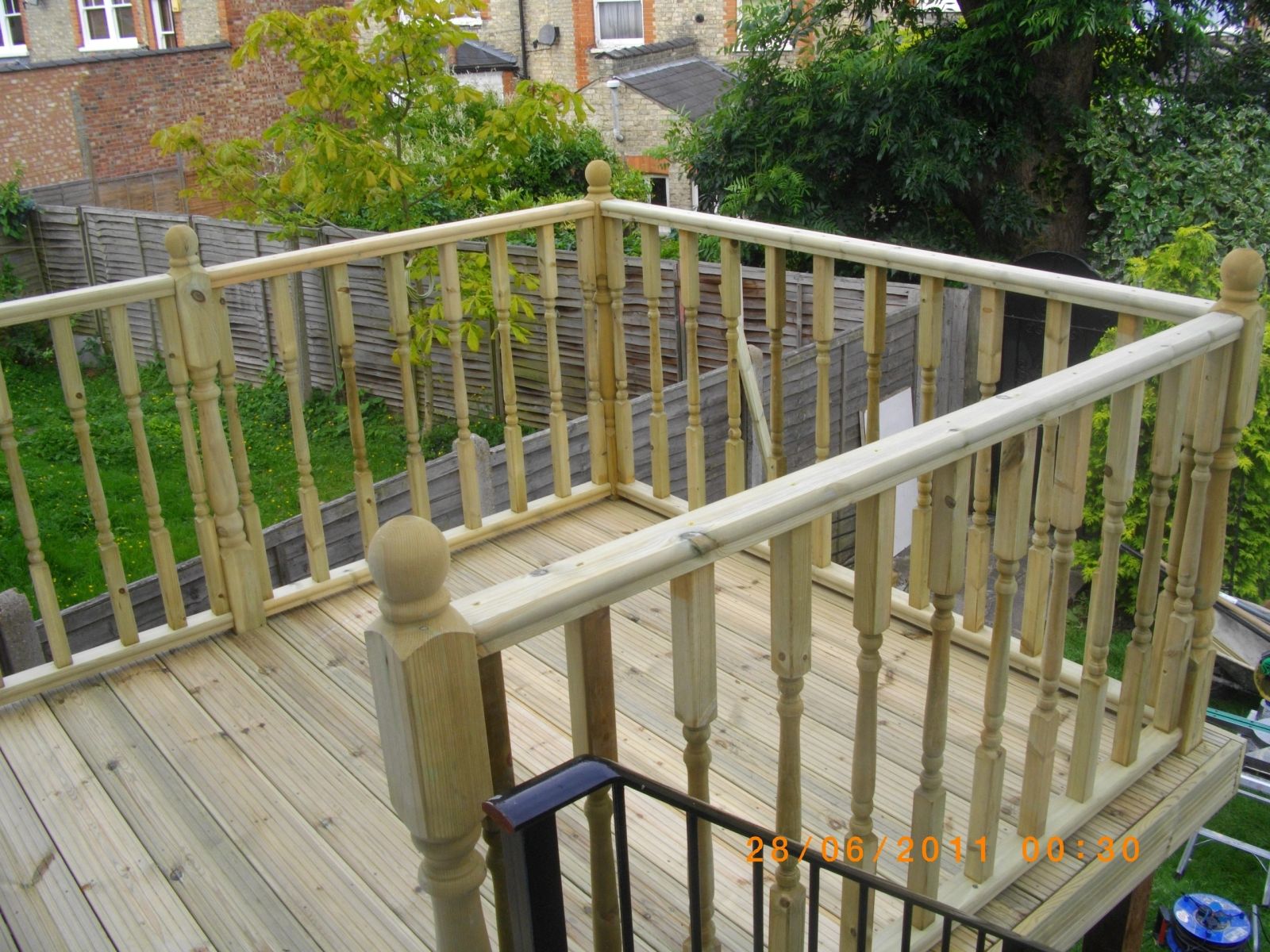
The checks worth doing each spring
Once a year, walk the deck slowly and look and listen. A short list catches nearly everything before it becomes a repair.
- Press board ends with your heel: a soft or spongy end needs looking at
- Listen for new creaks or movement underfoot
- Check screw heads have not lifted above the surface
- Shake balustrade posts and handrails for any looseness
- Look at steps, where wear and water collect first
- Lift planters and furniture to check the boards beneath
Winter and shade
North facing and tree shaded decks stay wet longest, grow algae fastest and suffer most from frost. Moving pots onto feet, trimming overhanging branches and clearing leaves before winter all help. Salt and metal shovels can mark boards, so a plastic shovel and a plain brush are kinder if you need to clear snow.
When care is no longer enough
If boards are soft right through, the deck bounces between joists, or a joist itself has rotted where it meets a post, cleaning and oiling will not fix it. At that point the deck needs a repair or partial rebuild. Send us photos of the problem areas and the deck as a whole, with rough measurements, and we will tell you what we think is needed and send a written estimate, then visit to confirm before any work is agreed.
Frequently asked
How often should decking be cleaned?
A sweep whenever leaves build up, and a proper wash and scrub once or twice a year, usually in spring and again before winter. Shaded areas may need it more often.
Should I oil new decking straight away?
Pressure treated softwood is often best left to weather for a while before the first coat so the finish soaks in. Follow the timber supplier's advice for the boards you have. Hardwood can be oiled once it is clean and dry.
Can I pressure wash my deck?
Some composite and hardwood boards tolerate a low setting held well back, but it can roughen softwood. A stiff brush and deck cleaner are safer for most timber decks.
Does composite decking need any maintenance?
It needs cleaning and the gaps kept clear, but no oiling or staining. The frame underneath still benefits from good drainage and airflow.
Why is my deck slippery?
Usually green algae on shaded, damp boards. Regular cleaning, more light and better drainage reduce it. Our slippery decking page covers this in more detail.
Want this priced properly for your garden?
Photos first, then a written estimate across London and Hertfordshire, a written specification, and a fixed price. No obligation.