
Comparisons
Concrete or Timber Gravel Boards: Which Should You Use?
Last updated
The short answer
Concrete gravel boards do not rot, so they suit damp ground, soil banked against the fence and slotted concrete posts. Timber gravel boards blend with the fence, are lighter and easier to cut, and are the usual match for timber posts and closeboard fencing. Either way, the board keeps the panel off the soil so it lasts longer.
Official guidance: Planning Portal: fences, gates and garden walls
At a glance
- Concrete boards
- No rot, heavy, pair with concrete posts
- Timber boards
- Blend in, lighter, pair with timber posts
- Job of the board
- Keep panels and boards off the soil
- Not for
- Holding back a large bank of soil
A gravel board is the cheapest part of a fence and one of the most important. Choosing the right one depends mainly on your posts.
A gravel board is the plank that sits along the bottom of a fence, between the posts and below the panels or boards. Its job is to take the contact with soil, damp and strimmers so the fence above does not have to. When it is missing, the bottom of every panel rots first.
We fit concrete and timber gravel boards on new fences and add them under existing ones across London and Hertfordshire. Here is how we decide which to use.
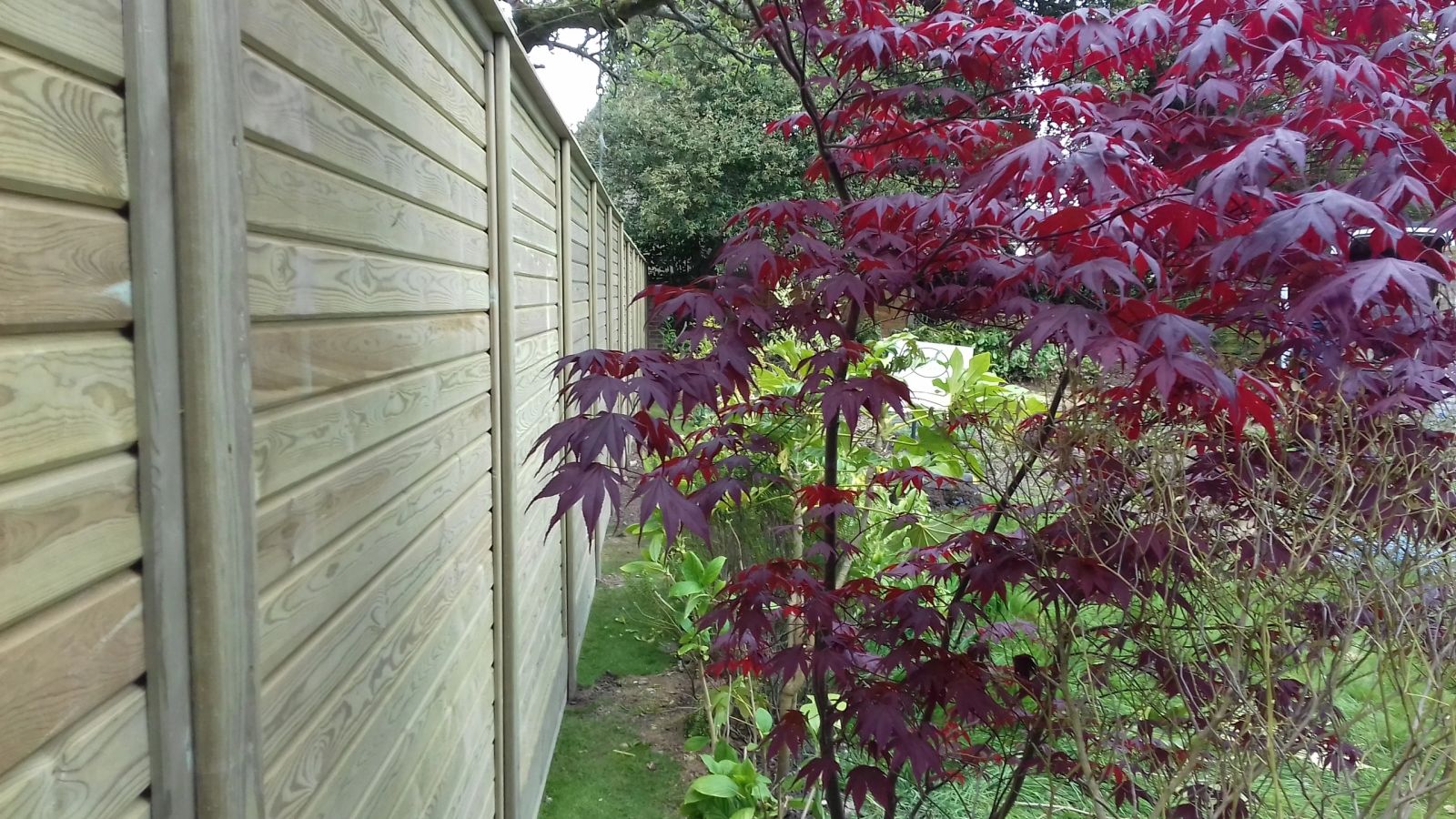
Why a fence needs a gravel board
Soil holds water. Any timber resting on it, or buried in it, stays wet and rots far faster than the rest of the fence. A gravel board lifts the panel clear of the ground, so the panel can dry out after rain. If the board itself eventually fails, it can be replaced on its own rather than replacing the whole panel.
Concrete gravel boards
Concrete boards do not rot, so they suit fences on damp ground, against raised beds and anywhere soil is banked up against the bottom of the fence. They pair naturally with slotted concrete posts, sliding down into the post slots beneath the panel.
The drawbacks are weight and looks. Concrete boards are heavy to handle, can crack if knocked hard, and some owners find a grey strip along the bottom of a timber fence less attractive. Planting along the base soon softens it.
Timber gravel boards
Pressure treated timber boards blend in with the fence and are the usual choice with timber posts and on closeboard fences, where they are fixed to the posts or to small timber blocks called cleats. They are lighter, easier to cut to slopes and simpler to replace.
Timber still rots in the end where it touches soil, so it lasts best when the ground is kept below the top of the board and not heaped against it.
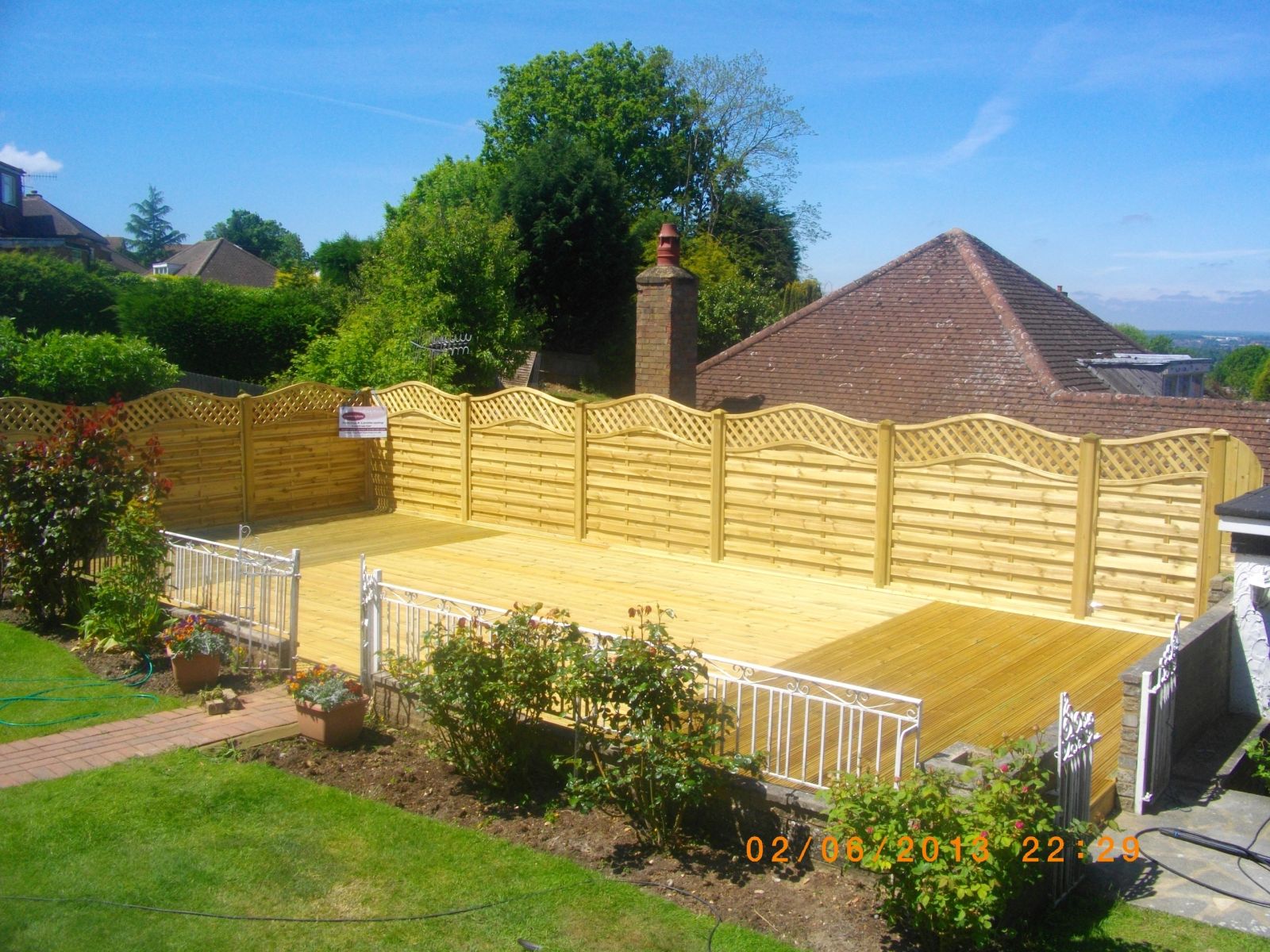
Matching boards to posts
The posts usually make the decision.
- Slotted concrete posts: concrete boards slide into the slots
- Timber posts: timber boards fixed to the posts or cleats
- Closeboard fences: timber boards are standard
- Retained soil higher on one side: concrete copes better
Height, slopes and retaining soil
A gravel board adds to the overall fence height, so panel and board heights are planned together against the height limits on the Planning Portal. On slopes, boards are cut or stepped to close the gaps under each panel.
A gravel board is not a retaining wall. If one side of the boundary is much higher, the soil pressure can push boards and posts over in time. That situation may need a proper retaining structure, and we will say so when we see it.
How long each type lasts
Concrete boards normally outlast the fence above them, provided they are not cracked by a heavy knock or frost getting into a damaged corner. Timber boards wear out sooner than concrete because they take the worst of the wet, but they protect the panel while they do and are cheap and simple to swap. On a timber fence, replacing tired gravel boards every so often is a normal part of keeping the fence going.
Keeping soil, bark and gravel below the top edge of either type of board helps it last much longer.
Adding gravel boards to an existing fence
It is often possible to add gravel boards under a fence whose panels are still sound but sitting on the soil. Depending on the posts, the panels may be lifted slightly or the boards fitted below them. Send photos of the bottom of the fence and its length, and we send a written estimate and visit to confirm.
Frequently asked
Are concrete gravel boards better than timber?
Concrete boards do not rot, so they last longer on damp ground. Timber boards look more natural and suit timber posts and closeboard fences.
Can you put concrete gravel boards with wooden posts?
It can be done with suitable brackets, but timber boards are the simpler and more usual match for timber posts.
Can gravel boards hold back soil?
Only a little. Where the ground is much higher on one side, a retaining structure is needed rather than a gravel board.
Do gravel boards count towards fence height?
Yes. The total height of board, panel and any trellis is what counts against planning limits.
How high should a gravel board be?
Boards come in a few heights. A taller board lifts the panel further from the soil and suits ground that is uneven or slightly higher on one side, but it adds to the total fence height, so we choose it with the panel height in mind.
Can a rotten gravel board be replaced without moving the panel?
Often, yes. With concrete posts the panel may need lifting slightly to slide the new board in. With timber posts the old board is unscrewed and a new one fixed in its place.
Want this priced properly for your garden?
Photos first, then a written estimate across London and Hertfordshire, a written specification, and a fixed price. No obligation.