
How it's done
Fence Panel Sizes: Widths, Heights and Posts
Last updated
The short answer
The standard fence panel is 1.83m wide, the old 6ft size, and heights run from low front-garden panels up to around 1.8m. Posts are set at panel-width centres, so a run is planned in 1.83m bays with one cut panel at the end. For a 1.8m fence, a concrete post around 2.4m long is usual, with roughly 600mm in the ground.
Official guidance: Planning Portal: fences, gates and garden walls
At a glance
- Standard width
- 1.83m (6ft)
- Heights
- Low front-garden panels up to around 1.8m
- Post for a 1.8m fence
- Around 2.4m concrete post, roughly 600mm in the ground
- Trellis topper
- Usually adds 300–450mm
One width, several heights, and a boundary that rarely divides evenly. Knowing the standard sizes makes a fencing quote far easier to read.
Most people meet fence panel sizes for the first time when a merchant asks what height they want and they realise they have never measured the boundary. Panel fencing is a modular system: the width is almost always the same, the height is your choice within the rules, and the posts and gravel boards are sized to suit.
This guide sets out the sizes we work to when we supply and fit panel fencing across London and Hertfordshire, and how a real boundary becomes a set of panels. We supply and fit panels as a complete job rather than selling them for self-fitting, so the measuring described here happens on every run we price.
The standard width and why it matters
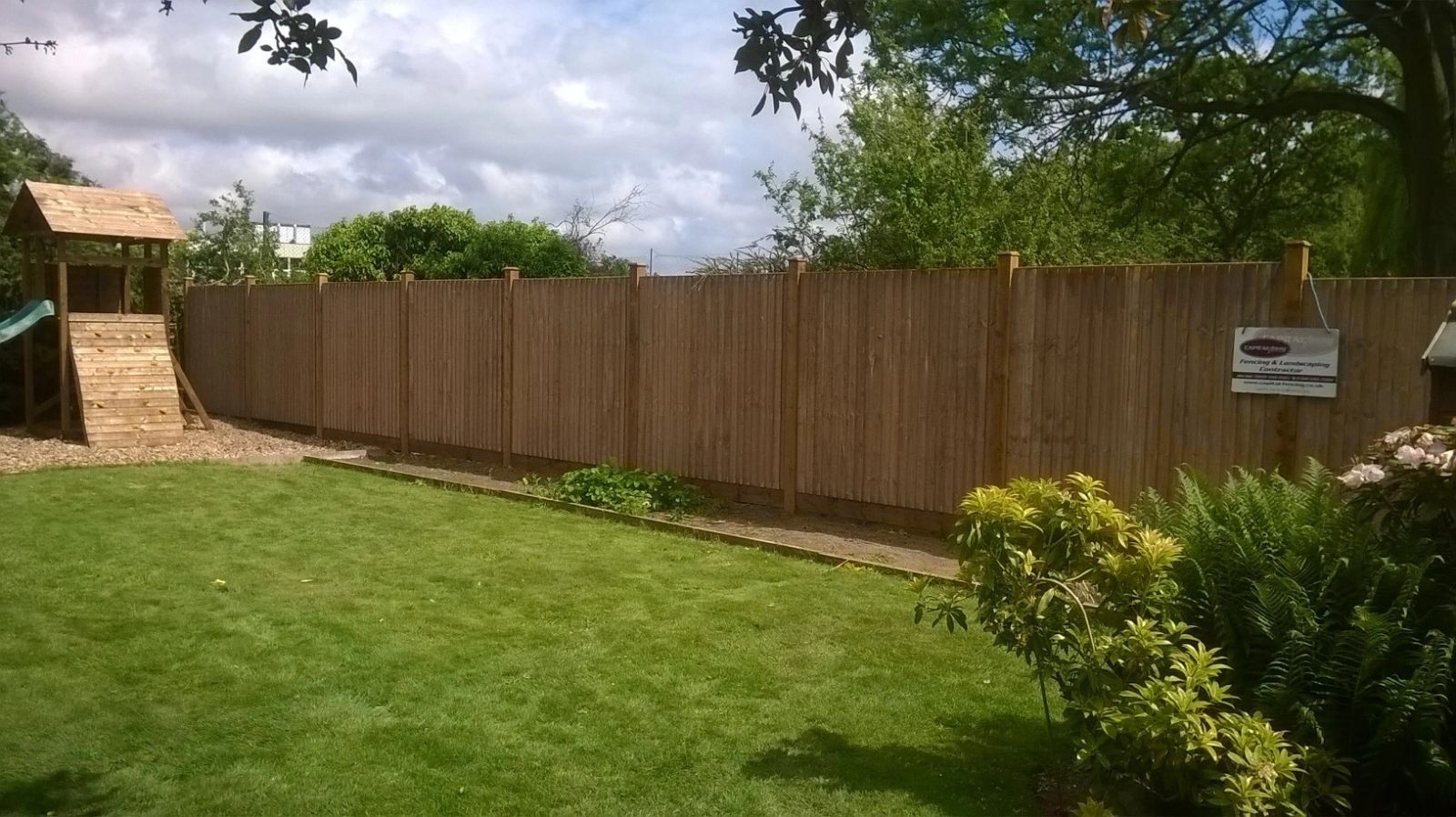
Standard panels are 1.83m wide, the old six-foot size. That one figure sets everything else: where the posts go, how many panels a run needs and where the cut panel falls. Because the width is fixed, a run is planned as a string of 1.83m bays from a fixed starting point, usually the house wall or a corner post.
Very few boundaries divide neatly into whole bays. The last bay is normally shorter, so a panel is cut down to fit it. Done properly, the cut panel is re-framed so it stays rigid, and it sits at the end of the run where it is least noticeable rather than in the middle.
Heights: what is available and what is allowed
Panel heights run from low front-garden panels up to around 1.8m for a full-height back-garden fence. The height you choose is limited by two things: what the boundary has to do, and the planning rules.
Under the national permitted development rules described by the Planning Portal, a fence can normally be up to 2m high measured from ground level, or 1m where it is next to a road used by vehicles or its footpath. A full-height panel sitting on a gravel board, or a panel with a trellis topper, can come close to the 2m figure, so the total is worth checking before you order. Listed buildings, Article 4 directions and planning conditions can tighten the limits, and your council is the place to confirm them.
Posts sized to the panel
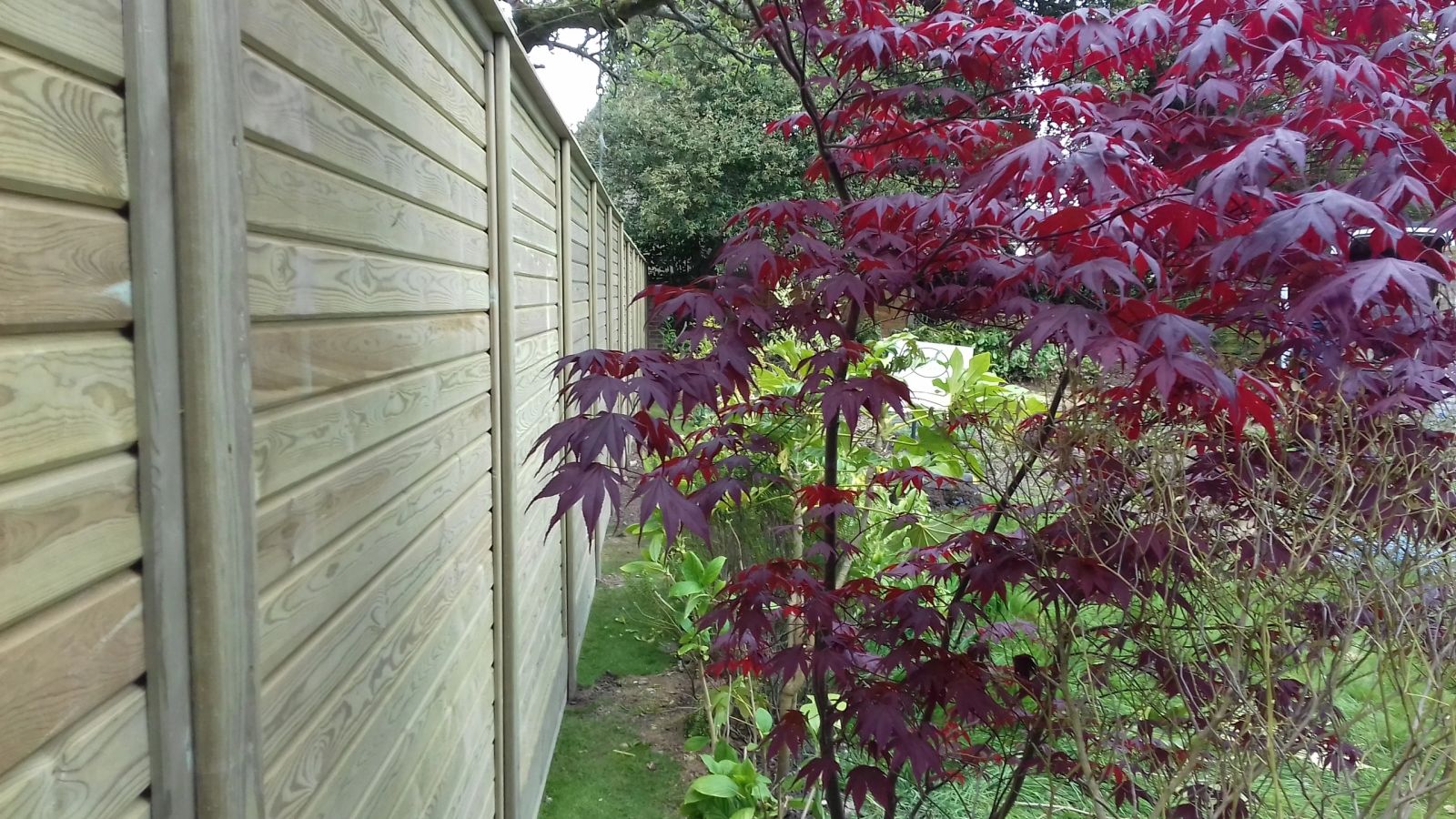
Posts have to be long enough to carry the panel above ground and still have a sound depth below it. For a standard 1.8m fence the usual concrete post is around 2.4m long, with roughly 600mm in the ground and a concrete base set around it. Taller or more exposed fences need longer posts and deeper bases.
- Intermediate posts carry a panel on each side
- End posts finish a run against a wall or a gate
- Corner posts take panels meeting at a right angle
- Gate posts are chosen for the gate, not for the panel beside it
Gravel boards and the gap at the bottom
A gravel board sits under each panel between the posts and keeps the timber clear of the soil. It also adds to the overall height, which is why panel height and board height are worked out together rather than separately. On sloping ground the panels step down the slope, and the gravel boards are cut to close the wedge-shaped gaps that open under each step.
Trellis toppers
A trellis topper fixed above a panel usually adds 300–450mm of height, softens the top line and gives climbers something to grow on. It adds to the total height of the boundary, so if a topper would take the fence over the limits above, check with your council before fitting it. The posts also need to be long enough to reach the top of the trellis.
Measuring your boundary for an estimate
For a written estimate, send the length of each straight leg of the boundary, the height you want, photos showing both ends and any gates, slopes or obstacles, and your postcode. We work out the bays, cut panels and post types from that, then check the measurements on a visit before the final written quote, so the panel count is based on your ground rather than a guess.
Frequently asked
What size is a 6ft fence panel?
A 6ft panel is the standard 1.83m wide. Height is a separate choice, up to around 1.8m for a full-height garden panel.
Can fence panels be cut to size?
Yes. The end panel of a run is usually cut to fit the last bay and then re-framed so it stays rigid. We do this as part of fitting rather than leaving a gap or an overlap.
What height fence panel can I have without planning permission?
Under the Planning Portal's general guidance, a fence can usually be up to 2m from ground level, or 1m next to a road used by vehicles or its footpath. Gravel boards and trellis add to the total, and local restrictions can apply.
Are lap, closeboard and decorative panels the same size?
The width is normally the same 1.83m, so different styles can share the same post layout. Thickness and weight differ, which affects the posts and fixings we choose.
Want this priced properly for your garden?
Photos first, then a written estimate across London and Hertfordshire, a written specification, and a fixed price. No obligation.