
How it's done
How Far Apart Should Fence Posts Be?
Last updated
The short answer
For a panel fence, posts are set at the panel width, so standard 1.83m panels mean posts at 1.83m centres. Closeboard and other site-built fences use posts at roughly 1.8m to 2.7m centres, depending on the rails and boards. Slatted fences, exposed gardens and tall runs need posts closer together, and every gate gets its own posts.
At a glance
- Panel fence
- 1.83m centres, set by the panel
- Closeboard
- Roughly 1.8–2.7m centres
- Closer spacing
- Slatted, tall or exposed runs
- Gates
- Separate posts sized for the gate
Post spacing is decided by what hangs between the posts and how much wind it catches, not by one rule for every fence.
Post spacing is one of those details nobody notices until a fence starts to sag between posts, or the last panel will not fit the last gap. The right spacing depends on the type of fence, its height, how much wind it catches and whether a gate sits in the run.
These are the spacings we work to on garden fences across London and Hertfordshire. Treat them as a guide to how a fence is laid out, not a substitute for measuring the boundary itself.
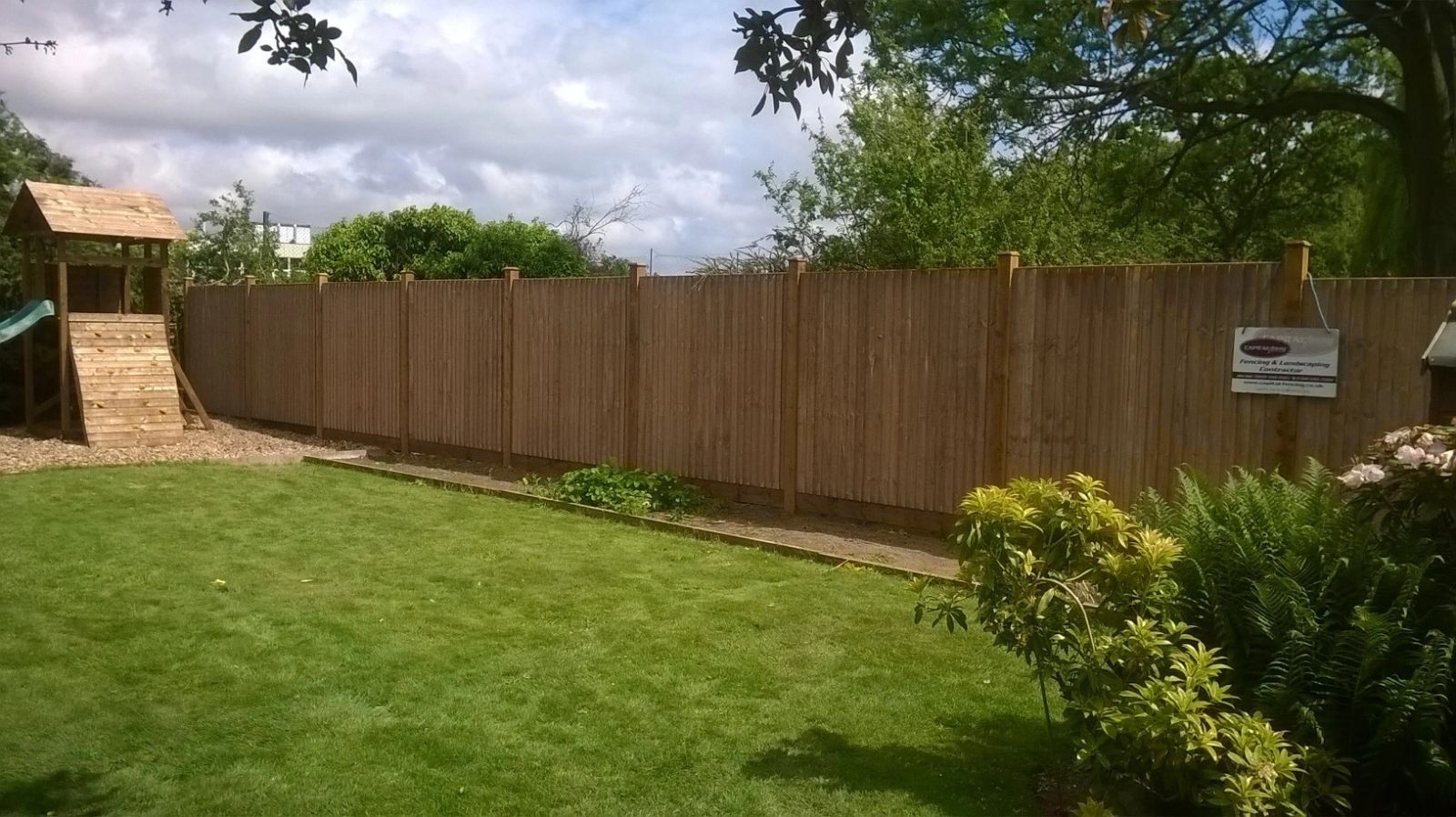
Panel fences: the panel sets the spacing
With panel fencing the decision is made for you. Standard panels are 1.83m wide, so the posts sit at 1.83m centres and the panels slot between them. Slotted concrete posts hold the panel edges, which is why accuracy matters: a post set slightly too wide leaves a panel loose in its slot, and one set too close means the panel will not go in at all.
Setting out starts from a fixed point, normally the house or a corner, and works along the run so that any short bay falls at the far end, where a cut panel fills it neatly.
Closeboard and other site-built fences
Closeboard is built on site from posts, arris rails and feather edge boards, so the spacing is more flexible. Post centres of roughly 1.8m to 2.7m are typical, set by the length and strength of the rails and the height of the fence. Shorter bays make a stiffer fence; longer bays use fewer posts but put more load on each rail.
Tongue and groove and other boarded designs work the same way: the spacing follows the boards and rails fixed between the posts.
When posts need to be closer together
On an exposed plot, tighter centres and heavier posts usually do more good than a stronger panel. If the budget is limited, it is better spent in the ground than on the boarding.
- Horizontal slatted fences, where slats would sag or twist over a long span
- Exposed gardens, where a solid fence takes the full force of the wind
- Taller fences, where each bay carries more wind load
- Soft or wet ground, where shorter bays spread the load across more posts
Corners, ends and changes of direction
At a corner or the end of a run, a post goes exactly at the turn and the bays either side are set out from it. Where the boundary bends slightly rather than turning a full corner, an extra post at the bend keeps each bay straight instead of forcing a panel to twist between two posts that are out of line.
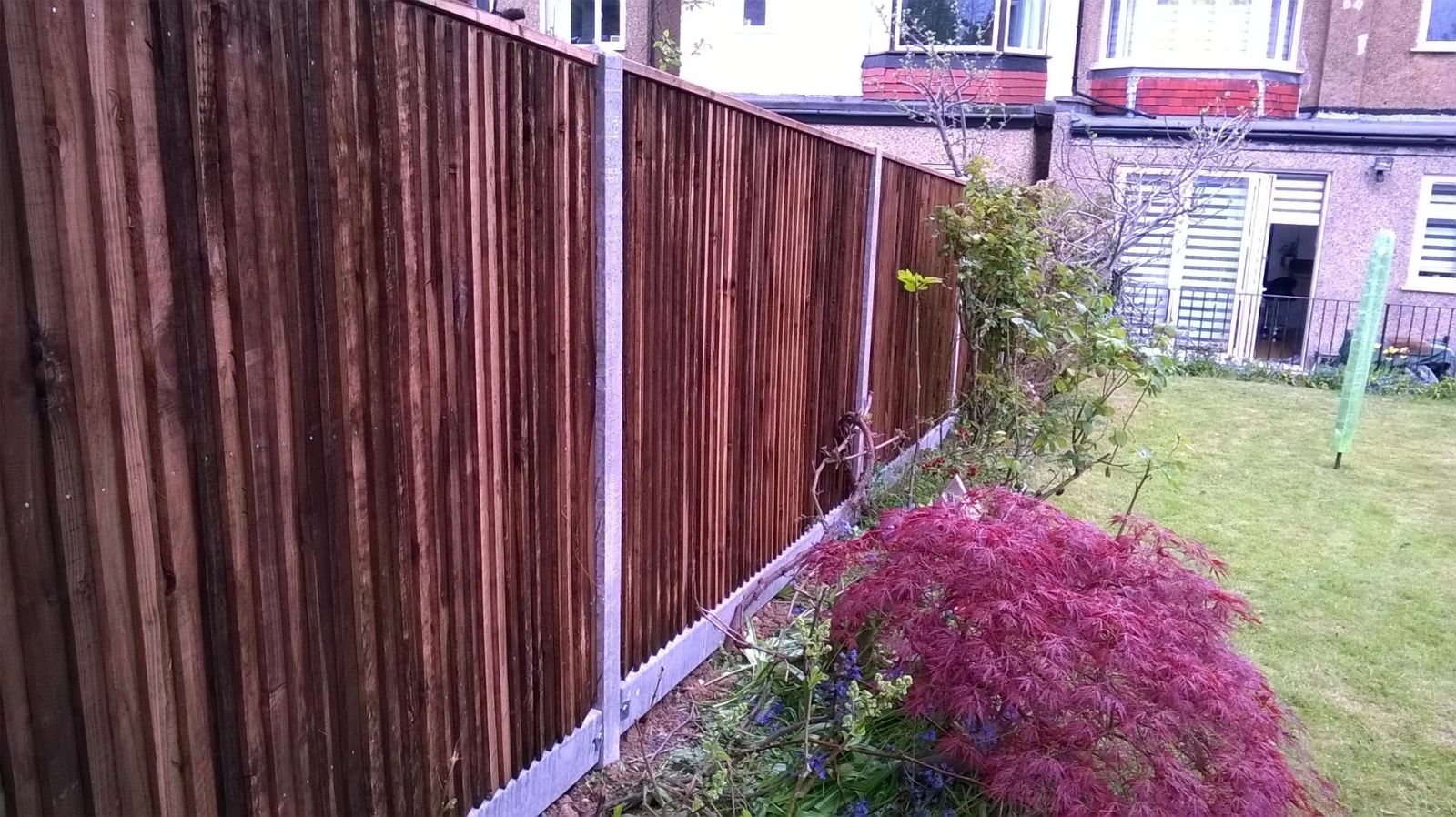
Post and rail fencing
Post and rail fencing follows its own logic. The posts are spaced to the length of the rails so each rail joins on a post, and longer runs get intermediate posts to stop the rails sagging in the middle.
Gate posts are a separate decision
A gate should never be hung on an ordinary fence post if it can be avoided. Gate posts carry a swinging load, so they are larger, set deeper and placed to the exact width of the gate plus its hinge and latch clearances. The fence posts either side are then set out from the gate posts, not the other way round.
Depth matters as much as spacing
Spacing and depth work together. For a standard 1.8m fence, a concrete post is usually around 2.4m long with roughly 600mm in the ground, set in a concrete base of about 700 to 750mm deep. Perfectly spaced posts set too shallow will still lean, so both are checked when a run is set out.
Getting your run laid out
Send us the length of each leg, the fence type and height you want, and photos of both ends and any gates. We work out the post positions for the written estimate and check them on a visit to confirm before anything is ordered.
Want this priced properly for your garden?
Photos first, then a written estimate across London and Hertfordshire, a written specification, and a fixed price. No obligation.
Frequently asked
How far apart are fence posts for 6ft panels?
At 1.83m centres, the width of a standard 6ft panel, so each panel fits snugly between two posts.
Can fence posts be further apart than the panel width?
Not with panel fencing, because the panel is the span. With closeboard the bays can be longer, within what the rails can carry, but longer bays are less stiff.
Are concrete posts spaced differently from timber posts?
For panels, no: both follow the panel width. Concrete posts must be set accurately because the panel slides into a fixed slot, while timber posts allow small adjustments when the panel is fixed.
What happens if fence posts are too far apart?
With panels, the last panel will not fit or sits loose in its slot. With closeboard, long bays put more load on the rails, which can sag or twist, and the fence flexes more in the wind.
How far apart should fence posts be on a slope?
The spacing along the ground stays the same, but each panel steps down, so the posts need to be long enough to cover the step and the gravel boards are cut to close the gaps.