
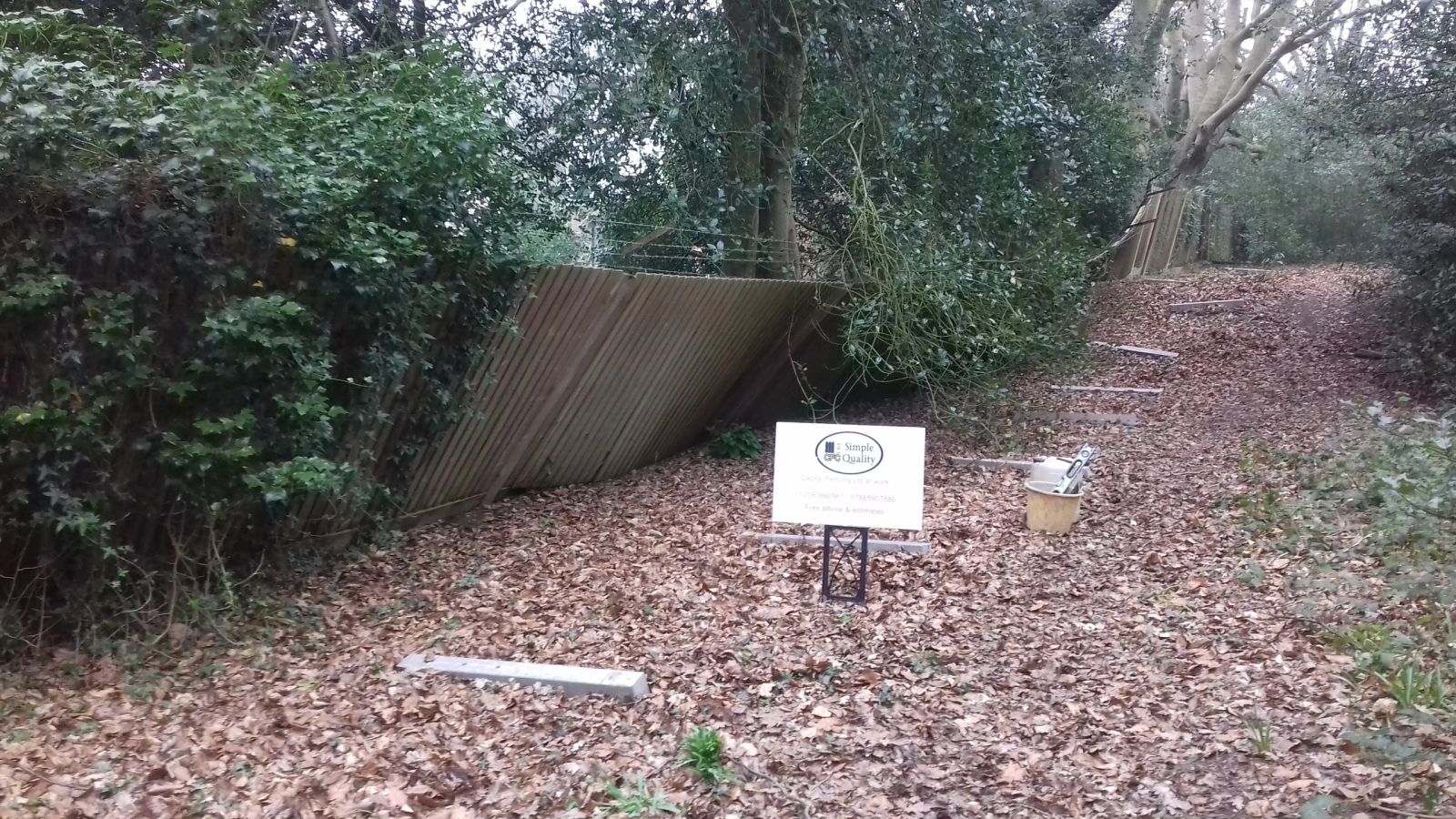
Fence repair cost depends far more on what has failed and how easy it is to reach than on the length of the fence. Swapping one panel between sound posts is a small job. Replacing a snapped post set in a large lump of old concrete, at the far end of a garden with no side access, is a bigger one, even though both look like 'one bit of fence' from the house.
This guide explains the factors that decide the price of a repair, so you know what to photograph, what to expect in an estimate and when it stops being worth repairing. It covers repairs to existing fences; the cost of a brand new fence is covered in our fence installation cost guide.
What is being repaired
The single biggest factor is the part that has failed. A panel, a few boards or a gravel board can usually be replaced without disturbing much else. A post is more work because the panels either side come off, the old post and its concrete come out and a new one is set. A whole bay, where both posts and the panel have gone, is close to a short section of new fence.
- A single panel or a few boards between sound posts
- A gravel board along the base
- One post, with the panels either side lifted and refitted
- A whole bay: posts, panel and gravel board
Access and old concrete
Everything has to be carried in and out. A side gate wide enough for materials makes a job faster than one where everything goes through the house. Old posts are often set in more concrete than needed, and breaking that out by hand takes time. If a new post can go beside the old base rather than through it, that can help, but only where the fence line allows it.
Height, material and matching
Taller fences use bigger posts and heavier panels. Closeboard repairs are built in place board by board, while panel fences take a ready-made panel. Matching an older fence can be the hardest part: timber weathers, panel styles change and an exact match is not always available. Concrete posts and gravel boards are easier to match than timber, which is one reason many people switch to them when a post fails.
Disposal and storm damage
Broken panels, old posts and concrete need taking away, which is part of the job. After a storm, a fence that is down or hanging can be a safety and security problem, so it helps to say so when you send photos. Storm repairs are the same work as any other repair; they just tend to come with more than one bay damaged at once.
When repair stops making sense
If several posts are leaning, the panels are soft along the run and every repair seems to lead to the next one, the cost of repairing bay by bay starts to approach a new fence without the benefit of one. At that point it is usually better value to replace the run. Our fence replacement page covers what that involves, and the repair vs replace comparison sets out the signs side by side.
Getting an accurate estimate
Good photos make the estimate more accurate. Take one of the whole run, one close up of each damaged post at ground level, and one showing how materials would get into the garden. Note the rough height and length. Then use the enquiry form below or see our fence repairs and fence post repair pages for the work itself.
Send us photos and rough measurements, we send a written estimate, then we visit to confirm before work starts. We cover London and Hertfordshire.