
How it's done
Where a Fence Meets the House: Fixing to a Wall
Last updated
The short answer
Where a fence meets the house, the end can either be a post set in the ground near the wall or a timber plate bolted to sound brickwork. Fix into brick rather than soft mortar, keep everything above the damp proof course, never cover an air brick, and watch for drains and pipes beside the house. A shared wall needs your neighbour's agreement first.
At a glance
- Options
- Post near the wall or a wall plate
- Fix into
- Sound brick, not mortar joints
- Protect
- Damp proof course and air bricks
- Shared wall
- Needs the neighbour's agreement
The last post of many fences sits against the house. How it is joined there affects the wall as well as the fence, so it is worth getting right.
Most garden fences run from the back of the house to the end of the plot. At the house end, there is a choice: set a post in the ground close to the wall, or fix a timber or metal plate directly to the brickwork. Side gates often hang from the house wall in the same way.
This guide explains the options, what to watch for on the wall itself, and how to keep the join neat and dry.
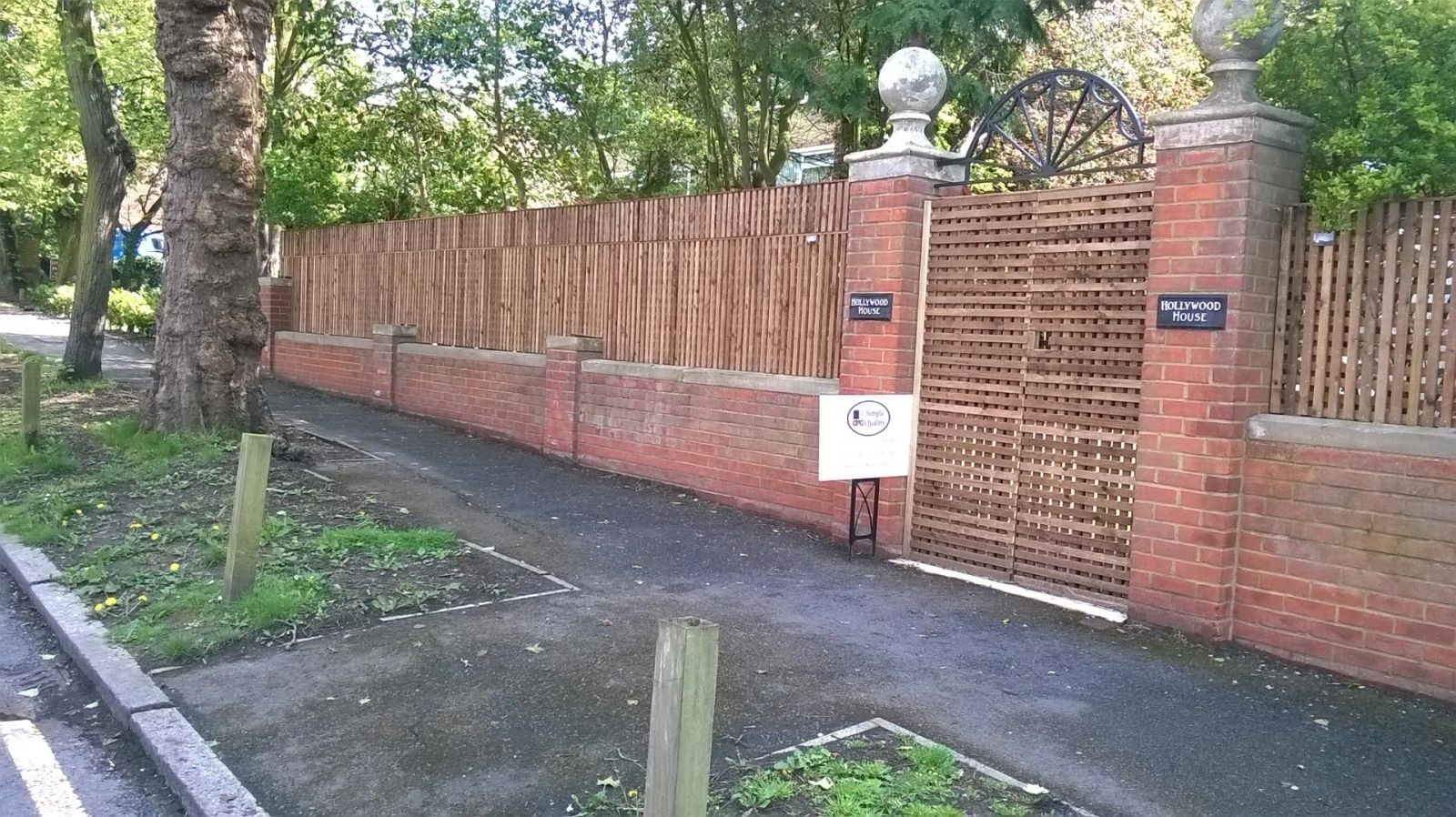
Post in the ground or wall plate?
A freestanding post near the wall keeps all the load in the ground and leaves the house alone. A wall plate, a length of timber bolted to the brickwork, saves digging next to the footings and gives a straight line. Which suits depends on the ground, the wall and what is underground there.
Fixing into brickwork
Wall plates are fixed with masonry fixings into sound brick, not crumbling mortar joints. On older properties with soft brick, the fixing positions need care. Rendered walls need fixings long enough to reach the masonry behind.
- Fix into brick rather than soft mortar
- Use fixings rated for outdoor masonry
- Keep fixings above ground level
- Seal any holes through render
Damp courses and air bricks
A house wall usually has a damp proof course near the bottom and may have air bricks that ventilate the floor. A fence should never bridge the damp course or block an air brick. Soil or gravel boards piled against the wall above the damp course can carry moisture into it.
Drains, pipes and gas
The ground beside a house often carries drains, downpipes and service pipes. Digging a post hole there needs care, which is one reason a wall plate is often preferred. Mention any manholes or pipes you know about when you send photos.
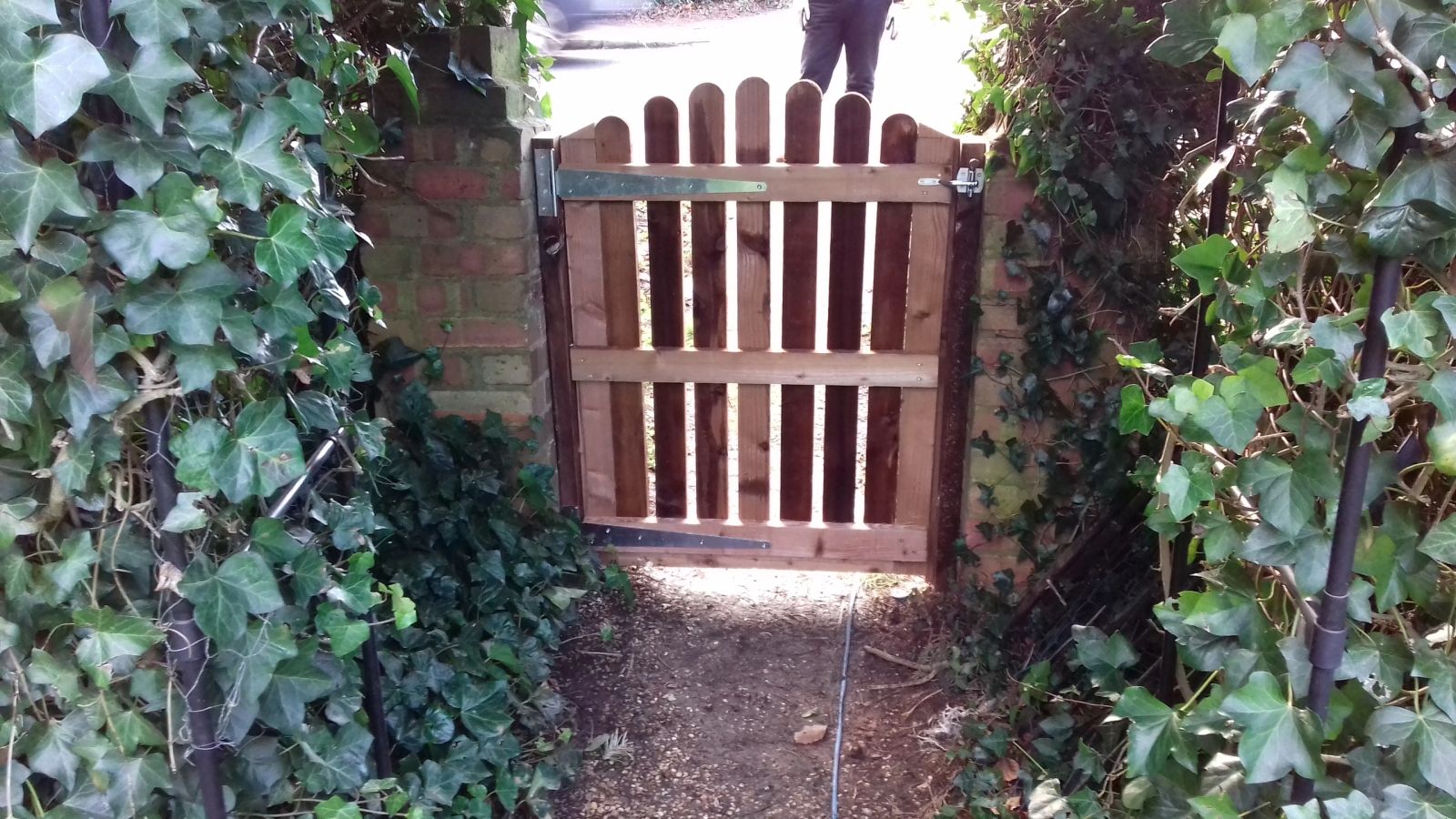
Hanging a side gate from the house
A gate fixed directly to a wall needs a heavy plate and strong fixings, because the weight of the gate pulls at the top fixing every time it swings. On wider or heavier gates, a separate hinge post close to the wall is often safer. Our garden side gates page covers gate choices for that spot.
Party walls and neighbours
If the wall you want to fix to is shared or belongs to next door, you need their agreement. On semi detached and terraced houses the line between properties can run through a wall, so check before anything is drilled.
Making the join look right
The fence should finish snugly against the wall without a gap a hand could reach through, but without being forced so tight that it stops water draining. A slim plate painted or stained to match the fence looks tidy. We plan the end of the run when we measure, so the last panel fits.
Soil levels at the house end
Gardens are sometimes built up against the house over the years, with flower beds or paving raised above the original ground. Where the fence meets the wall, the soil level matters. A fence that holds soil against the brick, or gravel boards that act as a retaining edge, can move moisture to where the house does not want it. Keeping the base of the fence at the original ground level and stepping it if needed protects both the house and the fence.
Older and period properties
Victorian and Edwardian houses often have softer brick and lime mortar. Fixings need to be chosen with that in mind, and it is usually better to fix into the centre of a sound brick than into the joint. On listed buildings, any fixing to the fabric of the building may need consent, so check with your council first.
Gaps at the house end and security
The join between fence and wall is a common weak point for privacy and for keeping pets in. A gap of a few centimetres is enough for a small dog to squeeze through. A wall plate closes it neatly, and the last panel or boards can be cut to fit tight against it. Where a side gate meets the house, check that the gap behind the hinges cannot be used to reach the bolt.
Frequently asked
Will fixing a fence to my wall cause damp?
Not if the fixings are above the damp proof course and nothing bridges it. Keep soil and boards clear of the course.
Can a gate hang straight from the house?
A light gate can, with a solid plate and fixings into good brick. Heavier gates are safer on their own post.
Do I need permission to fix to my own wall?
Not usually for your own house. A shared wall needs the neighbour's agreement, and listed buildings may have extra controls.
Do you fix fences to walls?
Yes. We look at the wall and the ground at the house end and suggest the method when we quote.
Fence finishing at the house?
A photo of the wall and the ground at that end tells us whether to use a post or a wall plate.