
Rules & permissions
Japanese Knotweed Near Your Fence: What to Do First
Last updated
The short answer
If you think Japanese knotweed is growing near your fence, stop before any digging happens. Disturbing it can spread it, and GOV.UK guidance says you must stop it spreading off your property. Get it identified and a treatment plan in place first. Fencing can then be planned around the treated area so posts do not disturb it.
Official guidance: GOV.UK: how to stop Japanese knotweed from spreading
At a glance
- First step
- Stop digging and get it identified
- Main risk
- Root fragments spreading to new ground
- Official guidance
- GOV.UK on preventing its spread
- Fence work
- Planned after treatment, away from the stand
Knotweed changes how a fence job is planned. The plant has to be dealt with before anyone digs, because disturbed roots can sprout somewhere new.
Japanese knotweed is a fast growing plant with bamboo like stems and heart shaped leaves. It often turns up along garden boundaries, behind sheds and in neglected corners, which is exactly where fence posts go. When a fence needs replacing and knotweed is nearby, the order of work matters more than the fence itself.
This guide explains why the plant affects fencing, what the general official guidance says, and how a fence can still be put up once the problem is under control. It is not a treatment guide, and we do not treat knotweed ourselves.
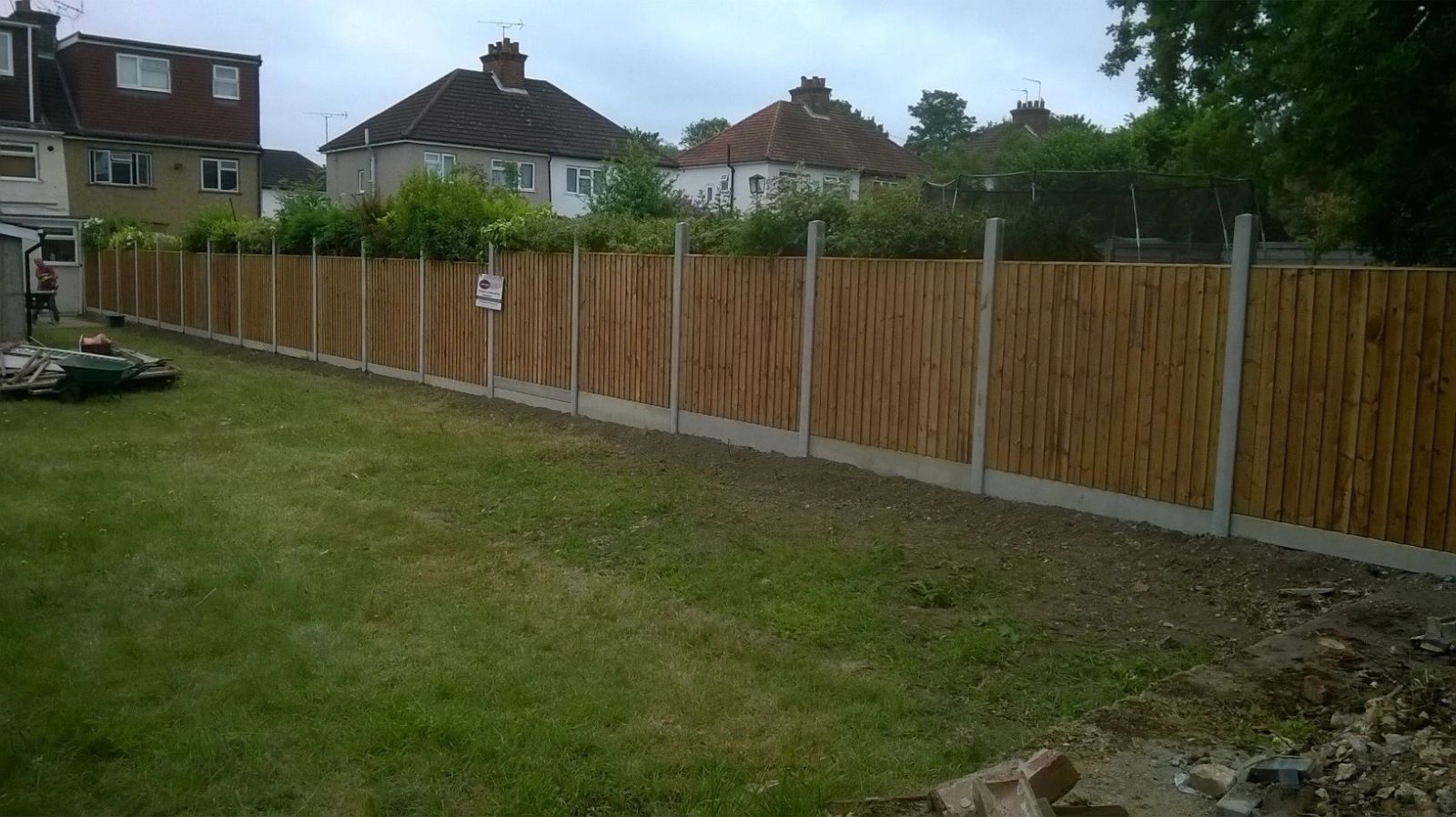
Why knotweed and post holes do not mix
A post hole is a column of disturbed soil, and the spoil from it usually ends up spread across a lawn or bagged for the tip. If that soil holds pieces of knotweed root, each piece can grow into a new plant. Digging out an old concrete post is even more disruptive, because it loosens a wide area around the base. That is why we will not dig in ground where knotweed is suspected until it has been dealt with.
How to tell whether it is knotweed
In summer look for hollow stems with purple speckles, arranged in a zigzag, and broad leaves that are flat at the base. In winter the stems die back to brittle brown canes that stay standing. Plenty of harmless plants look similar at a glance, so a photo alone is not proof. If you are unsure, ask someone qualified to identify it before you change any plans.
- Hollow, speckled stems that zigzag
- Leaves with a straight edge at the stalk
- Dead brown canes over winter
- Dense clumps that return each spring
What the official guidance says in general
GOV.UK publishes guidance on stopping Japanese knotweed from spreading. In broad terms, you do not have to remove it from your land unless it is causing a nuisance, but you must stop it spreading off your property, and soil or plant material containing it may be classed as controlled waste. Rules can change and every case differs, so read the current guidance and take advice that fits your situation.
If it is growing on the neighbour's side
Knotweed does not respect a boundary, and a stand next door can push shoots under or through a fence. Raise it calmly, with photos, and agree how it will be handled before either household starts work on the fence line. A replacement fence on top of an untreated stand only hides the problem for a season.
Planning a fence once treatment is under way
Treatment can take more than one growing season. During that time it is usually best to leave the affected stretch alone, or use a temporary option that needs no digging there. Once whoever is treating it is happy for ground work to go ahead, tell us exactly where the stand was so posts can be placed to avoid it. Sometimes a slightly different post spacing or a shorter run near the corner is enough.
Keeping the old fence in the meantime
If the existing fence is still standing, a light repair that avoids the ground, such as refixing a loose board or rail, may carry it through. We can look at photos and say whether a repair like that is sensible or whether the fence is too far gone to wait.
Mistakes that make it worse
Strimming or mowing the stems scatters fragments that can root. Pulling canes up by hand snaps the roots and leaves pieces behind. Moving soil from the area to another bed, or filling a skip with it, risks spreading the plant somewhere new. Leaving it alone until a plan is agreed is usually safer than any quick fix.
What to send us
Photos of the whole fence line, a closer shot of the plant and a note of where it is growing are enough for a first view. Tell us whether treatment has started. We give written quotes, and we will make clear which stretch we can work on now and which has to wait.
Frequently asked
Can you dig fence posts near knotweed?
Not until it has been treated and whoever is managing it agrees ground work can start. Disturbing the roots risks spreading it, so we plan posts away from the affected area.
Can I put soil with knotweed in my green bin?
No. GOV.UK guidance says soil or plant material containing knotweed may be classed as controlled waste, so it must be disposed of properly. Check the current guidance before moving any soil from that area.
Will a new fence stop knotweed coming through?
No. A timber fence does not stop the roots, and shoots can come up either side. The plant has to be treated for the boundary to stay clear.
Do you remove Japanese knotweed?
No. We build and repair fences, gates and decking. Once the plant is under control we can plan a fence that avoids the treated ground.
Knotweed on your fence line?
Send photos showing where it grows and we will say which parts of the job can go ahead now.