
How it's done
Replacing a Fence Behind a Shed: Access and Clearance
Last updated
The short answer
A fence behind a shed can sometimes be replaced without moving the shed if there is enough room to dismantle boards and reach every post safely. Roof overhangs, buried bases and blocked fixings may mean the shed has to move. The new fence needs its own posts and should not rely on the shed for support.
At a glance
- First check
- The narrowest gap and roof clearance
- May stay in place
- If posts and boards remain safely reachable
- Hidden obstacle
- A shed base covering the old post line
- Future care
- Leave room for drainage and inspection
A shed tight against a fence does not always stop replacement, but the working room, roof overhang and condition of the hidden fence decide how the job is approached.
Sheds have a habit of drifting closer to boundaries as gardens change. A new shed goes where the old slabs happen to be, a base is extended, and years later there is barely a hand's width behind it. When the fence then fails, access becomes the first problem to solve.
The aim is to replace the boundary without damaging the shed or leaving an unreachable strip that immediately starts to rot again. This guide sets out the options and the information that helps us plan the work.
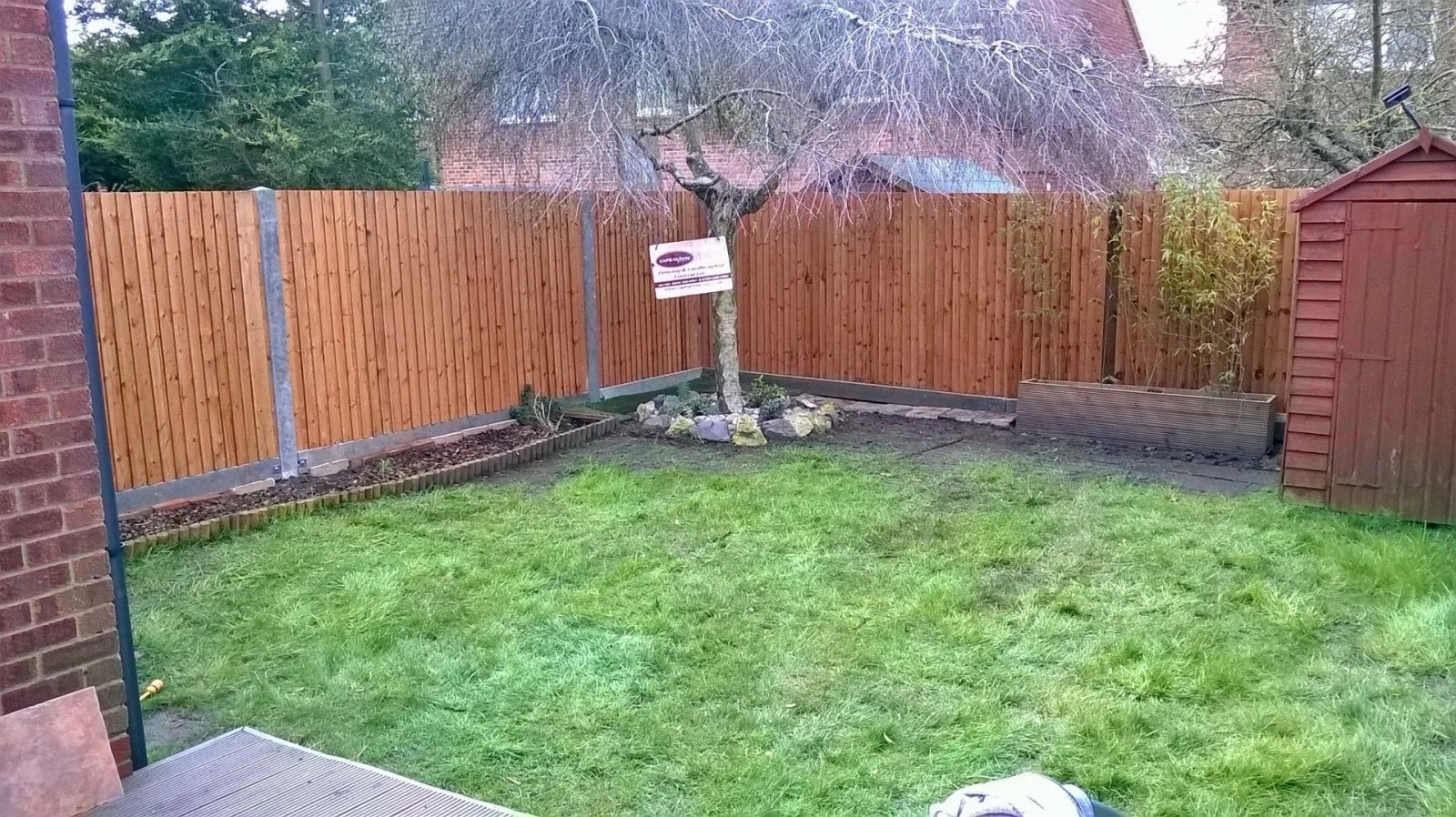
Measure the space that is really there
Look at the narrowest point rather than the average gap. Shed walls may bow, roof fascias project beyond the cladding, and guttering can reduce the working space further. Posts and old concrete bases may also sit partly beneath the shed floor line.
Photographs taken from each end of the gap show far more than a single front view. Include the roof edge and the ground, because both affect whether tools and panels can be manoeuvred safely.
When the fence can be replaced with the shed in place
If there is enough room to remove boards and work along the posts, the shed may be able to stay exactly where it is. A fence built from the garden side can sometimes be fixed in stages, with boards lifted over or fed along the gap one at a time.
This works best when the post bases remain accessible and the existing panels can be broken down into manageable pieces. Large intact panels are awkward to handle in a confined passage and may need careful dismantling first.
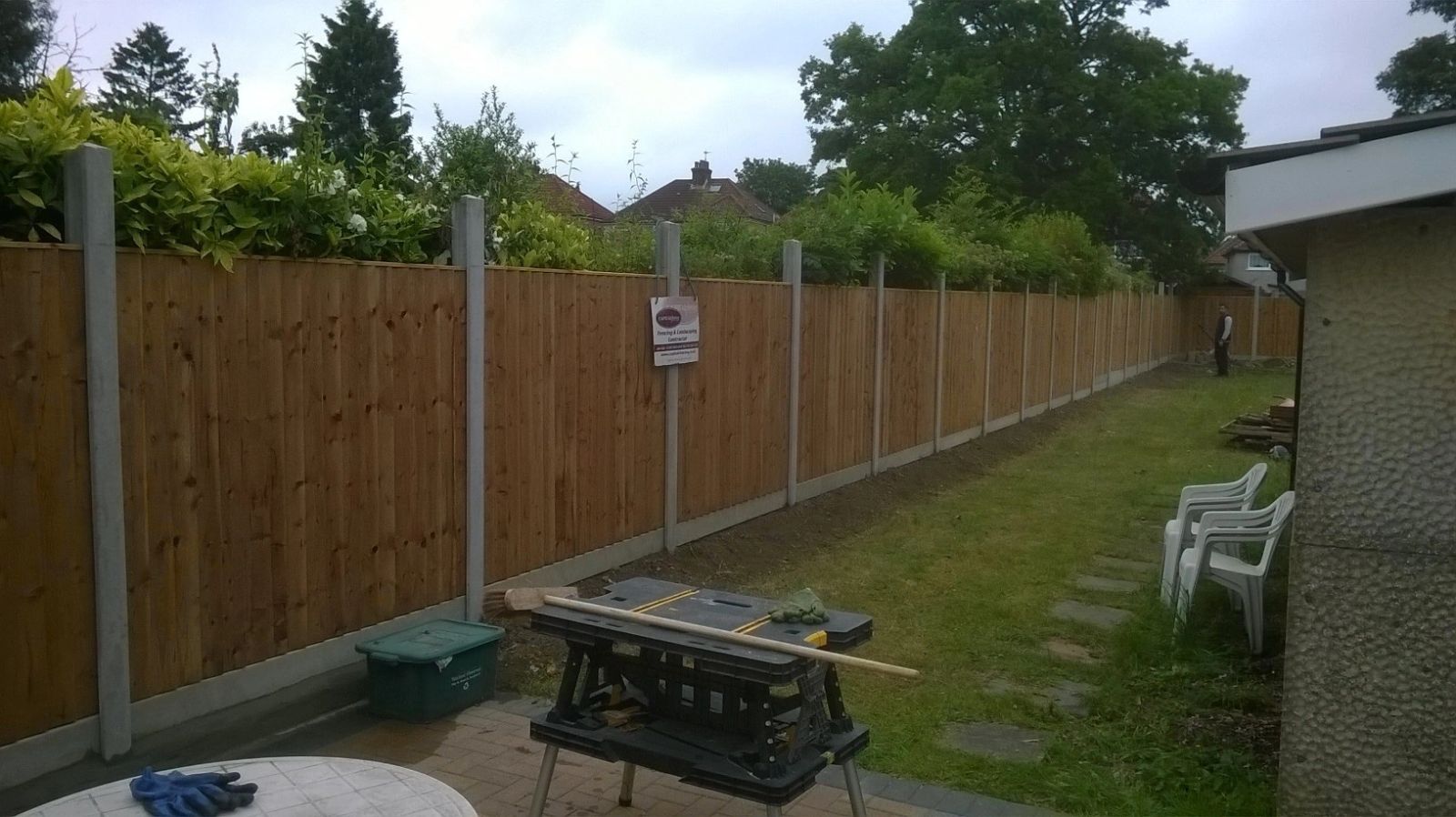
When the shed needs moving
Moving the shed becomes the practical option where the fence is completely inaccessible, the post holes sit underneath its base, or the back of the new fence must be fixed from that side. Even a small temporary shift can create enough working room if the structure and ground allow it.
A shed is not simply lifted by its cladding. Its floor, framing, contents and roof all affect whether moving it is realistic. We would discuss that before agreeing the fencing scope rather than assuming it can be dragged aside on the day.
Working around a concrete shed base
A base that extends beyond the shed can block the original fence line. Cutting a narrow channel for every post is not automatically the right answer, particularly if the slab reinforces the shed or covers older footings.
Sometimes the new line can sit just inside the boundary, or posts can be positioned to miss the slab while closeboard sections bridge the variations. Any change of line needs checking against the actual boundary, not merely copying the old fence.
Protecting the shed during removal
Old fencing under tension can spring back when nails or rails are released. Removing it in small sections reduces the chance of boards striking the shed. Roof edges, windows and guttering need particular care when long timber is turned in a tight space.
We also look for fixings joining the shed to the fence. A shed that has been screwed to a boundary post should not be left unsupported when that post comes out, so any temporary support is agreed before removal.
Dealing with damp and hidden damage
A narrow gap with little airflow keeps both the fence and shed damp. Once the old boards are removed, we may find rotten shed cladding, plants rooted behind it or post bases that have stayed wet for years. Those discoveries can change what is sensible to reuse.
New fencing should leave the shed able to dry. Gravel boards can protect the fence at ground level, but they do not solve soil or vegetation pressed against the shed wall itself.
Leaving room for future maintenance
If the layout is being changed anyway, this is the moment to think about future access. A modest clear strip makes it easier to inspect the fence, clean behind the shed and treat accessible timber. The right amount depends on the garden and cannot come at the expense of building over the boundary.
- Keep vegetation out of the gap
- Avoid storing loose items against the new boards
- Make sure water can drain away from both structures
- Choose a fence that can be repaired from the accessible side
What to send before asking for a price
Send wide photographs showing the shed and fence together, views down both sides, and close shots of the post bases and roof clearance. Rough measurements of the shed, the gap and the fence length help us compare possible methods.
Tell us whether the shed can be emptied or moved and whether its base sits on the boundary. We can then explain the likely approach in a written estimate, with a visit to confirm access and the final fence line before work is agreed.
Frequently asked
Can you replace a fence without moving my shed?
Sometimes, if there is enough room to dismantle the old fence and reach the post positions safely. Tight roof overhangs or buried bases can make moving the shed necessary.
What if the shed sits on the boundary line?
The new fence still needs to remain on the correct line. We would inspect the base and post positions, then discuss whether the shed, slab or fence layout needs changing.
Can a new fence be fixed to the shed?
A shed is not a suitable substitute for proper fence posts. The boundary needs its own structure rather than relying on the shed cladding or frame.
Will you repair the shed as well?
Our work is fencing, gates and decking. We plan the fence carefully around the shed and explain any fencing limitations revealed by its position or condition.
Shed tight against the boundary?
Photos down each side and beneath the roof edge will help us plan access before anyone starts taking the old fence apart.