
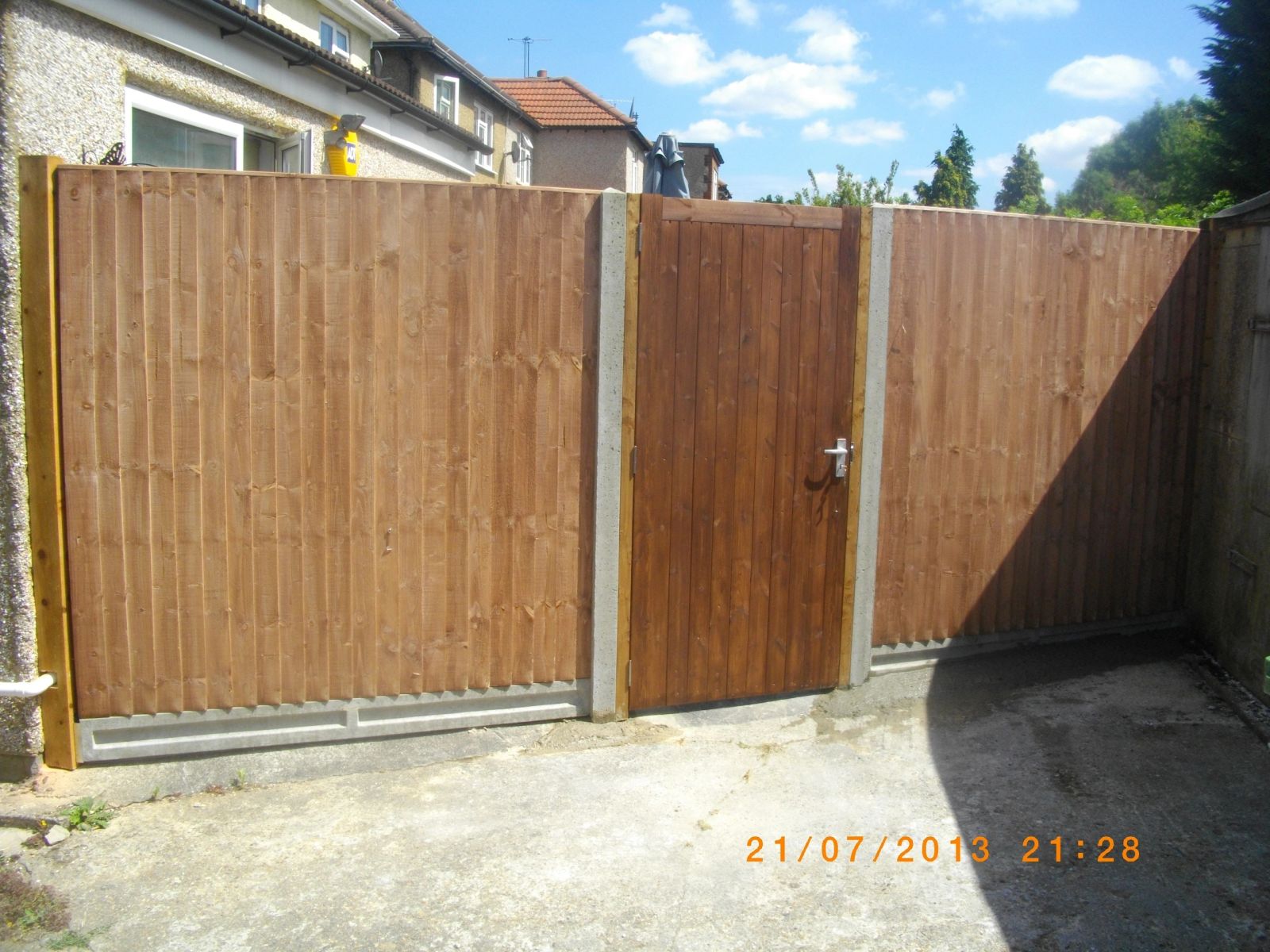
Very few openings are a stock size. Brick piers lean, old posts have been knocked out of plumb, paths rise towards the house and driveways fall to the road. A gate bought off the shelf is then trimmed, packed or hung with a gap you could post a cat through. A made to measure gate starts from the other end: we measure the opening first and the gate is made to order to suit it.
This page explains what we measure, how timber and metal gates are specified, what goes into the ironmongery, and how the finished gate is hung. Everything is priced on a free site visit and set out in a written quote before any work starts.
What we measure on the visit
The width at the top and at the bottom of the opening, because they are often different. The height you want and the height the ground allows once the gate has to swing over a path or a slope. Which way it should open, and whether there is room for it to do so. What it is hanging from: a sound brick pier, an existing timber or concrete post, or new posts that need setting.
We also note the fall of the ground across the swing. A gate that clears the path when shut but hits the paving halfway open is the most common complaint we are called about, and it is designed out at the measuring stage rather than fixed afterwards.
Timber gates made to order
Timber gates are built as framed and braced leaves, typically around 44mm thick, with the brace running up towards the hinge side so the weight is carried rather than left to sag. They can be boarded to match a closeboard or panel run, built as solid tongue and groove for privacy, or made up in hardwood such as iroko for a front entrance.
Softwood suits most side and garden gates and is pressure treated. Hardwood costs more and lasts longer, and it is covered in detail on our bespoke hardwood gates page.
Metal gates made to order
Metal gates are mostly made to measure. Frames are commonly 50 by 50 square hollow section, with vertical bars, flat top, ball top or decorative infill, and the steel is hot dip galvanised and then powder coated. Galvanising stops the rust; the powder coat gives the colour and protects the galvanising.
Where a metal gate meets timber fencing, or where you want the look of wood on a steel frame, a galvanised steel frame with timber or composite infill is also an option.
Ironmongery that suits the weight
The hinges, latch and bolts are chosen for the gate rather than whatever comes in the box. Heavier leaves go on ball race hinges, double gates get a drop bolt so the fixed leaf stays put, and front gates can take a lock or a thumb latch that works from both sides.
- Ball race or heavy strap hinges sized to the leaf
- Drop bolts and cane bolts on double gates
- Latches and locks that work from the side you need
- Stops fitted so the gate closes to the same place every time
Hanging it properly
Most gate faults are post faults. New posts are set in concrete deep enough for the weight and the swing, and where a gate hangs from brickwork the fixings go into sound masonry. The gate is then hung with an even gap, checked through its full swing, and adjusted before we leave. The old gate is taken away.