
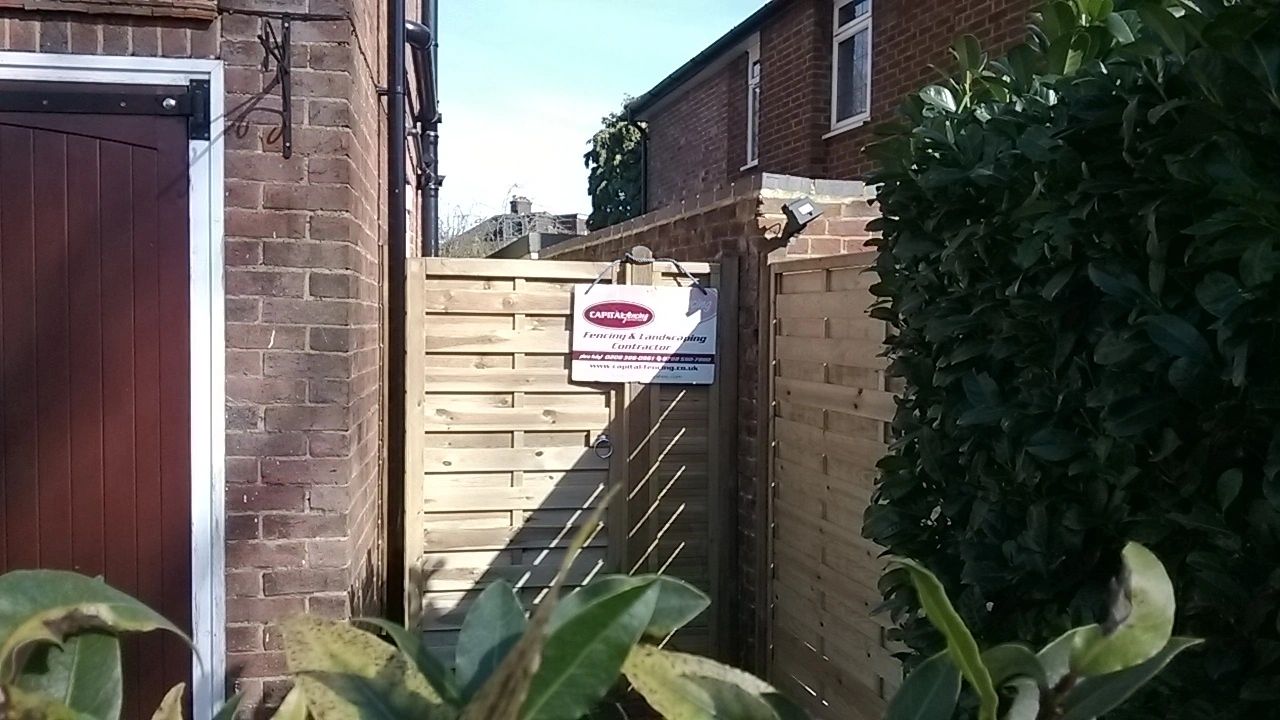
Timber gates look good and can sag. Steel gates stay square and can look hard. A metal and timber gate uses each for what it does best: a galvanised, powder coated steel frame carries the weight and holds its shape, and the infill gives the finish you see.
They are made to measure for side returns, front paths and driveways, and are one of the most asked-for styles on modern houses.
Why combine the two
The frame does not rot, twist or drop, so the gate keeps its gap and its latch keeps lining up. The infill can be chosen for looks and privacy: close-set slats for a solid screen, spaced slats for light and air, or horizontal boards to match a slatted fence.
Infill choices
Slats are fixed into the frame so they can be replaced individually if one is ever damaged, without taking the gate off.
- Hardwood slats, such as iroko, oiled or left to silver
- Pressure treated softwood, painted or stained
- Composite boards for low upkeep
- Horizontal or vertical, close-set or spaced
Frame and finish
Frames are typically square hollow section, hot dip galvanised and then powder coated. Black and anthracite are the most common colours because they suit both timber and composite. The steel is treated after fabrication so the welds are protected.
Matching the fence
The gate can be made to match a slatted or hit and miss fence, so the boundary reads as one run. Where a fence already exists, we match slat width and gap on the visit. Where the fence is being replaced as well, we plan both together.
Hanging and hardware
The gate hangs from steel posts set in concrete or from sound brickwork, on hinges sized to the leaf. Latches and locks are chosen for the side you open from, and double gates get drop bolts. It is all set out in a written quote after a free site visit.