Common questions
Why has my new-build fence already started leaning?
Developer-grade posts are often set shallow in a minimal concrete base — enough to pass initial inspection but not to survive years of wind loading.
Who owns which boundary on a new estate?
Check the plot's land registry title plan — the small T-marks indicate ownership, and estate handover packs don't always make this obvious.
Is it worth upgrading to concrete posts straight away?
If the existing timber posts are already failing within a few years, yes — replacing panels alone on a failing post is a short-term fix.
Does the developer's warranty cover fencing?
Sometimes for a limited period — check your handover documents; we can advise once we've inspected what's actually failed.
New-build estates are laid out with clearly defined plot boundaries, but the fencing that comes with the house is rarely built to the standard we'd recommend for a long-term boundary — thin panels, minimal post depth and no gravel board are common shortcuts on a developer spec.
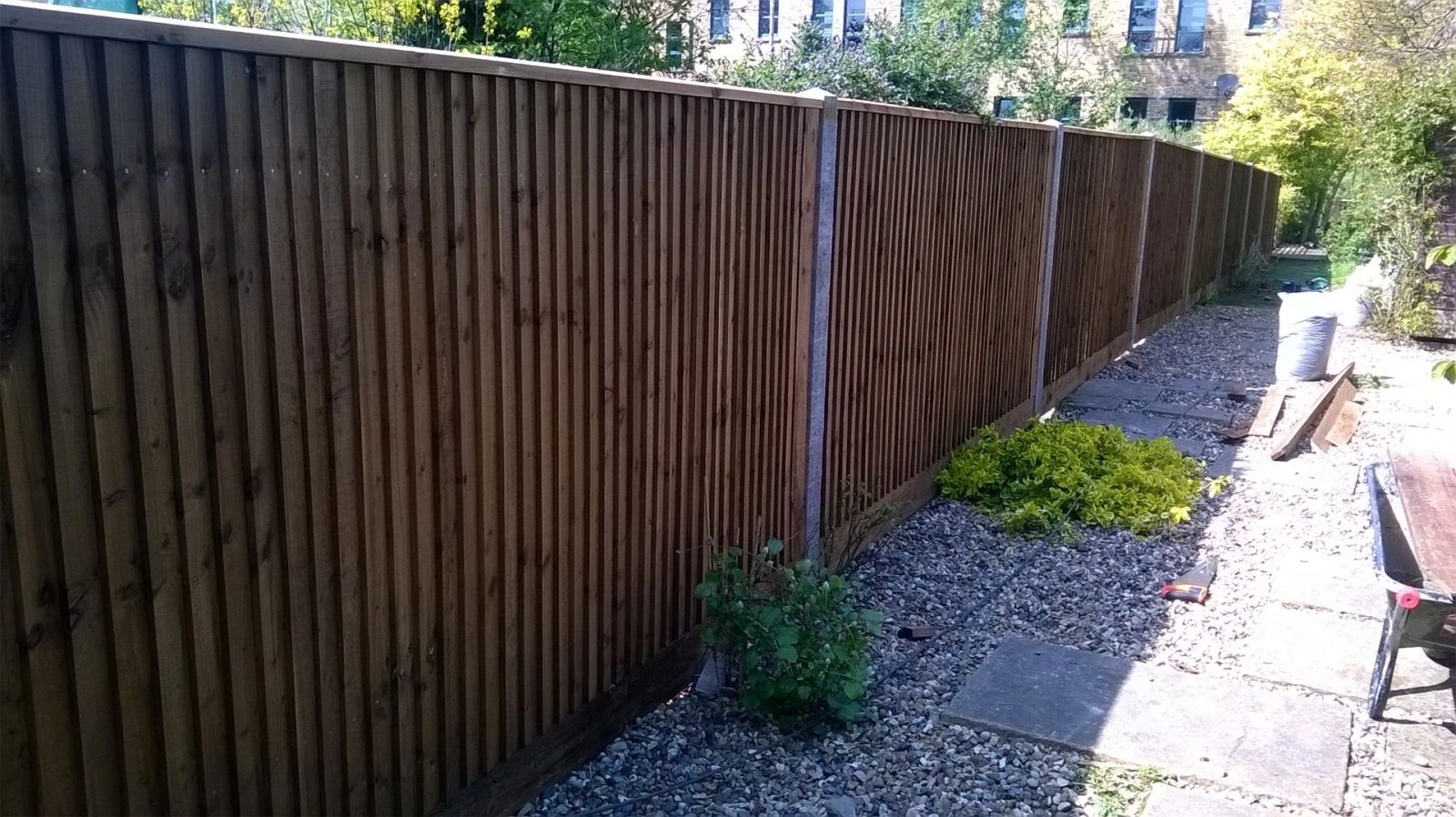
What developer-grade fencing typically lacks
Thin overlap panels rather than closeboard, timber posts set shallow rather than in a proper concrete base, and boards sitting directly on soil without a gravel board are the three most common shortcuts we find.
- Thin overlap panels prone to racking within a few years
- Shallow post bases that lean in the first storm season
- No gravel board, so boards rot from ground contact early
Boundary demarcation between plots
New estates sometimes leave ambiguity over exactly which boundary belongs to which plot until the land registry plan is checked — worth confirming before replacing anything, especially on shared-appearance developer fencing.
Upgrade paths
Concrete posts and closeboard or composite panels are the most common upgrade from developer-grade fencing, chosen to avoid repeating the same failure within another few years.
On-site checklist
- Check the land registry plan before assuming boundary ownership
- Inspect post base depth before deciding 'panels only' will fix it
- Consider concrete posts to avoid repeating developer-grade failures
- Ask whether any NHBC or developer warranty still covers boundary treatment