London & Hertfordshire Free Site Visit
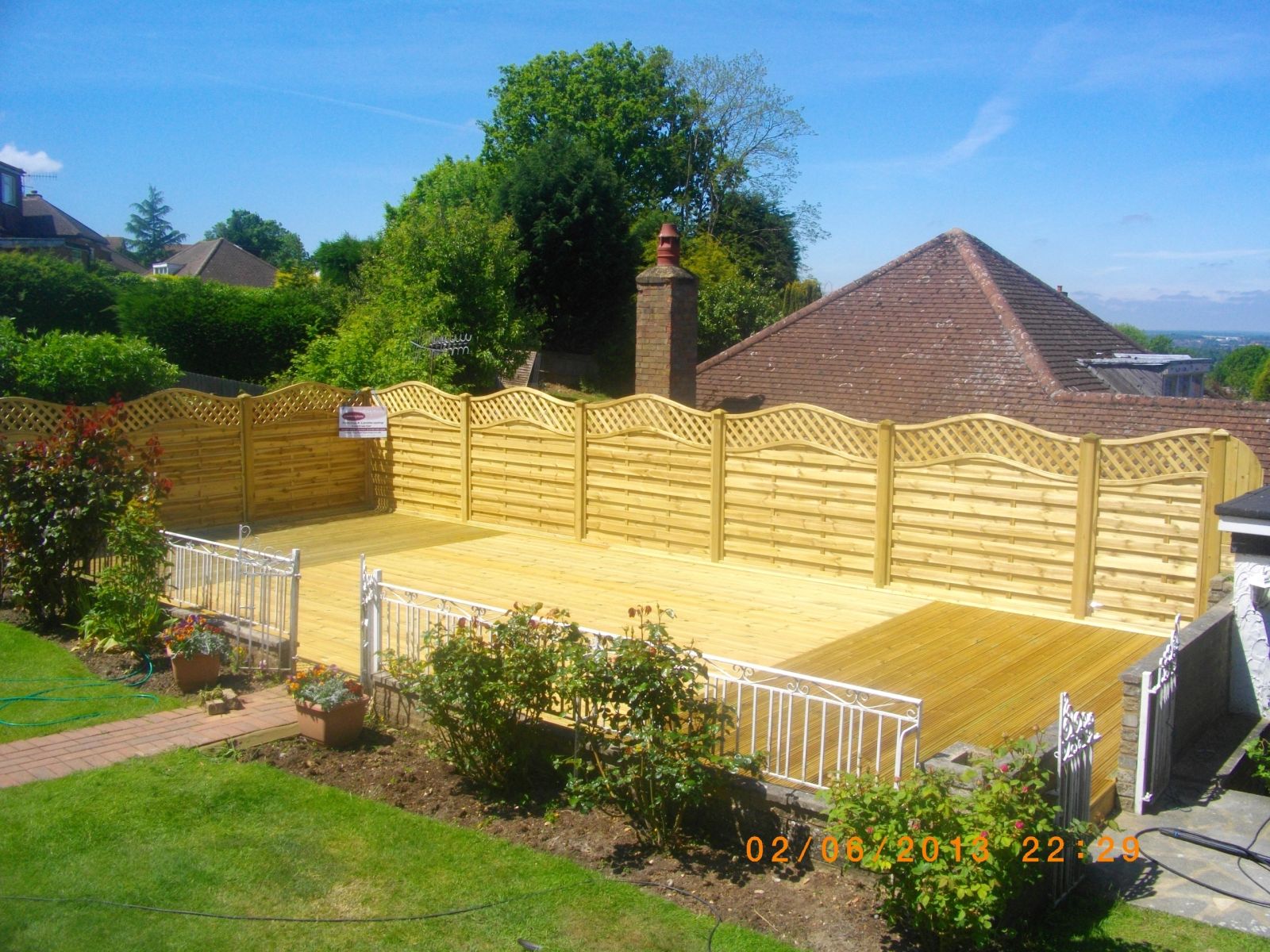
softwood garden decking installed by Capital Fencing in Borehamwood (WD6)
Borehamwood · WD6

Borehamwood Composite Decking — Specified for WD6

Composite decking is bought for the years after the build: no annual oiling, no lifting boards, a wash-down and that is it. What makes or breaks it in Borehamwood is the frame underneath — joists at 300mm centres, ventilated, and level to the millimetre. Composite Decking in Borehamwood isn't a bolt-on for us — it's a day-in, day-out install. We cover WD6 and the streets running toward A1 / A5135, and we know before we arrive that limited rear access on the older estates means materials usually have to come through the house. That's the first thing that shapes the spec, not the last. Recent work on Whitehouse Avenue and Shenley Road. We orient jobs off Aberford Park.

Composite decking is bought for the years after the build: no annual oiling, no lifting boards, a wash-down and that is it. What makes or breaks it in Borehamwood is the frame underneath — joists at 300mm centres, ventilated, and level to the millimetre. Composite Decking in Borehamwood isn't a bolt-on for us — it's a day-in, day-out install. We cover WD6 and the streets running toward A1 / A5135, and we know before we arrive that limited rear access on the older estates means materials usually have to come through the house. That's the first thing that shapes the spec, not the last. Recent work on Whitehouse Avenue and Shenley Road. We orient jobs off Aberford Park.

Typical spec

How we build composite decking in Borehamwood

Capped wood-polymer composite boards on treated softwood joists. Standard build: Trex or Q-Deck capped boards on 150×47mm treated joists at 300mm centres. On Borehamwood jobs we adjust for limited rear access on the older estates means materials usually have to come through the house.

Property mix locally: mix of post-war terraces, 1960s low-rise estates and new-build apartments near the studios. Typical gardens: small to mid-size rear plots, often south-facing on the Elstree side. Postcodes we regularly service: WD6.

Common Borehamwood briefs

  • raised decks around hot tubs and outdoor kitchens where slip resistance matters
  • rear gardens where the client wants no annual oiling or sanding
Honest trade-offs

Where composite decking isn't the right answer

  • damaged boards can't be sanded out — they're replaced
  • up-front cost is 40–60% higher than a matching softwood deck

We'll say so on the site visit — a wasted quote helps nobody.

Why composite decking works here

  • no annual maintenance beyond a wash-down
  • capped boards resist stains and don't fade to grey the way softwood does
  • grooved surface keeps grip in wet weather

Composite Decking FAQs — Borehamwood

Is composite slippery when wet?

Fascia and trims are what make a composite deck look finished; they are on the quote, not an extra at the end. Survey slots across WD6 are usually inside a week. Worth weighing no annual maintenance beyond a wash-down against up-front cost is 40–60% higher than a matching softwood deck before you commit.

How long do composite boards typically last?

Ventilation under a Borehamwood deck is not optional — a boxed-in frame with no airflow is what rots first. We work this patch weekly, from Elstree Way out toward bushey. In short: no annual maintenance beyond a wash-down, though up-front cost is 40–60% higher than a matching softwood deck.

Can composite boards be cut and mitred on site?

Ventilation under a Borehamwood deck is not optional — a boxed-in frame with no airflow is what rots first. For mix of post-war terraces in WD6, that is where the cost sits. Practically, that means capped boards resist stains and don't fade to grey the way softwood does — and we're upfront that can feel hotter underfoot in full sun than timber.

Can composite decking be laid over an existing frame?

Hidden clip fixings mean no screw heads on the walking surface of a Borehamwood terrace. We allow for small to mid-size rear plots when setting out in Borehamwood. Practically, that means capped boards resist stains and don't fade to grey the way softwood does — and we're upfront that can feel hotter underfoot in full sun than timber.

How do you clean composite decking?

Hidden clip fixings mean no screw heads on the walking surface of a Borehamwood terrace. Survey slots across WD6 are usually inside a week. Worth weighing no annual maintenance beyond a wash-down against up-front cost is 40–60% higher than a matching softwood deck before you commit.

Recent composite decking work
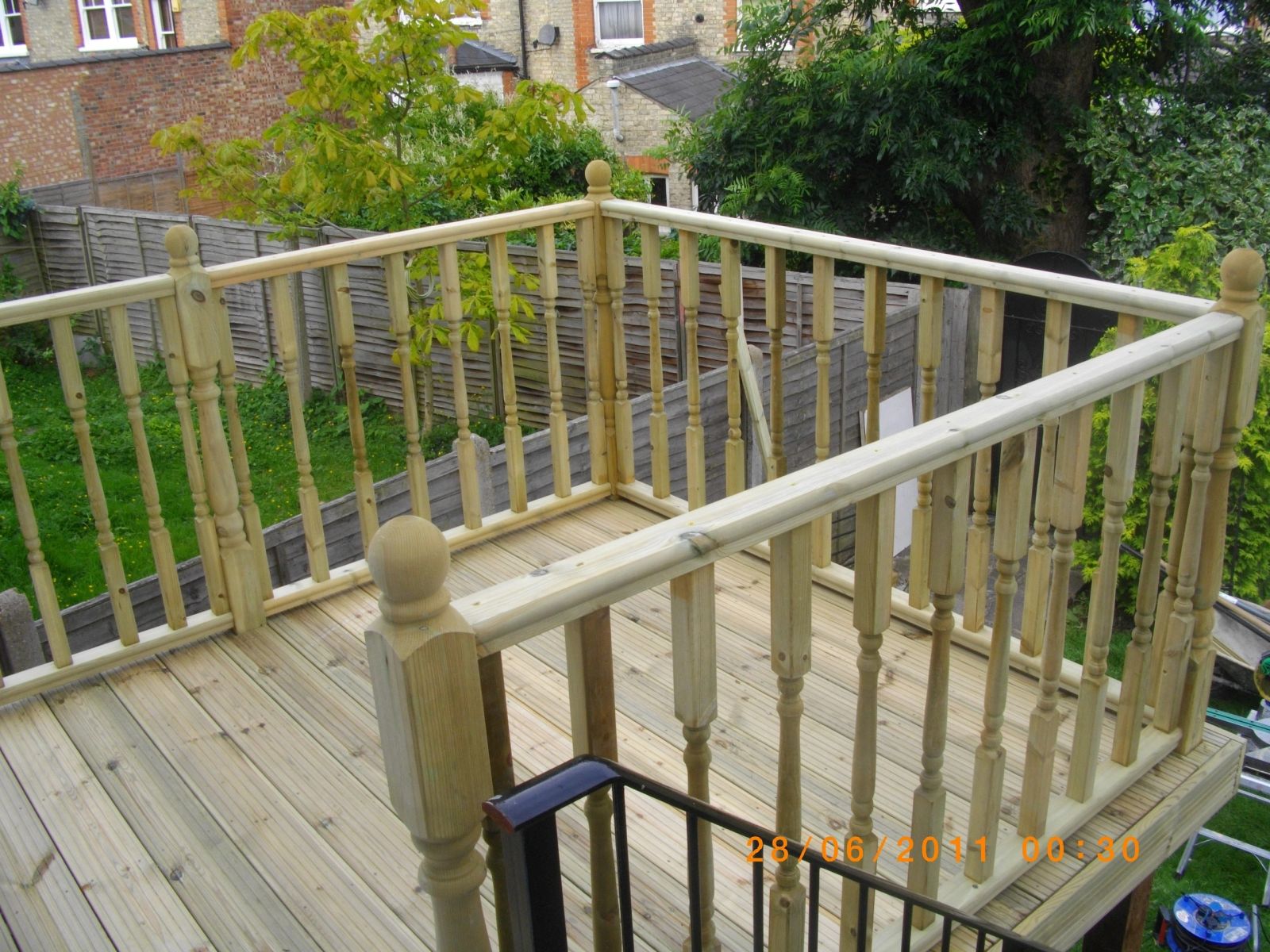
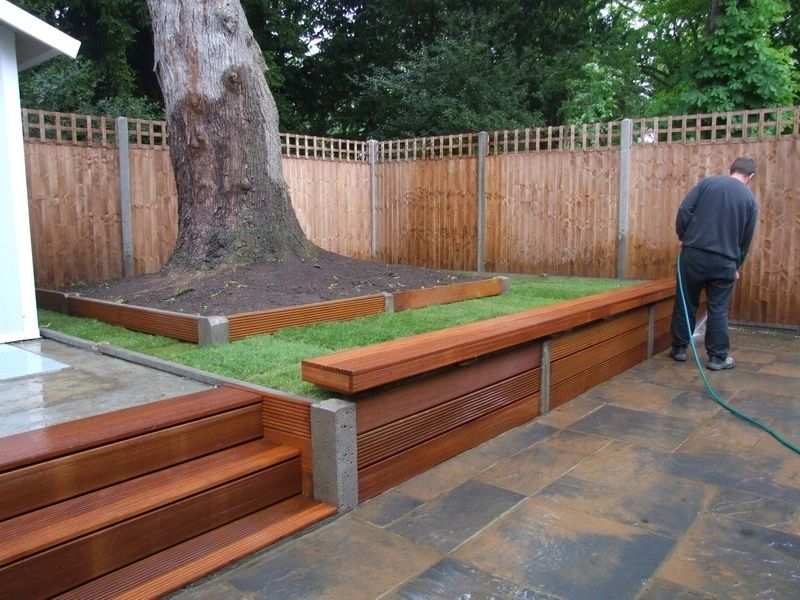
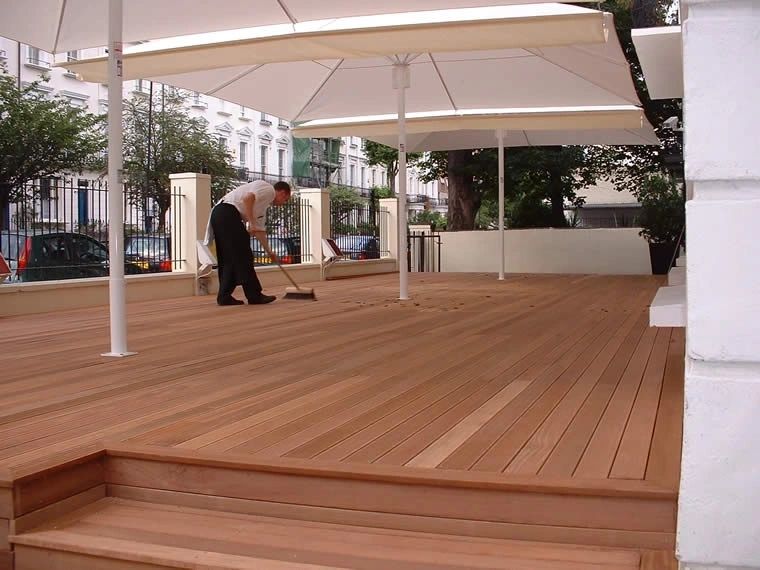
softwood garden decking installed by Capital Fencing in Borehamwood (WD6)hardwood deck install installed by Capital Fencing in Borehamwood (WD6)composite decking installed by Capital Fencing in Borehamwood (WD6)raised garden deck installed by Capital Fencing in Borehamwood (WD6)

Local considerations across Borehamwood and bushey

Adjusting post heights when repairing a fence on sloping ground

A fence stepped down a slope has posts of varying heights above ground even though the panels themselves are a standard size, and a repaired post needs to match the stepped height of its neighbours rather than a single standard measurement.

Getting this wrong on a repair creates a visible kink in the top line of an otherwise consistent stepped run, so measuring the actual height of the posts either side of the repair matters more here than on a level run.

Drainage consents affecting boundary works

Altering ground levels, hardstanding or drainage patterns near a boundary can affect surface water flow onto a neighbour's land, and in some cases needs consent from the local authority or, for work near a watercourse, from the relevant drainage authority or the Environment Agency.

Diverting water so that it discharges onto next door's garden rather than soaking away on the original plot is a common and avoidable source of neighbour disputes, separate from any formal consent requirement.

Where boundary work is combined with a change in levels or new hard surfacing, it's worth checking whether the combined works trigger a drainage consent even if the fence itself wouldn't on its own.

Recording an informal boundary agreement properly

Where neighbours agree a boundary line that differs slightly from, or clarifies, what the deeds show, that agreement carries far more weight if it's put in writing and signed by both parties rather than left as a verbal understanding.

A formal boundary agreement can, in some cases, be registered with HM Land Registry against both titles, which protects the arrangement for future owners of either property.

Even a simple written note with an agreed sketch, dated and signed by both neighbours, is worth far more later than relying on memory of a conversation years afterwards.

Checking for older asbestos-containing gravel boards before repair

Some older fence installations used asbestos-cement gravel boards or panels, which look similar to concrete at a glance but need identifying and handling differently if disturbed during a repair.

Where a boundary fence predates the ban on asbestos cement products and shows a grey fibrous-looking board rather than standard reinforced concrete, it's worth having it checked before cutting, breaking or disposing of it as ordinary waste.

Wayleaves and easements crossing a boundary

Some plots have a legal wayleave or easement allowing a utility company access to overhead lines or buried infrastructure crossing the garden, which can restrict what's built directly above or around that strip of land.

A shared access easement giving a neighbour a right of way across part of a garden also affects fence planning, since blocking that route — even with an otherwise perfectly legal fence — can breach the easement's terms.

These details are usually in the property's title register rather than obvious on the ground, so it's worth checking before finalising a boundary line that crosses anything unusual.

Realistic panel replacement frequency on an exposed plot

A standard timber panel on a sheltered suburban plot might reasonably be expected to last a decade or more before replacement; the same panel on a genuinely exposed, wind-loaded boundary can fail in structural terms — cracked rails, a bowed or blown-out panel — well inside that timeframe regardless of treatment quality.

Setting client expectations around this at quote stage, rather than after an early failure, avoids the impression that a product or installation was faulty when the real cause is unmanaged exposure.

Where budget allows, specifying for the exposure from the outset is cheaper over the fence's life than replacing a standard panel repeatedly on the same exposed run.

Concrete spur repairs to a rotten post base

A concrete spur bolted alongside a post that's rotted at the base lets the sound timber above stay in use without a full replacement, provided enough good timber remains above the rot to take the bolts.

The spur is set into its own fresh concrete footing rather than simply strapped to the old base, since the old footing has usually already failed along with the timber.

Feather-edge board overlap

Feather-edge boards are sawn to a tapered profile, thick along one edge and thin along the other, and are hung vertically with each board overlapping the thin edge of its neighbour by a consistent margin, typically 15-20mm.

Getting that overlap consistent matters more than it looks, since too little overlap opens sightlines and lets wind-driven rain through as the boards shrink, while too much wastes timber and adds unnecessary weight to the rails.

Because the boards taper, the overlap measurement is usually taken at the board's face rather than assumed from its nominal width, and a badly calibrated first board throws off the spacing for the rest of the run.

Siberian larch as a fencing timber

Siberian larch grows slowly in a cold climate, which produces a dense, tight-grained timber with better natural durability than most fast-grown European softwoods, without needing pressure treatment in many applications.

It's noticeably harder to nail and screw without pre-drilling than typical treated pine, and a nail driven in at the wrong angle is more likely to split the board than sink cleanly.

Left unfinished it weathers to a silvery grey similar to cedar, though its higher density means it holds up somewhat better to knocks and general handling on site.

Temporary bracing while concrete cures

A freshly-concreted post has no strength to resist knocks or wind until the concrete has gone off, so it needs temporary raking struts or timber braces fixed to hold it plumb and in line while curing.

Braces are best left in place for at least the manufacturer's stated initial cure time, and longer in cold weather, rather than removed as soon as the concrete looks solid on the surface.

A post nudged out of true during this window is much harder to correct afterwards than one checked and adjusted while the mix is still workable, so the check-and-brace step is worth the extra few minutes per post.

Waterlogged clay and accelerated post rot

Heavy clay that holds standing water around the base of a post keeps the timber saturated for long periods, which is the single biggest driver of rot at ground level regardless of how well the timber was treated.

The visible sign is usually a post that snaps cleanly at or just below ground level while the section above ground still looks sound, because that is exactly where moisture content stays highest for longest.

A free-draining stone key at the base of the hole, rather than a solid concrete collar with no escape for water, reduces how long the timber sits wet after rain.

Using wall plates to transition timber to masonry

A wall plate — a length of timber bolted flat to a masonry wall — gives a stable timber fixing point for arris rails or panel frames to run into, avoiding the need to drill and plug the wall at every rail height individually.

Setting the plate slightly proud of the wall face with packers behind it can help keep it clear of surface damp on an older solid wall, rather than fixing it flush against a face that holds moisture.

The bolts holding the plate need to be sized for the wall material — heavier-duty fixings for old lime-mortar brickwork than for modern dense blockwork — since an undersized fixing can work loose under repeated wind load on the panels.

Tongue-and-groove board joints

Tongue-and-groove boards have a projecting tongue on one edge and a matching groove on the other, which locks adjacent boards together and stops the panel racking or gapping as timber moves.

This gives a fully solid-looking panel face with no gaps even as the boards season, unlike an overlapping feather-edge panel where gaps can open as the wood shrinks.

The tight interlocking fit does mean less room for movement overall, so tongue-and-groove panels are more prone to visible buckling if fitted without a small expansion allowance at each end.

Working hours restrictions set by councils

Most councils set standard permitted working hours for construction noise, commonly something like 8am to 6pm on weekdays and a shorter window on Saturdays, with no noisy work at all on Sundays and bank holidays, though the exact hours vary by borough.

These restrictions apply regardless of whether formal planning permission was needed for the work itself, and are usually enforced under separate environmental health powers rather than the planning system.

On a site with a specific planning condition attached, hours can be tighter still, so it's worth checking any condition notice as well as the general council policy before committing to a start time.

We hand over the board reference and the frame layout for every Borehamwood deck, so any future alteration matches what is already down. Borehamwood clients get the same crew from first visit to hand-over. That's the whole model — one small team, composite decking done properly, work agreed in writing before it starts. Recent work on Allum Lane and Manor Way. We orient jobs off Sky Studios entrance.

Get In Touch

Get My Free Quote — 24h Response

No callout fee · Free site visit · Friendly local team covering London & Hertfordshire.

Call us
07885907880
or 02036484746
Email
capital_fencing@yahoo.com
WhatsApp
Message us anytime
Area
London & Hertfordshire
Payment
Card payments accepted

Pay by debit or credit card, bank transfer or cash once the work and price are agreed. No deposit taken online.

Request a Free Quote

We'll get back to you within 24 hours.

Free Site Visit No Callout Fee
Call WhatsAppQuote