London & Hertfordshire Free Site Visit
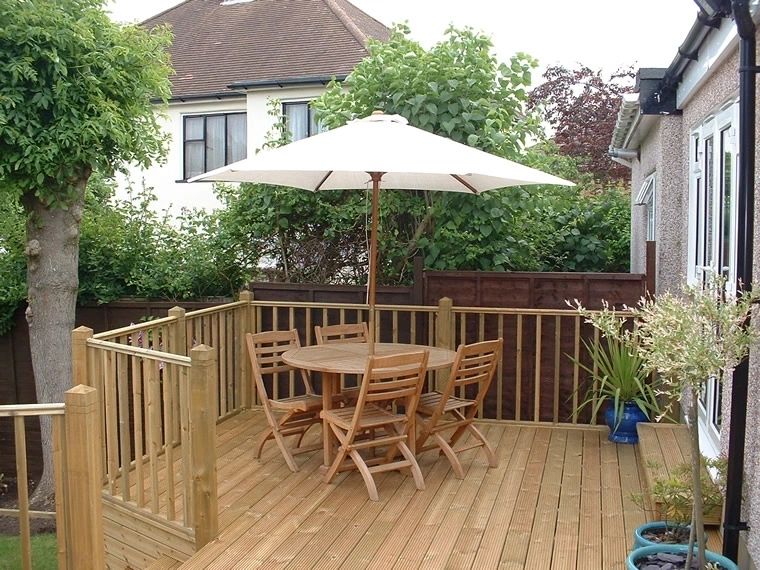
softwood garden decking installed by Capital Fencing in Mill Hill (NW7)
Mill Hill · NW7

Composite Decking in Mill Hill (NW7)

Composite decking is bought for the years after the build: no annual oiling, no lifting boards, a wash-down and that is it. What makes or breaks it in Mill Hill is the frame underneath — joists at 300mm centres, ventilated, and level to the millimetre. We're a small, time-served composite decking crew working out of London and Herts, and Mill Hill is a regular week for us. Most briefs here come down to rear gardens where the client wants no annual oiling or sanding — and honestly, whether composite decking is the right answer at all before we quote. Recent work on Wise Lane and Milespit Hill. We orient jobs off Mill Hill East station.

Composite decking is bought for the years after the build: no annual oiling, no lifting boards, a wash-down and that is it. What makes or breaks it in Mill Hill is the frame underneath — joists at 300mm centres, ventilated, and level to the millimetre. We're a small, time-served composite decking crew working out of London and Herts, and Mill Hill is a regular week for us. Most briefs here come down to rear gardens where the client wants no annual oiling or sanding — and honestly, whether composite decking is the right answer at all before we quote. Recent work on Wise Lane and Milespit Hill. We orient jobs off Mill Hill East station.

Why composite decking works here

  • no annual maintenance beyond a wash-down
  • capped boards resist stains and don't fade to grey the way softwood does
  • grooved surface keeps grip in wet weather
Honest trade-offs

Where composite decking isn't the right answer

  • damaged boards can't be sanded out — they're replaced
  • up-front cost is 40–60% higher than a matching softwood deck

We'll say so on the site visit — a wasted quote helps nobody.

Typical spec

How we build composite decking in Mill Hill

Capped wood-polymer composite boards on treated softwood joists. Standard build: Trex or Q-Deck capped boards on 150×47mm treated joists at 300mm centres. On Mill Hill jobs we adjust for the mill hill conservation area on the ridgeway has strict rules on materials and finishes.

Property mix locally: large detached homes on the Ridgeway, 1930s semis around the Broadway, and modern infill near Mill Hill East. Typical gardens: spacious plots — many of the Ridgeway properties have gardens deep enough for full landscaping schemes. Postcodes we regularly service: NW7.

Common Mill Hill briefs

  • commercial and hospitality terraces that get heavy footfall
  • rear gardens where the client wants no annual oiling or sanding

Composite Decking FAQs — Mill Hill

Can composite boards be cut and mitred on site?

Ventilation under a Mill Hill deck is not optional — a boxed-in frame with no airflow is what rots first. Survey slots across NW7 are usually inside a week. Worth weighing no annual maintenance beyond a wash-down against up-front cost is 40–60% higher than a matching softwood deck before you commit.

Can composite decking be laid over an existing frame?

Ventilation under a Mill Hill deck is not optional — a boxed-in frame with no airflow is what rots first. We work this patch weekly, from Mill Hill Industrial Estate out toward edgware. In short: no annual maintenance beyond a wash-down, though up-front cost is 40–60% higher than a matching softwood deck.

Does composite decking get too hot to walk on?

Ventilation under a Mill Hill deck is not optional — a boxed-in frame with no airflow is what rots first. For large detached homes on the ridgeway in NW7, that is where the cost sits. Worth weighing no annual maintenance beyond a wash-down against up-front cost is 40–60% higher than a matching softwood deck before you commit.

How do you clean composite decking?

Hidden clip fixings mean no screw heads on the walking surface of a Mill Hill terrace. We allow for spacious plots — many of the Ridgeway properties have gardens deep enough for full landscaping schemes when setting out in Mill Hill. Practically, that means capped boards resist stains and don't fade to grey the way softwood does — and we're upfront that can feel hotter underfoot in full sun than timber.

How long does composite decking last vs timber?

Fascia and trims are what make a composite deck look finished; they are on the quote, not an extra at the end. Survey slots across NW7 are usually inside a week. Practically, that means capped boards resist stains and don't fade to grey the way softwood does — and we're upfront that can feel hotter underfoot in full sun than timber.

Recent composite decking work
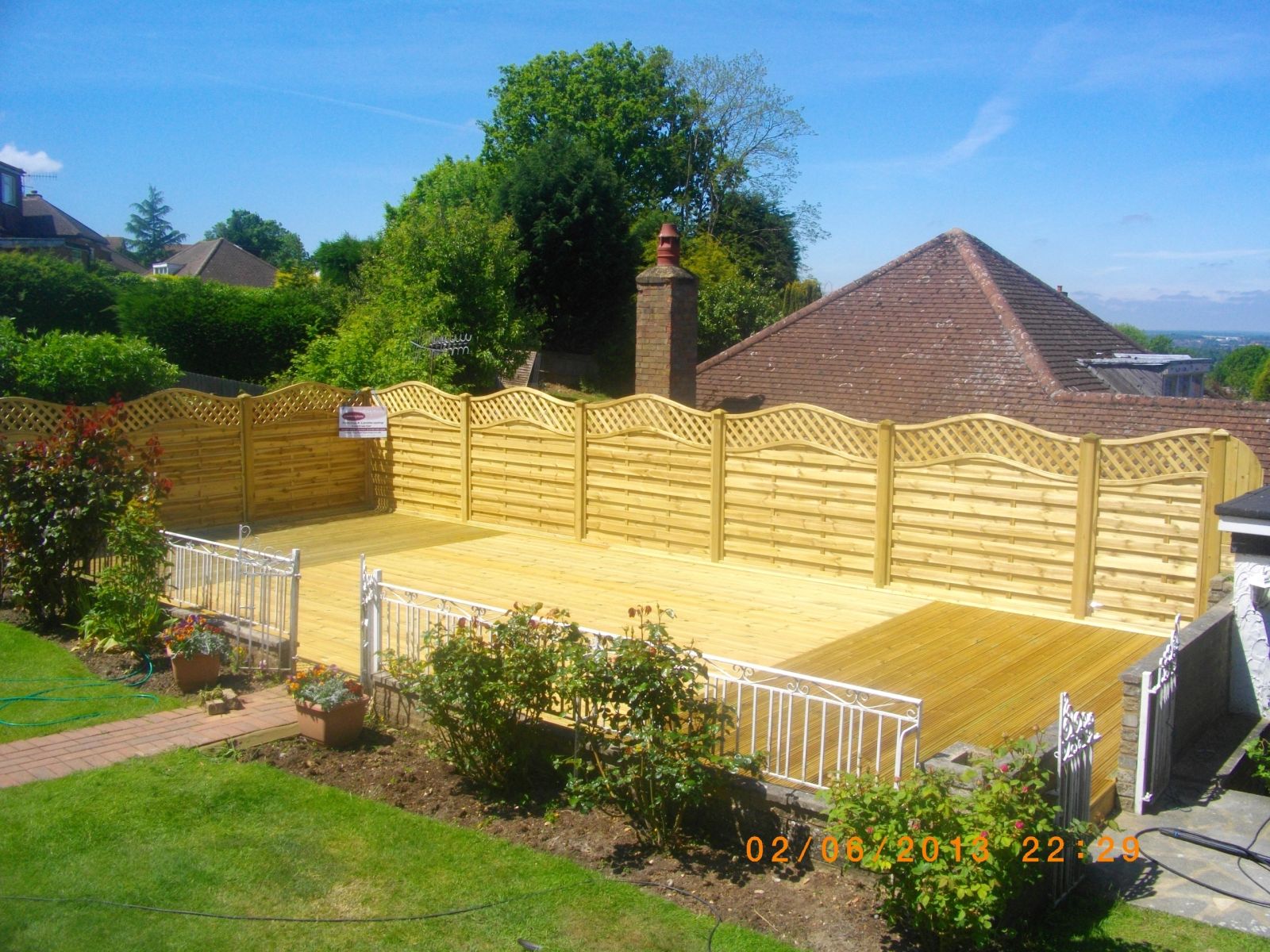
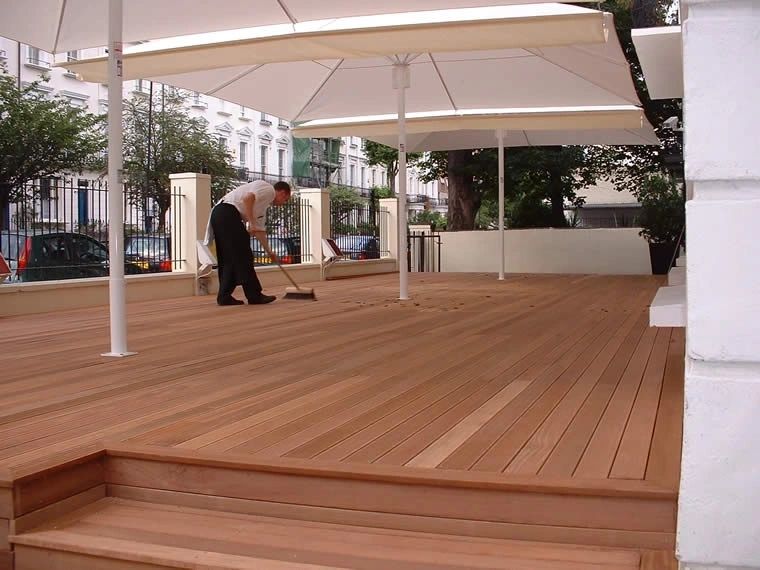
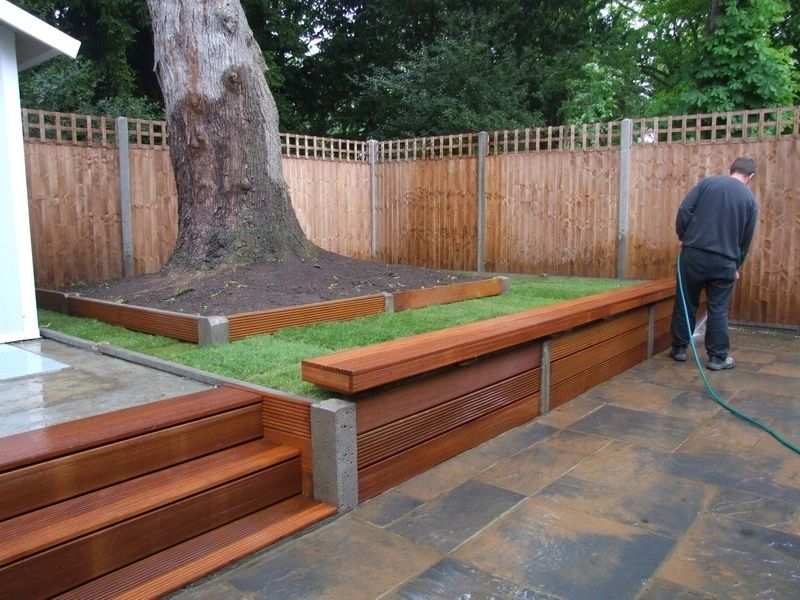
softwood garden decking installed by Capital Fencing in Mill Hill (NW7)hardwood deck install installed by Capital Fencing in Mill Hill (NW7)composite decking installed by Capital Fencing in Mill Hill (NW7)raised garden deck installed by Capital Fencing in Mill Hill (NW7)

Composite Decking in Mill Hill: the practical detail

Why storm damage clusters at certain bays

Storm damage rarely hits a run evenly — a bay at the end of a straight run, or one next to a gap such as a gate, usually takes more wind load than the bays either side and fails first.

When repairing storm damage we check the bays either side of the failure too, since a post that's been leaned on hard by a falling neighbour is often compromised even if it's still standing.

Painting and re-treating repaired sections

New timber fitted into a repair should be treated before it's fixed as well as after, since end grain and cut edges exposed during fitting are the points most likely to take on moisture if left untreated.

Matching the existing stain or paint colour on a repaired section is easier once the new timber has had at least one season to weather, rather than trying to match it immediately.

Working safely on a tall or elevated fence repair

A repair on a taller run, or one set on a retaining wall or raised bank, sometimes needs a working platform or trestles rather than simply working from a stepladder against the fence itself.

Where a repair is above head height along its full length, planning safe access before starting reduces both the time on site and the risk of further damage to the fence being used as a support.

Dropped kerbs and boundary gate positions

A dropped kerb is authorised for a specific width and position, and a gate or fence opening that doesn't line up with it can create a technically unauthorised vehicle crossing over the footway.

Where a driveway gate is being repositioned or widened, it's worth checking whether the dropped kerb needs to be extended or moved to match, which is a separate application to the council's highways department.

Parking a vehicle over a kerb that hasn't been properly dropped, even briefly during works, can also draw attention from the local authority in some areas.

Timber species and on-site workability

Workability describes how easily a timber can be sawn, planed, nailed and screwed without splitting, tearing or blunting tools excessively, and it varies considerably between species independent of durability or strength.

Straight-grained, moderate-density softwoods like redwood pine are generally easier to work on site than dense hardwoods or highly figured timber with interlocked or wavy grain, which can tear out during cutting or planing.

A timber chosen purely for durability or appearance without considering workability can significantly slow on-site fitting, particularly where a lot of site cutting and drilling is needed rather than factory-machined components.

Converted flats and shared bin storage

Houses converted into two or three flats often have a shared bin store or side passage boundary that wasn't part of the original single-dwelling fence layout, and responsibility for repair can be unclear where the freeholder retains the passage but individual flats use it daily.

A gate onto a shared bin store needs to be wide enough for wheelie bins to pass without lifting them over a threshold, and a self-closing latch is worth specifying so the gate isn't left open between collections.

Where flats were converted without formal division of the garden, it's worth clarifying in writing which flat is responsible for which section of boundary before starting any replacement work.

Choosing between timber, concrete and steel posts

Timber posts are the cheapest and easiest to work with but are the first part of a fence to rot, particularly at ground level where they sit in permanently damp soil or concrete.

Concrete slotted posts cost more upfront and are harder to cut or adjust on site, but don't rot and hold panels rigidly without needing separate fixings, which suits a long, exposed or heavily-used run.

Steel posts, either box section or RSJ, are mostly reserved for commercial, security or very heavy-load applications where timber or concrete wouldn't cope with the weight or vandal-resistance required.

The highway 1m rule in practice

The 1m permitted development limit applies to any boundary that fronts a highway used by vehicular traffic, which in practice includes most adopted roads and many unadopted estate roads that carry regular car use, not just classified A and B roads.

A footpath-only right of way at the front of a plot doesn't trigger the lower limit on its own, but councils interpret 'used by vehicles' broadly, so a shared driveway serving several houses usually counts.

Where it's unclear, checking with the local planning authority before building is cheaper than a retrospective application after a 1.8m fence goes up on what turns out to be a vehicular frontage.

Sizing gates for specific vehicle types

A driveway gate wide enough for a family car may still be too narrow for a van, motorhome or trailer, which is worth checking against the actual vehicles a household owns or plans to own rather than a generic standard opening.

Turning circle matters as much as raw width on a tight driveway, since a gate that technically fits a vehicle's width can still be unusable if there isn't room to straighten up before passing through it.

For a household with mixed vehicle needs, a wider single gate or double gates with an off-centre split (one narrow, one wide leaf) can give flexibility that two equally-sized leaves don't.

Off-street parking and dropped kerbs

Converting a front garden to off-street parking usually requires a dropped kerb permit from the highway authority, and a boundary fence or gate across that new access has to be positioned clear of the visibility splay the dropped kerb creates.

Where a low front boundary already exists specifically to preserve sightlines onto the new parking, replacing it with a taller or solid fence can undo the safety benefit the dropped kerb approval was granted on.

It's worth checking whether the dropped kerb approval included any conditions on boundary treatment before ordering a new front fence or gate.

Sheeting plants and borders during fencing works

Established shrubs and borders close to a fence line are easily damaged by dropped tools, spoil heaps or simply being walked over repeatedly during a multi-day job, so temporary boards or breathable sheeting laid over beds reduces incidental damage.

Concrete dust and cement splash can scorch foliage if it settles on leaves and isn't rinsed off promptly, which is worth flagging before mixing starts next to a prized border.

Where a plant genuinely sits in the way of a post position, agreeing with the client in advance whether it's moved, worked around, or the post offset avoids an awkward decision made on the spot mid-dig.

Historic ha-ha and ditch boundaries

Some older rural and semi-rural Hertfordshire properties retain a ha-ha — a sunken ditch-and-wall boundary designed to keep a view open while still containing livestock — rather than a conventional fence line.

Where a ha-ha exists on a historic estate boundary, it's sometimes a designated heritage feature in its own right, in which case altering or fencing over it needs the same care as any other listed landscape feature.

More often a ditch boundary is simply a drainage feature rather than a heritage one, in which case a fence set back from the ditch edge, rather than spanning it, avoids undermining the bank.

Terraced housing and rear access

Victorian and Edwardian terraces were rarely built with side access, which means materials for a rear garden fence often have to go through the house, over a shared side return, or down a narrow rear alley shared with several other properties.

That access constraint changes the practical choice of materials — full concrete gravel boards and long panels are harder to move through a narrow hallway than shorter timber sections carried in and built up on site.

It's also why timing matters on these jobs: a delivery that blocks a shared alley for half a day needs agreeing with neighbours in advance, not discovering on the morning of the job.

Vegetation growing through or over a shared fence

Plants growing from one garden through, over or against a shared fence — a spreading shrub, an overhanging branch, a self-seeded sapling in the fence line itself — sit in a grey area between garden maintenance and boundary structure that isn't always covered by a simple 'good neighbour' agreement.

A sapling that germinates directly against a post and is left to grow can eventually distort or crack the post as its trunk thickens, which is a slow-motion structural problem rather than a purely cosmetic one.

Flagging seedlings growing in or immediately against a fence line at an early stage, before root or trunk growth causes structural distortion, avoids a much larger repair later.

We hand over the board reference and the frame layout for every Mill Hill deck, so any future alteration matches what is already down. Whether you're on a period street near Mill Hill Industrial Estate or a newer estate toward edgware, composite decking in Mill Hill is a service we run every week — booked in, on time, and left tidy. Recent work on Wise Lane and Devonshire Road. We orient jobs off Belmont Farm.

Get In Touch

Get My Free Quote — 24h Response

No callout fee · Free site visit · Friendly local team covering London & Hertfordshire.

Call us
07885907880
or 02036484746
Email
capital_fencing@yahoo.com
WhatsApp
Message us anytime
Area
London & Hertfordshire
Payment
Card payments accepted

Pay by debit or credit card, bank transfer or cash once the work and price are agreed. No deposit taken online.

Request a Free Quote

We'll get back to you within 24 hours.

Free Site Visit No Callout Fee
Call WhatsAppQuote