London & Hertfordshire Free Site Visit
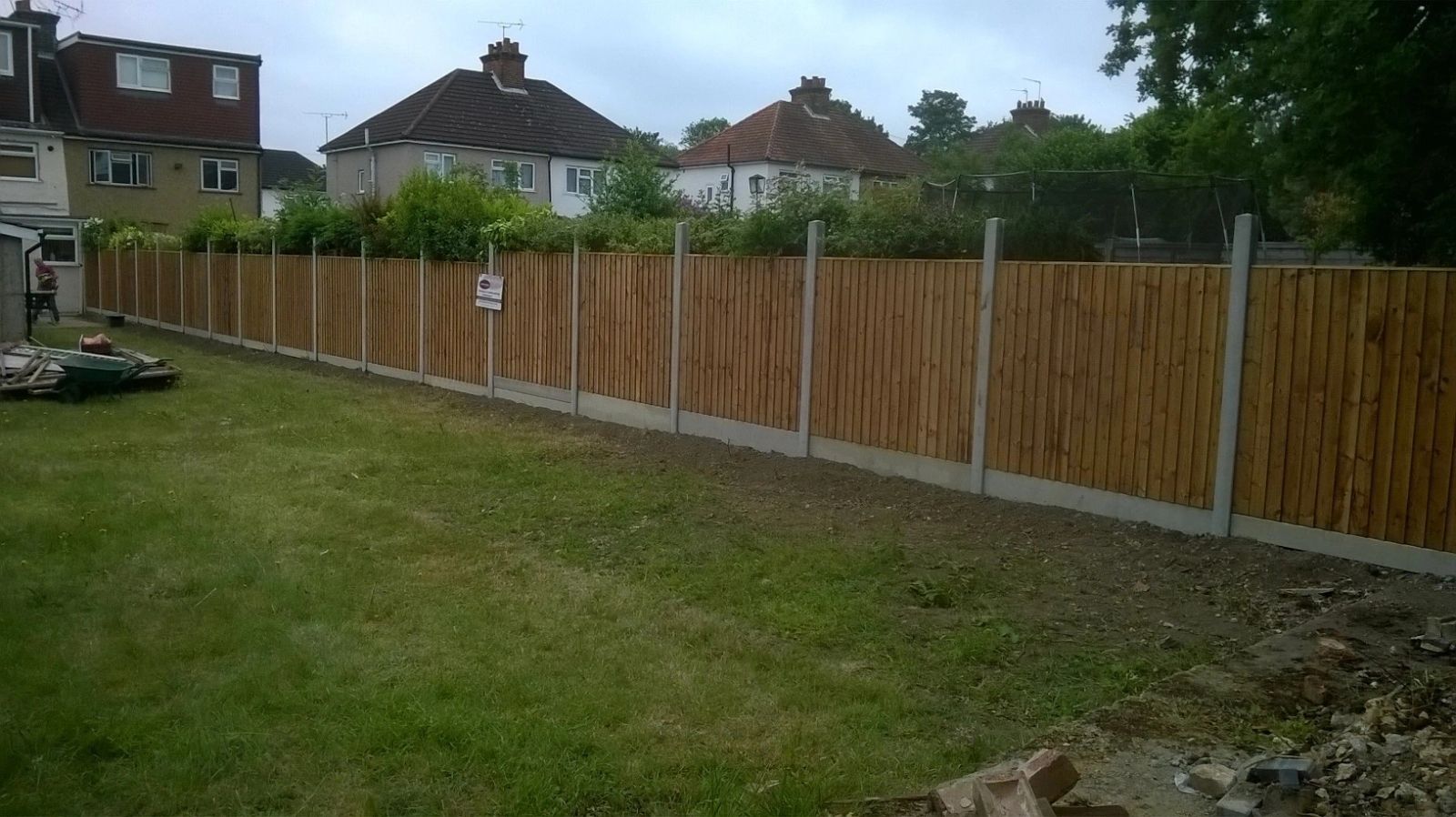
closeboard fence run installed by Capital Fencing in Camden (NW1)
Camden · NW1 / NW3 / NW5 / N7 / WC1

Composite Fencing in Camden (NW1)

Expansion is the thing installers get wrong with composite. Boards move along their length in summer, so gaps at the post channels are deliberate, not sloppy. On Camden gardens we set out runs to land on full boards where we can, because a cut composite end never looks like a factory one. Every composite fencing job we run in Camden starts from what fails locally: listed-building and conservation constraints across most postcodes — timber and painted profiles only at the front. Our default spec — 6ft × 6ft panels, 2.4m aluminium posts on 700mm concrete bases — is built around that, not around a generic price sheet. Recent work on Prince of Wales Road and Camden Road. We orient jobs off Camden Lock.

Expansion is the thing installers get wrong with composite. Boards move along their length in summer, so gaps at the post channels are deliberate, not sloppy. On Camden gardens we set out runs to land on full boards where we can, because a cut composite end never looks like a factory one. Every composite fencing job we run in Camden starts from what fails locally: listed-building and conservation constraints across most postcodes — timber and painted profiles only at the front. Our default spec — 6ft × 6ft panels, 2.4m aluminium posts on 700mm concrete bases — is built around that, not around a generic price sheet. Recent work on Prince of Wales Road and Camden Road. We orient jobs off Camden Lock.

Typical spec

How we build composite fencing in Camden

Wood-polymer composite boards on aluminium or steel posts. Standard build: 6ft × 6ft panels, 2.4m aluminium posts on 700mm concrete bases. On Camden jobs we adjust for listed-building and conservation constraints across most postcodes — timber and painted profiles only at the front.

Property mix locally: Georgian and Victorian townhouses in Primrose Hill and Hampstead, plus dense terraces around Kentish Town and Gospel Oak. Typical gardens: small walled courtyards behind period houses; several conservation areas restrict visible materials. Postcodes we regularly service: NW1, NW3, NW5, N7, WC1.

Common Camden briefs

  • long rear boundaries where zero maintenance matters more than up-front cost
  • commercial forecourts where painted timber looks tired within a season
Honest trade-offs

Where composite fencing isn't the right answer

  • boards can dent under a football or garden strimmer edge
  • colour range is narrower than paint-grade timber

We'll say so on the site visit — a wasted quote helps nobody.

Why composite fencing works here

  • no annual staining or oiling
  • colour-through boards don't fade to grey the way pressure-treated timber does
  • aluminium post system won't rot at ground level, which is where 90% of timber fences fail

Composite Fencing FAQs — Camden

Is composite fencing worth the extra cost?

Post fixing matters more than the boards here: aluminium posts get concrete-set, because a composite run has no give to hide a leaning post in Camden. For georgian and victorian townhouses in primrose hill and hampstead in NW1, that is where the cost sits. In short: no annual staining or oiling, though up-front cost is roughly double a lap-panel fence.

How is composite fencing recycled at end of life?

We keep colour batches together on a single run, so a Camden boundary reads as one boundary rather than two deliveries. We allow for small walled courtyards behind period houses; several conservation areas restrict visible materials when setting out in Camden. In short: no annual staining or oiling, though up-front cost is roughly double a lap-panel fence.

How long does composite fencing last compared to timber?

We keep colour batches together on a single run, so a Camden boundary reads as one boundary rather than two deliveries. Survey slots across NW1 are usually inside a week. Worth weighing no annual staining or oiling against up-front cost is roughly double a lap-panel fence before you commit.

Do composite panels handle high wind loads?

Post fixing matters more than the boards here: aluminium posts get concrete-set, because a composite run has no give to hide a leaning post in Camden. We work this patch weekly, from Camden High Street out toward islington. Practically, that means colour-through boards don't fade to grey the way pressure-treated timber does — and we're upfront that boards can dent under a football or garden strimmer edge.

Can composite panels drop into existing concrete posts?

Post fixing matters more than the boards here: aluminium posts get concrete-set, because a composite run has no give to hide a leaning post in Camden. For georgian and victorian townhouses in primrose hill and hampstead in NW1, that is where the cost sits. In short: no annual staining or oiling, though up-front cost is roughly double a lap-panel fence.

Recent composite fencing work
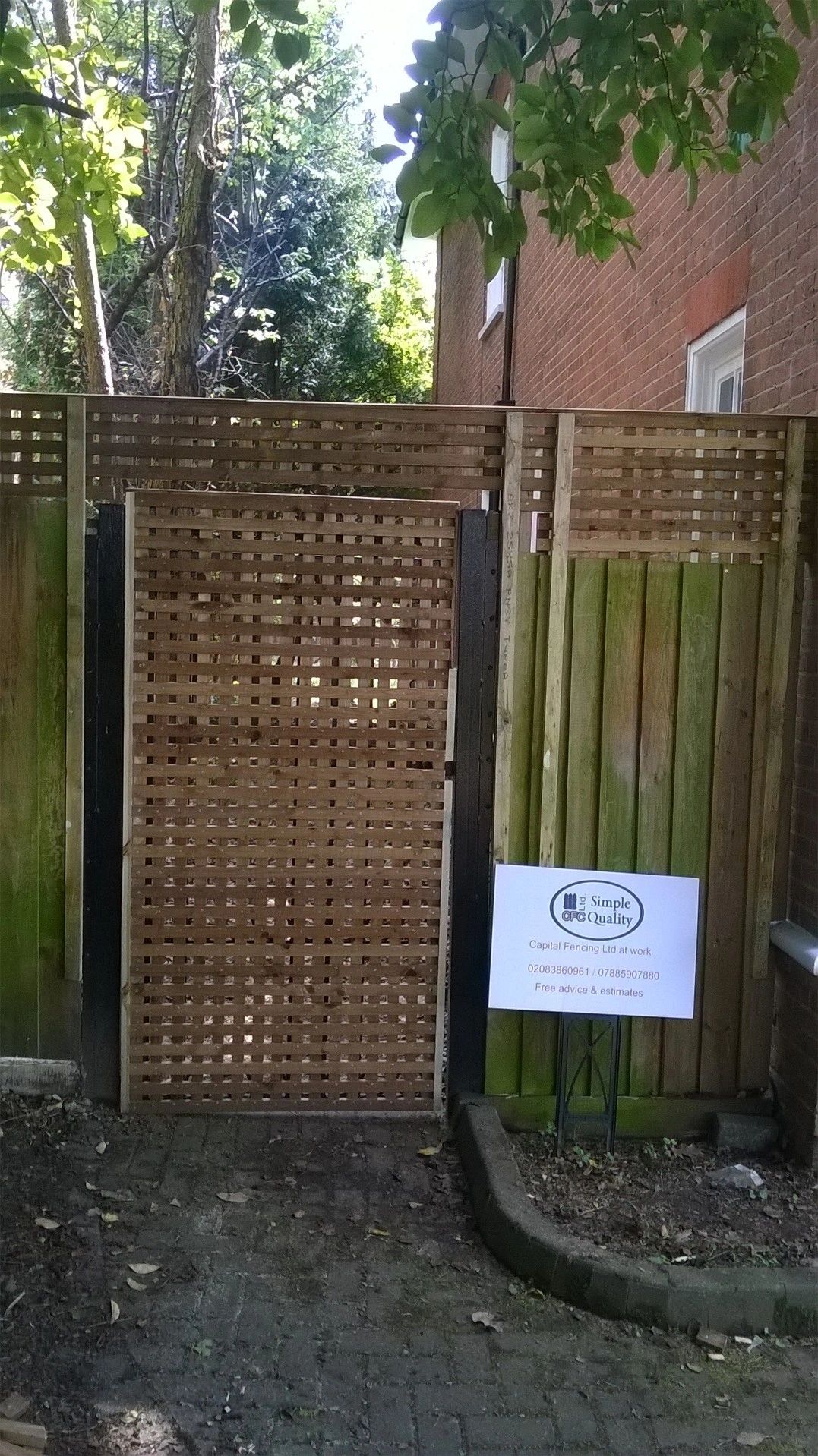
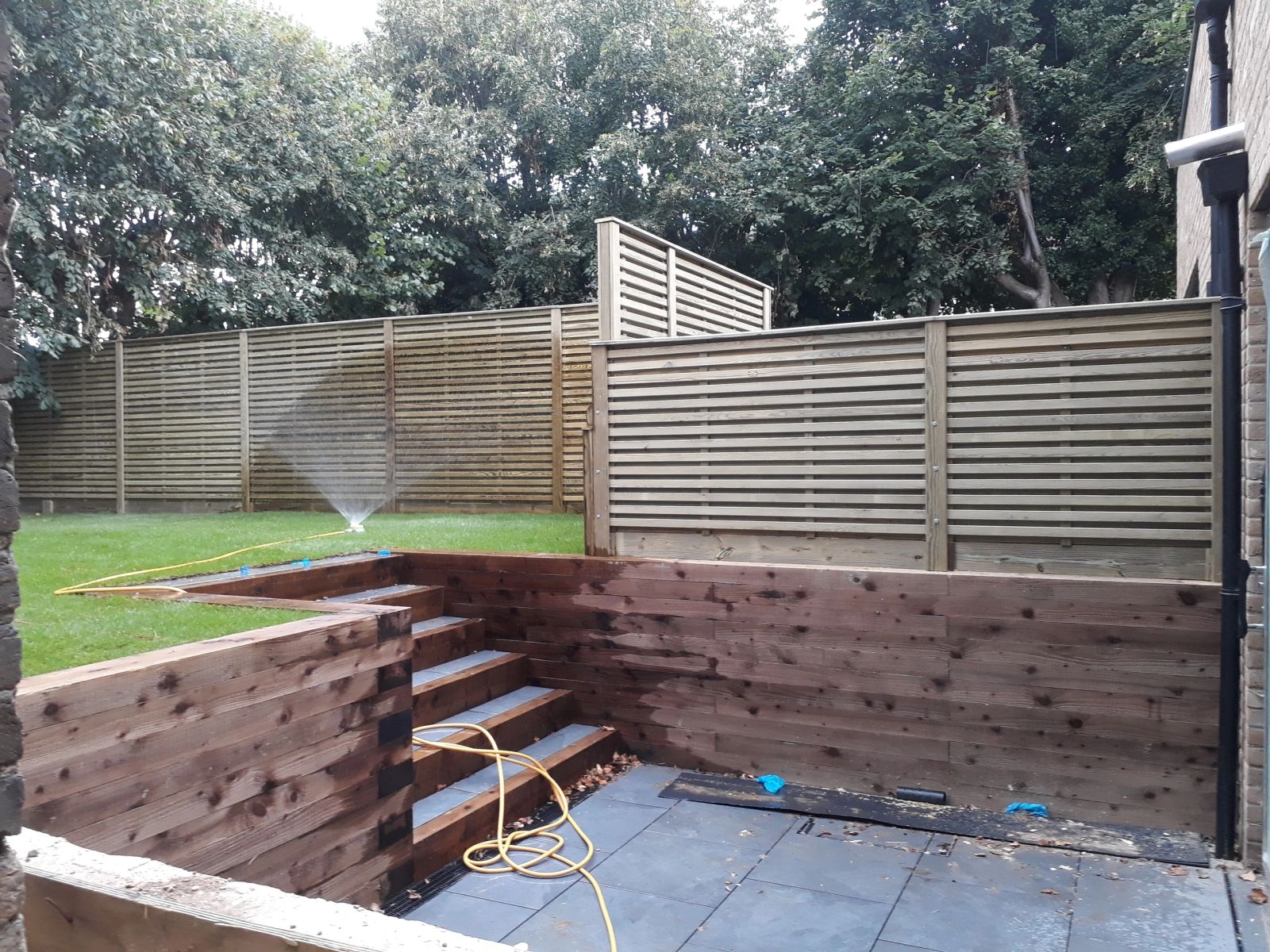
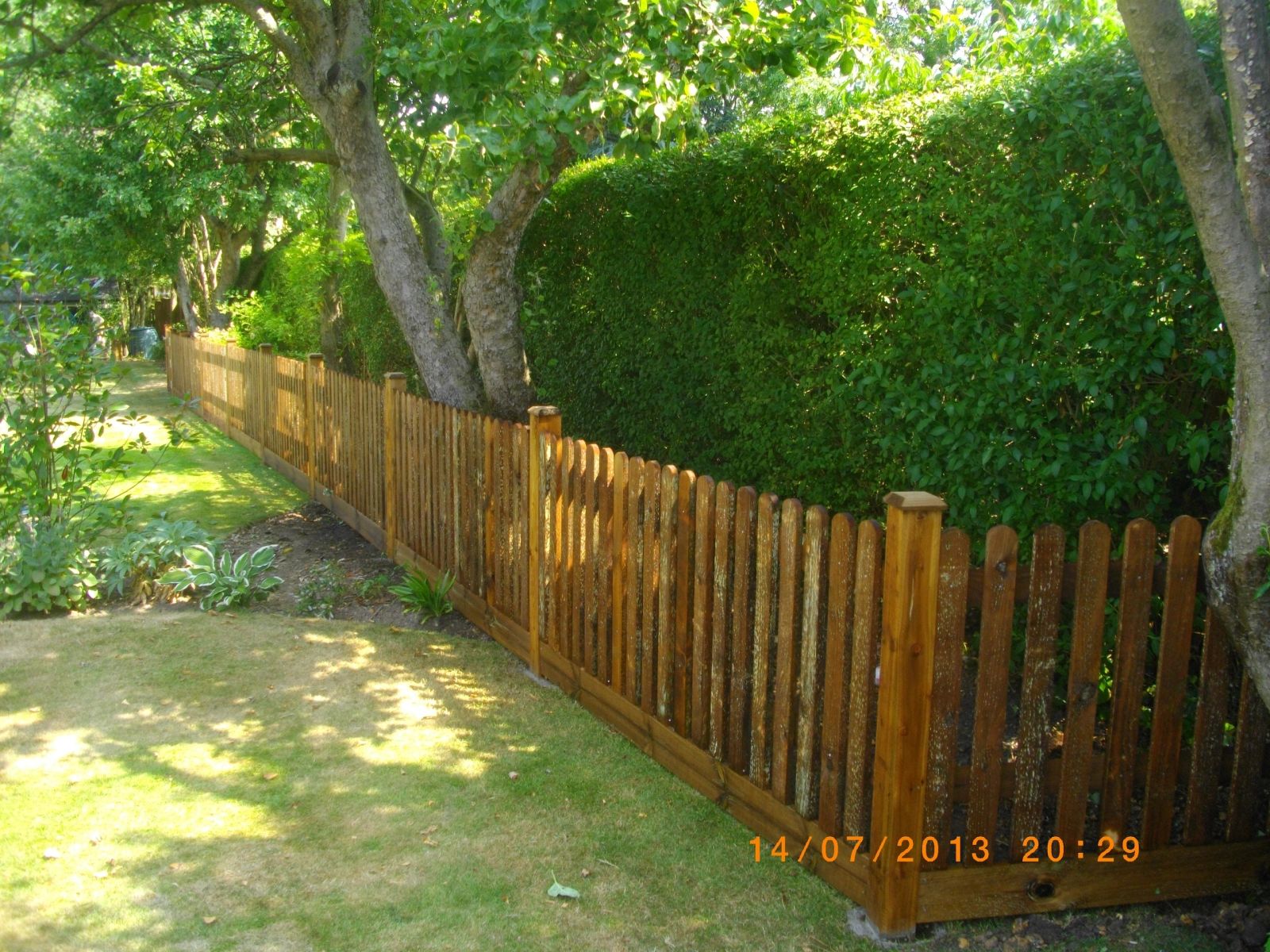
closeboard fence run installed by Capital Fencing in Camden (NW1)panel fence install installed by Capital Fencing in Camden (NW1)trellis-topped fence installed by Capital Fencing in Camden (NW1)bespoke decorative fence installed by Capital Fencing in Camden (NW1)

Before you book composite fencing in Camden

Listed building curtilage and garden boundaries

Structures within the curtilage of a listed building — which can include garden walls, gate piers and sometimes fencing — may themselves be treated as part of the listing, even if not mentioned explicitly.

That means listed building consent can be required for work that would otherwise be unremarkable on a non-listed property, and doing work without consent where it's needed is a criminal offence.

Anyone unsure whether their boundary falls within this kind of curtilage should raise it with the council's conservation or listed buildings officer before starting.

Visibility splays on corner plots and driveways

Corner plots and driveways onto a road often have a highway visibility splay — a triangular zone near the junction — where boundary height is restricted so drivers and pedestrians can see each other clearly.

These restrictions are usually lower than the standard 1m front-boundary limit and are enforced by the highway authority rather than just general planning policy, so it's worth checking with the council for any plot near a junction or driveway crossing a footway.

Open railings or low planting within a visibility splay are common solutions where some boundary definition is still wanted without blocking sightlines.

School and nursery boundary needs

Boundaries around schools, nurseries and other settings used by children are usually specified with child safety in mind first — no horizontal rails that could be used to climb, gaps too narrow to trap a small limb, and self-closing gates with child-safe latches on any pedestrian access.

Height matters both for containment and sightlines: too high and staff lose visibility into a play area from a building; too low and it's not a meaningful boundary at all.

Any work on an occupied site with children present also has practical scheduling implications — most of this work happens outside term time or during holiday closures to avoid disruption.

Seasonal restrictions on hedge and vegetation clearance

Clearing vegetation or a hedge to make way for a fence during bird nesting season, broadly March to August, risks disturbing an active nest, which is a wildlife offence regardless of whether the fencing work itself is otherwise unrestricted.

A quick visual check for active nests before cutting back growth is standard practice, and where a nest is found the sensible step is working around it rather than pushing ahead with clearance.

Outside nesting season, most routine hedge cutting ahead of fencing work has no seasonal restriction, though thicker or more established hedgerows may still need the checks covered elsewhere for protected hedgerows.

Sheltered courtyard microclimates and reduced wear

A small enclosed courtyard garden surrounded by walls or buildings on most sides creates a sheltered microclimate with reduced wind and often reduced direct rain exposure, which can extend the practical life of a timber finish well beyond the general guideline interval.

The trade-off is often reduced airflow and higher humidity in the enclosed space, which can favour algae or mould growth even though the timber itself isn't taking direct weather.

Recommending a maintenance interval based on general exposure alone can be too cautious for a sheltered courtyard or too relaxed for a damp, poorly-ventilated one, so it's worth judging each enclosed garden on its own conditions.

Recycled mixed-plastic lumber composition

Recycled plastic lumber differs from wood-plastic composite in that it's typically made entirely from reprocessed plastic waste with no wood fibre content, giving it complete immunity to rot and insect attack but a distinctly plastic rather than timber-like appearance.

Because it contains no wood fibre, it doesn't absorb moisture in the way composite or timber boards do, but it's also generally more flexible and prone to visible sagging over a wide unsupported span unless internally reinforced.

It's more commonly specified for ground-contact components like gravel boards and low retaining edges, where rot resistance matters most, than for larger structural fencing elements.

Safeguarding considerations on school and nursery sites

Fencing and gate work on a school or nursery site typically has to be scheduled around supervised access, since contractors are usually required to sign in, wear visible identification, and avoid unsupervised contact with children during term time.

Perimeter security fencing for these sites is often specified with anti-climb profiles and minimum heights well above a typical domestic garden fence, reflecting safeguarding rather than purely boundary-marking needs.

Work is frequently timetabled for holidays or after hours specifically to avoid any overlap between contractors on site and children present, which affects programme length more than the fencing work itself.

Driveway gate sizing and swing arc

A driveway gate needs its swing arc checked against the car actually parked behind it, not just the opening width, since a gate that clears a small hatchback can still clash with a larger estate or a roof box.

Outward-opening gates onto a public footway are generally avoided because they can obstruct pedestrians and pushchairs, which is why most residential driveway gates are hung to open inward onto the drive itself.

Sliding gates are a practical alternative on a short or sloping driveway where there isn't room for a swing arc, though they need a level track run and enough side clearance to slide fully open.

Acoustic fencing on a sloped boundary

Where the ground falls away along the boundary, panels are stepped rather than raked so the top of the run stays level with the noise source it's meant to be screening — a raked acoustic panel can leave a gap at one end that lets sound straight through underneath.

On a steep drop, a low retaining detail at the base keeps the panel height consistent along the whole run.

Running bamboo and rhizome pressure on boundaries

Running bamboo species spread through underground rhizomes that can travel several metres from the parent plant and push up through gravel boards, path joints or even through weak points in a fence base.

Unlike tree roots, rhizome growth is fast and can reappear within a single growing season after being cut back, so a fence base alone rarely stops it without a physical rhizome barrier buried alongside it.

Where established running bamboo sits on a neighbouring boundary, it's worth flagging to the client that fence replacement won't solve the underlying spread on its own.

Movement joints in timber cladding

Timber cladding boards fixed edge to edge without any allowance for seasonal expansion can buckle or split as the boards swell in wet weather and have nowhere to expand into.

A small gap left between board ends, or a slightly loose fixing pattern that allows a board to expand slightly within its fixing slots, accommodates this movement without transferring stress into the board itself.

The required gap varies by species and board width, since wider boards and more moisture-reactive species move more in absolute terms than narrow boards of a stable species for the same change in humidity.

Wheeling barrows over lawn without lasting damage

Repeated barrow runs over the same strip of lawn compact the soil and flatten the grass, and on wet ground a laden barrow can rut the turf enough that it doesn't recover without reseeding.

Laying scaffold boards or trackway matting along the barrow route spreads the load and protects the same strip from repeated single-wheel pressure, which is worth doing on any job running more than a day or two.

Choosing a slightly longer but firmer route — along a path rather than across open lawn — often does less lasting damage than the shortest direct line, even though it takes a little longer per trip.

Party wall notices for an acoustic boundary wall

Where an acoustic barrier is built as a masonry wall rather than a timber fence, and it sits on or near the boundary line, the Party Wall etc. Act 1996 can apply in a way it wouldn't for a standard timber fence.

Checking whether a notice is needed before work starts avoids a dispute part-way through a build, particularly since a masonry wall's foundations often extend closer to a neighbour's ground than a timber post ever would.

Choosing between timber, concrete and steel posts

Timber posts are the cheapest and easiest to work with but are the first part of a fence to rot, particularly at ground level where they sit in permanently damp soil or concrete.

Concrete slotted posts cost more upfront and are harder to cut or adjust on site, but don't rot and hold panels rigidly without needing separate fixings, which suits a long, exposed or heavily-used run.

Steel posts, either box section or RSJ, are mostly reserved for commercial, security or very heavy-load applications where timber or concrete wouldn't cope with the weight or vandal-resistance required.

Composite runs in Camden are quoted per linear metre including posts, caps and trims, with the board colour and profile named on the quote. It is a long-life, zero-treatment boundary, and we will say plainly when a timber closeboard run would serve you better for the money. Whether you're on a period street near Camden High Street or a newer estate toward islington, composite fencing in Camden is a service we run every week — booked in, on time, and left tidy. Recent work on Chetwynd Road and Malden Road. We orient jobs off Parliament Hill Fields.

Get In Touch

Get My Free Quote — 24h Response

No callout fee · Free site visit · Friendly local team covering London & Hertfordshire.

Call us
07885907880
or 02036484746
Email
capital_fencing@yahoo.com
WhatsApp
Message us anytime
Area
London & Hertfordshire
Payment
Card payments accepted

Pay by debit or credit card, bank transfer or cash once the work and price are agreed. No deposit taken online.

Request a Free Quote

We'll get back to you within 24 hours.

Free Site Visit No Callout Fee
Call WhatsAppQuote