Outbuildings casting permanent shade onto a fence run
A shed, greenhouse or garage built close to a boundary casts a fixed shadow over part of the adjoining fence run for some or all of the day, creating the same slower-drying conditions as a north-facing aspect regardless of the fence's actual orientation.
This localised shading is easy to overlook when assessing a whole boundary's exposure, since the rest of the run a few metres away may be in full sun.
It's worth treating the shaded section as its own microclimate for treatment and inspection purposes rather than assuming uniform conditions along the full length.
Brick and blockwork alternatives
A brick or blockwork wall offers higher mass per unit area than most timber acoustic builds and performs well as a barrier, but comes with its own foundation, planning and cost considerations that a timber fence doesn't.
Where a wall isn't practical, a heavier timber-and-mineral-wool build is the usual compromise, trading some mass for lower foundation demand and faster installation.
Measuring height from natural ground level
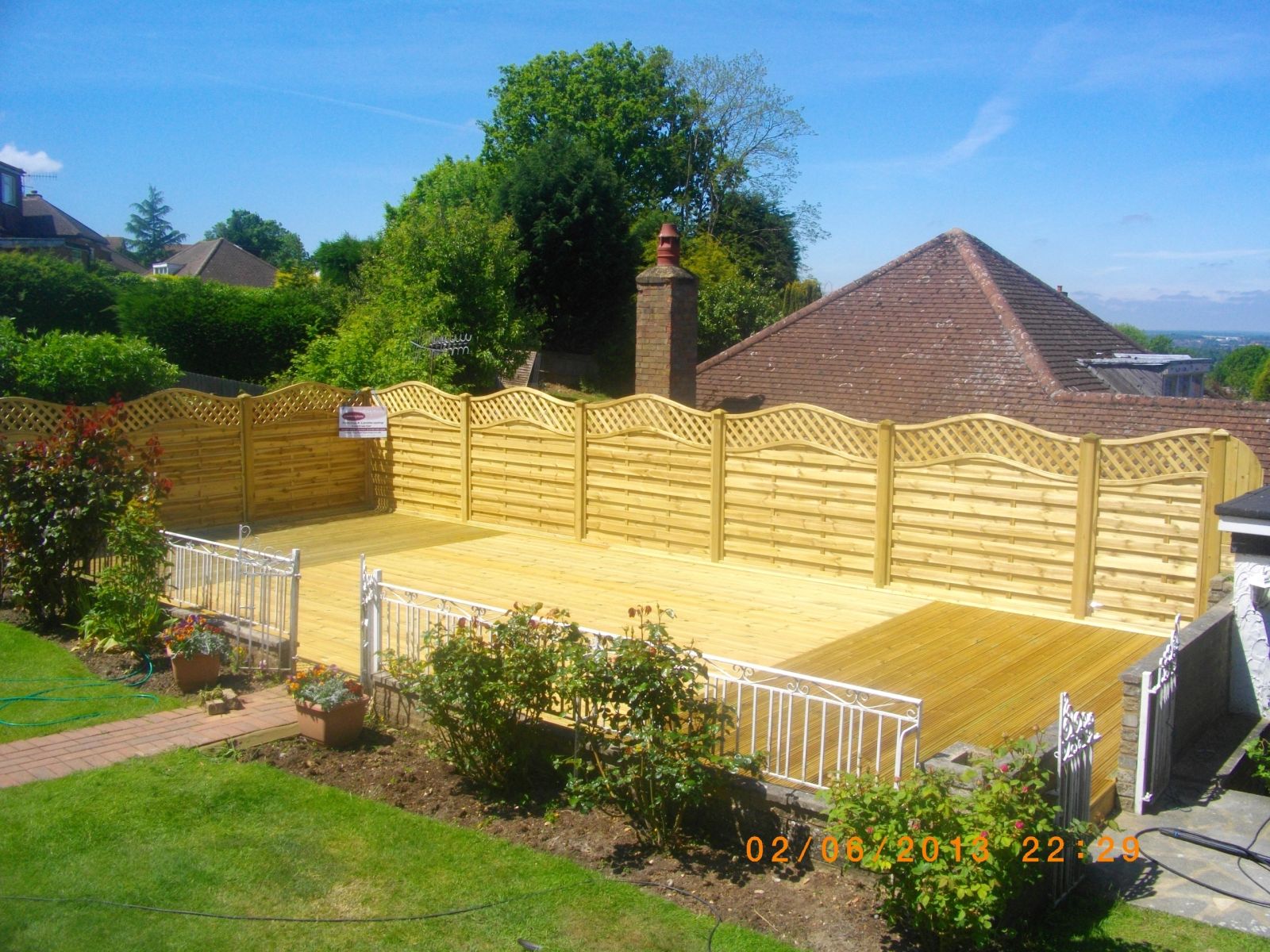
Permitted development height limits are measured from the natural ground level on the lower side of the boundary, not from any raised bed, deck or hardstanding that's been added since, which matters wherever one side of a plot has been built up.
On a level change between neighbouring gardens, the higher ground effectively gives that side a taller fence relative to the lower garden even though the fence itself is a uniform height along its top rail.
Councils measuring a disputed fence will normally use the original survey level or historic photos where the ground has since been altered, so changing levels doesn't retrospectively legalise an over-height fence.
Post caps and end-grain protection
A timber post's end grain sits at the top, cut across the fibres, and that exposed grain draws in water far faster than the treated face of the post, which is why an unprotected post top is often the first place rot takes hold.
A weathered or pyramid-cut post cap sheds water off the end grain instead of letting it pool, and a cap that oversails the post slightly also keeps water from tracking down the sides at the joint.
It's a small, low-cost detail that's frequently skipped on budget jobs, and its absence is a reliable way to predict which posts in an older fence will need replacing first.
Inspecting fixing points for early corrosion during routine maintenance
Corrosion on a galvanised security fence typically shows first at cut ends, weld points and fixing holes where the zinc coating has been broken during manufacture or installation, rather than along an untouched length of rail or mesh.
A routine inspection checks these specific points rather than relying on a general look along the fence line, since a fixing bolt corroding from the inside can look sound from the outside until it fails under load.
Diagnosing a latch that only sticks in damp weather
A latch or gate that closes fine in dry weather but sticks or binds after rain is very often timber swelling with moisture rather than a hardware fault, and this points to a finish or ventilation issue rather than the latch mechanism itself.
Confirming the pattern is weather-related before adjusting or replacing hardware avoids fixing a symptom that will return with the next wet spell.
Sports clubs
Sports club boundaries need to withstand impact from balls and players far more than an ornamental garden fence, which usually means heavier-gauge mesh or rebound-rated panel rather than standard closeboard along pitch-facing runs.
Ball-stop netting on posts set back from the fence line is a common addition where a pitch runs close to a public path or road, and post spacing for that netting is tighter than for a standard fence line.
Clubhouse car parks and pitch perimeters are also often used for match-day parking, so access for fencing work needs scheduling around the fixture calendar rather than assumed to be free every weekend.
Capping and end-grain protection
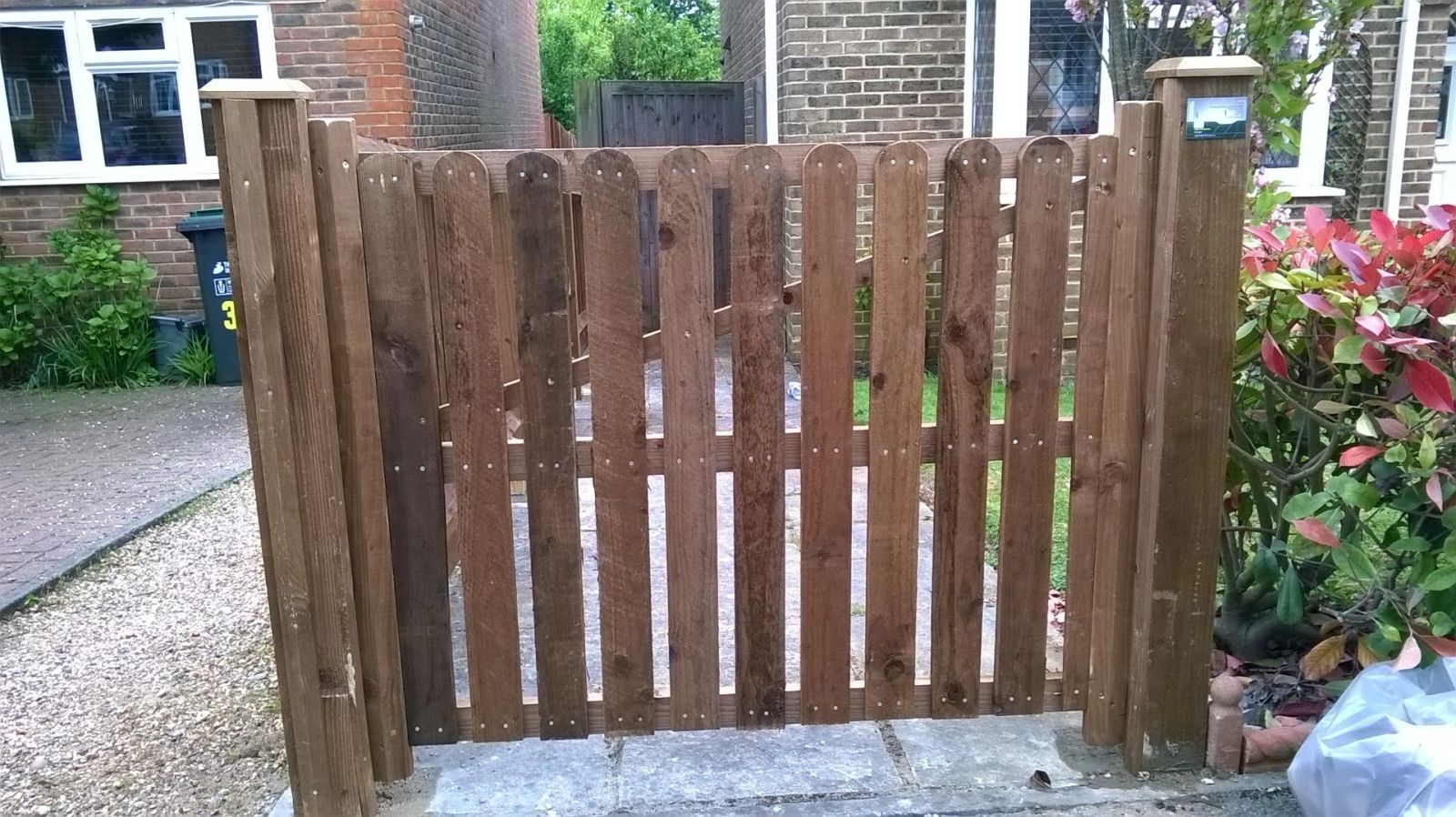
End grain absorbs moisture far faster than the face of a timber board, so an uncapped top rail or exposed post top takes in water long before the rest of the gate shows any sign of decay.
Fitting a capping strip or weathered top cut sheds water away from that end grain and noticeably extends the life of an otherwise sound gate.
Car wash and jet-wash noise
A commercial car wash or a domestic jet-wash produces a high-pressure hiss along with motor noise from pumps and vacuums, and the hiss component sits at higher frequencies that a solid barrier generally handles well.
Where a neighbouring property runs a car wash or valeting business close to a boundary, a barrier close to that source captures more of the noise before it spreads than one set back into the receiving garden.
Overhanging roofline drip lines onto a boundary
A fence running close to a house or outbuilding without gutters, or with a gutter that overshoots during heavy rain, can sit directly under a concentrated drip line that soaks one section of the run far more than the rest.
Over time this shows up as a localised patch of accelerated rot or algae growth that doesn't match the general weathering pattern of the rest of the boundary.
Where this can't be resolved by fixing the guttering itself, a slightly increased offset from the wall or a more resistant board section at that specific point avoids repeat localised failure.
Letting-agent instructions and access arrangements
Work instructed through a letting agent rather than directly by the owner usually needs a written authorisation confirming who can approve variations to the quote, since the agent isn't always the person paying the invoice.
Key access for an occupied rental needs proper notice to the tenant under the tenancy agreement, typically at least 24 hours, and arranging a lockbox or agent-held key avoids a wasted visit if the tenant isn't home.
Where a fence sits between a let property and an owner-occupied neighbour, it's worth the agent confirming which side is instructing and paying before quoting, to avoid a dispute over cost once the job is done.